Understanding Teen Wellness Visits
Regular check‑ups are a cornerstone of adolescent health because the teen years bring rapid physical growth, hormonal shifts, and new risk behaviors. Annual wellness exams let pediatricians track height, weight, and BMI, catch abnormal growth patterns or scoliosis early, and screen blood pressure, vision, and hearing before problems become obvious. The visit also updates immunizations—such as the Tdap booster, HPV series, and meningococcal shots—protecting teens from vaccine‑preventable diseases. Confidential mental‑health screening for depression, anxiety, and substance use offers a safe space for teens to discuss sensitive topics without parents present, fostering trust and early intervention. Lifestyle counseling on nutrition, exercise, sleep (8‑10 hours), and screen‑time habits equips teens with tools for lifelong wellness. By establishing a continuous, trusted relationship with their health‑care team, teens learn to take ownership of their health, setting the stage for healthier adulthood.
Why Teens Need Yearly Physicals
| Points from Annual Physicals
| Topic | Key Details |
|---|---|
| Growth & Development | Track height, weight, BMI; catch abnormal trends, early signs of scoliosis, puberty milestones |
| Vital Signs & Labs | Blood pressure, vision, hearing, cholesterol, anemia screening |
| Immunizations | Tdap booster, HPV series, meningococcal, flu, COVID‑19 |
| Lifestyle Counseling | Nutrition, exercise, sleep (8‑10 hrs), screen‑time limits, digital safety |
| Mental Health | Confidential depression questionnaire, anxiety screening, substance‑use discussion |
| Trust Building | Private teen‑only conversation encourages openness about sexual health, gender identity, relationships |
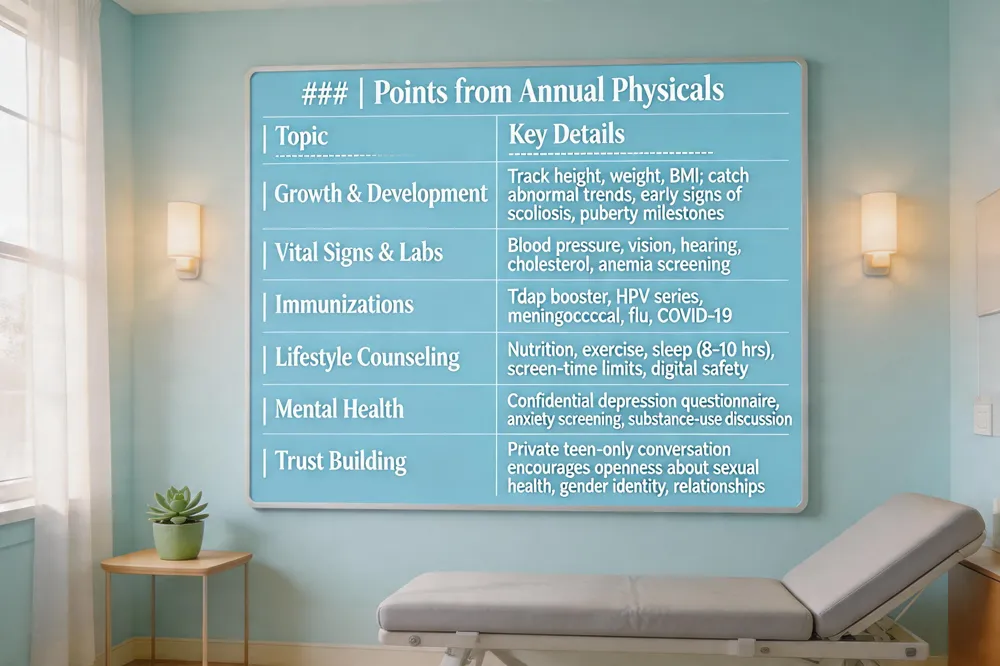 Annual wellness visits are a cornerstone of adolescent health. They let pediatricians track growth and development, catching abnormal height or weight changes, early signs of scoliosis, and puberty‑related concerns before they become serious. The exam also includes routine blood‑pressure, vision, hearing, and cholesterol checks that can reveal hypertension, obesity, or metabolic issues early.
Vaccination updates are a key component: Tdap boosters, HPV series, meningococcal shots, flu and COVID‑19 vaccines are reviewed and administered as needed, protecting teens and their communities. During the visit, clinicians counsel on nutrition, exercise, sleep (8‑10 hours), screen‑time limits, and safe digital habits, reinforcing healthy lifestyle choices.
A private, confidential conversation with the teen builds trust and encourages openness about sensitive topics such as sexual health, substance use, and mental‑health symptoms. Depression screenings and mental‑health questionnaires help identify anxiety or mood disorders, allowing timely referrals.
Do teens need a yearly physical? Yes—most pediatricians recommend an annual exam to provide a safe space for health discussions, monitor puberty, update vaccines, and screen for anemia, hypertension, or emerging mental‑health concerns.
Are yearly physicals really necessary? Absolutely. Routine exams catch vital‑sign changes, growth patterns, and vaccination gaps early, while counseling on nutrition, activity, and mental health sets teens on a healthy trajectory into adulthood.
Are yearly check‑ups necessary for teens? Yes. They ensure growth, vaccinations, mental health, and emerging health concerns are monitored throughout puberty.
What Happens During a Teen Wellness Exam
Typical Exam Workflow
| Step | What Happens |
|---|---|
| Physical Measurements | Height, weight, BMI, blood pressure, vision & hearing screens |
| Focused Physical Exam | Head‑to‑toe check for scoliosis, skin changes, musculoskeletal issues, pubertal development |
| Vaccination Review | Update record; administer Tdap, HPV, meningococcal, flu, COVID‑19 as needed |
| Lifestyle & Mental‑Health Counseling | Nutrition, sleep, exercise, screen time, substance‑use; complete depression questionnaire |
| Confidential Sensitive‑Topic Discussion | Sexual health, gender identity, relationships, other concerns (AAP guidelines) |
| Optional Labs (age‑specific) | Cholesterol, anemia, STI testing if indicated |
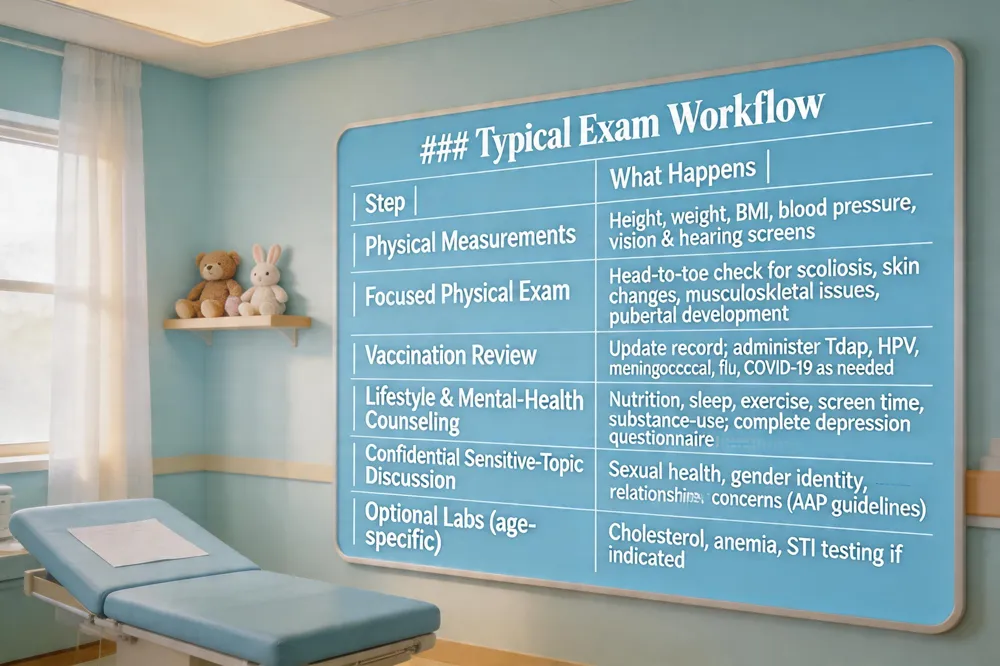 During a teen wellness exam the clinician begins with physical measurements and screenings: height, weight, BMI, blood pressure, vision and hearing checks, and a brief head‑to‑toe exam that looks for scoliosis, skin changes, musculoskeletal issues, and pubertal development. Vaccination review and administration follows; the provider updates the record and gives any due shots such as the Tdap booster, HPV series, meningococcal vaccine, seasonal flu shot, or COVID‑19 booster. The visit then moves to lifestyle counseling and mental‑health assessment, where the teen discusses nutrition, sleep (8‑10 hours), exercise, screen time, and substance‑use habits while completing a confidential depression questionnaire. Finally, a confidential discussion of sensitive topics allows the teen to ask about sexual health, gender identity, relationships, or any other “hot topics” without parents present, in line with AAP guidelines.
What happens at a 16‑year‑old wellness check? Height, weight, BMI, blood pressure, vision/hearing screens, a focused physical exam, nutrition and sleep counseling, mental‑health and substance‑use screening, up‑to‑date vaccines, and optional labs (cholesterol, anemia, STI) with safety and transition advice.
What do they do at a 15‑year‑old checkup? Same core measurements, immunization review, mental‑health screening, counseling on diet, activity, and substance use, plus vision, hearing, and puberty assessment.
How often does my child need a wellness check? The AAP recommends a schedule that starts in infancy and continues annually from age 12 through 21.
Schedule and Guidelines for Well‑Child Visits
AAP Periodicity Schedule (Key Ages)
| Age | Visit Frequency | Typical Focus |
|---|---|---|
| Newborn | 3–5 days, 1 mo, 2 mo, 4 mo, 6 mo, 9 mo, 12 mo | Growth, developmental screening, immunizations |
| 1–2 yr | 15 mo, 18 mo, 2 yr | Developmental milestones, vaccinations |
| 3 yr | Annual | Physical exam, vision/hearing, counseling |
| 4–5 yr | Annual | Growth, immunizations, safety counseling |
| 6–11 yr | Annual | Height/weight, vision/hearing, immunizations, behavior |
| 12–21 yr | Annual | Puberty assessment, mental‑health screen, vaccinations, lifestyle counseling |
PDF: https://downloads.aap.org/AAP/PDF/periodicity_schedule.pdf
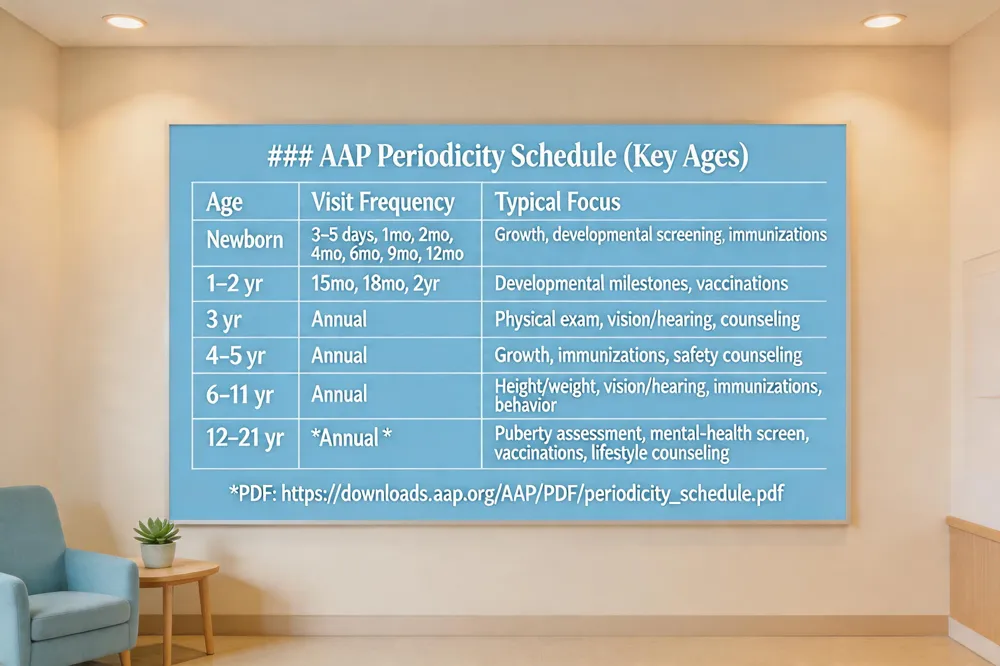 Staying on top of a child’s health is easier when families have a clear roadmap. The American Academy of Pediatrics (AAP) issues a Periodicity Schedule that outlines every well‑child visit from birth through age 21. You can download the official PDF directly from the AAP website at https://downloads.aap.org/AAP/PDF/periodicity_schedule.pdf. This printable schedule lists visits at 3–5 days, 1 month, 2 months, 4 months, 6 months, 9 months, 12 months, 15 months, 18 months, 2 years, 2½ years, 3 years, and then yearly through adolescence.
The CDC mirrors the AAP’s timeline on its Parenting “Well‑Child Visit Schedule” page and on HealthyChildren.org. Early appointments focus on growth measurements, developmental screenings, and immunizations; later yearly visits continue these checks and add counseling on nutrition, sleep, screen time, and safety.
Age‑specific frequency: newborns see a pediatrician several times in the first year, toddlers (including a 2‑year‑old) have a visit around the second birthday and then annual check‑ups, and teens receive a yearly well‑visit through age 21.
Quick answers:
- Well‑child visit schedule PDF: The AAP’s downloadable Periodicity Schedule PDF (link above). Our clinic can also provide a hard copy and walk you through each visit’s purpose.
- CDC well‑child visit schedule: Follow the AAP schedule; details are on the CDC Parenting site.
- AAP well‑child visit schedule: See the PDF for the full list; it starts with newborn visits and shifts to annual exams after age 3.
- How often should a 2‑year‑old see a pediatrician?: Once shortly after the second birthday, then about once a year through age 5, unless special health needs require more frequent visits.
Legal, School, and Program Requirements
How Exams Meet Institutional Needs
| Requirement | Why Exam Is Needed |
|---|---|
| School Physicals | Verify vision/hearing, immunizations, overall health for enrollment |
| Sports Clearance | Confirm fitness, rule out cardiac or musculoskeletal issues |
| Childcare Programs | Ensure up‑to‑date vaccines, developmental milestones |
| Legal Mandates | No statutory requirement, but many programs require recent exam documentation |
| Consequences of Skipping | Delayed detection of growth problems, hypertension, mental‑health issues, vision/hearing deficits |
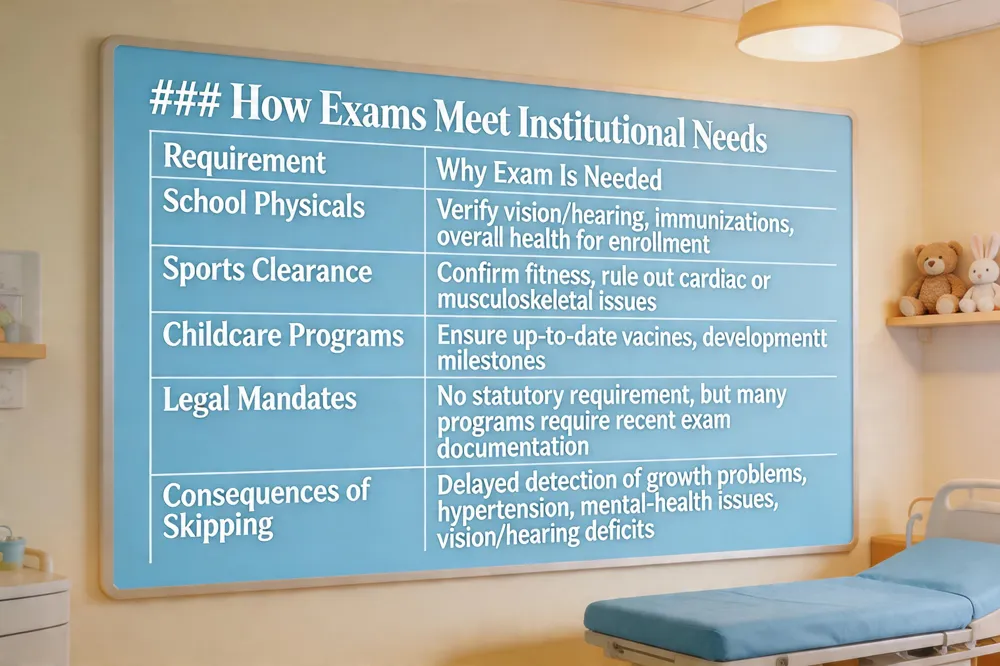 Because these requirements are tied to school and program policies, families frequently need a recent exam to meet eligibility criteria, even though the visit itself isn’t a statutory obligation. Skipping the annual wellness exam can postpone detection of growth abnormalities, vision or hearing problems, hypertension, early mental‑health concerns, or other chronic conditions—making later treatment harder and less effective.
The American Academy of Pediatrics schedule of roughly 12 visits by age 3 and yearly checks through adolescence remains a clinical guideline, not a legal mandate, but it aligns closely with the practical needs of schools, sports, and childcare programs.
Building Trust and Preparing Teens for Adult Care
Transition‑Ready Practices
| Practice | Benefit for Teens |
|---|---|
| Private Confidential Visits | Encourages honest discussion of sensitive topics |
| MyChart Portal Access | Increases health literacy, lets teens view results, schedule, message providers |
| Goal‑Setting & Self‑Advocacy Coaching | Empowers teens to manage their own health decisions |
| Gradual Introduction to Adult Providers | Smoothes transition to adult care system |
| n | Insurance & Care Coordination Guidance |
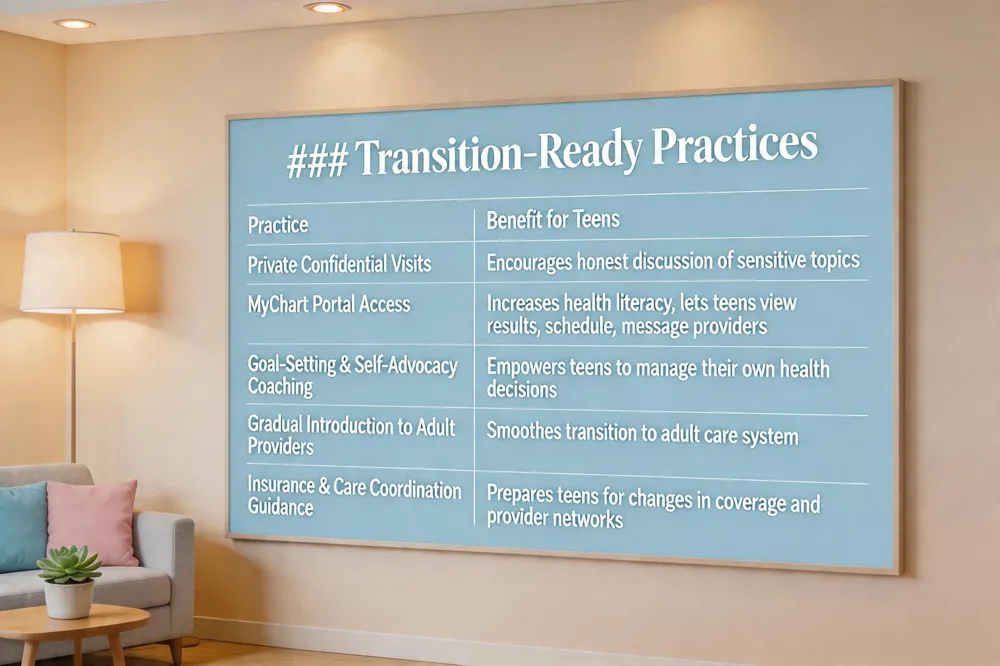 A cornerstone of adolescent health is giving teens a private, confidential moment with their pediatrician. This one‑on‑one time lets them discuss sensitive issues—sexual health, mental‑wellness, substance use—without parental presence, fostering honesty and building trust. Modern practices enhance that trust by inviting teens to use MyChart, a secure portal where they can view test results, schedule appointments, and message their provider directly. By navigating their own records, teens develop health literacy and a sense of ownership over their care. As they mature, the same relationship eases the transition to adult health services: the pediatrician can introduce the teen to new providers, review insurance changes, and reinforce the habit of regular check‑ups. Empowered with knowledge and tools, teens learn to advocate for themselves, set health goals, and make informed decisions—laying a solid foundation for lifelong wellness.
Take the Next Step for Your Teen’s Health
Schedule the annual wellness visit today, because one year can bring big changes in growth, mood, and risk factors. Use our online portal to gather questions, upload school forms, and review your teen’s immunization record before the appointment—this makes the visit efficient. Staying ahead of health challenges means catching early signs of hypertension, scoliosis, depression, or nutrition gaps, and getting timely referrals or counseling. By taking proactive steps now, you empower your teen to own their health, build a trusted relationship with their pediatrician, and set the foundation for a healthy adulthood and a brighter future for the whole family.