Why Knowing When to Call Matters
Parents instinctively know when something feels off, but turning that gut feeling into action can save a child’s health. Early recognition of red‑flag signs—such as a fever of 100.4 °F in infants under three months, rapid breathing, persistent vomiting, dehydration clues (dry mouth, no wet diapers), or a rash that spreads or looks bruised—allows the pediatrician to intervene before an illness escalates. Prompt contact gives doctors the chance to assess, order needed tests, and start treatment while the condition is still manageable, reducing the risk of complications, hospital stays, and parent anxiety. Trusting your instincts and acting quickly ensures your child receives the right care at the right time.
Fever and Fever‑Related Red Flags
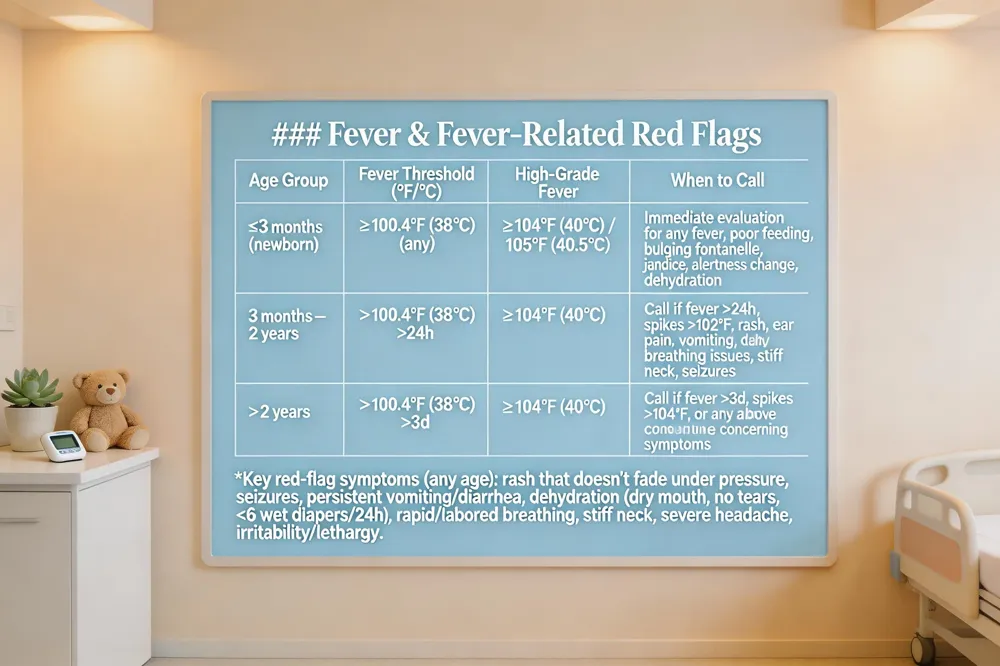
Fever & Fever‑Related Red Flags
| Age Group | Fever Threshold (°F/°C) | High‑Grade Fever | When to Call | if-----------|------------------------|------------------|--------------| | ≤ 3 months (newborn) | ≥ 100.4 °F (38 °C) (any) | ≥ 104 °F (40 °C) or spike to 105 °F (40.5 °C) | Immediate evaluation for any fever, poor feeding, bulging fontanelle, jaundice, change in alertness, or dehydration signs | | 3 months – 2 years | > 100.4 °F (38 °C) for > 24 h | ≥ 104 °F (40 °C) | Call if fever > 24 h, spikes > 102 °F, rash, ear pain, vomiting, dehydration, breathing difficulty, stiff neck, seizures | | > 2 years | > 100.4 °F (38 °C) for > 3 days | ≥ 104 °F (40 °C) | Call if fever persists > 3 days, spikes > 104 °F, or any concerning symptom listed above |
Key red‑flag symptoms (any age): rash that doesn’t fade under pressure, seizures, persistent vomiting/diarrhea, signs of dehydration (dry mouth, no tears, < 6 wet diapers/24 h), rapid or labored breathing, stiff neck, severe headache, marked irritability/lethargy.
 A fever is the body’s alarm bell, but knowing when that alarm demands a professional response can keep a child safe.
Fever thresholds by age – In infants younger than 3 months, any rectal temperature ≥ 100.4 °F (38 °C) is an emergency. For children 3 months‑2 years, a fever that lasts > 24 hours warrants a call; for kids over 2 years, the limit extends to > 3 days.
High‑grade fever – Temperatures ≥ 104 °F (40 °C) at any age, or a spike to 105 °F (40.5 °C), should trigger an immediate call or trip to urgent care.
Fever with additional symptoms – Seek help right away if a fever is paired with a rash that doesn’t fade under pressure, seizures, persistent vomiting/diarrhea, signs of dehydration (dry mouth, no tears, < 6 wet diapers/24 h), rapid or labored breathing, stiff neck, severe headache, or marked irritability/lethargy.
Newborn fever policies – Newborns (≤ 3 months) with fever, poor feeding, a bulging fontanelle, jaundice beyond the scalp, or any change in alertness need immediate evaluation.
When to call:
- General rule: temperature ≥ 100.4 °F that persists beyond the age‑specific window or any fever ≥ 105 °F.
- 1‑year‑old: call if fever > 24 h, spikes > 102 °F, or is accompanied by rash, ear pain, vomiting, dehydration, breathing difficulty, stiff neck, or seizures.
- Newborn: call instantly for fever ≥ 100.4 °F, feeding problems, breathing trouble, jaundice, bulging fontanelle, or dehydration signs.
- Post‑discharge: mother should call if newborn develops fever, poor feeding, excessive sleepiness, persistent vomiting, or worsening jaundice.
- Prenatal: contact your pediatrician early in pregnancy to arrange newborn care, discuss high‑risk factors, and schedule the first well‑child visit.
Lethargy, Poor Feeding, and Dehydration Red Flags
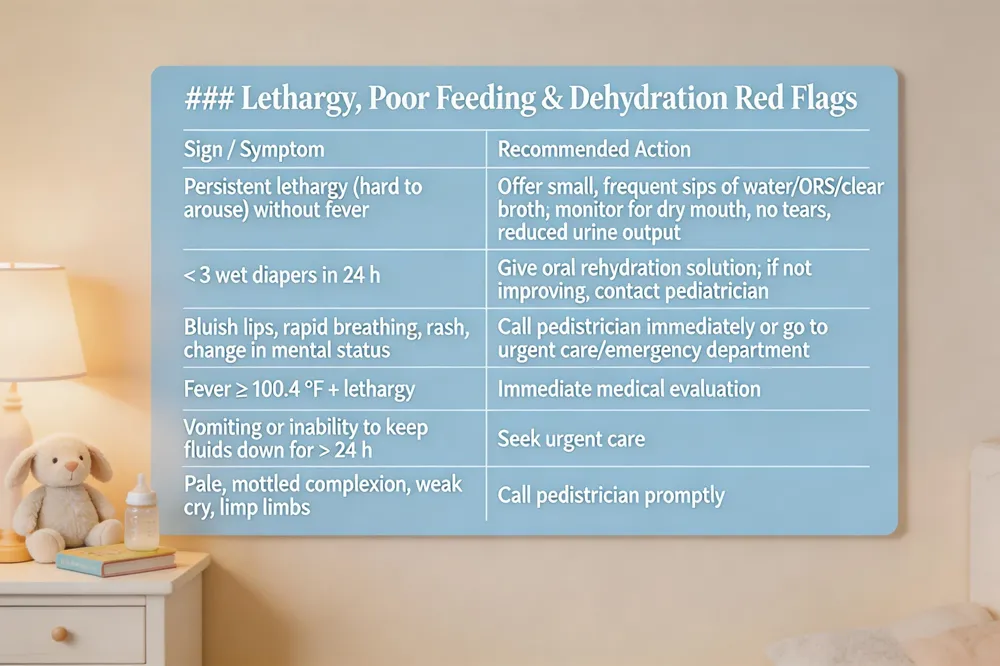
Lethargy, Poor Feeding & Dehydration Red Flags
| Sign / Symptom | Recommended Action |
|---|---|
| Persistent lethargy (hard to arouse) without fever | Offer small, frequent sips of water/ORS/clear broth; monitor for dry mouth, no tears, reduced urine output |
| < 3 frequent or wet diapers in 24 h | Give oral rehydration solution; if not improving, contact pediatrician |
| Bluish lips, rapid breathing, rash, change in mental status | Call pediatrician immediately or go to urgent care/emergency department |
| Fever ≥ 100.4 °F + lethargy | Immediate medical evaluation |
| Vomiting or inability to keep fluids down for > 24 h | Seek urgent care |
| Pale, mottled complexion, weak cry, limp limbs | Call pediatrician promptly |
 When a child seems unusually tired, refuses to eat, or shows signs of dehydration, it can signal a serious problem that deserves prompt medical attention.
Lethargic child with no fever – what should I do? Even without a fever, persistent lethargy may indicate dehydration, infection, or another illness. Offer small, frequent sips of water, oral rehydration solution, or clear broth and monitor for dry mouth, no tears, or reduced urine output. If the child remains difficult to awaken, develops a rash, has rapid breathing, bluish lips, or any change in mental status, contact your pediatrician immediately or go to urgent care.
What are common signs of a lethargic baby? A lethargic infant often has poor feeding, weak suckling, limp limbs, and a floppy appearance when held. The baby may be unusually sleepy, difficult to arouse, show little response to voices or lights, have a weak cry, and display a pale or mottled complexion. Any of these findings warrant a prompt call to the pediatrician.
My child is lethargic, has no fever and no appetite—what should I do? Offer small, frequent fluids and watch for at least three wet diapers or a normal urine stream. If lethargy, poor intake, or vomiting continue beyond 24 hours, or if you notice rash, rapid breathing, or a change in consciousness, call the pediatrician right away.
What are the signs that a lethargic toddler needs urgent care? Urgent care is needed if the toddler has a fever ≥100.4°F, dehydration signs (dry mouth, no tears, sunken eyes, markedly reduced urine), difficulty breathing, bluish lips, seizures, persistent vomiting, or a sudden inability to stay awake. In these cases, seek emergency evaluation without delay.
Respiratory Issues, Cough, and Congestion
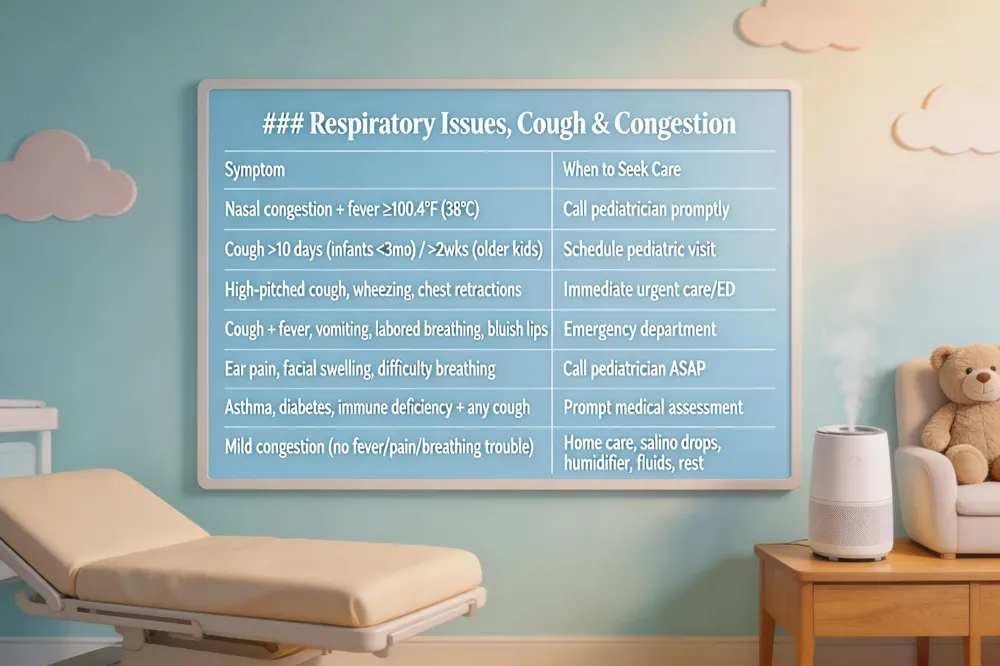
Respiratory Issues, Cough & Congestion
| Symptom | When to Seek Care |
|---|---|
| Nasal congestion + fever ≥ 100.4 °F (38 °C) | Call pediatrician promptly |
| Cough lasting > 10 days (infants < 3 months) or > 2 weeks (older children) | Schedule a pediatric visit |
| High‑pitched or worsening cough, wheezing, chest retractions | Immediate evaluation (urgent care or ED) |
| Cough with fever, vomiting, labored breathing, bluish lips | Emergency department |
| Ear pain, facial swelling, difficulty breathing | Call pediatrician ASAP |
| Asthma, diabetes, immune deficiency + any cough | Prompt medical assessment |
| Mild congestion without fever, pain, or breathing trouble | Home care (saline drops, humidifier, fluids, rest) – monitor for changes |
 When a child’s nasal congestion is paired with a fever of 100.4 °F (38 °C) or higher, a persistent cough, ear pain, facial swelling, or any difficulty breathing, parents should schedule a pediatric visit right away. Congestion that lingers beyond 10 days or worsens after a few days—especially in infants under 3 months—also calls for evaluation. For otherwise healthy kids, mild congestion without fever, pain, or breathing trouble can be managed at home with saline drops, a humidifier, fluids, and rest, but a quick call to the pediatrician is prudent if symptoms change suddenly.
A cough that is high‑pitched, gets louder, or lasts longer than two weeks without improvement warrants a doctor’s appointment. Immediate care is needed if the cough comes with fever, wheezing, vomiting, labored breathing, bluish lips or chest retractions, or signs of dehydration such as no tears when crying. Children with asthma, diabetes, or immune deficiencies should be seen promptly even for milder coughs, as they are at higher risk for complications.
Toddler illness that includes a fever of 101 °F (38.3 °C) or higher (especially if lasting over a day), severe headache, stiff neck, rash, difficulty breathing, persistent cough, ear pain, unusual drowsiness, irritability, or refusal to drink—should trigger an immediate pediatric visit. Persistent vomiting or diarrhea beyond 24 hours, or any sign of dehydration, also requires urgent evaluation. For milder, short‑lived symptoms, home care and close monitoring are acceptable, but if the child does not improve within a couple of days or worsens, schedule an appointment.
Symptom Checkers, Apps, and Reliable Resources
Symptom Checkers, Apps & Reliable Resources
| Tool / Resource | Reliability / Notes |
|---|---|
| WebMD Child Symptom Checker | Good for quick overview only; not a substitute for pediatric evaluation |
| AAP Symptom Checker (HealthyChildren.org) | Trusted, age‑specific checklist; printable and free |
| KidsHealth (Nemours) – Ask the Doctor / Symptom Checker | Reliable, pediatric‑focused; free |
| CDC Illness Guides | Authoritative public‑health information; free |
| Fever Tracker (symptom‑tracking app) | Helpful for recording temperature trends before calling doctor |
| Practice phone‑triage lines & telehealth portals | Direct access to nurse/physician; recommended for urgent questions |
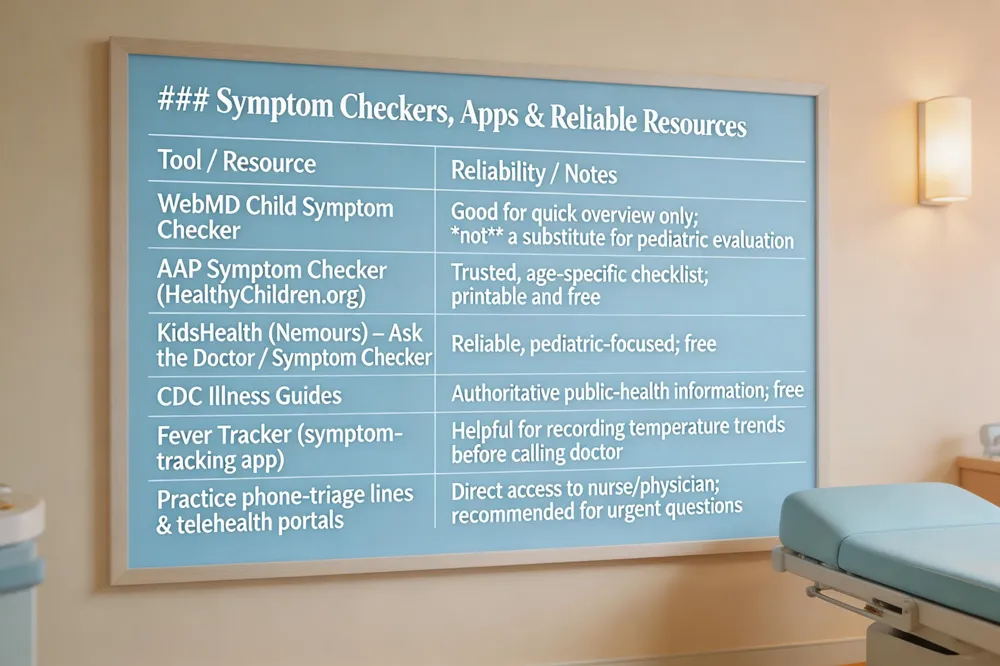 When a child feels off, many parents turn to online tools for quick guidance. Below are concise answers to the most common questions about pediatric symptom checkers and how to use them safely.
Is the WebMD child symptom checker reliable? WebMD’s checker can give a rapid overview of possible causes, but it is not a substitute for a pediatric evaluation. The disclaimer notes it provides no medical advice and relies on algorithms that may miss nuances of a child’s history or physical exam. Use it only as a starting point to decide whether to call your office; always discuss findings with your pediatrician or seek immediate care if the child appears ill.
What tools can I use for a toddler symptom check? Trusted options include the American Academy of Pediatrics’ Symptom Checker, KidsHealth’s “Ask the Doctor,” and the CDC’s Illness Guides. Nemours KidsHealth also offers a pediatric‑focused checker and detailed articles on fever, RSV, ear infections, and more. Many pediatric practices provide phone‑triage lines or telehealth portals where you can securely share symptoms and receive guidance from a nurse or doctor. A digital thermometer and a simple symptom‑tracking app (e.g., Fever Tracker) help record trends before you call.
Is there a pediatric symptom checklist I can use? Yes. The AAP provides a printable checklist on HealthyChildren.org that covers fever, breathing issues, feeding changes, skin findings, and behavior, organized by age group. Download, print, and keep it handy for well‑child visits or sick‑day assessments.
Are there free symptom checkers for kids? Absolutely. Free, reputable tools include the KidsHealth Symptom Checker (Nemours), the CDC’s Illness Guides, and the AAP’s Symptom Checker app. They help parents decide if a fever, cough, or rash warrants a doctor’s visit, but they are never a replacement for professional evaluation when a child is seriously ill or symptoms persist.
General Red Flags, Injuries, and How to Access Care in Decatur
General Red Flags, Injuries & Access to Care in Decatur, GA
| Red‑Flag Sign | Action |
|---|---|
| Fever ≥ 100.4 °F (38 °C) persisting > 2 days or spikes > 104 °F | Call pediatrician or urgent care |
| Persistent lethargy, extreme irritability, unusual sleepiness | Immediate medical evaluation |
| Repeated vomiting, watery diarrhea, < 3 wet diapers/24 h | Offer ORS; if no improvement, call pediatrician |
| New rash that spreads quickly, bruised/purpuric, painful, or with fever | Call pediatrician; consider emergency if associated with breathing difficulty |
| Respiratory distress (rapid breathing, wheezing, grunting, bluish lips) | Emergency department or urgent care immediately |
| Severe abdominal pain, ear pain, sudden decrease in urine output | Call pediatrician promptly |
| Minor injuries (cuts, bruises) without concerning signs | Home care; monitor for infection signs |
| Urgent‑care center: Kids & Teens Primary Healthcare – Decatur Children’s Urgent Care, 1234 West Ponce de Leon Ave, Decatur, GA 30030 (walk‑ins welcome, 7 days/week) | |
| Prenatal pediatric: Register early, complete prenatal form on practice website, schedule newborn’s first visit (often within first week) |
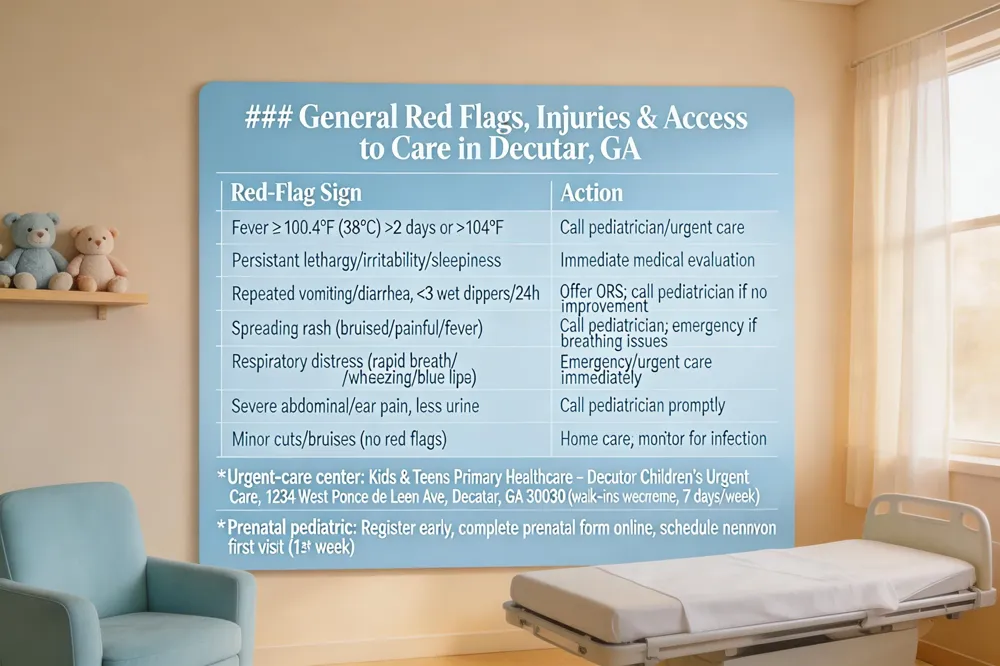 Knowing when a child needs professional help can be overwhelming, but a few key warning signs make the decision clear. Common signs and symptoms of an unwell child include a fever of 100.4°F (38°C) or higher—especially if it persists more than two days or spikes above 104°F—persistent lethargy, unusual sleepiness, or extreme irritability. Gastro‑intestinal red flags are repeated vomiting, watery diarrhea, or a loss of appetite that leads to dehydration (dry mouth, no tears, fewer wet diapers). Skin changes such as a new rash that spreads quickly, looks bruised or purpuric, or is painful to touch, plus respiratory distress (rapid breathing, wheezing, grunting, bluish lips) require prompt evaluation. Severe abdominal pain, ear pain, or a sudden decrease in urine output are also concerning. Is there a pediatric urgent‑care center in Decatur, GA? Yes. Kids & Teens Primary Healthcare partners with Decatur Children’s Urgent Care at 1234 West Ponce de Leon Ave, Decatur, GA 30030. Walk‑ins are welcome for minor illnesses, injuries, and urgent vaccinations, seven days a week. How do I set up a pediatrician for my baby before birth? Choose a practice early, complete the prenatal registration form on the office website, and schedule the newborn’s first visit (often within the first week). Provide insurance information and any prenatal records so the pediatrician can review the baby’s health history before arrival. When should I take my child to the doctor for a rash? Call the pediatrician if the rash spreads rapidly, is painful, looks bruised or purpuric, or is accompanied by fever, vomiting, or breathing difficulty. Even rashes that don’t improve after a few days—especially if itchy, blistering, or oozing—should be evaluated to rule out infection or allergic reaction.
Take Action with Confidence
Key takeaways: Fever of 100.4 °F (38 °C) or higher in infants under 3 months, fever lasting > 3 days, vomiting, diarrhea, signs of dehydration, difficulty breathing, severe rash, or a head injury with loss of consciousness all require pediatric evaluation. When to call: Immediately for labored breathing, blue lips, seizures, uncontrolled bleeding, or a fever ≥ 104 °F; within 24 hours for fever ≥ 100.4 °F in a baby ≤ 3 months, vomiting, dehydration signs, ear pain with fever, or a rash that spreads or bleeds. Next steps for parents: Keep a symptom log (temperature, urine output, feeding), have medication and allergy information ready, call the pediatric office or 911 for emergencies, and follow care instructions awaiting the appointment. Monitor for new symptoms like stiff neck, severe headache, or worsening pain, report them promptly.