Why Understanding Coughs Matters
A cough is the body’s built‑in protective reflex that clears mucus, irritants, and pathogens from the airway. In most children it follows a viral upper‑respiratory infection—common cold, flu, or RSV—producing a dry or wet cough that resolves in a week or two with supportive care. However, a cough can also be a warning sign of a deeper problem such as asthma, post‑nasal drip, bronchiolitis, croup, or pertussis when it persists the a week, worsens at night, or is accompanied by wheezing, fever, vomiting, or bluish lips. Parents should watch for red‑flag symptoms and seek prompt medical evaluation rather than relying on over‑the‑counter syrups, especially in children under six. Timely care—hydration, humidified air, honey for kids over one year, and a clear action plan for asthma or whooping cough—helps prevent complications and reassures families that their child’s health is the top priority.
Common Cough Types and When to Seek Care
 Kids cough for many reasons, but the type of cough and any accompanying signs guide you on when to act.
Dry vs. wet coughs – A dry, tickly cough often stems from viral irritation, allergies, or dry air; a wet (productive) cough usually means mucus is present, as in a cold or bronchiolitis.
Toddler has dry cough but no other symptoms – In an otherwise healthy toddler, a dry cough is usually mild viral irritation or post‑nasal drip. Keep the child hydrated, run a cool‑mist humidifier, and offer a spoonful of honey if over >1 year old. Avoid smoke and strong fragrances. If the cough lasts >1 week, worsens, or is joined by fever, wheezing, or breathing difficulty, schedule a pediatric visit to rule out cough‑variant asthma or infection. Home remedies that can help ease a child's cough include using a cool‑mist humidifier, ensuring adequate hydration, giving honey to children older than 1 year, and using saline nasal drops with gentle suctioning for younger children.
Croup and barky cough – Croup produces a seal‑like bark and may include stridor that worsens at night. Persistent barky cough or any stridor warrants same‑day evaluation, especially if the child struggles to breathe.
Pertussis (whooping cough) – A series of violent cough spells ending in a high‑pitched “whoop” is classic pertussis. Infants <6 months are at high risk; seek immediate care for any whooping sounds, vomiting after coughing, or bluish lips.
Toddler cough – when to worry – Be alarmed if the cough lasts >2 weeks, is accompanied by fever >104 °F, rapid labored breathing, wheezing, stridor, bluish skin, vomiting, or inability to eat/drink. Any cough in a child <3 months should prompt a call to the pediatrician. Red‑flag signs that warrant immediate medical evaluation include difficulty breathing, wheezing, fever lasting more than 3–4 days, cough lasting longer than 3 weeks, discolored lips or skin, vomiting after coughing, and chest pain.
When to worry about a wet cough in toddlers – A wet cough is usually viral, but urgent evaluation is needed if fever >101 °F, rapid breathing, chest retractions, yellow‑green mucus, or signs of dehydration appear. Persistent cough >1 week, coughing that disrupts sleep, or associated wheezing also merit prompt medical attention.
Red‑flag timing – Red‑flag signs—difficulty breathing, blue lips, high persistent fever, cough >3 weeks, vomiting, or chest pain—require immediate evaluation, either by urgent‑care or the emergency department. Early recognition protects children from serious complications and ensures timely treatment.
Managing Dry and Wet Coughs at Home
 A child’s cough is often just a protective reflex, but the right home care can make a big difference.
Hydration and humidification – Keep fluids flowing with water, dilute juice, or warm broth. A cool‑mist humidifier (or a steamy bathroom) thins mucus, eases breathing, and reduces nighttime coughing.
Honey safety and dosage – For kids ≥ 1 year, a half‑to‑one‑teaspoon of honey before bed can calm a dry throat. Never give honey to infants under 12 months because of botulism risk.
Saline nasal drops – A few drops of sterile saline followed by gentle suction (for infants) or a saline spray (for older children) clears post‑nasal drip that often fuels a dry cough.
When to call the pediatrician – Red‑flag signs include fever > 3 days, cough > 3 weeks, difficulty breathing, wheezing, stridor, vomiting after coughing, bluish lips, or chest pain.
Toddler wet cough, fever – Likely a viral cold or post‑nasal drip. Hydrate, use a humidifier, and elevate the head of the bed. Watch for worsening breathing, new fever, or a barky cough; call the pediatrician if these appear.
Child persistent dry cough, no fever – Often lingering viral irritation, allergies, or mild asthma. Offer honey (≥ 1 yr), keep air moist, and use saline spray. Seek medical advice if the cough lasts > 1 week, worsens at night, causes vomiting, or is accompanied by wheezing or chest pain.
Toddler wet cough and fever – Could be bronchiolitis, pneumonia, or a bacterial infection. Maintain hydration, use a humidifier, and give age‑appropriate fever reducers. Promptly contact the pediatrician if breathing becomes labored, fever exceeds 102 °F, or the cough does not improve after 3 days.
Nighttime Cough: Causes and Relief Strategies
 Most nighttime coughs in children are driven by post‑nasal drip, mild reflux, or lingering throat irritation after a viral cold. Keeping the airway moist with a cool‑mist humidifier or steam from a warm shower helps thin secretions and reduces the urge to cough. Elevating the head of the bed a few inches—using an extra pillow for toddlers or a wedge for infants—promotes drainage and lessens coughing from drip. For children over one year, a teaspoon of honey (or a frozen popsicle) can coat the throat and soothe irritation; honey must never be given to infants under 12 months because of botulism risk.
Toddler coughing at night remedies – Offer plenty of fluids throughout the day, use a humidifier, and give honey before bedtime if age‑appropriate. Saline nasal drops with gentle suction can clear congestion. Contact a pediatrician if the cough lasts >2 weeks, is linked with fever, wheezing, or breathing difficulty.
How to stop a constant cough in child at night – Keep bedroom air moist, elevate the head, give a warm honey-sweetened drink, and use saline spray or salt‑water gargle. Avoid OTC cough suppressants under age six. Seek medical care if fever, vomiting, or worsening cough develop.
1‑year‑old wet cough no fever – Likely a mild viral infection. Provide hydration, a humidifier, gentle nasal suction, and honey if >12 months. Watch for rapid breathing, wheezing, fever >100.4 °F, or cough >1 week; call the pediatrician if any appear.
Child can’t stop coughing every few seconds – Often normal mucus clearance. Keep hydrated, use humidified air, and offer honey (if >1 year). Avoid suppressants. Call the doctor promptly for difficulty breathing, wheezing, chest retractions, blood in sputum, or new fever, as these may signal asthma, bacterial bronchitis, or croup.
Persistent Cough Without Other Symptoms
 A child who coughs night after night but shows no fever, runny nose or other illness is often dealing with post‑viral irritation. The airway remains inflamed for weeks after a cold, and simple measures—humidified air, staying upright after meals, and a teaspoon of honey for kids over one year—can provide relief. If the cough worsens at night, acid reflux or allergic post‑nasal drip may be the culprit; elevating the head of the bed and using saline nasal drops can help.
When a dry cough persists beyond three weeks, cough‑variant asthma should be considered. Children may have a cough as the only manifestation of asthma, especially if wheezing or chest tightness appears. A short trial of an inhaled bronchodilator or low‑dose inhaled steroid often clarifies the diagnosis.
Protracted bacterial bronchitis is another possibility when a productive cough lingers for weeks without systemic signs. A pediatrician may order a chest X‑ray, sputum culture, or lung‑function testing to rule out infection and decide if a brief course of antibiotics is needed.
In summary, seek a medical evaluation if the cough lasts more than three weeks, is nightly, or is accompanied by any sign of breathing difficulty. Early testing and targeted treatment prevent complications and get your child back to feeling well.
Red Flags and Emergency Situations
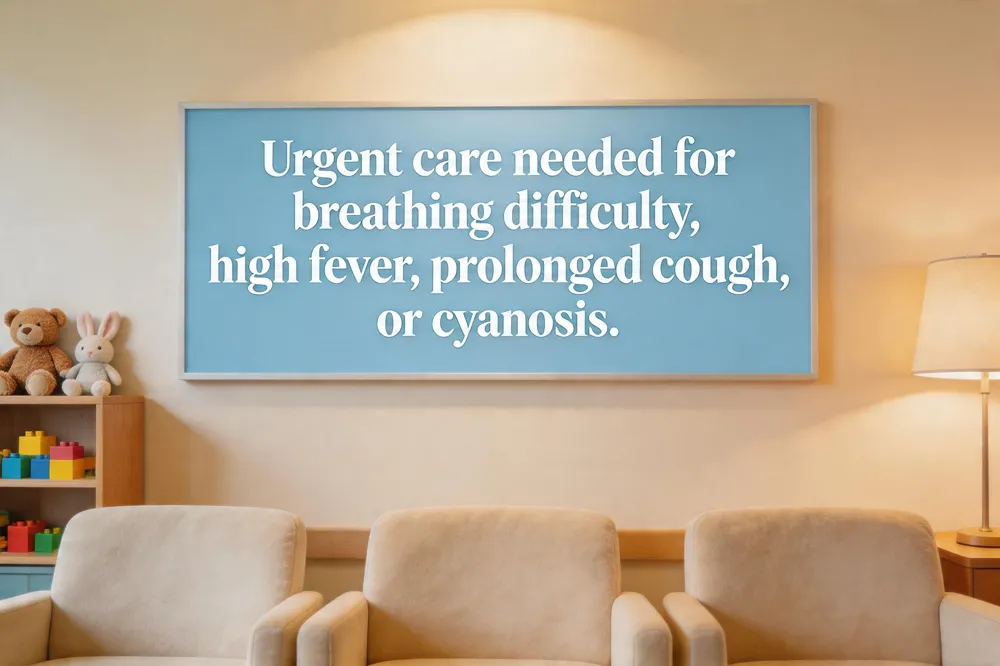
When is my child's cough an emergency?
If a child is choking, vomiting repeatedly, cannot swallow, or is struggling to breathe, call 911 or head straight to the nearest emergency department. Other urgent signs include sudden shortness of breath, severe chest pain, coughing up blood or pink‑tinged mucus, fainting, or a loss of consciousness. Even a high‑fever (≥104 °F/40 °C) that does not improve with medication warrants immediate evaluation. When none of these life‑threatening features are present but the cough persists, arrange a same‑day appointment with your pediatrician rather than an ER visit.
What are red flags in a child's cough?
Red‑flag clues that merit prompt medical attention are:
- Cough lasting longer than two weeks, especially if it changes in character or worsens.
- Rapid, labored, noisy breathing, wheezing, chest retractions, or stridor.
- Fever >104 °F (40 °C) or any fever that continues beyond three days.
- Persistent vomiting, exhaustion after coughing fits, or an inability to eat, drink, or sleep.
- Bluish lips, fingertips, or skin (cyanosis).
- Any cough in an infant under three months.
What causes severe coughing in kids?
Severe coughing often stems from acute viral or bacterial respiratory infections, but chronic or especially intense coughing can signal:
- Pertussis (whooping cough) – caused by Bordetella pertussis, producing violent fits and a characteristic “whoop”.
- Cough‑variant asthma – a dry, persistent cough that may worsen at night or with exercise.
- Post‑nasal drip from allergies or sinusitis, leading to irritation of the throat.
- Protracted bacterial bronchitis – bacterial colonization of the airways that generates excess mucus.
- Environmental irritants such as second‑hand smoke, or underlying diseases like cystic fibrosis, tuberculosis, or structural airway abnormalities. Identifying the exact cause through a thorough exam, and when needed, sputum cultures or lung‑function testing, guides effective treatment and prevents complications.
Allergy, Reflux, and Cough Variants
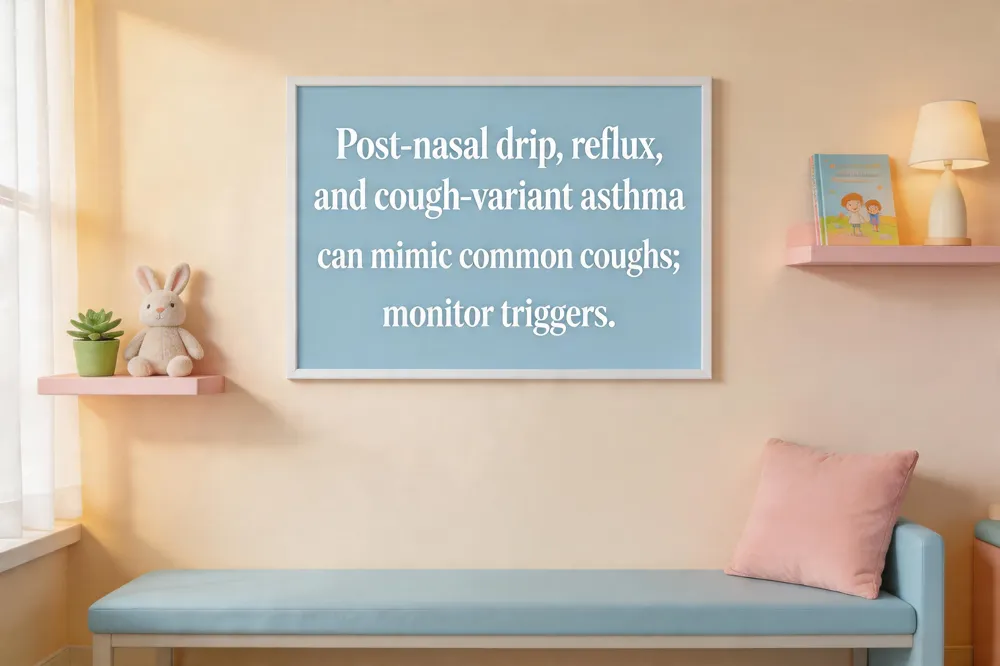 Post‑nasal drip(Post‑nasal drip) from allergies or a lingering viral infection often irritates a child’s throat when they lie flat, producing a dry, gag‑inducing cough at night. Gastro‑esophageal reflux can mimic this pattern; stomach acid rises while the child is horizontal, triggering a cough‑gag reflex. Asthma may also present as a cough‑variant, especially when wheezing is subtle and symptoms worsen after exercise or in cold air.
Toddler coughing and gagging at night – The most common culprits are post‑nasal drip(Post‑nasal drip and reflux, but croup’s barky cough can also cause nighttime gagging. Home measures that help include elevating the mattress head, using a cool‑mist humidifier(cool‑mist humidifier, and offering warm fluids before bedtime. If the cough lasts > 3 weeks, or if wheezing, fever, or breathing difficulty appears, schedule a pediatric evaluation to rule out asthma, reflux, or other serious issues.
How to stop a constant cough at home – Keep the child well‑hydrated with warm water, broth, or caffeine‑free tea; honey(honey (½‑1 tsp) is safe for kids > 1 year and soothes the throat. Use saline nasal drops(saline nasal drops and gentle suction to clear post‑nasal drip(Post‑nasal drip, run a humidifier, and elevate the head of the bed with an extra pillow for children > 2 years. Rest is essential. Contact a pediatrician if the cough persists beyond a couple of weeks, is accompanied by fever, or shows any red‑flag signs(red‑flag signs.
Prevention and Care Coordination
 Vaccination is the cornerstone of cough prevention in children. The annual flu shot and the DTaP series (including the Tdap booster for adolescents) dramatically reduce the risk of influenza, whooping cough, and their complications. For infants at high risk for severe RSV disease, a monthly dose of palivizumab (Synagis) during RSV season can be lifesaving. Simple infection‑control habits further protect families: regular hand‑washing with soap for at least 20 seconds, using alcohol‑based hand sanitizers when water isn’t available, and cleaning toys and high‑touch surfaces daily help limit spread of respiratory viruses. During peak cold‑and‑flu months (late fall through early spring), keep children away from crowded indoor settings, ensure adequate ventilation, and consider postponing non‑essential outings if community illness rates are high. Pediatric clinics often offer same‑day appointments for worsening coughs, rapid testing for flu, RSV, and COVID‑19, and coordinated care with allergy, pulmonology, or infectious‑disease specialists when needed. Parents should keep an eye on local clinic resources, such as walk‑in urgent‑care locations and telehealth services, to obtain prompt evaluation of red‑flag symptoms and to receive guidance on supportive home care measures.
Key Takeaways for Parents
Monitor cough duration and characteristics – note whether the cough is dry, wet, bark‑like, or whooping, and how long it has lasted. A cough that persists beyond 7‑10 days, especially if it becomes productive or worsens at night, deserves a call to the pediatrician. Know the red‑flag signs – rapid or labored breathing, wheezing, stridor, bluish lips or skin, fever lasting more than three days, vomiting after coughing, chest pain, or a cough that continues for over three weeks. These symptoms can signal asthma, bronchiolitis, pertussis, pneumonia, or other serious illnesses and require prompt medical evaluation. Use safe home‑care measures – keep the child well‑hydrated, use a cool‑mist humidifier, offer honey (only for kids older than one year), and apply saline nasal drops with gentle suction for infants. Avoid over‑the‑counter cough medicines in children under six years, as they provide little benefit and may cause side effects. Seek timely medical evaluation – if any red‑flag signs appear or the cough does not improve with supportive care, contact your pediatric provider or go to urgent care without delay.