Understanding When a Cough Signals Trouble
Children’s coughs fall into a few recognizable patterns. A dry, tickly cough often follows a viral cold or allergies, while a wet, phlegmy cough points to mucus in the lower airways and may signal bronchitis or pneumonia. A bark‑like cough suggests croup, and a “whoop” after a coughing spell is classic for pertussis (whooping cough). Most viral coughs improve within 7‑10 days; a wet cough that lasts longer than two weeks, or any cough persisting beyond four weeks, should raise concern. Parents should monitor for red‑flag signs such as rapid or labored breathing, chest retractions, wheezing, bluish lips, high fever (≥ 104 °F), vomiting after coughing, or dehydration. Any cough in an infant younger than three months, or a sudden change in cough character, warrants immediate medical evaluation. When in doubt, calling the pediatrician early can prevent complications and keep kids and teens breathing easy.
Red‑Flag Signs and When to Seek Emergency Care
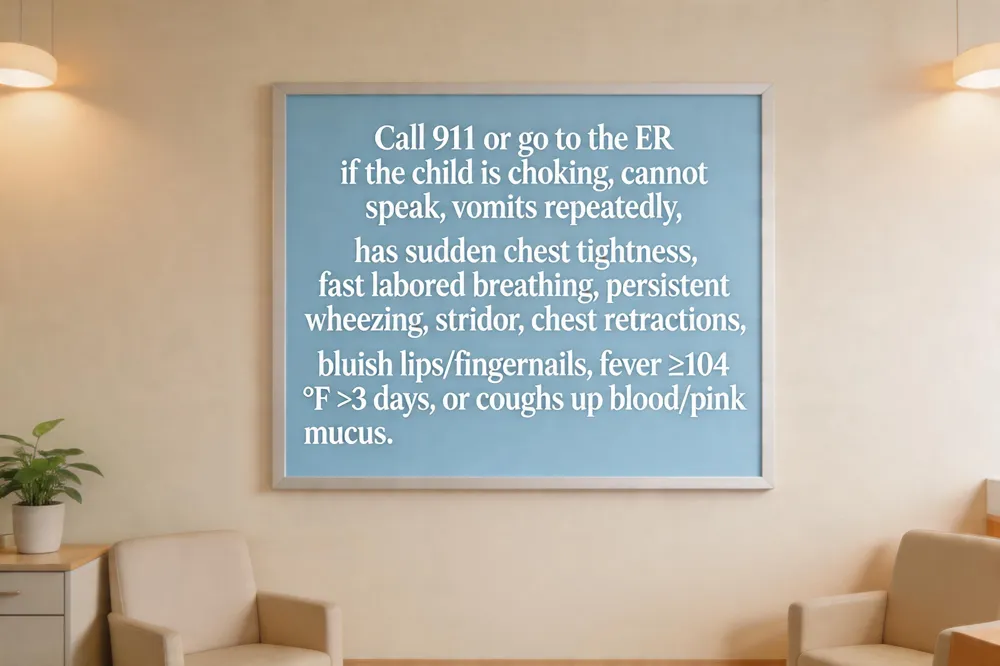 A cough becomes an emergency when the child shows any sign of respiratory distress or life‑threatening symptoms. Call 911 or go straight to the emergency department if the child is choking, cannot speak, is vomiting repeatedly, or has sudden chest tightness. Fast, labored breathing, wheezing that does not improve, stridor, or chest retractions are red‑flag signs, as are bluish lips or fingernails, a fever of ≥ 104 °F (40 °C) lasting more than three days, or coughing up blood or pink‑tinged mucus. Other warning clues include coughing fits that cause vomiting, extreme fatigue, poor feeding, or clear dehydration (dry mouth, few wet diapers). If any of these appear, do not wait for a routine appointment—seek immediate medical evaluation. For less urgent but still concerning findings, such as a cough lasting more than two to three weeks, worsening after brief improvement, or persistent nighttime coughing, contact your pediatrician promptly.
Coughs in Infants and Young Babies
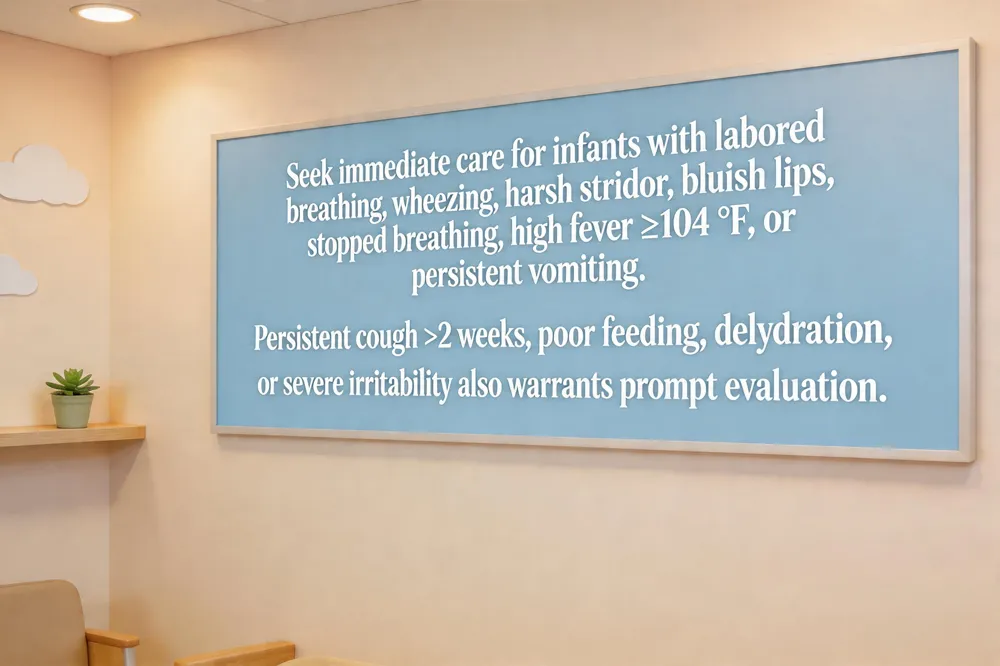 Most infant coughs are caused by a simple viral cold and clear up on their own in about ten days. However, any sign of distress should prompt a call to the pediatrician. If the baby shows trouble breathing, rapid or labored breaths, wheezing, or a harsh stridor on inhalation, seek medical advice right away. Emergency care (911) is required if the lips or face turn bluish, the baby stops breathing, or the cough is accompanied by a high fever (≥104 °F/40 °C) or persistent vomiting. A cough lasting longer than two weeks, worsening over time, or linked with poor feeding, dehydration, or severe irritability also warrants prompt evaluation. For mild, non‑worrisome coughs, keep the infant well‑hydrated, use a cool‑mist humidifier, and monitor for any changes. Nighttime coughs without other symptoms often stem from post‑viral irritation, reflux, allergies, or asthma. If the cough persists >3 weeks, disrupts sleep, or is accompanied by wheezing, chest tightness, or breathing difficulty, schedule a pediatric appointment. Simple home measures—elevating the head of the bed, using a humidifier, and avoiding known allergies—can help while awaiting professional guidance.
Persistent Cough Without Other Symptoms
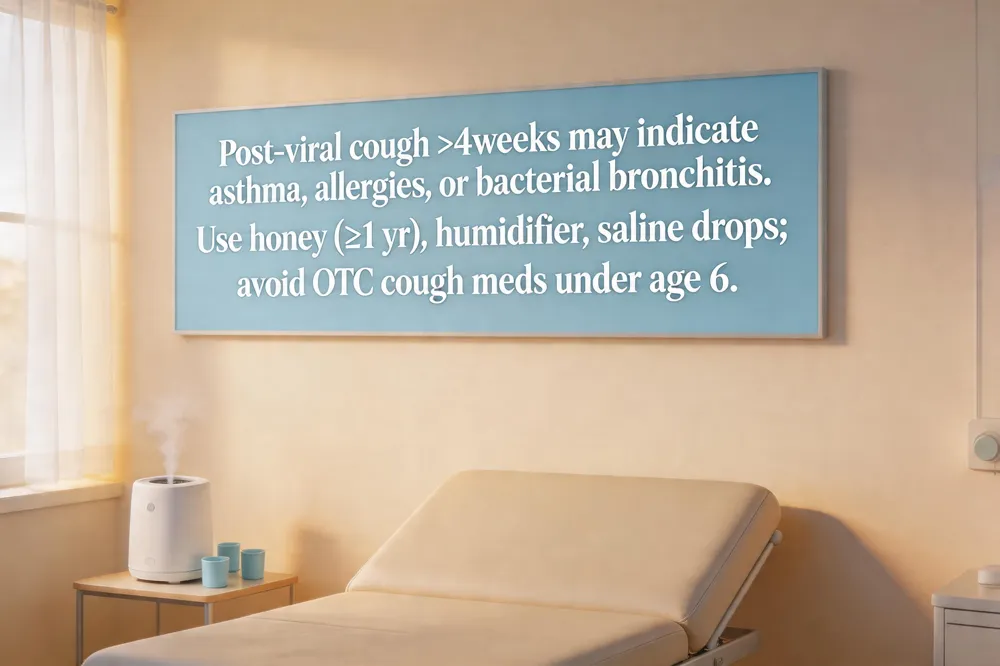 After a cold, a cough that lingers a week or two is often post‑viral irritation or post‑nasal drip. It’s harmless, but if it lasts >4 weeks it may signal asthma, allergies, or lingering bacterial bronchitis. Keep the throat soothed with a teaspoon of honey (≥1 yr), use a cool‑mist humidifier, and clear nasal passages with saline drops or a bulb syringe. OTC cough medicines are not advised for kids under six.
1‑year‑old wet cough, fever – Most likely a mild viral cold or post‑nasal drip. Hydrate with water, breast‑milk, formula, or diluted juice; offer warm apple juice or honey‑sweetened tea (≥12 mo). Use a humidifier or steamy shower at bedtime. Watch for increased effort, wheezing, fever, or a cough >1 week; call the pediatrician if any appear.
Wet cough, no other symptoms – Viral or allergy‑related. Keep hydrated, use a humidifier, and elevate head of bed. If cough persists >1 week, thickens, or is accompanied by breathing trouble, seek evaluation.
When a Cough Becomes Chronic
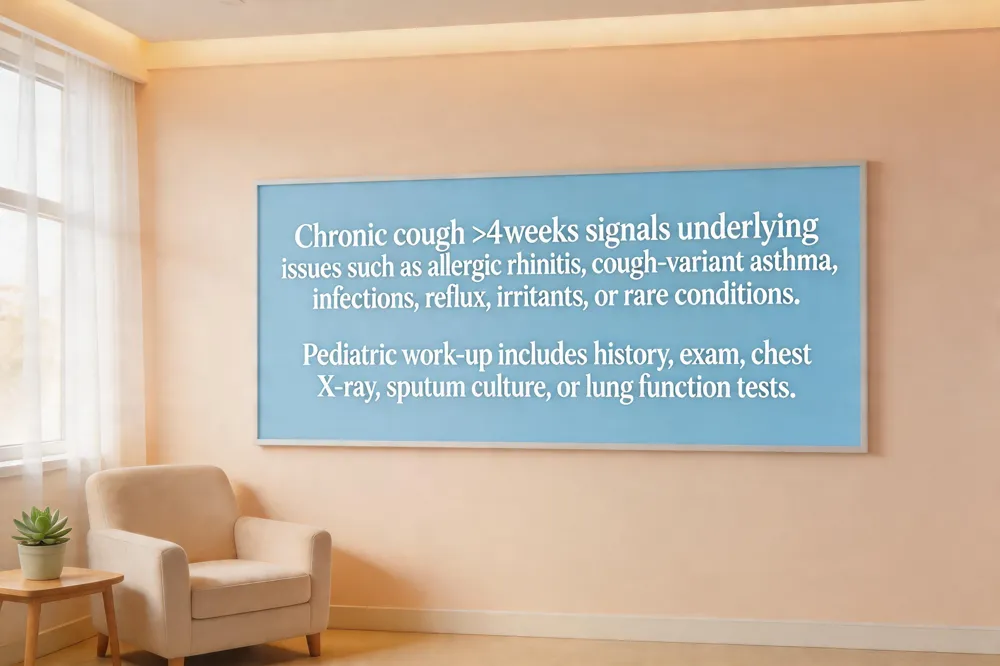 A chronic cough in children is defined as a cough that persists for more than four weeks. It is not just a lingering cold; it signals an underlying problem that needs a pediatric work‑up. The most common culprits include allergic rhinitis or post‑nasal drip, cough‑variant asthma, lingering viral or bacterial infections such as pertussis or pro‑bacterial bronchitis, chronic sinusitis, gastro‑esophageal reflux, exposure to irritants like second‑hand smoke, and, in rarer cases, foreign‑body aspiration or cystic fibrosis.
When a child has been coughing for months, the pediatrician will take a detailed history, perform a thorough physical exam, listen to lung sounds, and may order a chest X‑ray, sputum culture, or pulmonary function tests to pinpoint the cause. Treatment follows the diagnosis: inhaled steroids for asthma, antibiotics for bacterial infection, antihistamines for allergies, or environmental changes to reduce irritants.
A toddler with a wet cough but no fever is usually dealing with a viral upper‑respiratory infection or post‑nasal drip. Keep the child hydrated, use a cool‑mist humidifier, and offer honey if over than one year old. Watch for red‑flag signs—cough lasting >1 week, worsening breathing, wheezing, colored mucus, irritability, poor feeding, or sleep disruption. If any appear, or if the cough interferes with daily life, call the pediatric office promptly.
Coughs in Toddlers: What to Watch For
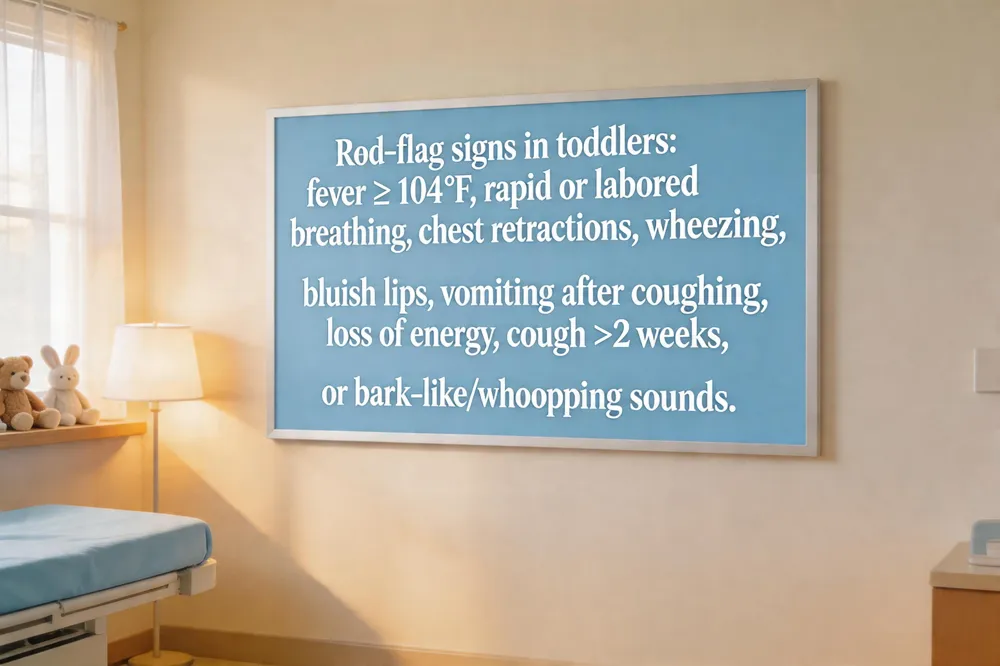 Most coughs in 1‑3‑year‑olds are viral and harmless, but some clues need care.
When to worry about cough – A productive cough is normal with a cold, yet fever ≥ 104 °F, rapid or labored breathing, chest retractions, wheezing, bluish lips, vomiting after a spell, or loss of energy suggest infection or pneumonia. Cough in infants < 6 months requires evaluation.
Toddler cough when to worry – Cough >2 weeks, fever > 3 days, difficulty breathing, wheezing, or a bark‑like or whooping sound (croup or pertussis) warrants a call. Even a cough in a baby < 3 months is a red flag.
Dry cough without other symptoms – Irritation or allergies. Keep child hydrated, use cool‑mist humidifier, and avoid smoke. Seek care if it lasts > 10‑14 days, develops fever or wheezing, or a “whoop”(https://childrensdayton.org/resources/when-to-be-concerned/cough-in-kids/).
Nighttime cough remedies – Offer warm fluids, [honey for children ≥ 1 year, humidify bedroom, use saline drops, and elevate head. Contact pediatrician if it continues for weeks or includes fever, wheezing, breathing trouble.
Managing Dry and Intermittent Coughs
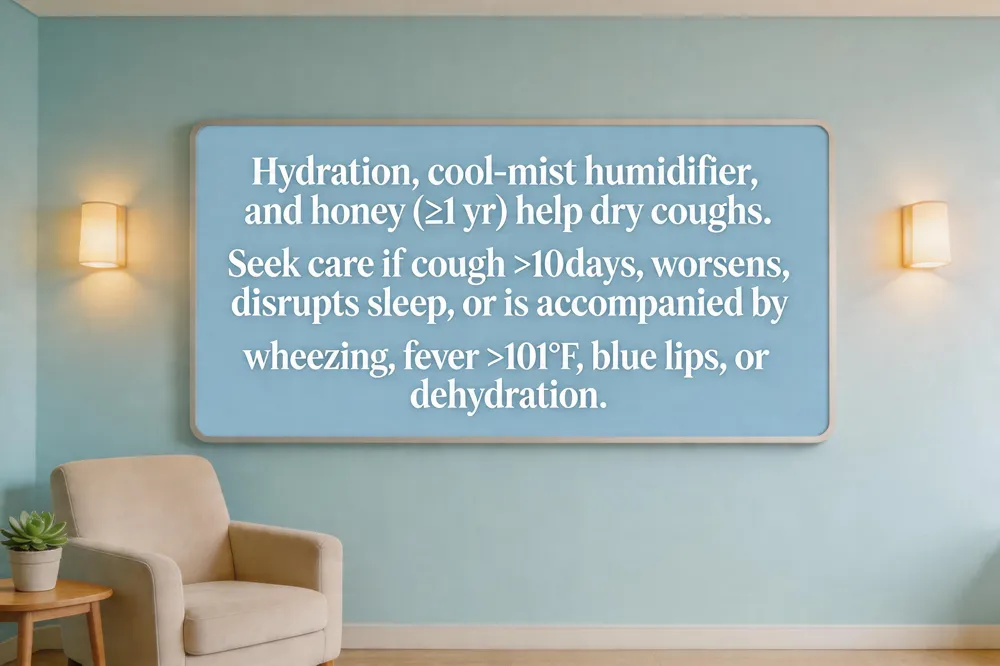 Dry coughs in children stem from lingering viral irritation, post‑nasal drip, allergies, or mild asthma. Cough may appear as bursts every few seconds. Care—fluids, a humidifier, and for kids over 1 yr a teaspoon of honey in warm water—helps keep the throat moist. Avoid OTC cough medicines in children under 6 years unless prescribed.
When to seek care: if the cough lasts >10 days, worsens, disrupts sleep, or is accompanied by wheezing, breathing, chest pain, fever >101 °F, blue lips, or dehydration. Sudden choking or inability to feed requires emergency services.
Q: Child persistent dry cough no fever – Usually viral, post‑nasal drip, allergies, or mild asthma. Use hydration, humidifier, honey (≥1 yr). If >10 days, worsening, or red‑flag signs appear, see a pediatrician.
Q: Child can’t stop coughing every few seconds – Often a normal viral cold clearing mucus. Keep hydrated, honey for >1 yr, and watch for wheezing or fever. If it persists >2 weeks or signs develop, schedule a doctor visit.
Nighttime Cough and Severe Episodes
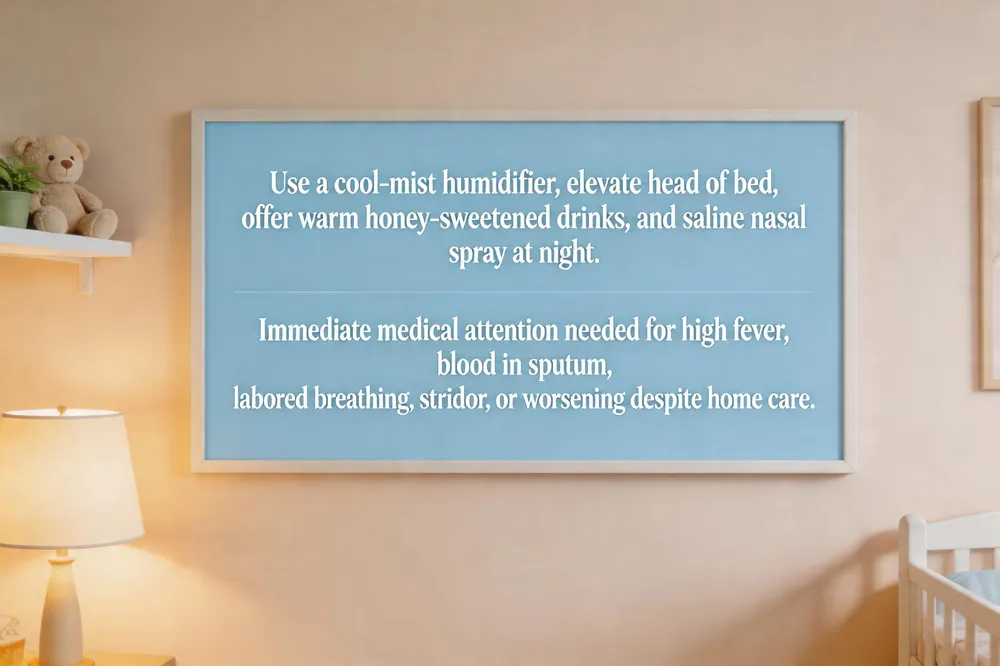 Nighttime coughing can disrupt sleep and worsen a child’s comfort, but simple home measures often bring relief. To stop a constant cough at night, keep the bedroom air moist with a cool‑mist humidifier, which thins post‑nasal drip and eases throat irritation. Offer a warm, soothing drink before bed—such as warm water, milk, or decaffeinated tea with a teaspoon of honey for children over 1 year—to loosen mucus. Use a saline nasal spray or gentle salt‑water gargle to clear congestion that triggers coughing while lying down, and elevate the head of the mattress a few inches to promote drainage. Ensure the child stays well‑hydration throughout the day and avoid over‑the‑counter cough suppressants for kids under 6 years, as they are generally ineffective and may cause side effects.
When a child has a severe cough, prioritize hydration with cool fluids (water, ice‑pop, smoothies) and, for those over 1 year, warm apple juice, milk, or tea with honey. Run a cool‑mist humidifier or create steam in a bathroom to moisten airways, encourage rest, and keep the child calm. Avoid cough medicines unless prescribed, and watch for red‑flag signs—persistent high fever, blood in sputum, rapid or labored breathing, stridor, or worsening despite home care. If any of these appear, call pediatrician or seek emergency care promptly.
Prevention and General Guidance
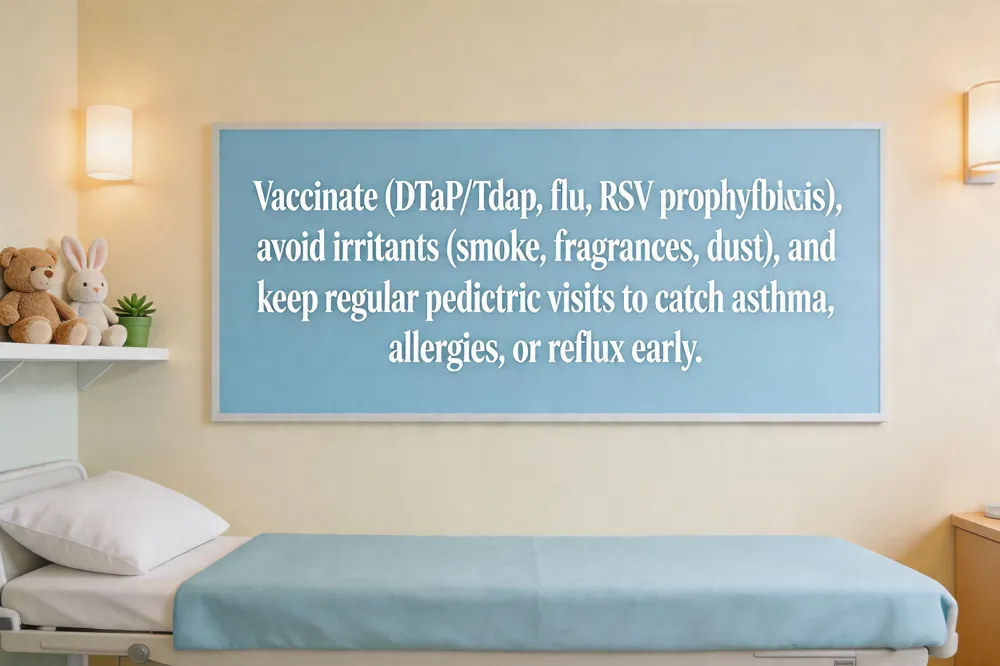 Keeping a child’s cough from becoming a serious problem starts with three easy pillars.
Vaccinations – The DTaP/Tdap series protects against pertussis (whooping cough), while annual flu shots and RSV prophylaxis (Synagis) for high‑risk infants cut the risk of the most common viral triggers.
Avoiding irritants – Second‑hand smoke, strong fragrances, dust‑mite‑laden carpets, and wildfire smoke can inflame the airway and turn a mild cough into a wheezy, night‑time nightmare. Keep indoor air clean, use HEPA filters, and enforce a smoke‑free home.
Routine pediatric care – Regular well‑child visits catch asthma, allergies, or reflux early, and a personalized asthma action plan can stop a cough before it wakes the whole family. Parents should never ignore red‑flag signs—persistent fever, labored breathing, blue lips, or cough that lasts > 2 weeks—and seek prompt medical evaluation.
By vaccinating, minimizing irritants, and staying on top of pediatric check‑ups, families give their kids the best defense against coughs that could otherwise spiral into emergencies.
Key Takeaways for Parents
Parents should keep an eye on how long a cough lasts and how it behaves. A cough that persists longer than two weeks in a child, or more than three weeks in a teen, or that changes from dry to wet, becomes louder at night, or is accompanied by fever, wheezing, or chest pain, signals that a medical check‑up is needed. Red‑flag signs that demand immediate evaluation include rapid or labored breathing, chest retractions, bluish lips or fingertips, high fever (≥ 104 °F), vomiting after coughing fits, dehydration (few wet diapers, dry mouth), or any cough in an infant younger than three months. For mild coughs, supportive care at home is safe: keep the child well‑hydrated, use a cool‑mist humidifier, offer warm liquids, and give a teaspoon of honey for children over one year old. Avoid over‑the‑counter cough medicines in kids under four years unless a doctor prescribes them. If any warning sign appears, call your pediatrician promptly or seek emergency care.