Understanding Pediatric Urgent Care
What is Pediatric Urgent Care?
Pediatric urgent care is designed to fill the gap between your child’s regular pediatrician and the hospital emergency room (ER). It is the right place to go for medical attention that is needed now but is not a life-threatening emergency. Think of it as a convenient, child-focused option for illnesses and injuries that strike after hours, on weekends, or during holidays when your primary care doctor’s office is closed.
Why Choose Pediatric-Specific Care?
One of the most important reasons to choose a pediatric urgent care center is that the doctors and nurses are specially trained to care for children. From infants to young adults, often up to age 21 or 26, these professionals understand how a child’s body works differently from an adult’s. They are skilled at diagnosing common childhood conditions and are experienced in making the visit less scary for kids. The equipment used, from smaller blood pressure cuffs to child-sized needles, is designed specifically for younger patients.
The Key Benefit: After-Hours Access
Perhaps the greatest benefit of pediatric urgent care is its availability. When your child spikes a fever at 8 PM on a Saturday, or twists an ankle during a Sunday afternoon soccer game, your pediatrician’s office is likely closed. Pediatric urgent care centers are open precisely for these moments, offering walk-in care seven days a week, including evenings and holidays. This access provides peace of mind, knowing that expert pediatric care is available when you need it most.
Cost Advantage Over the Emergency Room
Choosing pediatric urgent care over an ER visit can also be a smart financial decision. For non-life-threatening conditions, an urgent care visit is generally much less expensive. For families paying without insurance, the cost of a visit typically ranges from $100 to $175. For those with insurance, copays are often lower than an ER copay, making it a more affordable option without sacrificing the quality of care.
Common Conditions Treated at Pediatric Urgent Care
Pediatric urgent care is equipped to handle a wide range of common illnesses and minor injuries. Here are some of the most frequent reasons parents bring their children in:
| Condition | Examples | What to Expect at an Urgent Care Visit |
|---|---|---|
| Fevers & Colds | Fever (over 2 months old), flu symptoms, cough, congestion | Check temperature, assess breathing, test for flu or RSV if needed |
| Ear, Nose & Throat | Ear infections (child tugging at ear), sore throat, strep throat | Use an otoscope to check ears; perform a rapid strep test |
| Minor Injuries | Cuts needing stitches, minor burns, sprains, possible fractures | Clean and bandage wounds; take X-rays to check for breaks; apply splints |
| Stomach Issues | Vomiting or diarrhea (no blood), mild dehydration | Evaluate hydration; may provide oral rehydration or IV fluids |
| Allergies & Skin | Mild allergic reactions (no breathing trouble), hives, eczema, rashes | Assess symptoms, prescribe antihistamines or topical treatments |
| Breathing Issues | Mild wheezing, asthma flare-up without severe breathing trouble | Provide breathing treatments (nebulizer) and monitor oxygen levels |
| Head Injuries | Minor head bump without loss of consciousness in older children | Check pupil response, monitor for concussion symptoms |
| Eye Infections | Pink eye (red, inflamed eyes) | Examine eye, prescribe antibiotic drops |
When to Call Your Pediatrician First
If you are ever unsure about where to take your child, do not hesitate to call your pediatrician’s office. Even after hours, most practices have a doctor on call who can provide guidance over the phone. A quick call can help you decide if your child needs to go to urgent care, the ER, or if a home care plan is sufficient. This step is especially helpful for managing less urgent concerns like a low-grade fever, mild cough, or minor rash that is not getting worse.
Choosing Pediatric Urgent Care for Peace of Mind
Pediatric urgent care is built around the needs of children and their families. It offers a faster, more comfortable, and more affordable alternative to the ER for non-critical situations. By understanding what these centers treat and when to use them, you can make informed decisions that ensure your child gets the right care at the right time.
What 'Urgent' Really Means for Your Child
What Does 'Urgent' Actually Mean for a Child's Health? Is It the Same as a True Emergency?
When your child is sick or injured, understanding the difference between an urgent condition and a true emergency is essential to getting them the right care quickly. An urgent medical issue is one that needs prompt attention within hours, not days, but is not immediately life-threatening. Examples include a moderate fever, an ear infection where your child is tugging at their ear, a sprained ankle from a fall, or persistent vomiting without blood. These conditions require medical evaluation and treatment, but they do not put your child's life or limb in immediate danger.
A true emergency, on the other hand, involves an immediate threat to your child's life or long-term health. These situations require you to call 911 or go directly to the nearest emergency department (ER). Examples include trouble breathing, severe bleeding that won't stop, a head injury with loss of consciousness, or suspected poisoning or ingestion of a button battery. Recognizing this distinction helps you make a quick, confident decision and avoid unnecessary trips to the ER, which can be crowded and expensive, while ensuring your child receives the right level of care for their needs.
How Can You Tell If It's Urgent or an Emergency?
To help you decide, here is a clear comparison of common childhood conditions and whether they are typically treated at an urgent care center or the emergency room.
| Condition | Urgent Care (Treatable Here) | Emergency Room (Needed Here) |
|---|---|---|
| Fever | Fever >100.4°F in a child over 3 months | Any fever in an infant under 2-3 months |
| Breathing | Mild wheezing without trouble breathing, mild asthma flare-up | Trouble breathing, heavy/fast breathing, gasping, bluish lips or face |
| Injuries | Minor cuts needing stitches, possible sprain or minor fracture (bone not protruding), minor burns | Deep/gaping cuts, severe burns, bone protruding from skin, head injury with loss of consciousness |
| Digestive Issues | Vomiting or diarrhea without blood, mild dehydration signs | Signs of severe dehydration (no urination for >12 hours, extreme lethargy), vomiting/diarrhea with blood |
| Allergic Reactions | Mild allergic reaction without breathing difficulty | Allergic reaction with trouble breathing, swelling of the tongue or throat |
| Seizures | Seizure with fever that stops on its own | Seizure that won't stop, seizure after a head injury |
| Ingestions | Object stuck in nose or ear, swallowed small object (excluding button battery) with no trouble breathing | Suspected poisoning or overdose, swallowed button battery |
What Age Range Does a Pediatric Urgent Care Typically Serve?
Pediatric urgent care centers are specifically designed for children and teens. Most treat patients from birth through age 18, but many extend their care to young adults up to age 21, and some even see patients up to age 26, especially for managing ongoing health issues. This focus means the doctors, nurses, and staff are specially trained in pediatric care and used to diagnosing and treating conditions unique to children. They also have child-sized equipment like smaller blood pressure cuffs and needles, which makes the experience less scary and more comfortable for your child.
Choosing a pediatric-specific urgent care center is always recommended over a general urgent care that treats patients of all ages. A general urgent care may lack the specialized training and equipment needed to best treat a child's developing body and mind. For routine care like checkups and vaccines, you should always see your child's primary care pediatrician. For urgent but not life-threatening issues when their office is closed, a pediatric urgent care center provides expert, kid-focused attention that a general clinic cannot match.
What Should You Do If You're Still Unsure?
If you are ever uncertain about whether your child's condition is urgent or an emergency, your pediatrician's office is your best resource. Many pediatric practices have a 24/7 nurse advice line or an on-call doctor who can answer your questions, even late at night or on weekends. A quick call can provide immediate guidance, help you decide the best place for care, and prevent a potentially unnecessary (or delayed) visit. Urgent care is for issues that cannot wait for a routine appointment but are not emergencies. With an urgent condition, you have a window of time to seek care, but you should act promptly rather than waiting until a routine appointment becomes available. Trust your instincts—if something feels seriously wrong, seek emergency care immediately.
Common Childhood Conditions Treated at Urgent Care: Know What to Expect

What are the common childhood conditions treated at urgent care centers?
Pediatric urgent care centers are expertly designed to handle a wide array of non-life-threatening illnesses and injuries that often occur during evenings, weekends, or holidays when your pediatrician’s office is closed. The staff is specially trained in pediatric care, ensuring your child receives age-appropriate treatment. Conditions commonly treated include:
- Injuries: Minor cuts that may require stitches, sprains, and minor fractures where the bone is not protruding through the skin. For burns, only minor ones are appropriate.
- Infections: Earaches (often indicated by a child tugging at their ear), sore throats with or without white patches on the tonsils (often requiring a strep test), pink eye (conjunctivitis), and respiratory infections.
- Illnesses: Fevers in children over 2–3 months old, especially when accompanied by cold or flu symptoms. Vomiting or diarrhea without blood in the stool, and mild asthma flare-ups or wheezing without trouble breathing are also treatable.
- Other conditions: Mild allergic reactions (as long as there is no breathing difficulty), head injuries without loss of consciousness, mild skin rashes, and headaches or migraines without numbness, tingling, or weakness.
For specific guidance, if you are ever unsure, calling your pediatrician’s after-hours line can help you decide if an urgent care visit is the right step.
What on-site diagnostics are available for same-visit diagnosis?
A major advantage of pediatric urgent care is the ability to perform many diagnostic tests on-site, allowing for a diagnosis and treatment plan during the same visit. This can be far more efficient than a trip to an emergency room for a non-emergency. Common services include:
- X-rays: For evaluating potential fractures or sprains. Many pediatric-focused urgent care centers use equipment designed to deliver up to 50% less radiation than some adult facilities, a significant benefit for growing children.
- Lab Tests: Rapid tests for strep throat, influenza (flu), COVID-19, and urinalysis (for urinary tract infections) are frequently available, with results often ready before you leave.
- Other Services: Some centers also provide EKG testing, IV fluids for dehydration, and breathing treatments for asthma or wheezing.
What are some example scenarios where urgent care is the right choice?
Consider these common situations:
- Fever with cold symptoms: A child develops a fever and a persistent cough or body aches during the weekend. While not an emergency, the child is uncomfortable. An urgent care can check for flu or other viruses, provide guidance on fever management, and rule out more serious infections.
- Ear infection: Your toddler wakes up crying and pulling at their ear. The pediatrician’s office is closed. At urgent care, a clinician can examine the ear, diagnose an infection, and if necessary, prescribe an antibiotic.
- Minor sprain from sports: After a soccer game, your child has a swollen ankle and can’t put full weight on it, but it doesn't look deformed. Urgent care can take an X-ray to rule out a break, apply a splint or brace, and give you instructions for care.
What services are not available in urgent care, requiring an ER visit?
Pediatric urgent care is not a substitute for an emergency department for life-threatening or very serious conditions. Urgent care centers lack the resources for complex procedures, major surgeries, or managing chronic conditions. You should go to an emergency room (or call 911) for:
- Breathing trouble: Labored breathing, wheezing that doesn't improve, or bluish lips/fingertips.
- Severe injuries: Deep cuts that won't stop bleeding, suspected broken bones with obvious deformity or bone protruding, or severe burns.
- High-risk fevers: A fever in any infant under 2–3 months old (100.4°F or higher), or a fever accompanied by a stiff neck, severe headache, or a rash that doesn't fade when pressed.
- Head injury with concerning signs: Loss of consciousness, persistent vomiting, confusion, or difficulty waking.
- Ingestions: Suspected poisoning, overdose, or swallowing a button battery.
- Mental health crises: Suicidal thoughts or threats to harm self or others.
A safe starting point: Urgent care staff are trained to recognize if a child's condition is more serious than it first appears. They can stabilize the child and arrange for a transfer to the emergency room if necessary, making it a safe first stop for non-emergencies.
Conditions treated at pediatric urgent care vs. emergency room
| Condition Category | Pediatric Urgent Care | Emergency Room (ER) |
|---|---|---|
| Fever | Children over 2-3 months | Infants under 2-3 months (100.4°F+) |
| Injuries | Minor cuts (stitches), sprains, minor fractures (no deformity) | Deep cuts (uncontrollable bleeding), broken bones (visible bone/deformity), severe burns |
| Breathing | Mild wheezing, asthma flare-ups (no distress) | Trouble breathing, bluish skin, severe asthma attack |
| Allergies | Mild to moderate reactions (no breathing difficulty) | Anaphylaxis (trouble breathing, swelling of lips/tongue) |
| Head Injury | Without loss of consciousness | With loss of consciousness, vomiting, or confusion |
| Stomach Issues | Vomiting/diarrhea (no blood), mild dehydration | Blood in stool, severe dehydration, suspected appendicitis |
| Seizures | Seizure with fever that stops on its own | Seizure that won't stop or is without fever |
| Other | Mild rashes, pink eye, sore throat | Suspected poisoning, psychiatric emergencies, complex chronic illness |
Pediatric vs. General Urgent Care: Which Is Right for Your Child?
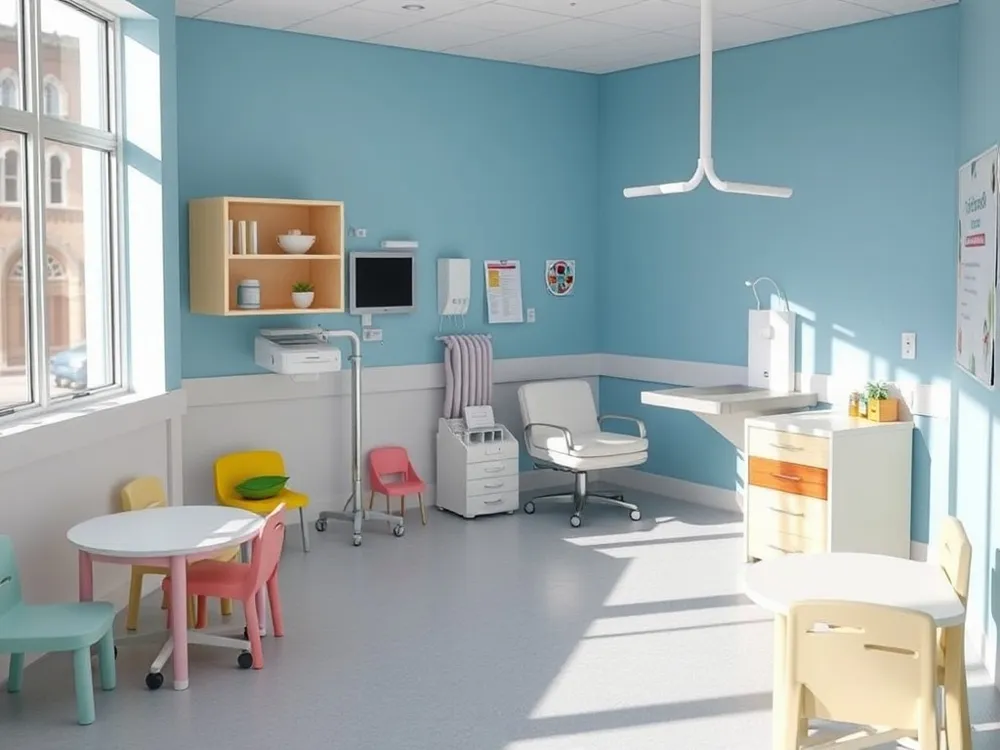
Key Difference: Specialized Staff and Equipment
The main difference between a pediatric urgent care center and a general one is the specialized focus on children. Pediatric urgent care centers are staffed by doctors, nurses, and nurse practitioners who have advanced training in pediatric medicine. They understand how a child’s body reacts to illness and injury differently than an adult’s.
These centers are also equipped with child-sized medical tools. This includes smaller needles, blood pressure cuffs, and IV supplies, which make procedures less intimidating and more accurate. Many also use anxiety-reducing techniques, like distraction and kid-friendly language, to help children feel safe and calm during their visit.
In contrast, a general urgent care sees patients of all ages. While they can treat children for common issues like ear infections or simple cuts, the providers may have less experience with pediatric medication dosing or recognizing subtle signs of serious illness in infants and toddlers. For any non-life-threatening issue, a pediatric urgent care is the more appropriate choice.
Can I Take My Child to a Regular Urgent Care, or Should I Look for a Pediatric One?
You can take your child to a regular urgent care. These facilities are designed to handle a range of common illnesses and minor injuries, such as fevers, sore throats, and sprains. However, for the best possible care, a pediatric urgent care is strongly recommended.
The staff at a pediatric center is specifically trained in children’s health. They are experts in proper medication dosing and in comforting a scared or upset child. For example, a pediatric specialist will know how to examine a toddler who is crying, while a general provider might struggle to get an accurate assessment. For infants under three months old with any fever, you must go to the emergency room, not an urgent care. If your pediatrician is unavailable, a pediatric urgent care offers the safest and most reassuring environment for non-life-threatening issues.
Age Range: Who Is Treated at Pediatric Urgent Care?
Most pediatric urgent care centers serve patients from birth through age 18. However, many extend their services to young adults up to age 21, and some, like PM Pediatric Care, see patients up to 26 years old. This is especially helpful for young adults with chronic conditions like asthma or diabetes who need consistent, specialized care as they transition from pediatric to adult medicine. This continuity of care is a major advantage over general urgent care, which may not have staff as familiar with managing complex pediatric histories.
Advantages of Pediatric Urgent Care
Beyond specialized staff and equipment, pediatric urgent care offers several practical benefits:
- Lower cost than the ER: An urgent care visit is far less expensive than an emergency room visit for a non-emergency condition.
- Shorter wait times: Wait times are typically shorter than at a hospital ER, often ranging from 15 minutes to under an hour.
- Online check-in: Many centers allow you to save your spot online, reducing time spent in the waiting room.
- Coordination with your pediatrician: Most pediatric urgent care centers will send a visit summary to your child’s primary care doctor, ensuring seamless follow-up.
For families, these features mean less stress, less time away from work or school, and better continuity of care.
When Should You Choose Pediatric Urgent Care?
Choose pediatric urgent care for any non-emergency condition when your child’s pediatrician is unavailable. This includes nights, weekends, and holidays. Common reasons include:
- Fever with cold or flu symptoms (child is over 3 months old).
- Minor cuts that may need stitches.
- Ear infections.
- Sore throat (with or without white patches).
- Sprains or minor fractures (bone not protruding).
- Mild wheezing without trouble breathing.
- Mild allergic reactions (no breathing difficulty).
- Vomiting or diarrhea without blood.
- Minor burns.
Can Urgent Care Do Specialized Tests Like Ultrasound for My Child?
Many urgent care centers do have ultrasound machines, but not all. The availability varies by location. If an ultrasound is needed, some centers can perform it for conditions like muscle tears or to check for appendicitis. Ultrasound is safe for children because it uses sound waves, not radiation. However, for rapid imaging, a pediatric urgent care or a dedicated pediatric emergency department is the most reliable option. The best approach is to call the urgent care center directly to ask about their capabilities or ask your pediatrician for specific guidance.
When to Go to the Emergency Room for a Fever or Cough
For infants under 3 months old with a fever of 100.4°F or higher, go directly to the emergency room. For older children:
- Urgent care is appropriate if: The fever lasts more than three days, is above 104°F but the child stays alert and hydrated, or the cough is persistent with only mild congestion or a runny nose.
- Go to the ER immediately if: The fever reaches 105°F or higher, does not respond to medication, or is accompanied by a stiff neck, confusion, or repeated vomiting. For a cough, seek emergency care if your child is struggling to breathe, turning blue, or has severe wheezing.
Always trust your instincts. If you are unsure, call your pediatrician’s office or go to the emergency room. Your child’s health and safety are the top priority.
What to Bring and What to Expect During the Visit
 Pediatric urgent care centers are designed to provide fast, specialized care for non-emergency situations, making them an excellent bridge between your pediatrician's office and the emergency room. Knowing what to expect can help you and your child have a smooth, less stressful experience.
Before You Go: When in Doubt, Call Your Pediatrician
If you are unsure whether your child’s condition needs urgent care, urgent care, or the emergency room, the best first step is to call your pediatrician. Many pediatricians have a 24/7 nurse advice line or an on-call doctor who can provide guidance after hours. This quick call can help you decide if your child needs immediate care or if they can be managed at home until the office opens. It can also save you a trip to the wrong facility.
What to Bring: Pack for a Smooth Visit
Being prepared can make the check-in process faster and more efficient for everyone. Here is a checklist of items to bring to a pediatric urgent care visit:
- Your Child's Insurance Card: This is essential for registration and billing.
- A List of Current Medications: Include the names, dosages (e.g., 5mL, 1 tablet), and how often your child takes them (e.g., twice a day). If possible, bring the actual medication bottles. This helps the provider understand your child’s medical history and avoid dangerous drug interactions.
- Comfort Items: A favorite toy, blanket, or stuffed animal can be a great source of comfort for a child in a new environment. For older kids, a book, tablet, or phone can help pass the time.
- Any Relevant Medical Records: If your child has a chronic condition like asthma or allergies, or has had recent X-rays or lab work, a copy of those records can be helpful for the urgent care provider.
- Your Own Phone (for notes): Be prepared to take notes on the diagnosis, treatment plan, and any home care instructions.
At the Urgent Care: From Arrival to Check-In
Most pediatric urgent care centers accept walk-ins, so an appointment is generally not required. However, many offer an online check-in system, often called “Save Your Spot” or “Check-In Online.” This allows you to join the queue from your phone or computer before you arrive, which can significantly reduce the time you spend in the waiting room. When you arrive, you’ll proceed to the front desk to provide your insurance information and confirm your child’s details.
Triage: The First Step to Care
Once checked in, a registered nurse will perform a triage assessment. This is a quick evaluation to determine the urgency of your child’s condition. The nurse will check your child's vital signs, including temperature, pulse, and breathing rate. They will also ask about their symptoms, how long they have been going on, and if they have any allergies. It’s important to know that doctors and nurses see patients based on the severity of their condition. If another child arrives after you but is seen first, it means their illness is more serious. This system ensures that the sickest children get care first.
Provider Evaluation: Diagnosis and Testing
After triage, a doctor or nurse practitioner with specialized training in pediatric care will examine your child. They will ask detailed questions about the symptoms, their duration, and any related history. Based on the evaluation, they may order diagnostic tests to help confirm a diagnosis. Common tests at a pediatric urgent care include:
- Strep Test: A quick swab of the throat to check for strep bacteria.
- X-rays: To diagnose broken bones, sprains, or pneumonia. Some pediatric urgent cares use child-sized equipment with less radiation.
- Blood Tests or Urine Tests: To check for infections, dehydration, or other conditions.
- Flu/COVID-19 Tests: Rapid tests for common viruses.
The provider will explain the results and what they mean for your child’s treatment.
Treatment and Prescriptions: What Happens Next
Once a diagnosis is made, the provider will discuss a treatment plan with you. This plan might include:
- Medications: Prescriptions for antibiotics, anti-nausea drugs, or pain relievers. Many urgent cares can send prescriptions electronically to a pharmacy. If no 24-hour pharmacy is nearby, ask if the first dose can be given at the urgent care.
- Breathing Treatments: For mild wheezing or mild asthma attacks, your child may receive a nebulizer treatment to help open their airways.
- Fluids: If your child is dehydrated, they may receive IV fluids to help them rehydrate more quickly.
- Procedures: For minor cuts, the provider may clean and close the wound with stitches or medical glue. For sprains, they may apply a splint or cast.
After the Visit: Follow-Up and Recovery
Before you leave, the staff will provide you with clear home care instructions. This will include:
- What to Watch For: Signs or symptoms that indicate your child needs more medical attention.
- Diet and Activity Restrictions: Any limitations on what your child should eat, drink, or do.
- Recovery Time: How long you can expect the illness or injury to last.
- School Note: Ask for a note for school or daycare if needed.
- Follow-Up: The urgent care will send a visit summary to your child’s primary care pediatrician. This ensures continuity of care. However, ask if you need to schedule a follow-up appointment with your pediatrician or a specialist.
What About a Rash? Is Urgent Care Appropriate?
Yes, urgent care is appropriate for a mild rash. However, for a baby’s rash, you can start with gentle home care like keeping the area clean and dry and using a hypoallergenic moisturizer or diaper cream. You should seek urgent care if the rash worsens, shows signs of infection (like pus, red streaks, or fever), or if your baby seems very uncomfortable. Urgent care can evaluate for common issues like contact dermatitis or folliculitis and provide treatment. For non-urgent rashes, your pediatrician can also offer guidance during regular office hours. If the rash is severe, accompanied by breathing difficulty, or your baby is under 3 months old and has a fever, seek emergency care instead.
Table: A Quick Guide to Your Pediatric Urgent Care Visit
| Step | What Happens | Key Items to Prepare |
|---|---|---|
| Before You Go | Call your pediatrician’s 24/7 nurse line or on-call doctor for guidance if unsure. | Health concerns, child’s age and symptoms. |
| What to Bring | Pack insurance card, medication list (with doses), comfort items, and any relevant medical records. | Comfort item, list of medications, insurance card. |
| Arrival & Check-In | Walk-ins welcome. Use online check-in to “save your spot” and reduce wait times. | Online check-in, insurance card. |
| Triage | Nurse checks vitals (temperature, pulse, breathing) and assesses symptom severity. | Child’s consent and cooperation. |
| Provider Evaluation | Doctor or nurse practitioner examines the child, asks about symptoms, and may order tests (strep, X-ray, blood work). | Any relevant medical records. |
| Treatment | Provider discusses treatment plan (e.g., medications, breathing treatments, fluids). Rarely, first dose given. | A plan for a 24-hour pharmacy. |
| After the Visit | Staff gives home care instructions, provides a school note, and sends a summary to your pediatrician. | Pen and paper for notes. |
After the Urgent Care Visit: Next Steps for Your Child's Recovery
Your child has been seen and treated. Now, what comes next? Knowing the right steps to take after an urgent care visit will help you manage their recovery, avoid complications, and support a smooth return to health. This guide walks you through essential actions to take before leaving the clinic and in the days that follow.
Get a clear after-visit summary: ask for the exact diagnosis, copies of test results and X-rays, and any prescriptions or treatment plans in writing.
Before you leave the urgent care center, make sure you have a written after-visit summary. This document should include your child’s exact diagnosis, any test results or X-ray findings, and a clear treatment plan. Don't hesitate to ask for a printed copy of lab results or X-rays—they are your child’s medical records. Having this information in hand helps you understand what is happening and share accurate details with your pediatrician.
Follow-up with your pediatrician: many urgent cares automatically fax a clinical report to your child's primary care doctor; ask about their policy on record transfer; sometimes just a phone check-in with the pediatrician is sufficient.
Many pediatric urgent care centers automatically send a clinical report to your child’s primary care doctor. However, always ask about their policy on record transfer. In some cases, a simple phone check-in with your pediatrician is enough to confirm the diagnosis and adjust care. If the condition is complex or requires ongoing management, schedule a follow-up appointment within a few days.
Ask about follow-up with a specialist: the urgent care provider may recommend seeing an allergist, orthopedist, or other specialist depending on the condition; get the exact concern to discuss.
Some conditions may require specialized follow-up. For example, a child treated for an allergic reaction may need to see an allergist, while a child with a fracture may need an orthopedist. Ask the urgent care provider for the exact reason they recommend a specialist and what specific concerns to bring up. Having this clarity helps you schedule the right appointment and ensures continuity of care.
Cost and insurance: ask about the clinic’s policy on filing insurance claims and whether the urgent care is in-network; if uninsured, ask about payment options or self-pay discounts.
Before you finalize the visit, ask how the clinic handles insurance billing. Confirm whether the urgent care is in-network with your plan to avoid unexpected bills. If you are uninsured, ask about self-pay discounts or payment plans. Many centers offer affordable cash prices—typically between $100 and $175 for a basic visit—but additional services like X-rays or lab tests may add to the cost.
Prescriptions: confirm medication name, dose, schedule, and potential side effects; check if the prescription is sent to a pharmacy or if you can get the first dose at the clinic.
If your child is prescribed medication, ensure you fully understand the details. Ask for the exact name, dose, dosing schedule, and possible side effects. Find out whether the prescription will be sent electronically to a pharmacy or if the clinic can give the first dose before you leave—especially helpful if it is late at night or if no 24-hour pharmacy is nearby. Write down any special instructions, such as finishing a full course of antibiotics even after symptoms improve.
Recovery expectations: ask how long recovery should last, which symptoms to monitor (e.g., fever returning, worsening pain), and any diet/activity restrictions (e.g., no sports for a sprain).
Ask the provider what to expect during recovery. Inquire about the typical recovery time, signs of complications (such as returning fever or worsening pain), and any necessary diet or activity restrictions. For example, a child with a sprained ankle may need to avoid sports for a week. Knowing these guidelines helps you create a safe recovery plan.
Connect online: many urgent cares have a patient portal to access summaries, test results, and to message the clinic with follow-up questions.
Most pediatric urgent care centers offer an online patient portal. This platform lets you access visit summaries, test results, and X-rays. You can also send messages to the clinic with follow-up questions. Using the portal is a convenient way to stay informed and maintain a record of your child’s care.
Be an advocate: take notes during the visit, ask questions until you understand, and trust your instincts—if something feels off, follow up with your pediatrician or go to the ER.
You are your child’s best advocate. During the visit, take notes on your phone or a piece of paper. Ask questions until you feel confident about the diagnosis and plan. If something about your child’s condition does not seem right after you get home, do not hesitate to call your pediatrician or return to an emergency room. Trust your instincts—they are a powerful guide.
| topic | what to ask/do | why it matters |
|---|---|---|
| after-visit summary | request exact diagnosis, test results, X-rays, treatment plan in writing | gives you a clear record and helps share details with your pediatrician |
| follow-up with pediatrician | ask about record transfer; schedule appointment if needed | ensures continuity of care and avoids gaps in treatment |
| follow-up with specialist | get the exact reason and concern to discuss | helps you book the right specialist and address specific issues |
| cost & insurance | confirm in-network status; ask about self-pay discounts | prevents surprise bills and makes care affordable |
| prescriptions | confirm name, dose, schedule, side effects; check how to get medication | ensures safe and effective medication use |
| recovery expectations | ask about recovery time, warning signs, diet/activity limits | helps you plan a safe recovery period |
| online patient portal | access visit summaries, test results, messaging | convenient way to stay informed and ask follow-up questions |
| advocacy & instincts | take notes, ask questions, trust your gut | empowers you to protect your child’s health |
Making the Right Choice for Your Child
Recap: Pediatric Urgent Care as a Valuable Resource
Pediatric urgent care centers are a crucial bridge between your child’s regular doctor and the emergency room. They are designed to handle non-life-threatening conditions when your primary care pediatrician is unavailable, such as during evenings, weekends, or holidays. Facilities like Children's Healthcare of Atlanta Urgent Care and PM Pediatric Care provide specialized, child-focused care for illnesses and injuries that require prompt attention but are not emergencies.
Conditions commonly treated at pediatric urgent care include fevers in children over two months, minor cuts requiring stitches, ear infections, sprains, and mild wheezing without respiratory distress. These centers provide on-site X-rays, lab tests, and can manage allergic reactions as long as there is no trouble breathing. They also treat head injuries without loss of consciousness, vomiting or diarrhea without blood, and seizures that stop spontaneously. By choosing urgent care for these issues, you help keep emergency departments free for true life-threatening emergencies.
When in Doubt: Call Your Pediatrician
If you are uncertain whether your child’s condition requires urgent care or the emergency room, your pediatrician is your best first resource. Most practices, including Kids & Teens Primary Healthcare, have a doctor on call after hours who can provide guidance. A quick phone call can help you avoid unnecessary trips or ensure you get your child to the right level of care quickly.
This professional advice is especially valuable for conditions like fever in infants under two months (a fever of 100.4°F or higher requires immediate ER care), suspected poisoning, or head injuries with loss of consciousness. Your pediatrician’s office can clarify these scenarios and direct you to the most appropriate facility.
Designed for Children: Specialized Training and Comfort
Pediatric urgent care centers are intentionally designed for children. Doctors and nurses receive specialized training in pediatric care, and the facilities use child-sized equipment, from blood pressure cuffs to needles. This focus helps reduce fear and anxiety for both children and parents.
Many urgent care centers offer options to save your spot online before arriving, which minimizes waiting room time. At the clinic, triage nurses assess your child’s condition, and doctors prioritize the sickest patients first. Some centers, like PM Pediatric Care, use kid-friendly medications administered through various methods, and they provide translation services to ensure clear communication. The entire experience is structured to support children’s unique medical and emotional needs.
Urgent Care Complements, But Does Not Replace, Regular Pediatric Care
It is important to remember that pediatric urgent care is not a substitute for ongoing primary care. Regular well-child visits, immunizations, and routine check-ups are essential for monitoring growth, development, and overall health. Continue scheduling these appointments with your primary pediatrician, such as Kids & Teens Primary Healthcare, which offers comprehensive services from newborn care to teen health.
Your pediatrician coordinates your child’s long-term health, manages chronic conditions, and provides preventive care like sports physicals and vaccinations. Urgent care centers are designed to complement this care by handling immediate needs, and they often share visit summaries with your primary doctor to ensure continuity. After an urgent care visit, follow up with your pediatrician as recommended to maintain a complete health record and address any ongoing concerns.
| Care Type | Best For | Examples of Conditions | What to Expect |
|---|---|---|---|
| Pediatrician | Routine and chronic care | Check-ups, immunizations, asthma management | Scheduled appointments, ongoing relationship |
| Pediatric Urgent Care | Non-life-threatening, after-hours needs | Minor cuts, ear infections, sprains, mild fevers | Walk-ins, online check-in, on-site X-rays |
| Emergency Room | Life-threatening emergencies | Difficulty breathing, severe burns, head injury with unconsciousness | Immediate, specialized care; highest cost |
Final Takeaway: Confidently Navigate Your Child’s Health
By understanding the functions of pediatric urgent care, parents can make well-informed decisions during stressful situations. Recognizing when a condition is urgent versus an emergency, knowing what conditions are treatable at urgent care, and preparing for the visit by bringing insurance cards and medication lists will help your child receive the best possible care in a timely manner.
Urgent care centers offer a valuable service for non-life-threatening illnesses and injuries, but they work best alongside your child’s regular pediatrician. When in doubt, call your pediatrician’s office for guidance. With this knowledge, you can confidently manage childhood illnesses and injuries, ensuring your child receives appropriate and compassionate medical attention when it is needed most.