Why Parents Need to Stay Informed
Teen vaping has exploded in the United States, with over 1.6 million pre‑teens and teens using e‑cigarettes and about 5 % of high‑school students reporting use. The aerosol inhaled contains nicotine, metals (nickel, chromium, lead), formaldehyde, acetaldehyde, and other carcinogens, leading to acute lung injury (EVALI), chronic bronchitis, asthma flare‑ups, and cardiovascular stress. Nicotine exposure before age 25 disrupts brain development, impairing attention, impulse control, mood regulation and increasing the risk of future substance abuse. Parents are the front line of defense: they must stay informed, watch for sweet odors, dry mouth, hidden devices, and engage teens in non‑judgmental conversations. Medical evaluation—by pediatricians or specialized cessation clinics—can catch lung injury, nicotine poisoning, or mental‑health issues before they become severe, while support, practice, and modeling a vape‑free lifestyle empower teens to quit and stay healthy. Resources like the Truth Initiative’s text‑to‑quit program or the American Lung Association’s HelpLine give families tools to act quickly.
Health Risks and Chemical Exposure
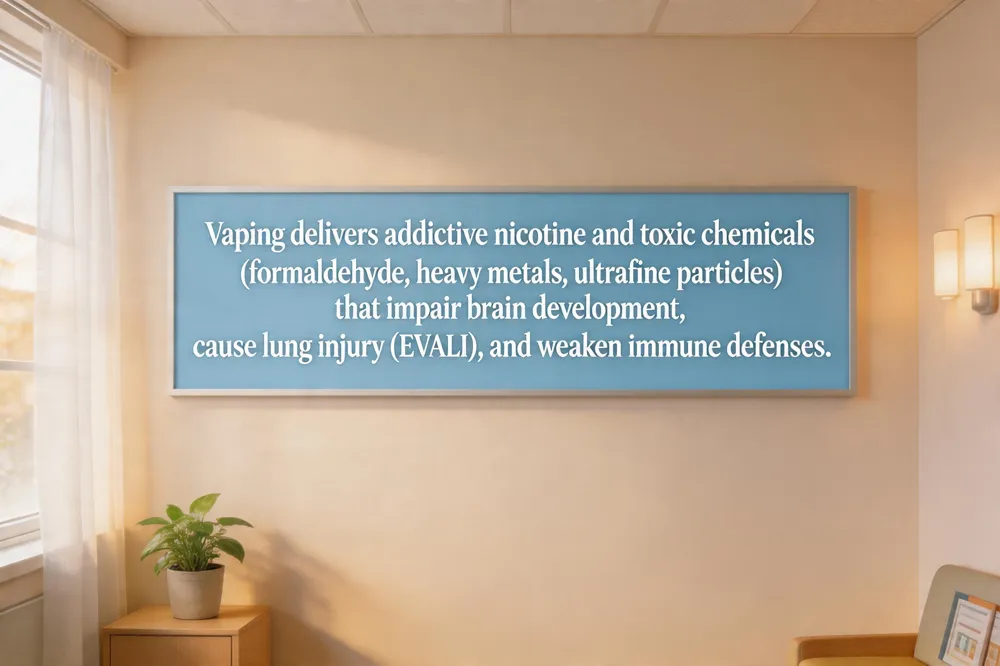 Vaping exposes teens to nicotine, a highly addictive toxin that nicotine exposure during adolescence can impair brain development up to age 25, affecting concentration, decision‑making, and emotional regulation and impairs memory, concentration, learning, and impulse control. Even occasional use can create cravings, irritability, and withdrawal symptoms, making quitting difficult. The aerosol inhaled from e‑cigarettes contains toxic chemicals such as formaldehyde, acrolein, heavy metals such as nickel, chromium, and lead, ultrafine particles, and flavoring agents like diacetyl that irritate the lungs, throat, and eyes. These substances can trigger bronchitis, asthma exacerbations, and chronic cough, and they weaken immune defenses, increasing susceptibility to infections.
Acute lung injury, known as EVALI, has been linked to vaping, especially products containing THC or vitamin E acetate. Symptoms include shortness of breath, cough, chest pain, fever, nausea, and gastrointestinal distress, sometimes requiring intensive care. Chronic exposure can lead to persistent lung inflammation, scarring, reduced lung function, and heightened risk of future respiratory disease.
Scary facts underscore the danger: a single pod may deliver nicotine equivalent to a pack of cigarettes; 2,807 EVALI cases and 68 deaths were reported in 2019‑2020; and exposure to second‑hand aerosol harms nearby family members.
In short, vaping is harmful to youth, delivering addictive nicotine and a cocktail of lung chemicals that damage the brain, lungs, and cardiovascular system. Parents should seek medical advice if a teen shows respiratory symptoms and use resources such as quit‑lines and counseling to support cessation.
Prevalence and Statistics
 Teen vaping statistics
In 2024, 5.9 % of U.S. middle‑ and high‑school students—about 1.63 million youths—reported using e‑cigarettes in the past 30 days. High‑schoolers lead at 7.8 % while middle‑schoolers are at 3.5 %. This marks a modest decline from 2023’s 7.7 % prevalence. Among current users, 26.3 % vape daily and 38.4 % have vaped on at least 20 of the last 30 days. Flavored products dominate, with 87.6 % of teen vapers choosing sweet or fruit‑infused liquids. Disposable vape pens are the most common device, accounting for 55.6 % of use. Notably, 63.9 % of teen vapers want to quit and 67.4 % have already attempted cessation in the past year.
Teen vaping statistics
In 2024, 5.9 % of U.S. middle‑ and high‑school students—about 1.63 million youths—reported using e‑cigarettes in the past 30 days. High‑schoolers lead at 7.8 % while middle‑schoolers are at 3.5 %. This marks a modest decline from 2023’s 7.7 % prevalence. Among current users, 26.3 % vape daily and 38.4 % have vaped on at least 20 of the last 30 days. Flavored products dominate, with 87.6 % of teen vapers choosing sweet or fruit‑infused liquids. Disposable vape pens are the most common device, accounting for 55.6 % of use. Notably, 63.9 % of teen vapers want to quit and 67.4 % have already attempted cessation in the past year.
Vaping facts for teens Vaping delivers nicotine—a highly addictive drug—plus toxic chemicals, heavy metals, and ultrafine particles that can harm a teen’s developing brain and lungs. Regular use is linked to anxiety, sleep disturbances, chronic bronchitis, and a heightened risk of later cigarette smoking or other substance use. Early, open conversations and professional counseling can prevent addiction and protect health.
What are 10 dangers of vaping?
- Nicotine addiction
- Lung injury (EVALI) – Vaping can cause acute lung injury known as EVALI
- Exposure to carcinogens (formaldehyde, acetaldehyde) – Studies have identified carcinogens such as acetaldehyde and formaldehyde in vape liquids
- Heavy‑metal inhalation (lead, nickel) – The aerosol can contain heavy metals such as nickel, chromium, and lead
- Cardiovascular stress (elevated heart rate, blood pressure) – Nicotine raises heart rate and blood pressure
- Impaired brain development (attention, mood, impulse control) – Nicotine exposure during adolescence can impair brain development up to age 25, affecting concentration, decision‑making, and emotional regulation
- Increased likelihood of future tobacco use – Teens who vape are more likely to start smoking traditional cigarettes later in life (gateway effect)
- Oral‑health problems (dry mouth, gum disease)
- Accidental nicotine poisoning in children – A single teaspoon of concentrated liquid nicotine can be fatal if ingested by a small child
- Battery‑explosion injuries – Defective e‑cigarette batteries can cause fires and explosions, resulting in serious injuries. Parents should seek medical care if a teen shows coughing, shortness of breath, chest pain, or any unexplained symptoms, and use cessation resources such as quit‑lines, texting programs, and pediatric counseling.
Identifying Vaping in Your Teen
 Teens who vape often leave subtle but tell‑tale clues for observant parents. Physical signs include a sweet or fruity scent on clothing, breath, or in their room—flavorings such as strawberry, mint, or chocolate linger even when no food is present. Look for persistent dry mouth (cotton‑mouth) that drives frequent water drinking, as well as throat irritation, a smoker‑like cough, or mouth sores that do not heal. Nosebleeds or a dry nasal lining can appear because aerosol chemicals evaporate moisture. Discoloration or nicotine stains on fingers and lips, and the presence of unfamiliar pen‑shaped devices, USB‑drive‑like vape sticks, lipstick‑tube‑style pens, extra batteries, or chargers hidden in backpacks, drawers, or under furniture are strong indicators of concealed vaping equipment.
Five practical signs to watch for are: (1) the lingering sweet odor; (2) hidden vape‑like devices or pods; (3) a new or worsening dry cough, sore throat, or nosebleeds; (4) increased thirst and constant sipping of water; and (5) mood shifts such as irritability, anxiety, or sudden breaks to “freshen up.”
Common side effects of vaping in adolescents include throat irritation and mouth sores, headaches, dizziness, nausea, and shortness of breath. In more severe cases, lung inflammation can cause chest tightness, coughing, or even seizure‑like episodes when highly nicotine or contaminated liquids are used. Recognizing these physical and behavioral clues early can prompt timely medical evaluation and help parents intervene before addiction deepens.
Talking and Intervening
 Effective parent‑teen communication is the cornerstone of preventing and stopping vaping. Begin with a calm, non‑judgmental conversation: gather what you know about when, where and how often your child has been vaping, then choose a private moment to ask open‑ended questions. Acknowledge their growing independence and connect the health risks—nicotine addiction, heavy‑metal exposure, and the possibility of acute lung injury (EVALI)—to things they care about, such as sports performance, school grades, and family health. Offer concrete help, like the American Lung Association’s 24‑hour Lung HelpLine (1‑800‑LUNG‑USA) or a referral to your pediatrician for nicotine‑replacement therapy and a personalized cessation plan.
When a teen is caught vaping, set appropriate consequences that reinforce responsibility without shaming. A brief loss of screen time or a temporary restriction on extracurricular activities can be effective, followed by a clear follow‑up plan. If the behavior persists, consider a structured response—community service, counseling, or a written warning—while keeping the focus on learning and health.
Understanding the root cause of teenage vaping helps target prevention. Aggressive youth‑focused marketing, sweet flavored e‑cigarettes, and peer pressure drive experimentation, while nicotine’s addictive power locks teens into a habit.
Vaping is not a safer alternative to smoking. Both deliver nicotine, but e‑cigarette aerosol contains heavy metals (nickel, chromium, lead), carcinogens (formaldehyde, acetaldehyde), and can cause lung inflammation, asthma exacerbations, and cardiovascular strain. Dual use of cigarettes and vapes increases toxin exposure. For adolescents, the healthiest choice is to avoid any nicotine product altogether and seek medical guidance if symptoms such as coughing, shortness of breath, or chest pain appear.
Resources, Treatment, and Next Steps
 What is vaping and how does it work? Vaping is the inhalation of an aerosol (often called “vapor”) produced by an electronic device such as a vape pen or pod system. A battery powers a heating coil that warms a liquid—typically nicotine, flavorings, propylene glycol or vegetable glycerin—into a fine mist. The user draws this aerosol into the lungs, where nicotine and other chemicals are absorbed. Because the aerosol carries toxic metals, carcinogens and nicotine, health professionals advise children and teens to avoid it.
Vaping facts for teens – In 2024, about 5.9 % of U.S. middle‑ and high‑school students (≈1.6 million) reported current e‑cigarette use, and 87 % prefer flavored products that mask nicotine’s strength. Vaping can impair brain development, cause anxiety, sleep problems, chronic bronchitis, and raise the odds of later cigarette smoking. A majority of teen vapers want to quit (63.9 %) and many have tried (67 %).
What is vaping addiction? It is a nicotine‑driven dependence where the brain’s reward system is hijacked, leading to cravings, irritability, and withdrawal symptoms such as trouble concentrating. Adolescents are especially vulnerable because nicotine interferes with attention, learning and mood regulation.
Professional help and cessation programs – Pediatricians can refer teens to specialized vaping clinics (e.g., Dr. Irina Dralyuk’s clinic at Cedars‑Sinai Children’s Health Center) or programs like the Truth Initiative’s EX/text‑to‑quit service. Nicotine‑replacement therapy may be prescribed under medical supervision.
Safe storage and prevention tips – Keep all e‑liquid containers and devices out of reach of children, preferably in child‑resistant, locked cabinets. Dispose of empty cartridges safely and educate teens about the dangers of accidental ingestion.
Where to find up‑to‑date information – Trusted resources include the CDC’s teen vaping data, the American Lung Association’s Lung HelpLine (1‑800‑LUNG‑USA), and state quit‑lines (e.g., 1‑800‑QUIT‑NOW). Schools and pediatric offices often provide flyers and links to the latest guidelines.
Taking Action Together
Vaping is harmful – its aerosol carries nicotine, heavy metals (nickel, lead, chromium), formaldehyde and other carcinogens that can trigger EVALI, asthma attacks, bronchitis, and lung damage. Nicotine addiction can impair brain development through age 25, worsening concentration, mood, and impulse control, and it raises the odds that a teen will later smoke cigarettes. Because devices look like pens, USB drives, or lipstick tubes, they can hide in backpacks and rooms, making detection tricky. Parents should act quickly: if a child shows signs such as a sweet odor, cough, blood‑shot eyes, or sudden irritability, seek pediatric care promptly—evaluation can prevent serious injury and begin nicotine‑withdrawal support. Trusted resources like CDC, Lung Association, Truth Initiative programs, and clinics (e.g., Dr. Irina Dralyuk’s vaping clinic) offer information and counseling. Keep the conversation open; ask about stress, peer pressure, and vaping experiences, and review safety rules together so the family stays united against threat.