Why Prompt Care Matters
Timely medical evaluation can prevent a mild illness from becoming life‑threatening, as many serious infections, respiratory distress, dehydration or anaphylaxis show early signs that worsen quickly. Parents should keep emergency numbers, a list of allergies, and basic first‑aid supplies (epinephrine auto‑injector, oral rehydration salts) ready, and practice calling 911 when needed. Seek help immediately for persistent fever over 102°F, difficulty breathing, bluish lips, severe vomiting, seizures, sudden lethargy, or any sign of an allergic reaction affecting the airway.
Deciding Between the Emergency Room and Urgent Care
Decision Guide
| Situation | ER Criteria | Urgent Care Suitability | Recommended Action |
|---|---|---|---|
| Choking, not breathing, bluish lips, severe allergic reaction with airway compromise, uncontrolled bleeding, loss of consciousness after head trauma, seizure >5 min, injury risking permanent disability | Any of the above | N/A | Call 911 or go directly to the ER |
| Infant <1 month with fever ≥100.4 °F (38 °C) | Fever ≥100.4 °F in infant <1 month | N/A | Go to ER |
| Fever >105 °F (40.5 °C) at any age | Fever >105 °F | N/A | Go to ER |
| Fever with stiff neck, rash, vomiting, lethargy, or seizures | Any red‑flag fever symptom | N/A | Go to ER |
| Mild fever (≤102 °F), ear pain, sore throat, minor cuts needing stitches, sprains, mild asthma flare‑up, rash without breathing difficulty | None | Non‑life‑threatening problems | Visit pediatric‑trained urgent‑care |
| Any life‑threatening sign (difficulty breathing, severe chest/abdominal pain, sudden loss of consciousness, severe burns, anaphylaxis) | Immediate threat | N/A | Dial 911 |
| Preparing for ER visit | N/A | N/A | Bring health history, meds/allergies list, insurance card, symptom timeline; stay calm and describe clearly |
 Emergency room criteria: Call 911 or go straight to the ER when a child is choking, not breathing, has bluish lips, severe allergic reaction with airway compromise, uncontrolled bleeding, loss of consciousness after head trauma, seizure lasting >5 minutes, or any injury that could cause permanent disability. High‑fever red flags include infants <1 month with 100.4 °F (38 °C) or higher, fever >105 °F (40.5 °C) at any age, or fever with stiff neck, rash, vomiting, lethargy, or seizures.
Urgent‑care suitability: Non‑life‑threatening problems such as mild fever (≤102 °F), ear pain, sore throat, minor cuts needing stitches, sprains, mild asthma flare‑up, or a rash without breathing difficulty can be evaluated at a pediatric‑trained urgent‑care clinic. Choose a facility with child‑size equipment and staff trained in pediatric first aid.
When to call 911: Immediate life‑threatening signs—difficulty breathing, severe chest or abdominal pain, sudden loss of consciousness, severe burns, or anaphylaxis—require dialing 911.
Preparing for an ER visit: Bring the child’s health‑history, list of medications/allergies, insurance card, and a brief written timeline of symptoms. Stay calm, describe the problem clearly, and after discharge follow up with your pediatrician to keep the medical home updated.
Red‑Flag Symptoms and Emergency Warning Signs
Red‑Flag Summary
| Symptom | ER Trigger | Key Notes |
|---|---|---|
| High fever | ≥104 °F (or ≥100.4 °F in infants) | Fever with stiff neck, rash, vomiting, lethargy, seizures → ER |
| Difficulty breathing | Chest retractions, bluish lips | Immediate ER |
| Severe allergic reaction (anaphylaxis) | Airway compromise, swelling | Immediate ER or 911 |
| Loss of consciousness after head injury | Any loss of consciousness | Immediate ER |
| Persistent vomiting | >24 h, forceful, blood/bile, dehydration | ER |
| Severe abdominal pain | Possible appendicitis, other serious cause | ER |
| Sudden fainting, uncontrolled bleeding, rapid mental‑status change | Any | Immediate ER |
| 12‑month‑old fever | Temp ≥105 °F, lethargy, inability to stay awake, dehydration, seizure, rash, >72 h | ER |
| Excessive crying | Non‑stop, cannot soothe, plus stiff neck, bulging fontanelle, limpness, severe pain | ER |
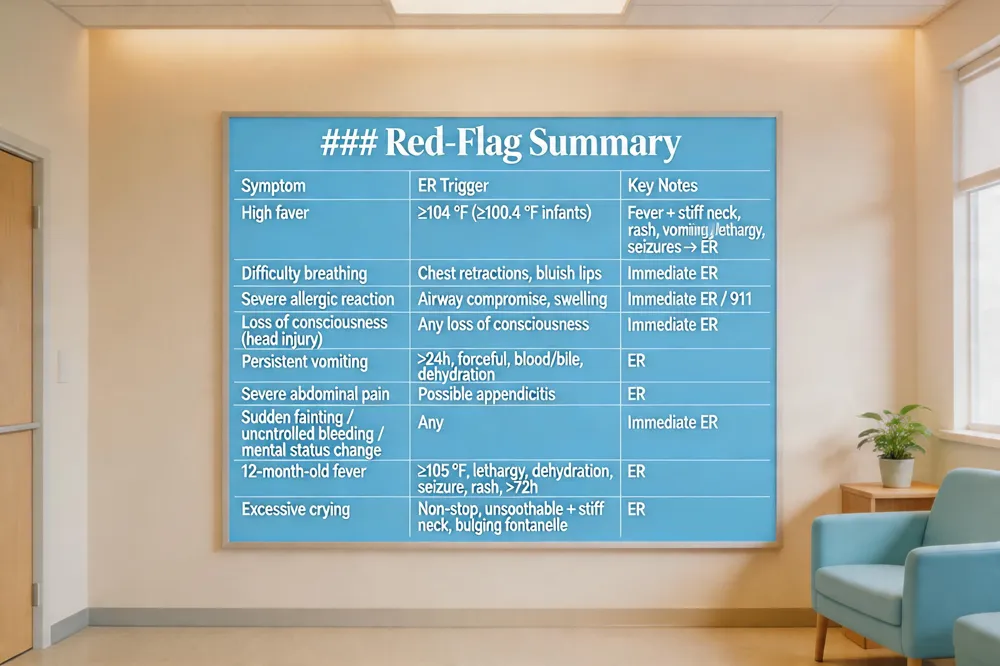 Life‑threatening pediatric signs include high fever≥104 °F (or ≥100.4 °F in infants), difficulty breathing with chest retractions or bluish lips, severe allergic reaction (anaphylaxis), loss of consciousness after head injury, persistent vomiting, and severe abdominal pain that may be appendicitis. Sudden fainting, uncontrolled bleeding, or rapid mental‑status change also require immediate ER care. Emergency resources are listed on the ACEP Pediatric Emergency Medicine Section, AAP Emergency Medicine, TREKK portal and hospital PEM sites.
Five emergency signs: high fever, difficulty breathing, serious injury with loss of consciousness, persistent vomiting, severe abdominal pain.
Two critical symptoms: severe difficulty breathing and sudden severe chest or abdominal pain.
12‑month‑old fever: go to ER if temperature ≥105 °F, lethargy, inability to stay awake for feeds, dehydration, seizure, rash, or fever >72 h.
Vomiting: ER if forceful, blood‑ or bile‑containing, >24 h, or with dehydration, high fever, severe abdominal pain.
Excessive crying: ER if nonstop, cannot be soothed, and accompanied by stiff neck, bulging fontanelle, limpness, or severe pain.
Resources: ACEP PEM, AAP Emergency Medicine, TREKK, poison‑control (1‑800‑222‑1222).
What Pediatric Urgent Care Can Do for Your Child
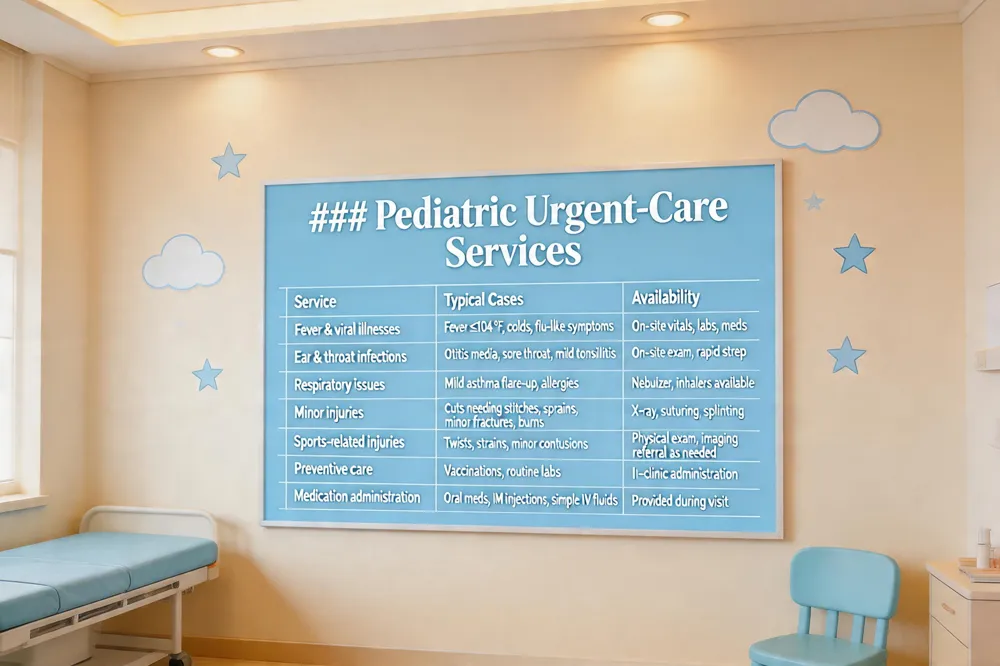
Pediatric Urgent‑Care Services
| Service | Typical Cases | Availability |
|---|---|---|
| Fever & viral illnesses | Fever ≤104 °F, colds, flu‑like symptoms | On‑site vitals, labs, meds |
| Ear & throat infections | Otitis media, sore throat, mild tonsillitis | On‑site exam, possible rapid strep test |
| Respiratory issues | Mild asthma flare‑up, allergies | Nebulizer, inhalers available |
| Minor injuries | Cuts needing stitches, sprains, minor fractures, bruises, burns | X‑ray, suturing, splinting on site |
| Sports‑related injuries | Twists, strains, minor contusions | Physical exam, imaging, referral as needed |
| Preventive care | Vaccinations, routine labs | In‑clinic administration |
| Medication administration | Oral meds, IM injections, simple IV fluids | Provided during visit |
 What services does pediatric urgent care provide?
Pediatric urgent care treats non‑life‑threatening illnesses and minor injuries—fevers, colds, flu‑like symptoms, ear/throat infections, mild asthma or allergies, cuts needing stitches, sprains, minor fractures, bruises, burns, and sports‑related injuries. On‑site X‑rays, labs, vaccinations and medications are usually available.
What services does pediatric urgent care provide?
Pediatric urgent care treats non‑life‑threatening illnesses and minor injuries—fevers, colds, flu‑like symptoms, ear/throat infections, mild asthma or allergies, cuts needing stitches, sprains, minor fractures, bruises, burns, and sports‑related injuries. On‑site X‑rays, labs, vaccinations and medications are usually available.
My child is lethargic, has no fever and no appetite – what should I do? Unusual sleepiness or inability to wake can signal infection or dehydration. Call the pediatrician, keep the child hydrated with small sips of water or oral rehydration, and monitor for dry mouth, few wet diapers, or sunken eyes. If vomiting, severe pain, breathing difficulty, or loss of consciousness occurs, go to the ER or call 911. Otherwise arrange an urgent‑care visit promptly.
When should I take my child to urgent care for a fever? Seek urgent care if the fever is ≥104 °F (40 °C) or persists >3 days. A fever of 102 °F (38.9 °C) in a child 6 months‑2 years lasting 24 hours, or any fever with headache, vomiting, difficulty breathing, stiff neck, or rash, also warrants urgent evaluation.
Is urgent care appropriate for babies? Yes, for mild fever, colds, minor cuts, rashes or ear infections at a pediatric‑specific clinic. High fever in infants <2 months, breathing trouble, seizures, or loss of consciousness or major trauma require emergency department care.
Can urgent care evaluate a possible torn meniscus? Most urgent‑care clinics can exam a knee injury, order X‑ray and refer for MRI or orthopaedic follow‑up. If the knee is locked, swollen or the child cannot bear weight, go to the ER.
Can urgent care perform enemas for children? Many urgent‑care centers treat uncomplicated constipation with enemas after ruling out fever, vomiting or abdominal distension. The provider doses by age/weight, monitors response and discharges with home‑care instructions; severe illness prompts ER referral.
What are the current pediatric clinical practice guidelines? Guidelines are evidence‑based recommendations from societies such as the AAP, covering diagnosis, treatment and prevention for a wide range of pediatric conditions. They are regularly updated and integrated into urgent‑care protocols to ensure safe, age‑appropriate care.
When might a child need urgent medical attention? Call 911 or go to the ER for trouble breathing, severe bleeding, loss of consciousness, high fever in infants <2 months, seizures, or anaphylaxis. Urgent‑care is appropriate for persistent vomiting / diarrhea, moderate fever, mild asthma, minor cuts, sprains or ear infections. When in doubt, seek emergency care and follow up with your pediatrician.
Age‑Specific Concerns: Babies, Toddlers, and Young Children
Age‑Specific Fever & Illness Guidance
| Age Group | Fever Threshold | ER Indications | Urgent‑Care Indications |
|---|---|---|---|
| <3 months | Any fever ≥100.4 °F (38 °C) | ER immediately | N/A |
| 1 year | Fever >100.4 °F lasting >24 h OR ≥104 °F | ER if lethargic, dehydrated, persistent vomiting, rash | Urgent‑care for fever 100.4‑104 °F if child is active, hydrated |
| 2 years (toddler) | Fever <105 °F, child alert, hydrated | ER if ≥105 °F, lethargy, dehydration, persistent vomiting | Urgent‑care for fever 100.4‑105 °F if child plays, drinks fluids |
| Cough/ congestion (all ages) | Persistent >7 days, high fever, green mucus, difficulty feeding/breathing | ER if rapid labored breathing, chest retractions, bluish lips | Urgent‑care for mild cough with fever, no breathing distress |
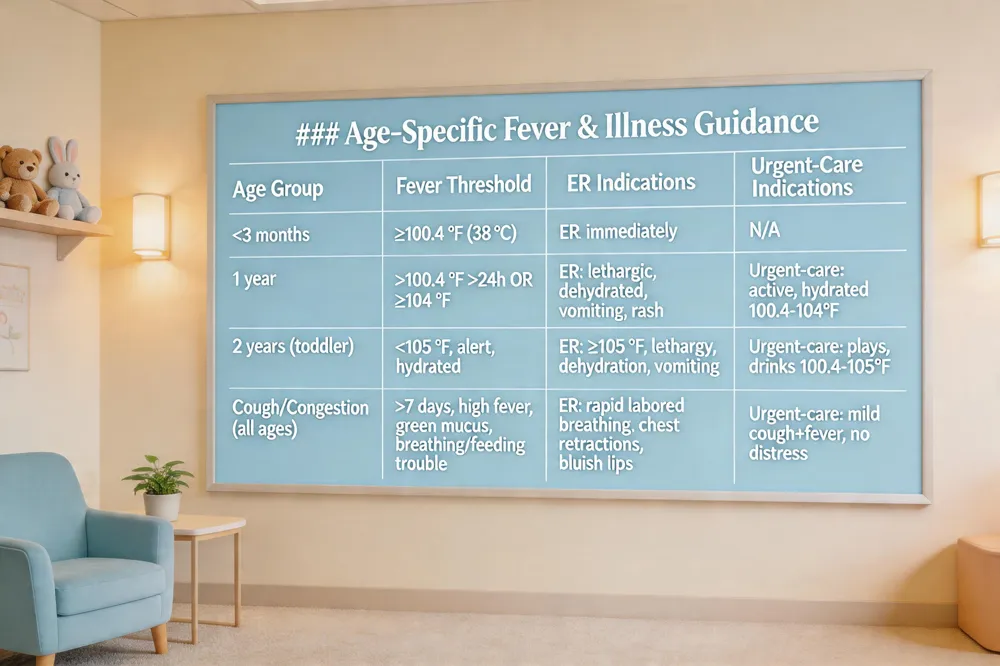 Fever management varies by age. In infants < 3 months, any fever ≥ 100.4 °F (38 °C) is an emergency and requires immediate evaluation in an ER. For 1‑year‑olds, a fever above 100.4 °F lasting more than 24 hours, or any fever that reaches 104 °F (40 °C) or higher, should prompt an urgent‑care visit. Toddlers (2 years) can be observed at home if the fever is below 105 °F and the child stays hydrated, awake, and playful; otherwise, seek emergency care for temperatures ≥ 105 °F or signs of lethargy, dehydration, or persistent vomiting.
Cough and congestion are common but can hide serious illness. Use saline drops, a humidifier, and gentle suction for mild stuffiness in babies. Call 911 or go to the ER if you notice rapid or labored breathing, chest retractions, flaring nostrils, or bluish lips. Persistent cough > 7 days, high fever, green mucus, or difficulty feeding also warrants urgent evaluation.
Finding pediatric urgent care for infants is simple: search for “pediatric urgent care near [city]” or use local health‑system locators. In the Atlanta area, clinics such as Kids & Teens Urgent Care, Children’s Hospital of Atlanta Urgent Care, and Emory Children’s Hospital Urgent Care accept patients from birth onward and offer extended hours. Call ahead to confirm age eligibility and insurance.
FAQ
- When should I take my baby to the hospital for congestion? If the baby shows respiratory distress (rapid or labored breathing, chest retractions, flaring nostrils, bluish lips) or cannot feed due to congestion, go to the ER. Otherwise, use saline drops and a humidifier and call your pediatrician.
- When should I take my 2‑year‑old to the hospital for a fever? Immediate ER if temperature ≥ 105 °F, the child is lethargic, cannot keep fluids down, or shows dehydration. For lower fevers with normal behavior, call pediatrician or consider urgent care.
- When should I take a 1‑year‑old to urgent care for a fever? Persistent fever > 100.4 °F for > 24 hours, or any fever ≥ 104 °F, or associated with rash, vomiting, or dehydration, requires urgent‑care evaluation (CHLA guidance).
- When should I take a child to urgent care for a cough? If the cough lasts > 7 days, worsens, or is accompanied by high fever, green mucus, difficulty breathing, or bluish lips, seek urgent care.
- Where can I find urgent care for a 1‑year‑old near me? Look up pediatric‑focused urgent‑care centers in your area (e.g., Kids & Teens, Children’s Hospital of Atlanta). Call ahead to verify they accept infants and check insurance.
Additional Resources, Rules, and Guidance
Resources & Guidelines
| Resource | Description | Access |
|---|---|---|
| 10‑10‑10 rule for kids | Three 10‑minute screen‑free connection windows daily to build emotional security | Parenting guides, pediatric blogs |
| Urgent‑care guideline PDF | Protocols for fever, asthma, abscess, anaphylaxis, button‑battery ingestion, vital‑signs policy | Download from Children’s Healthcare of Atlanta website or Urgent Care Crash Course site |
| Pediatric emergency medicine portals | ACEP Pediatric Emergency Medicine Section, TREKK, AAP Emergency Medicine, UNC PEM | Online toolkits, quick‑reference sheets, podcasts; contact UNC PEM coordinator (daniel.park@unc.edu) for links |
| Poison‑control | 1‑800‑222‑1222 | Immediate assistance for ingestions, exposures |
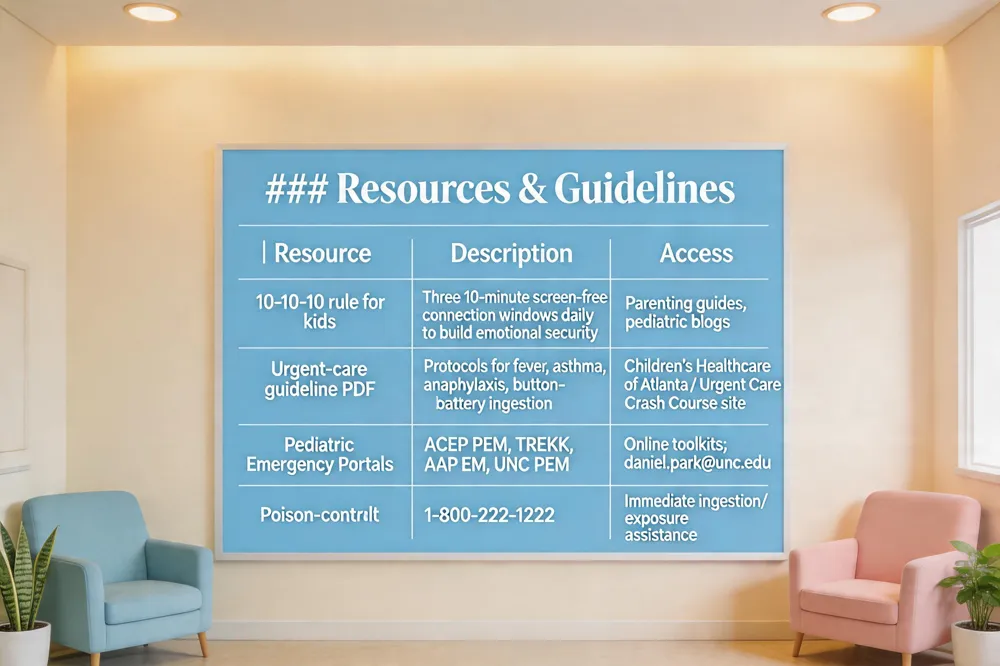 Parents often wonder where to turn for guidance. Below are three concise resources to help you decide about pediatric urgent care and emergencies.
What is the 10‑10‑10 rule for kids? The 10‑10‑10 rule sets three 10‑minute windows each day for focused, screen‑free connection: first after waking, second when you reunite after school or work, and third before bedtime. These brief moments build emotional security, improve behavior, and strengthen the parent‑child bond.
Urgent‑care guideline PDF A downloadable PDF outlines protocols for common pediatric issues—fever, asthma, abscesses, anaphylaxis, button‑battery ingestion, and more—plus a vital‑signs policy and red‑flag thresholds. It is available from the Children’s Healthcare of Atlanta website or the Urgent Care Crash Course site. Clinicians and triage staff use it to ensure safe, standardized care.
Where can I find pediatric emergency medicine resources? Key portals include the ACEP Pediatric Emergency Medicine Section, TREKK, the AAP Section on Emergency Medicine, and the UNC PEM portal. They offer toolkits, clinical policies, quick‑reference sheets, and podcasts. Contact the UNC PEM coordinator (daniel.park@unc.edu) for links.
Key Takeaways for Parents
Spotting red‑flag signs—like labored breathing, bluish lips, a fever over 104 °F in an infant, persistent vomiting, seizures or sudden lethargy—can be lifesaving. If appear, call 911 and go to the emergency department. For less critical issues such as a fever, ear pain, minor cuts or asthma wheeze, a pediatric urgent‑care clinic is appropriate and faster than waiting for an appointment. Follow guidelines from American Academy of Pediatrics, your child's pediatrician, or Poison Control Center (1‑800‑222‑1222) to make the right call.