Why Understanding Vaccine Schedules Matters
Vaccines are one of the most powerful public‑health tools, shielding children from illnesses that once caused severe complications, hospitalizations, and death. By introducing a harmless piece of a pathogen—whether a live‑attenuated virus, an inactivated whole organism, a protein subunit, or a toxoid—vaccines train the immune system to recognize and eliminate the real disease without exposing the child to its dangers. The timing of each dose is not arbitrary; experts examine the disease burden in the community, the age at which a child’s immune system can mount a strong response, and the need to complete protection before exposure becomes likely. The CDC’s Advisory Committee on Immunization Practices and the American Academy of Pediatrics continuously review epidemiologic data, new vaccine trials, and safety reports to update the schedule. Following the latest recommendations ensures that children receive optimal protection, supports herd immunity, and reduces the risk of outbreaks.
The Updated 2025 Childhood Immunization Schedule
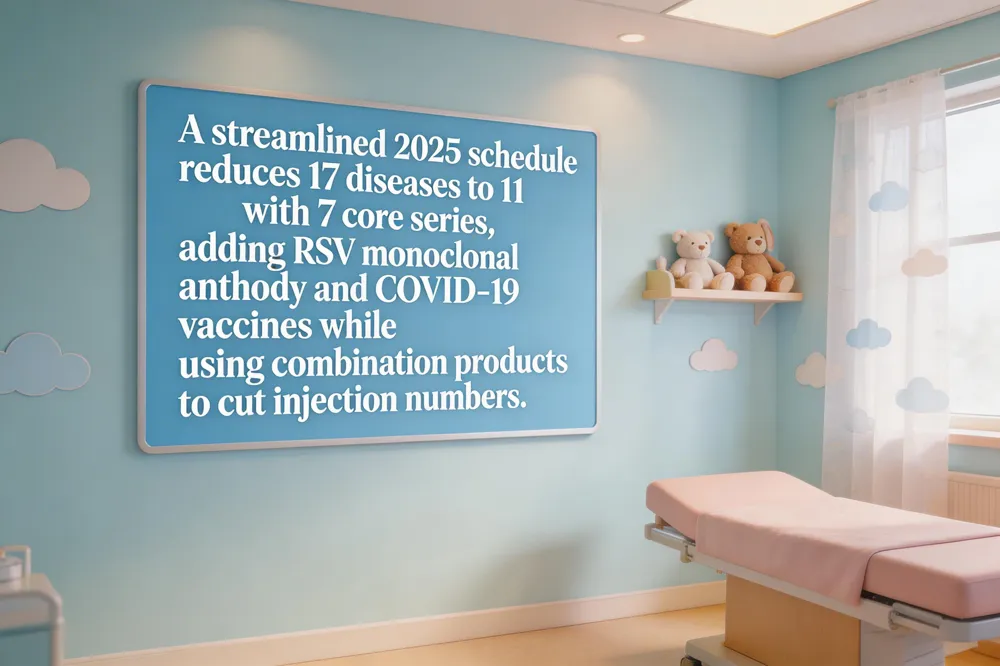 The U.S. Department of Health and Human Services released a streamlined 2025 routine childhood immunization schedule that now targets 11 vaccine‑preventable diseases with seven core vaccine series, down from the previous 17 diseases and 13 separate vaccines. This reduction was achieved by grouping antigens into combination products—such as DTaP‑HepB‑IPV and DTaP‑IPV‑Hib—so fewer injections are needed while maintaining full protection. New additions include the RSV monoclonal antibody (Beyfortus) for high‑risk infants and the COVID‑19 vaccine series for children as young as six months.
The schedule is organized by age milestones from birth through 18 years. At birth, infants receive Hepatitis B (and, when indicated, a single‑dose RSV monoclonal antibody). Early infant visits (2, 4, and 6 months) cover DTaP, Hib, PCV, IPV, rotavirus, and the second HepB dose. The first MMR, varicella, and Hepatitis A doses are given at 12‑15 months, with boosters at 4‑6 years. Adolescents receive Tdap, HPV (2‑dose series if started before age 15), MenACWY, and a second MenACWY booster at age 16.
Catch‑up tables are included for children who start late or fall behind; they use minimum interval guidelines so series do not need to be restarted. The full printable schedule and detailed notes are available on the CDC website and via the CDC Vaccine Schedules app.
Types of Vaccines and How They Work
 Childhood immunizations rely on several vaccine technologies, each designed to teach the immune system to recognize a disease without causing illness.
Live‑attenuated vaccines (e.g., MMR and varicella) contain a weakened form of the virus that can still replicate a little. Because the pathogen is alive, it stimulates a robust, long‑lasting immune response, often after a single dose. This strong response means fewer booster shots are needed, which simplifies the schedule for families.
Inactivated vaccines (e.g., the injectable influenza shot, polio IPV) use viruses or bacteria that have been killed. They cannot cause disease, but the immune system sees only a static copy of the pathogen, so the response is weaker and usually requires multiple doses to achieve durable protection.
Subunit and conjugate vaccines (e.g., hepatitis B, HPV, Hib, pneumococcal conjugate) contain only specific protein fragments or polysaccharide pieces of the germ. These fragments are harmless and focus the immune response on the parts most likely to cause disease. Subunit vaccines often need several doses, while conjugate vaccines (polysaccharide linked to a protein carrier) boost immunity in young children whose immune systems respond poorly to polysaccharides alone.
Toxoid vaccines (e.g., diphtheria, tetanus) target the toxins that bacteria produce rather than the bacteria themselves. By exposing the immune system to an inactivated toxin, the body learns to neutralize the harmful effects without confronting the whole organism.
Together, these vaccine types provide layered protection throughout childhood, balancing safety with the need for strong, lasting immunity.
Safety, Side Effects, and Monitoring Systems
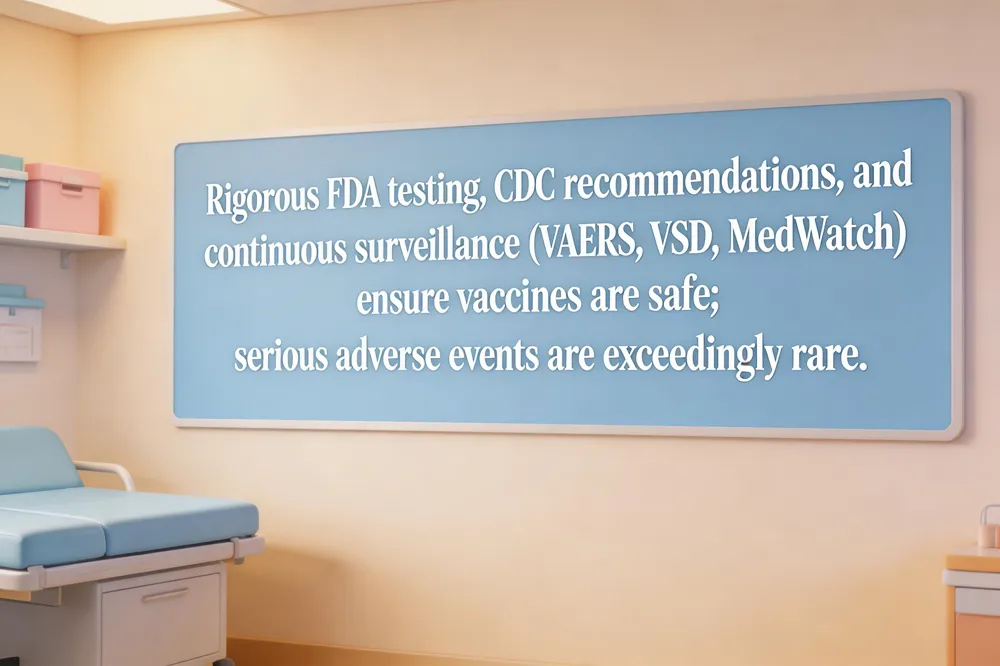 Children’s vaccines are among the most rigorously evaluated medical products in the United States. Before any vaccine receives licensure, the Food and Drug Administration (FDA) requires years of pre‑clinical testing, multiple phases of clinical trials, and continuous post‑marketing surveillance. The FDA’s Center for Biologics Evaluation and Research (CBER) reviews safety data, and the CDC’s Immunization Services Division translates those findings into national recommendations.
Common mild reactions – Most pediatric vaccines cause only brief, low‑grade effects such as soreness, redness, or swelling at the injection site, a low‑grade fever, or mild body aches. These reactions reflect the immune system’s normal response to the antigen and resolve within a few days. They are far more common than any serious problem and are not a sign of lasting harm.
Rare serious adverse events – Severe reactions, such as anaphylaxis, neurologic events, or Guillain‑Barré syndrome, occur at rates of less than one per million doses. The United tracks these events through several robust systems: the Vaccine Adverse Event Reporting System (VAERS) collects voluntary reports from clinicians, patients, and manufacturers; the Vaccine Safety Datalink (VSD) conducts active surveillance in large health‑care databases; and MedWatch allows health‑care professionals to report serious product‑related issues directly to the FDA. These databases enable rapid detection of safety signals and prompt public‑health action when needed.
Overall, comprehensive testing, continuous monitoring, and transparent reporting ensure that the benefits of childhood immunizations far outweigh the very small risk of serious adverse events.
Herd Immunity and Community Protection
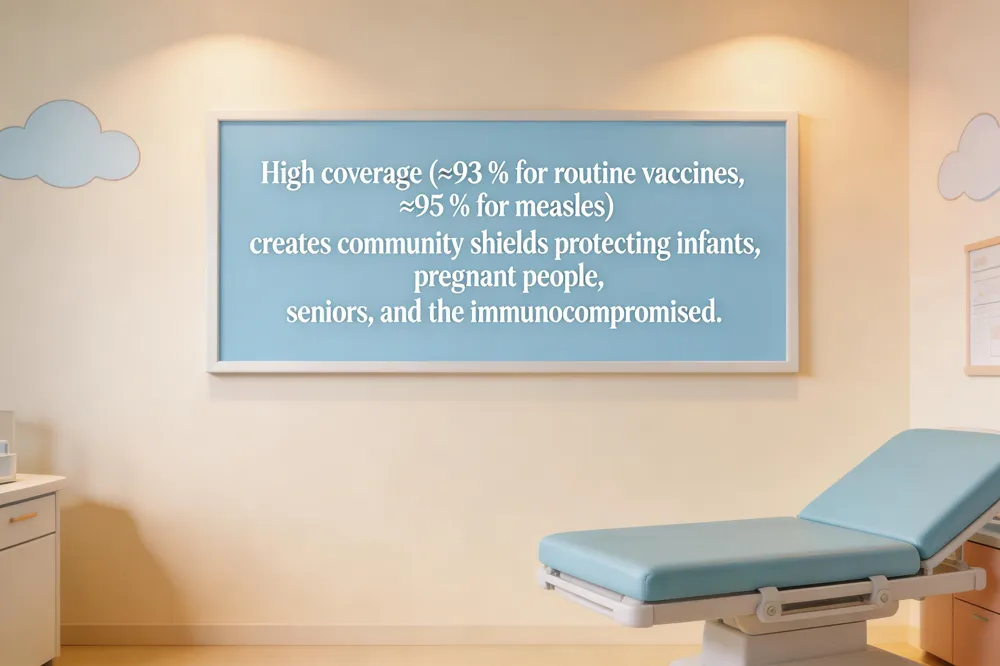 High vaccination rates create a shield around the most vulnerable members of society—infants too young to be fully immunized, pregnant people, older adults, and those whose immune systems are compromised and cannot receive certain vaccines. When roughly 93% of US children receive standard vaccinations. the community reaches the herd‑immunity thresholds needed to interrupt transmission of highly contagious diseases. For measles, which spreads easily through respiratory droplets, the CDC estimates a threshold of about 95 % coverage; falling below this level allows the virus to find susceptible hosts, leading to outbreaks whenever an infected traveler introduces the disease. Similar principles apply to pertussis, where a coverage of 80‑90 % is required to protect infants who are most at risk for severe complications. High rates of immunization thus keep the pathogen circulation low, reducing the chance that a single case sparks an epidemic. Conversely, pockets of low vaccination create “blind spots” where measles or pertussis can spread rapidly, endangering both unvaccinated children and those who rely on herd protection. Maintaining robust coverage across all age groups is essential for sustained community health.
Timing of Doses: Disease Burden, Immunogenicity, and Visit Efficiency
 Vaccines are scheduled at ages when a child's immune system can mount the strongest response, which maximizes protection while keeping side effects mild. For example, the measles‑mumps‑rubella (MMR) vaccine is given at 12‑15 months because maternal antibodies that linger after birth begin to wane, allowing the infant’s own immune cells to generate a robust, lasting immunity. If maternal antibodies are still high, as they often are before 6 months, the measles vaccine may be less effective, which is why the first dose is delayed until the immune system is ready.
To keep families from juggling many separate appointments, the CDC and AAP recommend Combination vaccines (Pediarix, Pentacel, MMRV) (e.g., Pediarix, Pentacel, MMRV). These combine several antigens into one injection, delivering protection against multiple diseases in a single visit. This strategy not only reduces the number of clinic trips but also ensures that children receive all recommended doses on schedule, lowering the risk of gaps that could leave them vulnerable to disease.
In summary, the timing of each dose reflects three core principles: matching the period of highest disease risk, aligning with the age at which the immune system can produce a strong response, and bundling vaccines whenever possible to make the immunization process as convenient as possible for families.
Receiving Multiple Vaccines in One Visit
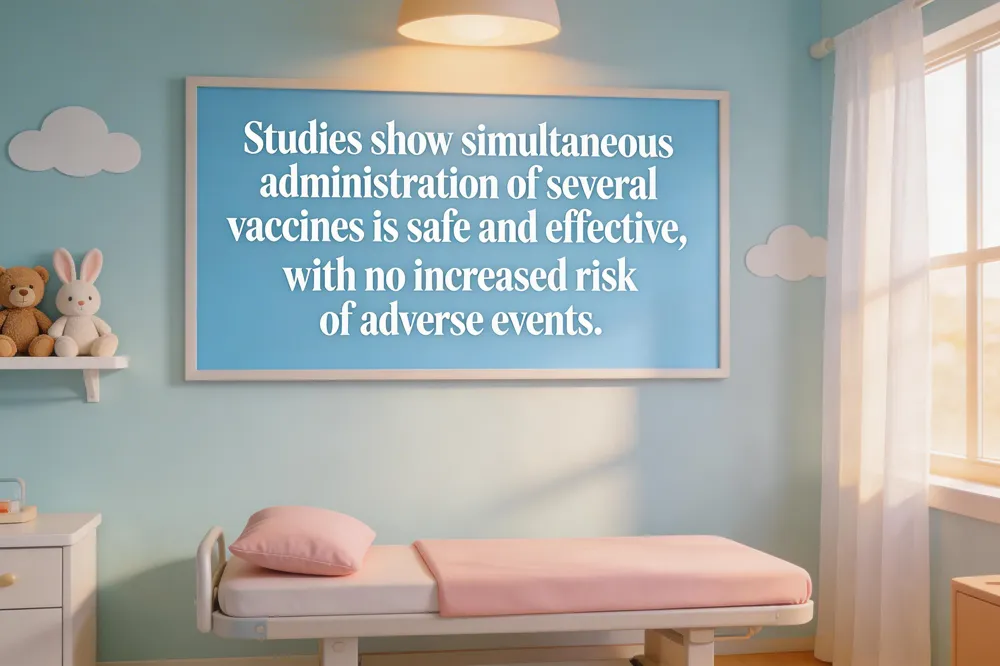 Extensive research shows that a child’s immune system can safely handle thousands of antigens each day, far more than the a dozen antigens present in the routine pediatric vaccine schedule. Large‑scale safety monitoring systems such as VAERS, VSD, and the CDC’s Immunization Services Division have found no increased risk of adverse events when several vaccines are given together. Combination products—Pediarix (DTaP‑HepB‑IPV), Pentacel (DTaP‑IPV‑Hib), and MMRV (measles‑mumps‑rubella‑varicella)—have been studied in rigorous clinical trials that demonstrate comparable immunogenicity and safety to the individual component vaccines, while dramatically reducing the number of injections per visit. The CDC and AAP endorse concurrent administration of all age‑appropriate vaccines, provided the child is not experiencing a moderate to severe acute illness. Study data confirm that giving vaccines on schedule, even in a single appointment, does not overwhelm immunity immune system and offers the best protection during the periods of highest disease risk. Parents can feel confident that receiving multiple vaccines at one visit is safe, effective, and essential for maintaining community (herd immunity).
Catch‑Up Immunization: Getting Back on Track
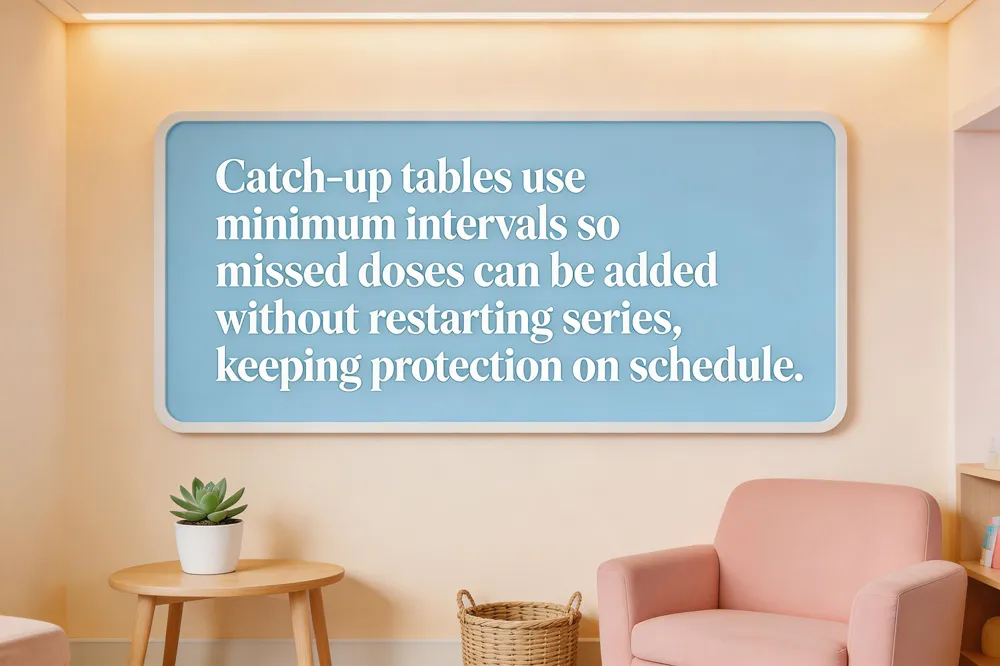 When a child falls behind the routine schedule, the CDC’s catch‑up tables provide a clear roadmap that respects the minimum‑interval guidelines for each vaccine. These tables show the shortest permissible time between doses—often four weeks for most injectable vaccines and longer for live‑attenuated ones—so providers can safely compress the schedule without compromising immune response. Importantly, families do not need to restart a series just because a dose is missed; the child can continue from the most recent vaccine, using the minimum intervals to determine when the next dose is due. This prevents unnecessary injections and keeps protection on track. Special considerations apply to immunocompromised or high‑risk children, such as those with asplenia, chronic lung disease, or on immunosuppressive therapy. For these patients, certain live vaccines (e.g., MMR, varicella) may be delayed or substituted, and additional doses of pneumococcal or meningococcal vaccines may be required. Clinicians also tailor the timing of boosters and may use alternate formulations (e.g., conjugate instead of polysaccharide) to ensure robust immunity while respecting each child’s unique health status.
Special‑Risk Vaccines and Shared Decision‑Making
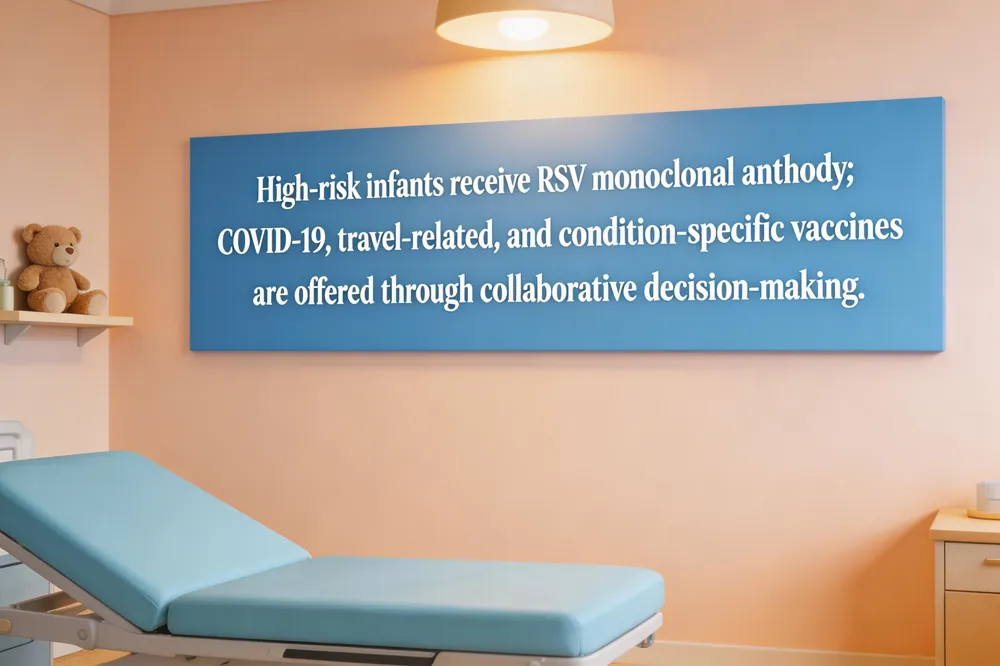 While the routine U.S. childhood schedule protects the vast majority of kids, certain children need extra safeguards. Infants born during the RSV season who are not protected by maternal vaccination should receive a one‑time monoclonal antibody—nirsevimab (Beyfortus)—within the first week of life. This passive‑immunity product reduces severe RSV disease in high‑risk infants and is given as a single injection, with a possible repeat dose before a second RSV season for children who remain vulnerable.
COVID‑19 vaccination is now part of the standard pediatric toolkit. The CDC recommends that all children age 6 months and older receive an age‑appropriate primary series (usually two mRNA doses) followed by annual boosters beginning at age 5 years. Immunocompromised children may need additional doses or an earlier booster schedule, and clinicians should discuss the timing and product choice with families.
Beyond these, travel, chronic illnesses, and specific risk factors trigger shared decision‑making vaccines. For example, hepatitis A for travel‑related exposure, meningococcal B for adolescents with certain medical conditions, or the dengue vaccine for children ≥9 years living in endemic U.S. territories are offered after a clinician‑parent discussion weighing benefits, risks, and individual health status. This collaborative approach ensures each child receives the right protection at the right time.
The Bottom Line: Protecting Your Child’s Health Through Vaccination
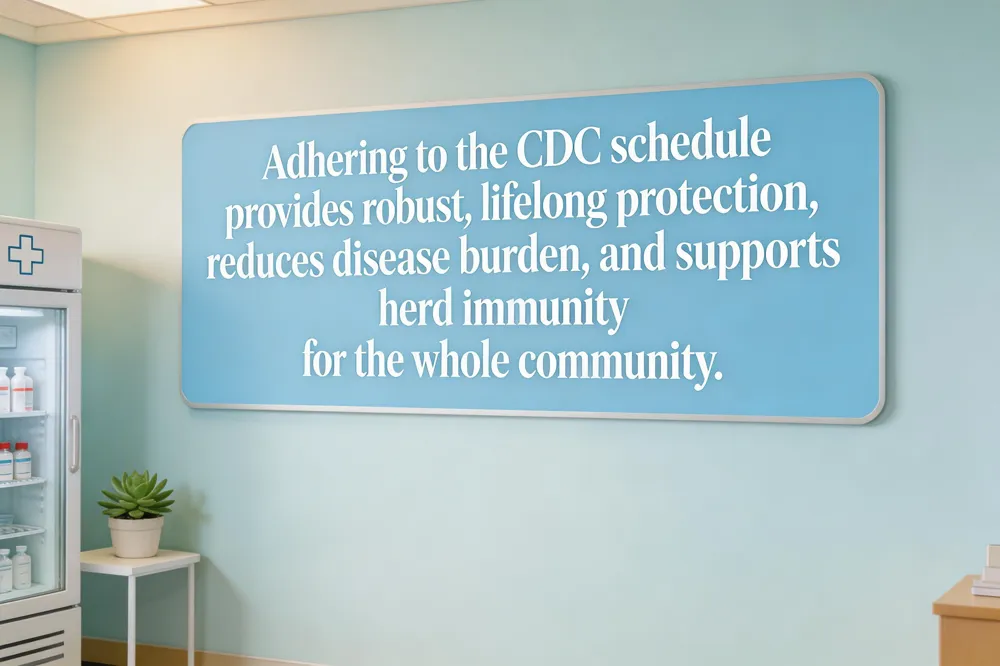 Timely childhood immunizations are one of the most powerful tools families have to keep kids healthy. By following the CDC’s age‑specific schedule, children develop immunity before they are likely to encounter dangerous pathogens, dramatically reducing the risk of severe disease, hospitalization, and even death. The schedule is built on solid science: vaccines such as DTaP, MMR, varicella, and HPV generate strong, long‑lasting protection while requiring only a few visits, and combination shots further cut the number of injections.
Parents can stay on track easily. The CDC’s free Immunization Schedules app, printable PDFs, and state‑run registries (like Florida SHOTS™) let families view up‑to‑date recommendations, set reminders, and verify records for school or travel. Local practices such as Kids & Teens Primary Healthcare in Decatur, Georgia follow the CDC schedule, offering compassionate, family‑centered care and helping with catch‑up plans if a dose is missed.
Safety is paramount. All U.S. vaccines undergo rigorous FDA testing and continuous monitoring through VAERS, VSD, and other systems; serious reactions are exceedingly rare, while mild side effects signal a normal immune response. When children are vaccinated on schedule, they not only protect themselves but also contribute to herd immunity, safeguarding infants, pregnant people, seniors, and immunocompromised individuals who cannot receive certain vaccines. In short, adhering to the recommended schedule is a simple, evidence‑based way to secure a healthier future for every child.
Your Partner in Keeping Kids Healthy
At Kids & Teens Primary Healthcare in Decatur, Georgia, we follow the most current CDC and American Academy of Pediatrics (AAP) immunization schedules—updates from October 2025 and the 2026 AAP recommendations are built into every well‑child visit. Our team reviews each child’s record against the age‑specific vaccine tables (e.g., DTaP at 2, 4, 6 months and booster at 4‑6 years; MMR at 12‑15 months and 4‑6 years; HPV starting at 11‑12 years) and uses the CDC’s catch‑up intervals to keep kids protected even if a dose is missed. Scheduling is simple: you can book appointments online, via our mobile app, or by calling the office, and we send automated reminders before each milestone. Families receive free printable schedule handouts, insurance eligibility checks, and personalized education sheets that explain vaccine safety, side‑effects, and herd immunity. Our goal is to make staying up‑to‑date effortless and stress‑free so every child can grow healthy and protected.