Why Understanding ADHD Diagnosis Matters
Across the United States, roughly 1 in 10 school‑age children—about 10 % of youth aged 4‑17—are diagnosed with ADHD. These symptoms interfere not only in the classroom, where attention lapses and impulsivity can lower grades, but also at home and in peer groups, leading to strained relationships and reduced self‑esteem. Early identification is a game‑changer: it opens the door to evidence‑based treatments, school accommodations, and family‑focused strategies that can prevent academic setbacks and emotional challenges later on. Primary‑care pediatric practices are the frontline for this work. Pediatricians follow the American Academy of Pediatrics guidelines, gather information from parents, teachers, and other caregivers, rule out medical mimics, and coordinate referrals when needed—ensuring a timely, comprehensive diagnosis that sets the stage for successful, long‑term management.
Defining ADHD and Its Core Symptoms
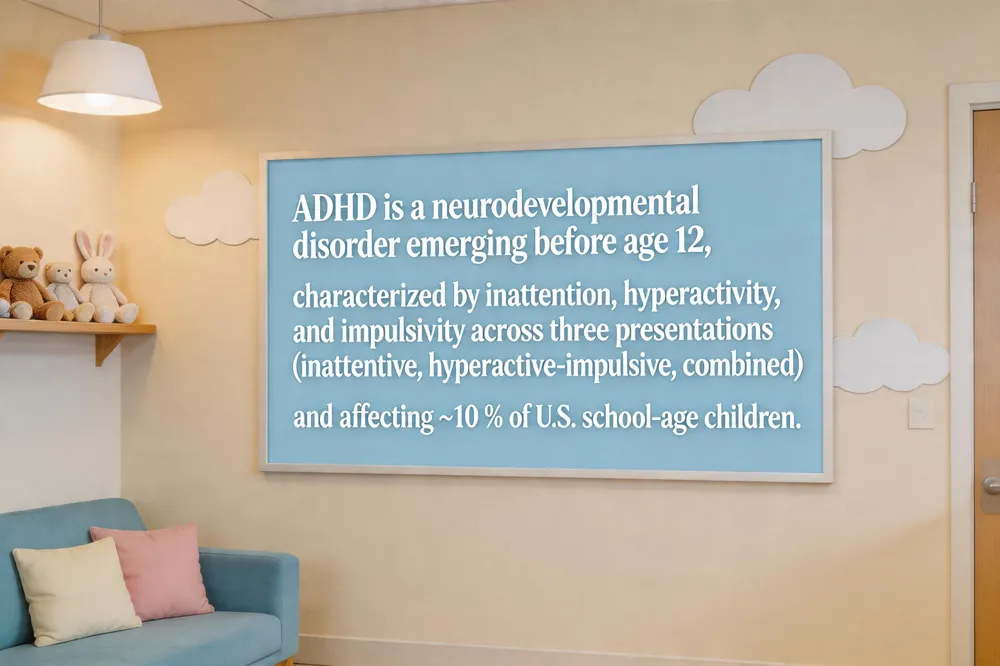 Attention‑deficit/hyperactivity disorder (ADHD) is a neurodevelopmental condition that typically emerges before age 12 and can affect a child's ability to focus, stay organized, and control impulses. The disorder is recognized in three primary presentations: predominantly inattentive (e.g., frequent day‑dreaming, missed details, poor organization), predominantly hyperactive‑impulsive (e.g., constant fidgeting, excessive talking, difficulty waiting turn), and a combined type that meets criteria for both. Common signs across these presentations include inattention, hyperactivity, and impulsivity that are inappropriate for the child's developmental level and persist for at least six months. ADHD is one of the most common childhood disorders in the United States, affecting roughly 10 % of school‑age children. Boys are diagnosed about twice as often as girls, partly because boys often display overt hyperactivity while girls may present more subtly with inattentive symptoms. Early identification and medical evaluation are essential to confirm the diagnosis, rule out other conditions, and begin evidence‑based interventions that can improve academic performance, social relationships, and overall well‑being.
DSM‑5 Criteria for ADHD in Children
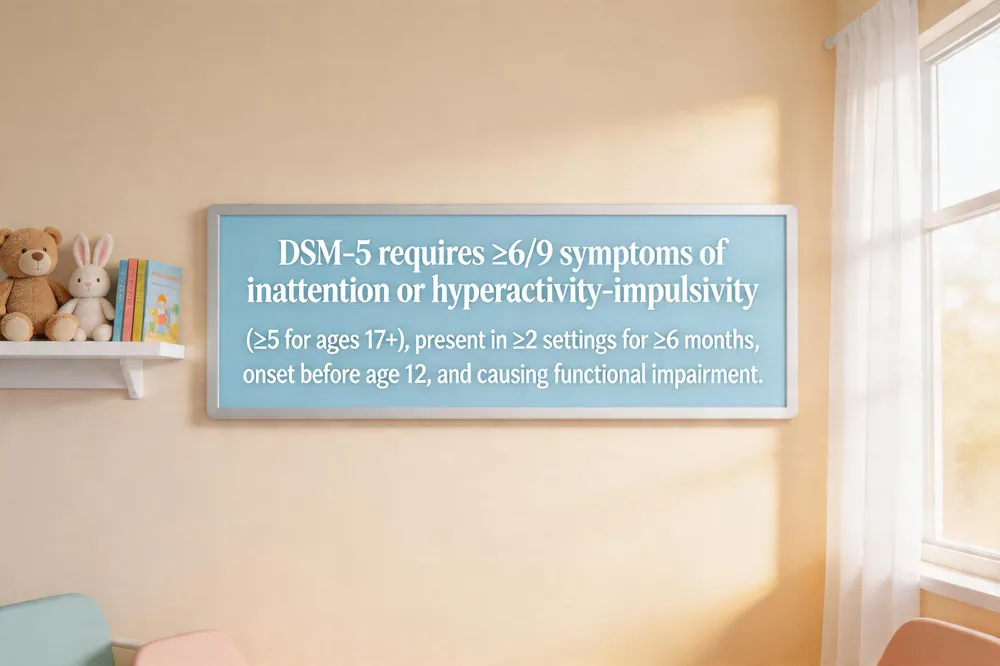 The DSM‑5 sets clear thresholds for diagnosing ADHD in children. Symptom count thresholds require at least six of nine inattention symptoms or six of nine hyperactive‑impulsive symptoms (or both) for ages 4‑16; adolescents 17 and older need five per cluster. Duration, setting, and age‑of‑onset requirements demand that symptoms persist for six months or more, appear in at least two or more settings (e.g., home and school), and have begun before age 12. Functional impairment definition means the behaviors must significantly disrupt social interactions, academic performance, or daily activities; they cannot be better explained by another mental disorder. Differentiating subtypes follows the symptom pattern: predominantly inattentive (only inattention symptoms), predominantly hyperactive‑impulsive (only hyperactivity‑impulsivity), or combined (both clusters).
DSM‑5 criteria for ADHD in child: The DSM‑5 requires that a child show at least six of the nine inattention symptoms or six of the nine hyperactive‑impulsive symptoms (or both) for a duration of six months or longer. These symptoms must be present in two or more settings, such as home and school, and they must interfere with the child’s social, academic, or occupational functioning. Onset must occur before the child turns 12 years old, and the behaviors cannot be better explained by another mental disorder or by oppositional, defiant, or hostile conduct. Depending on which symptom clusters are met, the diagnosis can be classified as predominantly inattentive, predominantly hyperactive‑impulsive, or combined presentation. For adolescents 17 years and older, the threshold is reduced to five symptoms per dimension, but the other criteria remain the same.
Who Is Qualified to Diagnose ADHD?
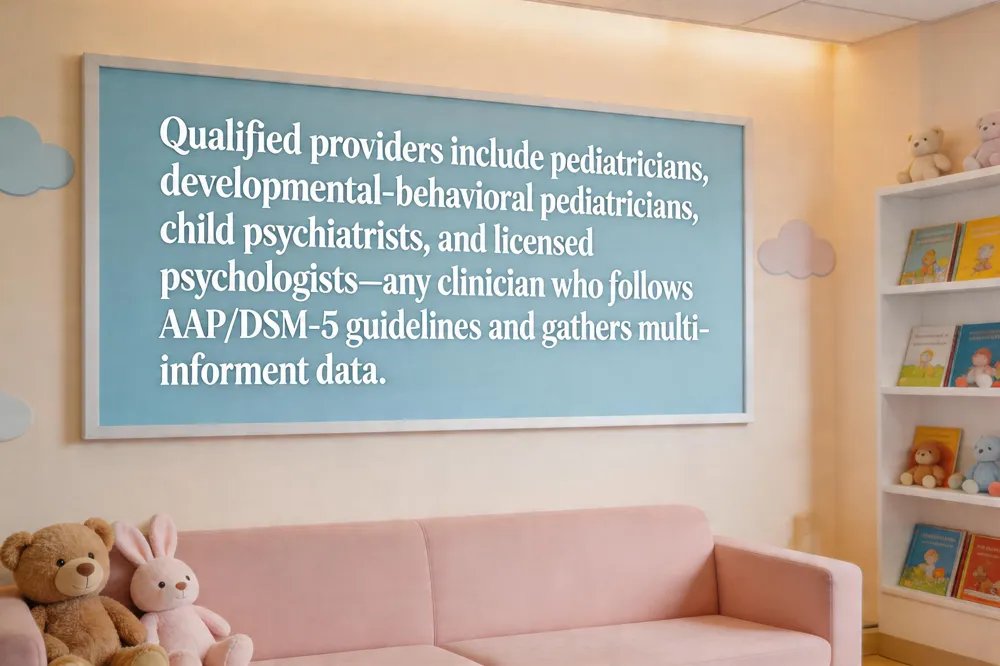 In Georgia, ADHD can be diagnosed by any qualified health‑care provider who follows the American Academy of Pediatrics (AAP) and DSM‑5 guidelines. The most common first point of contact is the child’s primary‑care pediatrician, who can take a detailed medical and developmental history, conduct a physical and neurologic exam, and collect behavior rating scales from parents and teachers. If the pediatrician suspects a more complex picture—such as co‑occurring learning disorders, anxiety, autism spectrum disorder, or severe behavioral concerns—referral is made to a mental‑health specialist. Child psychiatrists and licensed psychologists are trained to conduct in‑depth interviews, administer standardized questionnaires (e.g., Vanderbilt, Conners), and rule out other conditions that mimic ADHD. Board‑certified developmental‑behavioral pediatricians blend medical expertise with behavioral assessment and are especially helpful for preschool‑aged children or cases involving intellectual disability or chronic medical illness. Whichever provider you see, the diagnosis will be based on multi‑informant data (parents, teachers, caregivers) and must meet the AAP/DSM‑5 criteria of symptoms in at least two settings, onset before age 12, and functional impairment.
How Kids & Teens Primary Healthcare Assesses ADHD
 At Kids & Teens Primary Healthcare, the ADHD assessment starts with a thorough clinical interview that includes the child, parents, and, when appropriate, caregivers. The clinician asks detailed questions about symptom onset (must be before age 12), duration (at least six months, and how behaviors affect school, home, and social settings. Next, standardized rating scales—most commonly the Vanderbilt and Conners questionnaires—are mailed or emailed to parents and teachers. These tools capture inattention, hyperactivity, and impulsivity across multiple environments and flag any co‑occurring concerns such as anxiety or learning difficulties.
A physical exam follows, with vision and hearing screenings to rule out sensory problems that can mimic ADHD. The pediatrician also reviews school records, report cards, and any prior evaluations, and may request a teacher‑completed behavior checklist or a short observation session in the office.
All gathered data are compared to DSM‑5 and AAP criteria (six or more symptoms for ages 4‑16, five for older teens, present in at least two settings, causing functional impairment). If the picture fits, a diagnosis is made; otherwise, referrals to specialists or additional testing are arranged.
Five Red‑Flag Signs Parents Often Miss
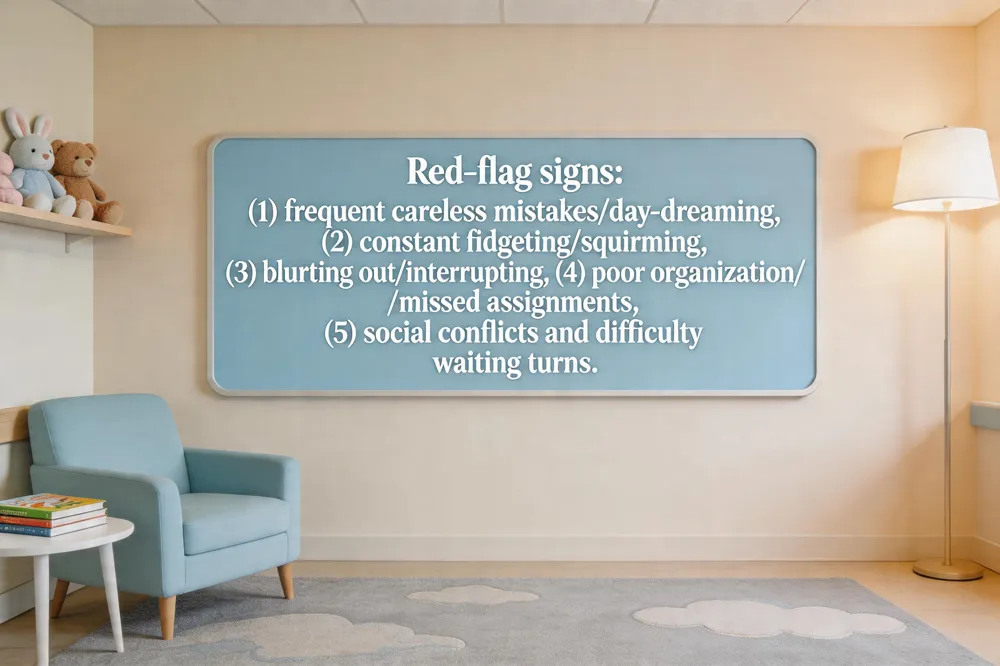 When children’s behavior seems only a little “out of sync,” parents can easily overlook early ADHD clues. Here are the five red‑flag signs that often slip past casual observation, along with why they matter for school performance and social health.
- Inattention indicators – Frequent careless mistakes, a tendency to miss details, and day‑dreaming during class or homework. These lapses can erode academic progress and hide a deeper inability to sustain focus.
- Hyperactivity clues – Constant fidgeting, squirming, tapping, or the inability to stay seated when required. This excess energy can disrupt classroom routines and make it hard for the child to engage in quiet activities.
- Impulsivity examples – Blurting out answers, interrupting conversations, and grabbing objects without asking. Impulsive actions often lead to social friction and safety concerns.
- School‑related difficulties – Poor organization, missed assignments, and trouble following multi‑step directions. When symptoms appear in the classroom, they directly impair learning and grades.
- Social‑behavioral impact – Trouble waiting turns, frequent conflicts with peers, and difficulty maintaining friendships. These challenges stem from the same inattentive and impulsive patterns and can affect self‑esteem.
What are 5 signs a child may have ADHD?
- Careless mistakes and difficulty paying close attention to details in schoolwork or other activities.
- Inability to stay focused on tasks or play; frequent day‑dreaming and easy distraction.
- Fidgeting, squirming, tapping hands/feet, and difficulty staying seated when required.
- Excessive talking, interrupting others, and blurting out answers before a question is finished.
- Acting impulsively—grabbing things without asking, difficulty waiting a turn, and not thinking through consequences.
Recognizing these signs early allows families to seek professional evaluation, ensure safety, and set up supportive school accommodations before the child falls behind academically or socially.
Treatment Guidelines, Home Strategies, and the 5 C’s
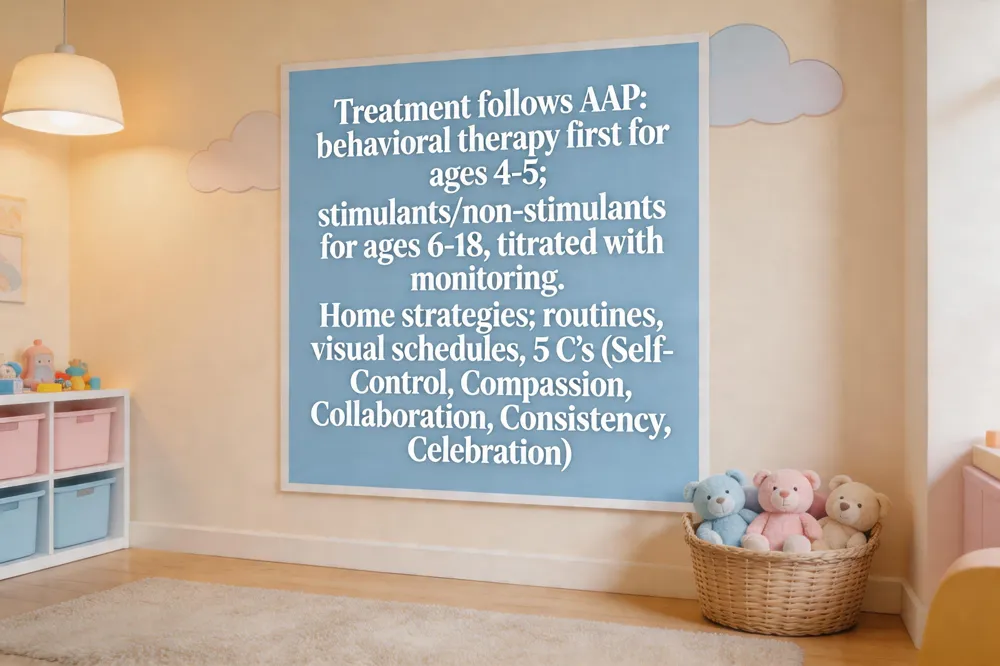 According to the American Academy of Pediatrics (AAP), any child 4‑18 years with academic or behavioral concerns should be evaluated for ADHD using DSM‑5 criteria and input from parents, teachers, and clinicians. For preschool‑aged children (4‑5 years) the AAP recommends evidence‑based behavioral therapy as first‑line treatment; stimulant medication is added only if symptoms remain moderate‑to‑severe. School‑aged children (6‑11 years) and adolescents (12‑18 years) are treated with FDA‑approved stimulants (methylphenidate, amphetamine) or non‑stimulants (atomoxetine, guanfacine, clonidine) alone or combined with behavioral interventions, with doses titrated to maximize benefit while minimizing side effects. Height, weight, blood pressure, and heart rate are monitored, as are academic performance and mood.
At home, a predictable daily routine with visual schedules, broken‑down tasks, timers, and specific reinforcement helps the child stay organized. A quiet, clutter‑free workspace, balanced meals, regular physical activity, and limited screen time support attention and sleep. Parents should practice the “5 C’s” – Self‑Control, Compassion, Collaboration, Consistency, and Celebration – to model regulation and reinforce effort. The “30 % rule” reminds families that children with ADHD typically lag about 30 % behind peers in executive‑function skills, so extra time and structured supports are essential.
When and Where to Seek a Formal Evaluation
 Minimum age for ADHD diagnosis
ADHD can be diagnosed in children as young as four years old, although the American Academy of Pediatrics recommends waiting until age six to be sure the symptoms are not typical preschool behavior. A reliable diagnosis requires at least six months of persistent inattention or hyperactivity‑impulsivity that interferes with home, school, or peer functioning. For children under four, clinicians focus first on behavioral interventions and parent training, reserving medication for older children.
Differences in preschool versus school‑age assessment
Preschool‑aged children (4‑5 years) are evaluated with validated rating scales and detailed observations, but the diagnosis is more challenging because rapid developmental changes can mimic ADHD. School‑aged children (6‑17 years) undergo a multi‑informant assessment—including parent and teacher checklists, a physical exam, and a review of academic records—making the diagnosis more straightforward.
Local evaluation sites and contact information
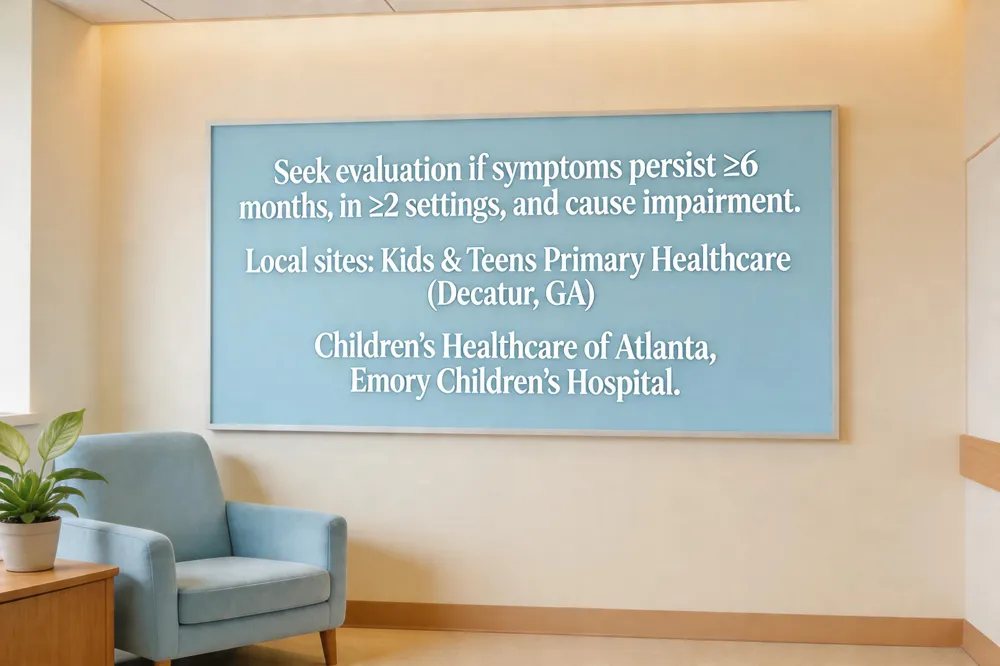
- Kids & Teens Primary Healthcare – 1234 Oak Street, Decatur, GA 30030 – (404) 555‑0123. Offers comprehensive ADHD evaluations with pediatricians trained in behavioral health.
- Children’s Healthcare of Atlanta – Pediatric Behavioral Health Center – 1515 Peachtree Rd, Atlanta, GA 30309 – Accepts most Georgia Medicaid and private insurance.
- Emory Children’s Hospital – Department of Developmental‑Behavioral Pediatrics – 1460 North Decatur Rd, Atlanta, GA 30322 – Provides multidisciplinary evaluations and medication management.
Safety considerations for children with ADHD
Children with ADHD may be less aware of hazards, so extra precautions are essential. Supervise them around traffic, firearms, swimming pools, power tools, and toxic chemicals. Reinforce safety rules regularly, use visual reminders, and consider protective gear when appropriate.
If you notice persistent attention, hyperactivity, or impulsivity across multiple settings for six months or more, contact one of the providers above to discuss a timely evaluation.
Putting It All Together for Your Child’s Success
The ADHD diagnostic pathway begins with a pediatrician’s review of medical history, a physical and neurologic exam, and the collection of symptom information from parents, teachers, and other caregivers using standardized rating scales. Demonstrating that six (or five for teens) symptoms have been present for at least six months, started before age 12, and appear in two or more settings confirms the DSM‑5 criteria. Multi‑informant data are crucial because behavior can look different at home, school, or during extracurricular activities, and it helps rule out other conditions such as anxiety or learning disorders. Successful diagnosis relies on collaboration among families, educators, and clinicians to share observations, discuss functional impairments, and develop a coordinated plan. After a diagnosis, next steps include creating an individualized treatment strategy—often a blend of medication, behavioral therapy, and school accommodations—followed by regular monitoring and adjustments to support the child’s long‑term growth and success.