Why Teen Sleep Matters
Adolescents need 8‑10 hours of sleep each night for optimal growth, cognition, and emotional regulation. Yet most U.S. teens get only 6‑7 hours because puberty delays melatonin release, early school start times clash with this shift, and heavy homework, extracurriculars, and nightly screen use push bedtime past 11 p.m. This chronic sleep loss fuels daytime sleepiness, irritability, poorer grades, and higher risk of mood disorders, obesity, and drowsy‑driving accidents. Weekend “catch‑up” sleep further disrupts the circadian rhythm, worsening fatigue. Recognizing these patterns and seeking medical evaluation when persistent insomnia, loud snoring, or extreme daytime drowsiness occur can prevent long‑term health consequences and restore teen performance.
Biological and Environmental Roots of Sleep Deprivation
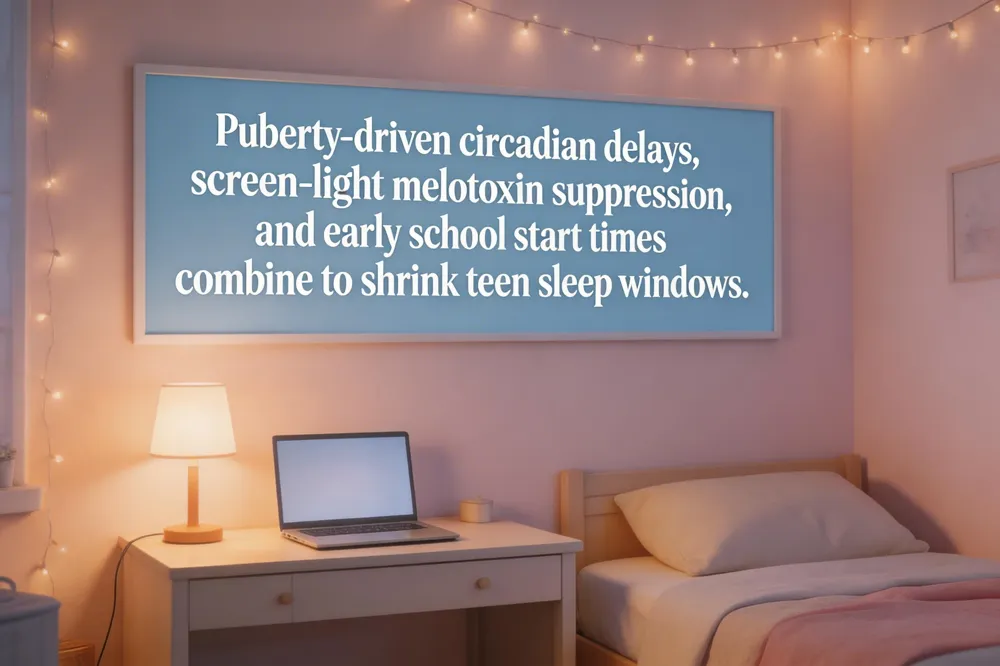 Teenage sleep loss stems from a perfect storm of biology, technology, and daily demands. Circadian phase delay during puberty shifts melatonin release two hours later, so teens naturally feel sleepy after midnight. Blue‑light exposure from screens—smartphones, tablets, computers—suppresses melatonin, pushing bedtime even later. Early school start times (often before 8 a.m.) clash with this delayed clock, forcing wake‑ups before teens are alert. Homework, extracurriculars, and part‑time jobs add evening workload, further shrinking sleep windows. Research shows Only about 8% of U.S. high school students obtain the recommended amount of sleep, while many get 5‑6 hours or less.
Causes of teenage sleep deprivation include hormonal shifts, screen‑time melatonin suppression, early schedules, heavy academic and activity loads, caffeine, and late‑night snacking.
Reasons students don’t get enough sleep are heavy coursework, part‑time work, extracurricular commitments, early start times, and pervasive device use that delays sleep onset.
Puberty can cause sleep problems by delaying the internal clock and increasing emotional stress, leading to later bedtimes and daytime sleepiness.
Why teenagers sleep late: biological night‑owl tendency, school pressures, screen‑time stimulation, and social media keep them up past their natural sleep window.
Research on sleep deprivation in students highlights irregular class schedules, stress, anxiety, excessive screen exposure, caffeine, and uncomfortable sleep environments as primary contributors.
The 10‑5‑3‑2‑1 rule: 10 hrs before bed avoid caffeine, 5 hrs skip alcohol/sugary drinks, 3 hrs finish homework, 2 hrs limit stimulating activities, 1 hr turn off screens and wind down with a calm routine.
Health, Cognitive, and Emotional Consequences of Chronic Sleep Debt
 Chronic sleep deprivation in teens erodes cognition, mood, and health. Long‑term effects include impaired memory, reduced attention, and lower grades, while the pre‑frontal cortex and hippocampus lose efficiency, weakening decision‑making and learning. Deep‑sleep loss cuts REM time, a stage vital for emotional regulation, leaving adolescents prone to irritability, anxiety, depression, and even suicidal thoughts. Mental‑health importance stems from sleep’s role in clearing cortisol and stabilising mood; without 8‑10 hours of sleep, teens experience frequent mood swings, heightened stress, and an increased risk of ADHD‑like symptoms. Brain‑development impacts are evident in neuroimaging studies showing reduced gray‑matter volume and altered connectivity, slowing maturation and compromising impulse control. Physical and metabolic consequences involve disrupted hormone balance, insulin resistance, obesity, and weakened immunity, while daytime drowsiness raises the danger of motor‑vehicle accidents—over 100,000 crashes annually involve sleep‑deprived teen drivers. Societal costs extend to poorer academic performance, higher absenteeism, and greater healthcare utilization. Persistent sleep problems warrant medical evaluation; pediatricians can screen for insomnia, sleep‑apnea, or mood disorders and guide evidence‑based interventions such as CBT‑I, consistent bedtime routines, and limiting evening screen exposure.
Identifying Insomnia and Tracking Sleep Patterns
 Teenagers need 8‑10 hours of sleep, yet biological shifts during puberty, early school start times, and nightly screen exposure often push bedtime past 11 p.m., leading to chronic insomnia and delayed‑sleep‑phase syndrome.
Teenage insomnia test – A brief screening questionnaire asks yes/no questions about difficulty falling asleep, nighttime awakenings, early‑morning wake‑ups, daytime fatigue, mood, and reliance on sleep aids. A positive screen signals that a pediatrician or sleep specialist should evaluate the teen, often with a sleep diary or polysomnography. Treatment begins with lifestyle changes—consistent bedtime routines, limited blue‑light exposure, caffeine reduction—and may incorporate cognitive‑behavioral therapy for insomnia (CBT‑I).
Teenage sleep problems – Common disorders include restless‑legs syndrome, obstructive sleep apnea (especially in overweight teens), and occasional nightmares or sleepwalking. Symptoms such as irritability, poor concentration, and increased accident risk warrant prompt medical assessment.
Adolescent sleep worksheets – Printable logs let teens record bedtime, wake‑time, screen use, caffeine intake, and mood. These worksheets raise awareness of habits that impair sleep, provide concrete data for clinicians, and support goal‑setting for healthier routines.
Sleep hygiene for Teens PDF – The downloadable guide outlines evidence‑based tips: cool dark bedroom, one‑hour screen‑free wind‑down, regular daytime exercise, and consistent wake‑times—even on weekends. Parents and providers should review completed worksheets during visits to reinforce positive habits and identify when professional evaluation is needed.
Evidence‑Based Sleep Hygiene and Lifestyle Strategies
 What is a healthy sleep hygiene for teens? Teenagers need 8‑10 hours of sleep and should keep a consistent bedtime and wake‑time, even on weekends to stabilize their circadian clock. Aim for at least 60 minutes of daily exercise but finish vigorous activity at least a few hours before bed. Avoid caffeine after the early afternoon and turn off electronic devices at least one hour before lights‑out to lessen blue‑light suppression of melatonin. Create a calming wind‑down routine—reading, gentle music, or breathing exercises—to signal the brain that it’s time to rest. If anxiety persists, seek a pediatrician’s help.
Sleep tips for Teens Maintain a regular schedule with a maximum one‑hour weekend drift. Keep the bedroom tech‑free; charge phones outside the room and use the space only for sleeping. Limit caffeine and large meals in the evening; a light snack is okay. Adopt a soothing pre‑sleep ritual (e.g., a warm chamomile tea) and keep the room cool, dark, and quiet.
How to treat sleep disorder naturally? Establish a steady sleep‑wake routine, a cool (65‑70 °F) dark bedroom, and limit evening caffeine and vigorous activity. Consider low‑dose melatonin (0.5‑3 mg) after consulting a pediatrician, and use relaxation techniques or gentle yoga before bed.
Best / aid for teenager For most teens, the safest aid is a solid sleep‑hygiene plan. If needed, a pediatric‑guided low‑dose melatonin supplement is preferred over over‑the‑counter antihistamines, which can cause grogginess and tolerance.
When to Seek Professional Help and Treatment Options
 Medical evaluation: When a teen shows persistent daytime sleepiness, loud snoring, restless legs, or mood changes, a pediatrician should assess for apnea, insomnia, depression, or other disorders. A sleep study may be ordered if breathing pauses or severe insomnia are suspected.
Cognitive‑behavioral therapy for insomnia (CBT‑I): The first‑line, non‑pharmacologic treatment. CBT‑I teaches teens to restructure thoughts, limit rumination, and adopt a consistent bedtime routine. It can be delivered in person or through reputable online programs and has been shown to improve sleep and reduce anxiety.
Melatonin and supplements: Low‑dose melatonin (0.5–3 mg) taken 30–60 minutes before bedtime may help reset a delayed circadian clock, but should only be used after pediatric guidance and for short periods. Caffeine, nicotine, and heavy evening meals should be avoided.
School‑policy advocacy: Encourage districts to adopt start times of 8:30 a.m. or later, aligning school schedules with teen biology and reducing chronic sleep debt.
How to fix sleep deprivation: Schedule a pediatric check‑up, enforce a regular sleep‑wake schedule, limit evening screens and caffeine, and create a cool, dark bedroom. Trim non‑essential after‑school commitments and consider a brief afternoon nap (20‑30 min).
How to treat teenage insomnia: Prioritize sleep hygiene, address underlying anxiety or depression, and refer for CBT‑I. Short‑term melatonin may be added under medical supervision; medication is rarely needed.
How to give a teenager help sleep: Remove devices from the bedroom, use a dimming light, keep the room at ~68–70 °F, and establish a calming wind‑down routine. If problems persist, seek professional evaluation.
Community Resources, Advocacy, and Ongoing Support
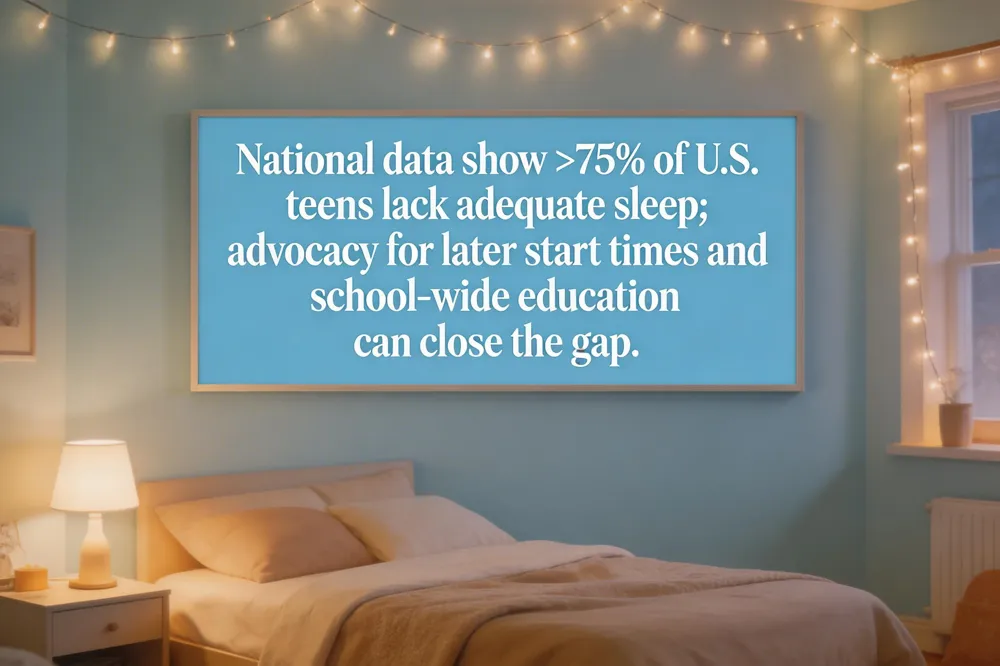 Sleep deprivation in high school students statistics
According to the CDC Youth Risk Behavior Survey, about 77 % of U.S. high‑school students reported getting less than the recommended 8 hours of sleep on school nights in 2021, up from 69 % in 2009. The gap is larger among females—80 % reported insufficient sleep in 2021—compared with males at 75 %. State‑level data range from 71 % in South Dakota to 84 % in Pennsylvania. A 2023 study found 23 % of teens get five hours or less, an increase from 16 % in 2007.
Sleep deprivation in teens statistics
National surveys show 77 % of high‑schoolers fall short of eight hours, with females reporting higher rates (80 % vs 75 %). A study of urban Hispanic adolescents revealed 75 % of pre‑adolescents and 45 % of late adolescents were sleep‑deprived, citing screen time, homework, and part‑time jobs as primary drivers.
Teen sleep deprivation
More than 85 % of U.S. high‑school students get far less than the recommended 8‑10 hours. Biological phase delays clash with early start times, heavy workloads, and pervasive device use, leading to mood disturbances, poorer grades, and drowsy‑driving risk. Medical evaluation is advised for persistent insomnia or daytime sleepiness.
Articles about sleep deprivation on students
Recent reporting highlights that 70 % of college students and over 87 % of high‑schoolers obtain insufficient sleep, correlating with lower GPA, anxiety, and increased accident rates. Experts call for later school start times and school‑wide sleep‑education programs.
Why is my teen struggling to sleep?
Stress, anxiety, hormonal shifts, late‑night screen exposure, caffeine, and irregular routines can all disrupt melatonin release and prolong sleep latency. Consistent bedtime routines, screen limits, and wind‑down activities can help.
How to fix sleep dehydration in teenagers?
Schedule a pediatric check‑up, enforce regular sleep‑wake times, limit evening caffeine, create a tech‑free bedroom, and advocate for later school start times. Modeling good habits and using evidence‑based apps (e.g., Sleep Ninja®) reinforce healthy sleep.
What is a 10‑5‑3‑2‑1 rule for sleep?
Ten hours before bed: avoid caffeine. Three hours: skip alcohol/sugary drinks. Two hours: finish homework. One hour: turn off screens and engage in a calming activity. This checklist supports a stable circadian rhythm.
School start time policies
The American Academy of Pediatrics recommends middle and high schools start no earlier than 8:30 a.m.; districts that have delayed start times report increased sleep duration, better grades, and reduced crash rates.
Parent education and modeling
Parents who set consistent bedtimes and limit device use improve teen mood and reduce depressive symptoms. Modeling these habits is crucial.
Online tools and apps
Apps such as Sleep Ninja®, Calm, and light‑therapy alarm clocks help teens track sleep, limit blue‑light exposure, and maintain regular schedules.
Link to practice resources
For clinicians, the CDC’s Sleep Health Toolkit and the American Academy of Pediatrics’ policy statements provide printable handouts and counseling scripts to support families.
Putting It All Together for Healthier Teens
Teen sleep loss stems from biology, screens, heavy homework, and school start times, leading to mood swings, poor grades, and unsafe driving. Families and schools must set bedtime routines, limit device use, and advocate start times. Kids & Teens Primary Healthcare offers screenings, counseling, and sleep‑hygiene workshops.