The Essential Role of Sports Physicals
A sports physical, also called a pre‑participation physical evaluation, is a focused health check that determines whether a child or teen can safely join a sport. Most U.S. states and school districts require a current form before a student can play, and many leagues make it a condition of participation. The exam reviews medical history, measures vital signs, screens heart, lungs, joints and vision, and asks about asthma, concussion history, family heart disease, and menstrual health for girls. By catching hidden conditions early—such as heart murmurs, uncontrolled asthma, or joint instability—physicians can treat or modify activity, reducing injury risk and ensuring that young athletes stay healthy, confident, and ready to perform.
Understanding the Sports Physical Exam

Why do kids need physicals for sports?
A sports physical screens for hidden health problems—heart conditions, asthma, joint or musculoskeletal issues, and vision problems—that could make participation unsafe or increase injury risk. The pediatrician measures height, weight, blood pressure, listens to heart and lungs, checks muscle strength and flexibility, and reviews the child’s medical and vaccination history. The visit also provides a chance to discuss sport‑specific equipment, nutrition, mental‑health, and concussion concerns, ensuring the child stays active and safe.
What does a kids sports physical consist of?
The exam starts with a detailed medical‑history questionnaire covering past illnesses, injuries, allergies, medications, family heart history, and sport‑related symptoms (chest pain, dizziness, shortness of breath). The provider records vital signs—height, weight, blood pressure, pulse—and auscultates the heart and lungs. A head‑to‑toe assessment checks eyes, ears, throat, abdomen, spine, joints, muscle strength, flexibility, and includes a brief genital/urinary inspection for boys. Vision screening and a quick posture/balance check are also standard; labs such as a CBC or EKG are added only if risk factors arise.
Sports physical exam checklist
- Review of personal and family medical history (injuries, surgeries, allergies, meds). 2. Vital signs and cardiovascular/respiratory exam for murmurs, wheezes, rhythm abnormalities. 3. Musculoskeletal screen for joint stability, range of motion, pain, and asymmetry. 4. Vision and hearing checks. 5. Genital/abdominal inspection as needed. 6. Immunization status verification. 7. Discussion of sport‑specific concerns (concussion history, asthma triggers). 8. Eligibility determination with any restrictions, referrals, or clearance noted.
Scheduling and Finding a Provider Quickly
 When a sports season is looming, families need a fast, affordable way to get a pre‑participation physical. Many pediatric offices, such as Kids & Teens Primary Healthcare in Decatur, GA, offer same‑day or next‑day appointments and accept most insurance, often covering the exam completely. For walk‑in convenience, retail clinics like MinuteClinic inside CVS or Target stores provide on‑the‑spot sports physicals that meet school‑league forms and usually require only a modest copay.
Where can I get a sports physical ASAP? You can get a sports physical right away at Kids & Teens Primary Healthcare in Decatur, GA. Call 770‑555‑1234 or book online for a same‑day or next‑day slot; insurance is accepted and the required form is completed during the visit.
$20 sports physicals Walgreens? Walgreens’ on‑site clinics list a standard walk‑in fee of around $149 for uninsured patients; promotions or insurance can bring the out‑of‑pocket cost down to $20 or less. Call the specific store to verify.
Does Walgreens do school sports physicals? Yes—Walgreens MinuteClinic and Providence Express Care offer school‑required sports physicals, completing the PPE form that most schools accept.
Sports physicals near me $25? Kids & Teens Primary Healthcare offers a sliding‑scale fee as low as $25 for uninsured families, and nearby retail clinics provide similar low‑cost options with insurance coverage.
Preparing for the Appointment
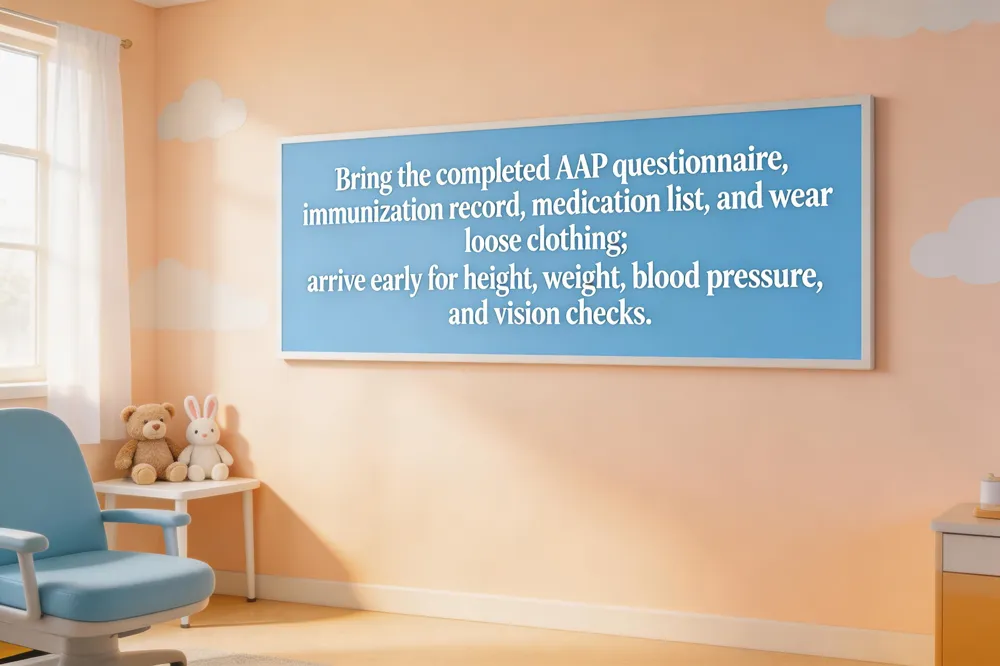 Getting ready for a sports physical doesn’t have to be a hassle. First, download the youth sports physical form (PDF) from our website’s Patient Resources page. The printable AAP‑compliant questionnaire and system‑based exam checklist can be filled out at home—Spanish versions are also available. Bring the completed form, along with any school‑required paperwork, to the visit.
What to bring and wear: Gather your child’s current immunization record, a list of medications and supplements, and any recent lab or specialist reports. Dress them in loose, comfortable clothing that lets the clinician easily examine the chest, arms, legs, and joints. Arrive a few minutes early so the nurse can record height, weight, blood pressure, and vision.
Tips for a smooth, fast exam: Schedule the appointment at least six weeks before the first practice to allow time for follow‑up testing. Complete the medical history questionnaire ahead of time, noting past injuries, asthma, concussions, and family heart‑disease history. Be ready to discuss nutrition, hydration, and injury‑prevention. If you need assistance with the forms, call our office or email the staff. The completed sports‑physical paperwork—health‑history questionnaire, parent consent, and the official eligibility form—will be returned to you ready for school or league submission.
Special Considerations for Boys and Girls
 Sports physicals (pre‑participation exams) are tailored to each athlete’s gender to catch issues that could affect safety. For boys, the exam includes a brief visual and hands‑on check of the penis, scrotum and testicles; this helps spot hidden injuries, hernias, or tumors. Girls receive a focused genital inspection that also looks for menstrual health, bone‑strength concerns and the “female athlete triad.” Both exams are done in a private room, and a parent, guardian or chaperone can be present if the child wants extra comfort. The clinician always explains each step, asks permission before any exposure, and uses a gown or sheet to keep the patient covered. A typical boy’s physical starts with a detailed medical history, then vital signs, heart‑lung auscultation, abdomen palpation, a quick genital check, and an assessment of strength, flexibility and joint stability. A girl’s exam follows a similar pattern, adding menstrual history and nutrition counseling. If a teen feels uneasy, they can request a different provider or discuss alternatives—privacy and respect are top priorities, and the goal is always to keep the athlete safe, not to perform a full sexual exam.
Beyond the Physical: Guidance and Follow‑up
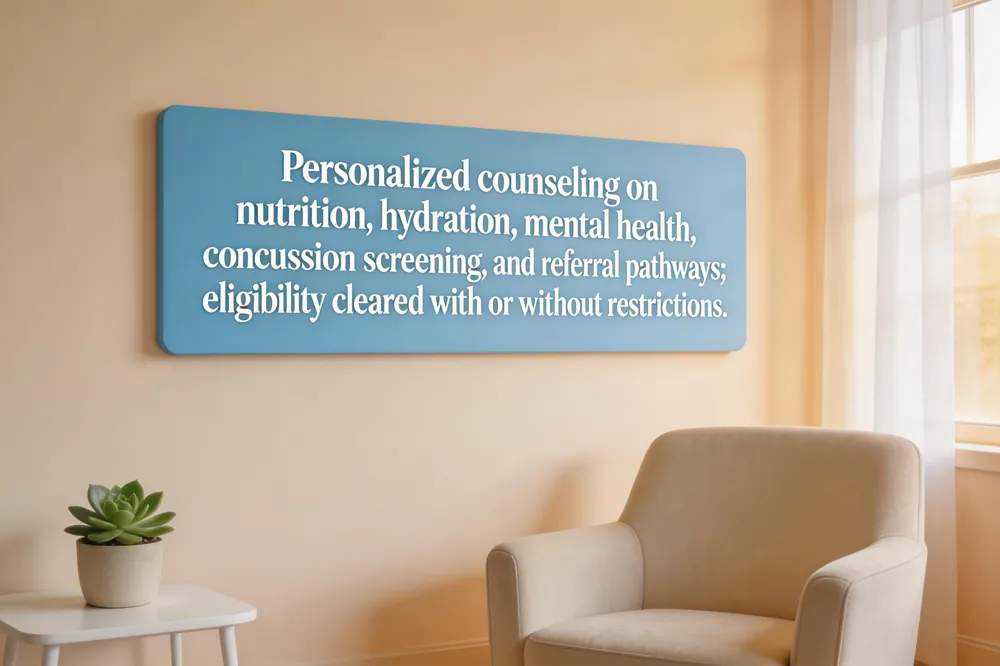 A sports physical does more than clear a child for the season—it launches a partnership for ongoing health. During the exam the clinician reviews a detailed health‑history questionnaire covering past illnesses, surgeries, allergies, medications, family cardiac history, and any prior sports injuries or concussions. Height, weight, blood pressure, heart rate, vision, and cardiopulmonary auscultation follow, along with a musculoskeletal screen for strength, flexibility, joint stability, and posture. Boys may receive an external genital check, while girls are asked about menstrual health. The provider then offers personalized counseling on nutrition, hydration, and injury‑prevention strategies such as proper warm‑ups and equipment use. Mental‑health and concussion screening are integral, identifying stress, anxiety, or lingering post‑concussion symptoms that could affect performance. If concerns arise, the physician outlines referral pathways—cardiology, orthopedics, physical therapy, or sports‑medicine specialists—and assigns an eligibility category: unrestricted clearance, clearance with restrictions, or clearance pending further evaluation. This comprehensive approach, endorsed by the American Academy of Pediatrics, ensures the young athlete stays safe, healthy, and ready to enjoy sports for years to come.
Take Action Today
Sports physicals are a vital safety net, uncovering hidden heart murmurs, asthma, joint instability, vision problems and other conditions that could cause injury or a sudden medical emergency during play. Early detection lets families treat or manage these issues before the season begins, keeping kids healthy and confident on the field. To stay ahead of the deadline, schedule the exam at least six weeks before the first practice. Kids & Teens Primary Healthcare offers appointments at its Tampa office (North 53rd Street, Dixie Farms, Tampa, FL 33619) and Riverview location (North 53rd Street, Riverview, FL 33619). Call (813) 708‑5082 to book.