Why This Topic Matters
Today, almost every American teenager—about 95 % of 13‑ to 17‑year‑olds—spends several hours a day on platforms such as TikTok, Instagram, Snapchat and YouTube. This near‑ubiquitous presence means social media shapes how teens learn, socialize and see themselves. While 58 % report feeling more accepted and 80 % say it keeps them connected, research consistently links more than three hours of daily use with twice the risk of depression, anxiety and sleep problems, especially for girls and those already struggling with mental health. Algorithms that amplify harmful content, cyber‑bullying and exposure to unrealistic body ideals can further erode wellbeing. Parents are the first line of defense: setting clear screen‑time limits, creating device‑free zones, modeling balanced habits and maintaining open, non‑judgmental conversations about online experiences. When warning signs—persistent low mood, irritability, insomnia or changes in school performance—appear, seeking professional evaluation promptly can prevent escalation and protect a teen’s future health.
Teen Social Media Use: Scale and Platforms
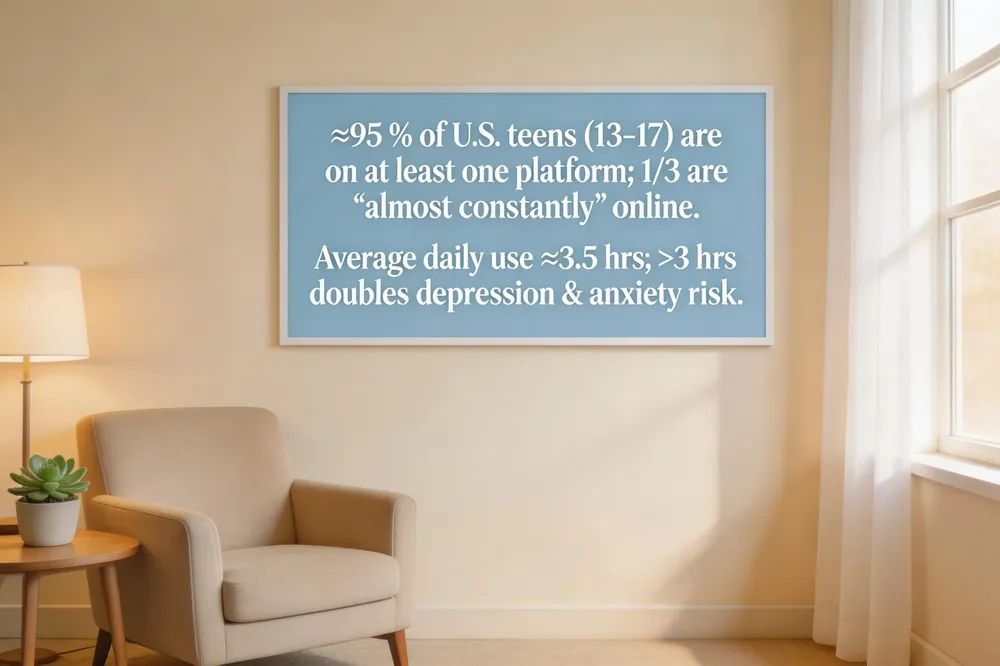 Nearly 95 % of U.S. teens aged 13‑17 are on at least one social‑media platform, and a third describe themselves as “almost constantly” online. The most used apps in 2023 are YouTube, TikTok, Instagram, Snapchat and, with each capturing a large share of daily activity among 13‑ to 17‑year‑olds. On average, teens spend about 3.5 hours per day scrolling, posting, or chatting, and those who exceed three hours have roughly double the risk of depression and anxiety, according to the Surgeon General’s 2023 advisory.
Social media and mental health in teens statistics
Nearly 95 % of U.S. teens use social media; 48 % say it has a mostly negative effect on peers, while only 14 % feel it harms them personally. Forty‑five percent think they spend too much time online, a rise from 36 % in 2022. Girls report higher rates of mental‑health harm (25 % vs 14 %), confidence loss (20 % vs 10 %) and sleep disruption (50 % vs 40 %).
How does social media affect teens statistics
A 2022 survey of 1,300 teens showed 35 % use a platform several times daily, with YouTube, TikTok, Instagram, Snapchat and Facebook leading. Problematic use affects 11 % of adolescents (WHO 2022), especially girls (13 % vs 9 %). Excessive use—three or more hours per day—correlates with poorer sleep, higher anxiety and depression, and reduced academic performance. Parents should monitor usage, encourage screen‑free time, and seek professional help if mood changes or sleep problems emerge.
Negative Mental‑Health Impacts
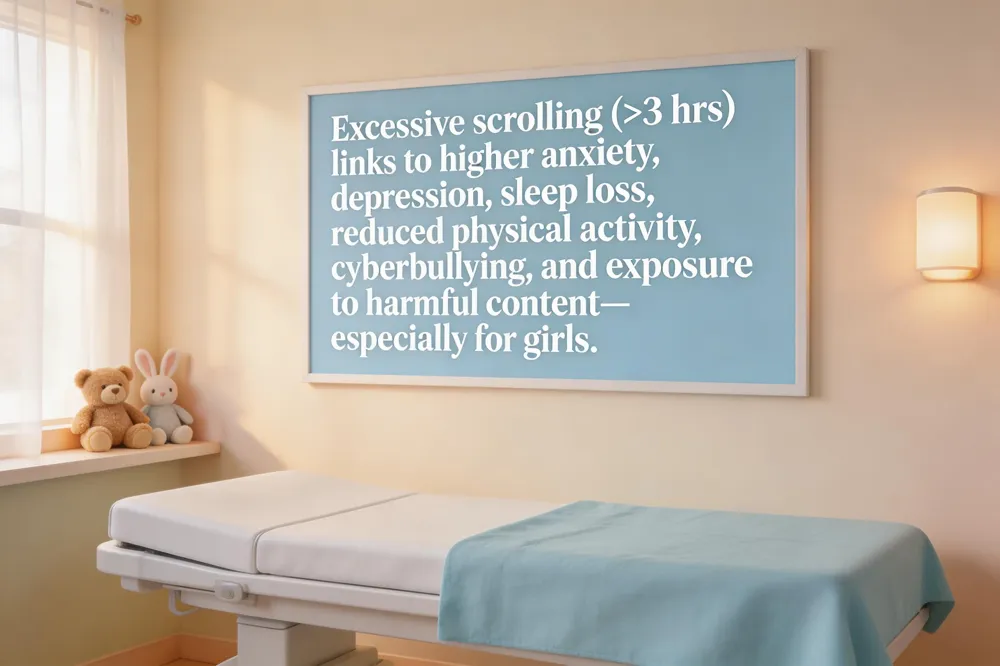 Social media can harm teens in several interconnected ways. Anxiety and depression risk rises sharply when adolescents spend more than three hours per day online; studies from the Surgeon General and APA show a doubled likelihood of depressive and anxious symptoms. Constant exposure to idealized "highlight reels" fuels social comparison, FOMO, and a dopamine‑driven reward loop that can become addictive, eroding self‑esteem when likes are few or comments are negative.
Sleep disruption and reduced physical activity occur because many teens keep phones in their bedrooms and scroll late into the night, cutting 1‑2 hours of sleep and limiting time for exercise, homework, and face‑to‑face interaction—critical for healthy brain development between ages 10‑19.
Cyberbullying and body‑image concerns disproportionately affect girls: hostile comments, cyber‑harassment, and unrealistic beauty standards posted on platforms like Instagram and TikTok increase depression, disordered eating, and feelings of isolation.
Algorithmic amplification of harmful content means that searching for mental‑health topics can flood a teen’s feed with depressive or suicidal material, normalizing risky thoughts.
How does social media affect mental health negatively? It fuels anxiety and depression through constant comparison, addictive checking, and exposure to bullying and unrealistic images, while also disrupting sleep and real‑world activities.
Why is social media bad for teens? Excessive use displaces essential activities, amplifies stressors, and exposes youths to cyberbullying and harmful content, especially hurting girls.
Negative impact of social media on teenager essay: The platform’s addictive nature, relentless comparison, cyber‑harassment, and unsafe content collectively threaten teens’ emotional well‑being and development.
Gender Differences and Vulnerable Populations
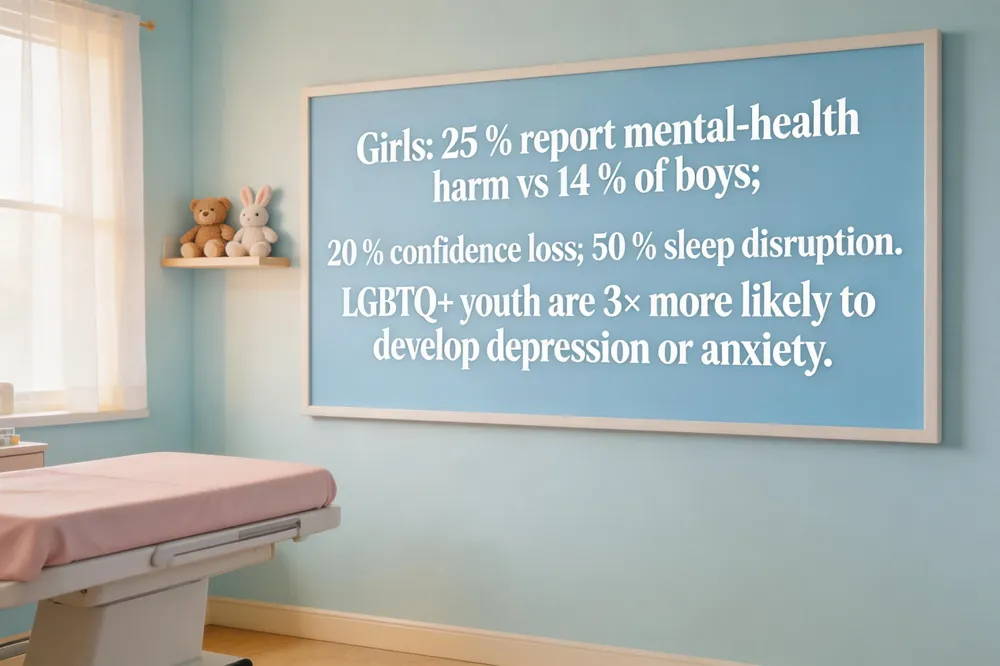 Social media’s influence is not the same for every teen. Adolescent girls face the greatest vulnerability: 25 % say platforms hurt their mental health versus 14 % of boys, 20 % report reduced confidence and 50 % experience sleep problems. LGBTQ+ youth also fare worse; they are three times more likely to develop depression or anxiety and encounter cyber‑bullying that amplifies feelings of isolation. Teens who already struggle with anxiety, depression, or disordered eating are at heightened risk—excessive scrolling can worsen symptoms, disrupt sleep, and trigger harmful comparisons.
Social media and mental health in teens what parents should know statistics
Nearly 95 % of U.S. teens (13‑17) use at least one platform; about two‑thirds log in daily and one‑third are “almost constantly” online. Forty‑five percent feel they spend too much time, and girls report higher rates of mental‑health harm, confidence loss, and sleep disruption. Spending >3 hours per day doubles the risk of depression and anxiety.
The impact of social media on teenage mental health research paper
Research shows a dual nature: platforms can boost acceptance, support, and creativity; yet excessive use links to anxiety, depression, low self‑esteem, and sleep loss—especially for girls and LGBTQ+ teens. Experts call for more longitudinal studies and proactive parental guidance.
The impact of social media on adolescent mental health PDF
Universal use (≈95 %) coexists with risks: cyber‑bullying, unrealistic body ideals, FOMO, and addiction‑like reward cycles that impair emotional regulation. Parents should set screen‑time limits, create tech‑free zones, model healthy habits, and seek professional help when mood changes, sleep disturbances, or self‑harm thoughts appear. Early intervention and regular mental‑health screenings are essential to protect teen well‑being.
Positive Aspects of Social Media
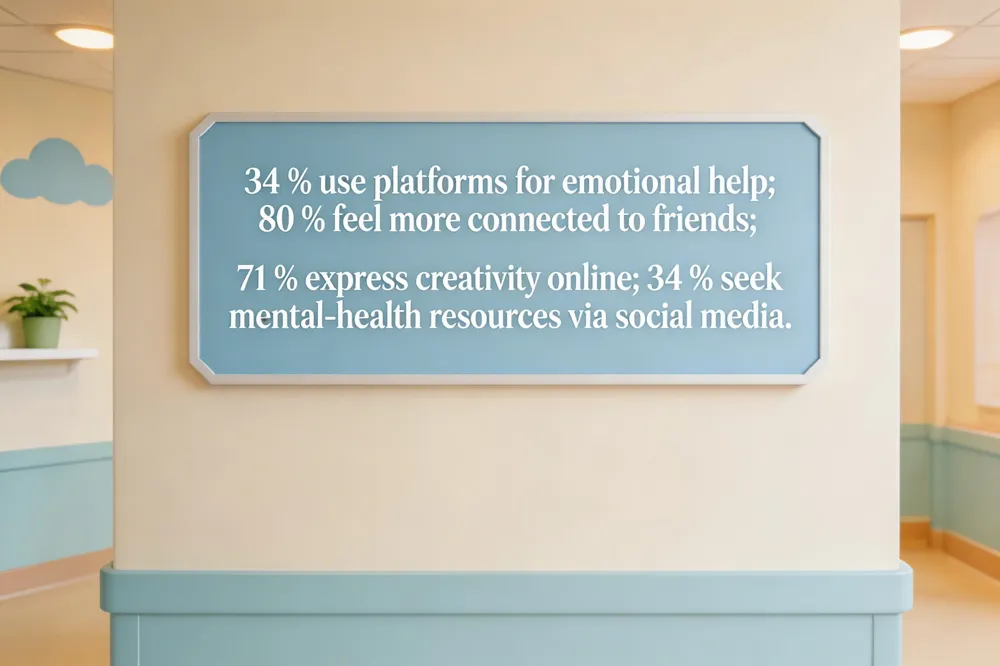 When used thoughtfully, social media can be a powerful ally for teens. It offers a sense of peer connection and support—[34 %] of adolescents report that platforms provide emotional help during tough times, and [80 %] feel more linked to friends (Pew Research, 2022). Creative self‑expression thrives online: [71 %] of teens say social media lets them showcase art, music, or writing, fostering confidence and identity development. Moreover, these platforms serve as conduits for mental‑health resources; [34 % of teens turn to social media for information, and 63 %] of them consider it an important source. While these benefits can boost well‑being, [parents should still model healthy habits, keep open dialogues] and know when professional help is needed—especially if a teen shows signs of anxiety, depression, or other distress. Balancing online positivity with vigilant care helps teens reap the rewards of digital connection without compromising their mental health.
Screen‑Time Limits and Sleep Hygiene
Bedroom Device Rules
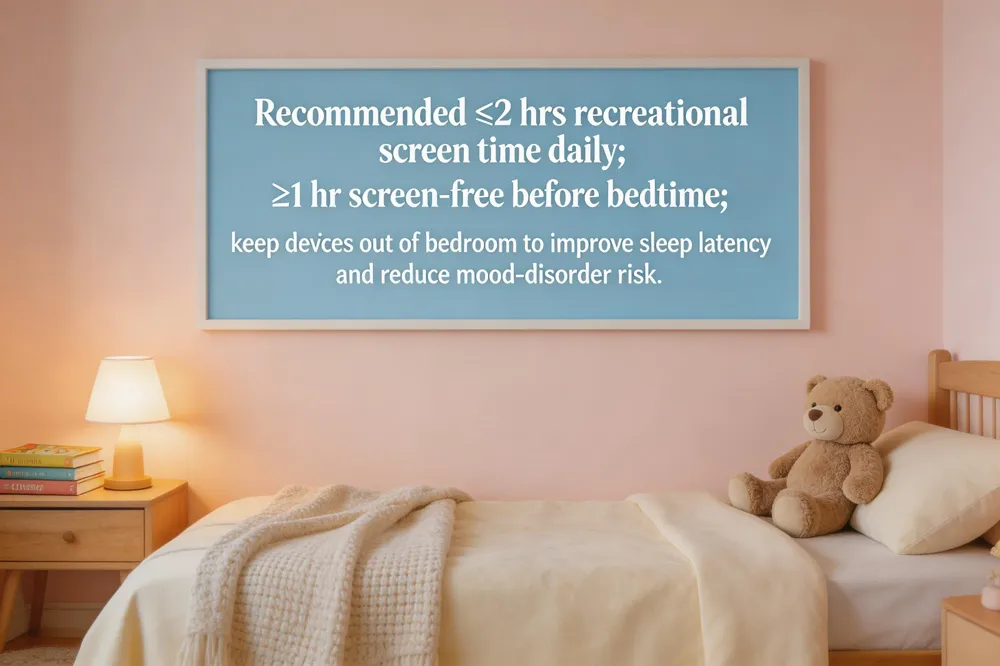
Keeping phones and tablets out of the bedroom is a simple but powerful step. When a teen’s device is in the room, the blue‑light and notifications can trigger the brain’s reward system, making it harder to wind down. The American Academy of Pediatrics and the Surgeon General both recommend a phone‑free bedroom to protect sleep quality and reduce the heightened risk of depression and anxiety that comes from nighttime scrolling.
One‑Hour Screen‑Free Bedtime Window
Research shows that at least one hour of screen‑free time before sleep improves sleep latency and overall restfulness. During this window, encourage activities such as reading a paperback, journaling, or gentle stretching. The National Sleep Foundation notes that teens who stop screen use after 10 p.m. get 1.5‑2 hours more sleep, which is linked to lower rates of mood disturbances and better academic performance.
Recommended Daily Recreational Screen Time
Experts agree that teens should aim for no more than two hours of recreational (non‑educational) screen time each day. Exceeding three hours daily doubles the risk of depression and anxiety, especially for adolescent girls and those already experiencing mental‑health challenges. Setting a clear daily limit, combined with the bedroom and bedtime rules, creates a balanced digital diet that supports emotional well‑being.
Social media and mental health in teens what parents should know 2022
In 2022, about one‑third of U.S. teens reported using social media multiple times a day, and research shows that heavy use—roughly three hours or more each day—can increase the risk of anxiety, depression, and sleep problems. While platforms can provide valuable social support, especially for marginalized or isolated teens, they also expose users to cyberbullying, unrealistic body images, and misinformation that may harm mental health. Girls tend to feel the negative effects more strongly than boys, reporting higher rates of lowered confidence, poorer sleep, and depressive symptoms. Parents should monitor how much time their teen spends online, encourage critical thinking about content, and model balanced device habits at home. Open, non‑judgmental conversations about online experiences and setting clear, consistent screen‑time boundaries can help teens enjoy the benefits of social media while protecting their emotional well‑being.
Social media and mental health in teens what parents should know pdf
Parents should understand that teens’ social‑media use is nearly universal and can both support and threaten mental health. Key risks include anxiety, depression, low self‑esteem, sleep disruption, cyberbullying, and exposure to harmful content, while benefits involve connection, self‑expression, and access to support networks. The U.S. Surgeon General’s advisory and recent parenting guides recommend that caregivers educate themselves about platforms, set clear boundaries, monitor for warning signs, and keep open, non‑judgmental conversations about online experiences. Practical tools such as “name it to tame it” vocabulary, media‑literacy discussions, and age‑appropriate privacy settings can help teens develop healthier digital habits. A concise, printable PDF summarizing these recommendations is available from the Kids & Teens Primary Healthcare website for easy reference.
The impact of social media on teen mental health article
Social media use among teens is linked to higher rates of depression, anxiety, and low self‑esteem, especially when they spend many hours scrolling, comparing themselves to idealized images, or seeking validation through likes and comments. Excessive nighttime scrolling disrupts sleep, which impairs cognitive development and can exacerbate mood disorders. Cyberbullying and exposure to harmful content further increase the risk of emotional distress and suicidal thoughts, particularly for vulnerable groups such as LGBTQ+ youth. At the same time, mindful use of social platforms can foster positive connections, boost self‑confidence, and provide access to health information when guided by parental boundaries. Parents can help by setting clear screen‑time limits, encouraging offline activities, and maintaining open conversations about online experiences.
Open Communication and Modeling
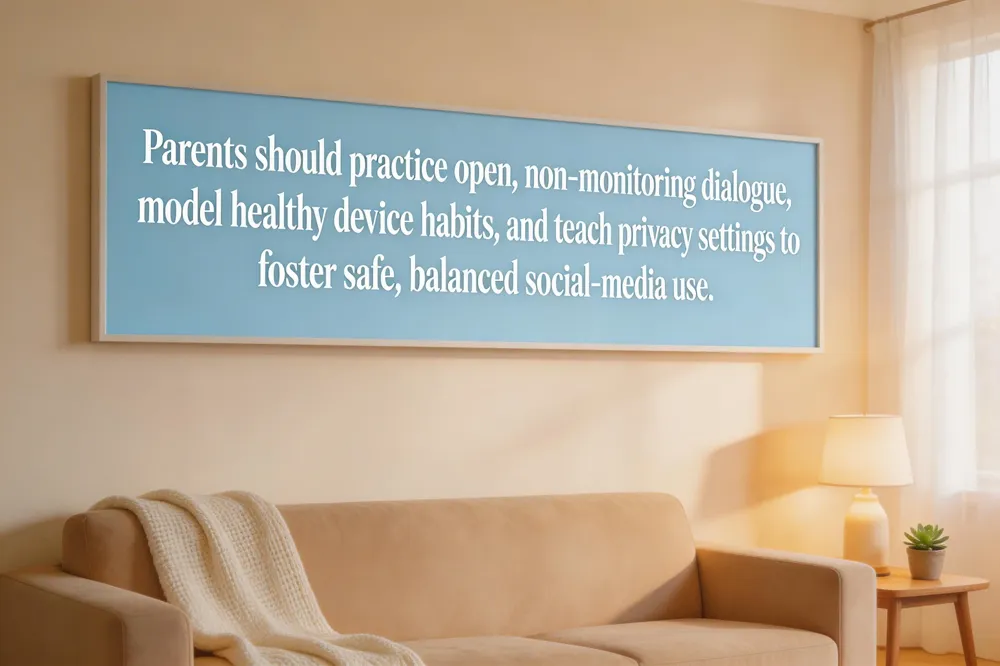 Effective parenting in the digital age hinges on three core practices. First, use Open, non‑monitoring communication—ask open‑ended questions, validate feelings, and keep the tone curious rather than investigative—so teens feel safe sharing online experiences. Second, model healthy device habits yourself; limit personal screen time, keep phones out of the bedroom, and demonstrate tech‑free moments at meals to reinforce the rules you set. Third, Teach teens about privacy settings—help teens spot edited images, recognize algorithmic bias, and evaluate the credibility of mental‑health information they encounter.
How does social media affect teenagers' mental health? Social media can be a double‑edged sword. It offers Social media provides benefits: acceptance, support, creative expression, and connection, yet Excessive social media use disrupts sleep, reduces physical activity, fuels social comparison, and raises risks of depression, anxiety, cyberbullying, and body‑image concerns—especially during the sensitive Brain development ages 10‑19 vulnerable to social media effects. Parents can mitigate harms by setting reasonable limits, encouraging offline activities, and fostering open, judgment‑free dialogue about what teens see and feel online.
Printable Handouts and School Resources
 Mental health handouts for teens
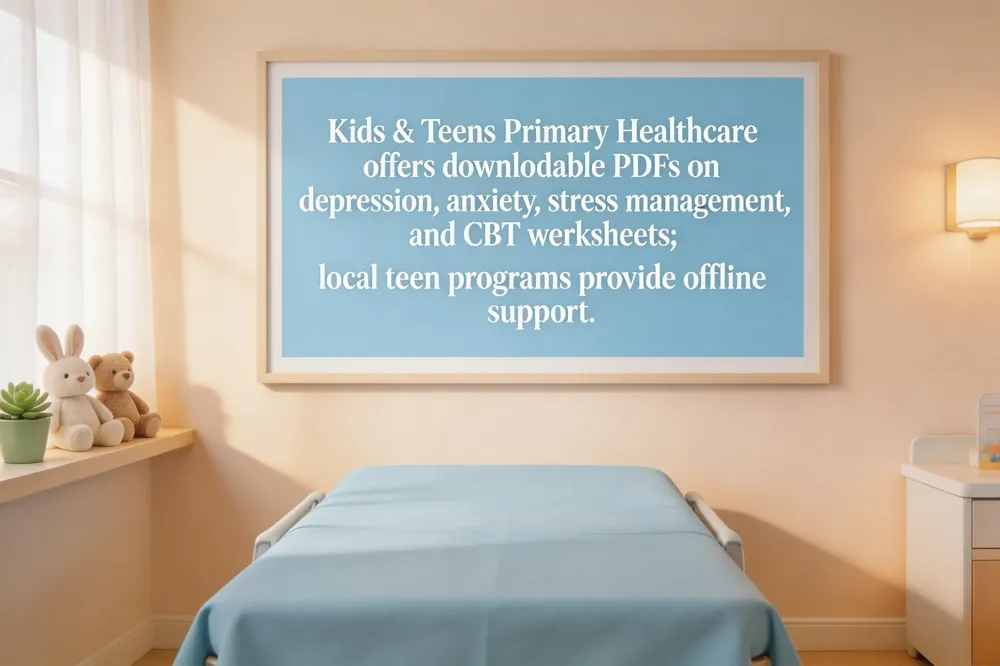
Kids & Teens Primary Healthcare offers printable mental‑health handouts for adolescents covering depression, anxiety, stress management, and signs of bipolar disorder. These evidence‑based PDFs, sourced from the National Institute of Mental Health, feature clear graphics and a share‑ready text for social‑media use. Families can download them from the clinic website or request a hard copy during a well‑child visit. In addition, free CBT worksheets from Therapist Aid—such as “Facing Fears With Whiskers” and “Productive Worrying”—are available to teach coping skills. All materials are age‑appropriate, culturally sensitive, and aligned with U.S. preventive‑service guidelines.
Teen resources near Me
Kids & Teens Primary Healthcare connects families to local teen resources in the Decatur area. The city’s Recreation Department runs free Friday‑night hangouts for ages 13‑17 at the Decatur Community Center, offering games, arts, and supervised social time. After‑school clubs like “Beyond the Bell” provide safe study spaces for middle‑schoolers. The Georgia Department of Human Services lists youth‑focused mental‑health and substance‑use programs, and the local Crisis Center is reachable at 988. The county library system and Decatur Youth Development Program also host free workshops on coding, leadership, and college preparation.
For more printable materials, search "teen mental health printable handouts pdf".
Crisis and Support Services
 Free online mental health resources for teens
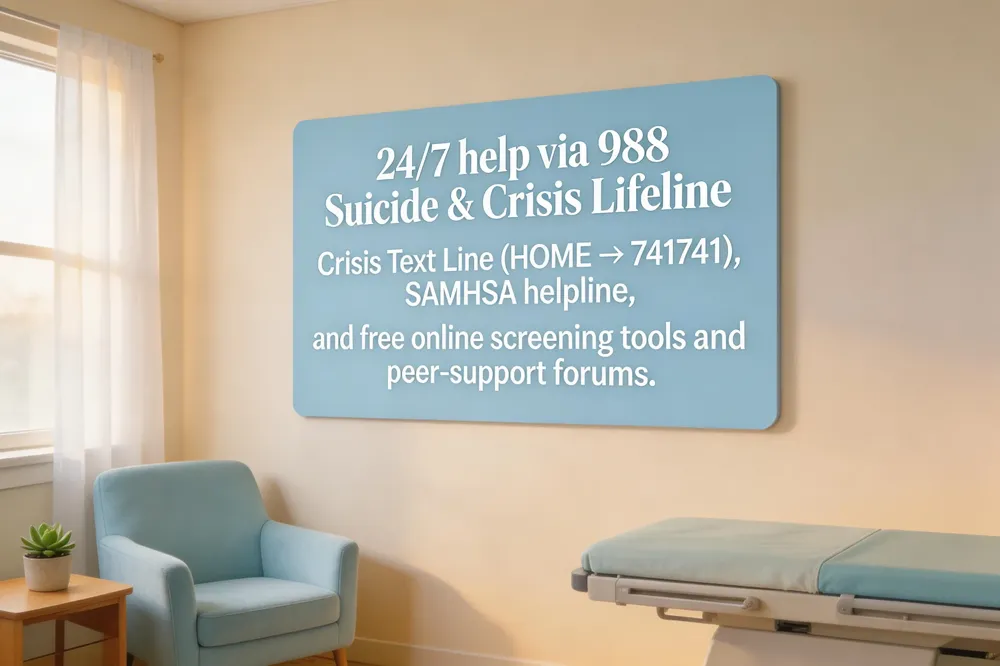
Teens can access confidential help 24/7 through the 988 Suicide & Crisis Lifeline (call, text, or chat) and the Crisis Text Line (text “HOME” to 741741). The SAMHSA National Helpline (1‑800‑662‑HELP) offers free treatment referrals in multiple languages. Online tools such as Go Ask Alice! provide expert‑vetted answers, while NAMI’s portal lists local support groups and searchable chapters. The Jed Foundation and the American Foundation for Suicide Prevention deliver educational resources and peer‑support forums at no cost.
Free mental health resources for teens
Beyond crisis hotlines, government sites (HHS.gov, CDC) host free screening tools for depression, anxiety, and substance use. State health departments often list mobile apps and online counseling platforms for adolescents. NAMI and the Administration for Children and Families publish video guides and evidence‑based articles that teens can explore without payment.
Mental health services for teens near me
Kids & Teens Primary Healthcare in Decatur, GA offers comprehensive adolescent services, including CBT, family therapy, and medication management. Services are coordinated with pediatric physicians, accept most insurance plans, and can be scheduled online or by phone.
Teen mental health organizations
The Jed Foundation (JED) and NAMI provide crisis resources, school‑based programs, and state‑by‑state support. Regional groups such as the Pennsylvania Teen Mental Health Coalition and Georgia’s GMHCA connect teens with counseling, peer groups, and advocacy.
Depression resources for teens
Teens can call/text 988 Suicide & Crisis Lifeline or HOME to 741741 for immediate help. SAMHSA’s Helpline offers free referrals, and primary‑care visits include depression screenings. Apps like ADAP, AACAP fact sheets, and videos such as “Ellie’s Depression” give practical coping tools and education.
Building a Family Media Plan
 Tech‑free zones and screen‑free bedtime are essential. Keep phones out of bedrooms and enforce a no‑screen period at least one hour before sleep. This reduces blue‑light exposure, improves sleep quality, and counters the reward‑center overstimulation that can lead to mood swings and anxiety.
Collaborative rule‑setting and monitoring involve regular family meetings to review the plan, adjust limits, and discuss any upsetting experiences. Parents can model healthy habits by limiting their own screen time, using privacy settings, and encouraging offline activities such as sports or arts.
Answer to the question: Social media use among teens is linked to higher rates of depression, anxiety, and low self‑esteem, especially when they spend many hours scrolling, comparing themselves to idealized images, or seeking validation through likes and comments. Excessive nighttime scrolling disrupts sleep, which impairs cognitive development and can exacerbate mood disorders. Cyberbullying and exposure to harmful content further increase the risk of emotional distress and suicidal thoughts, particularly for vulnerable groups such as LGBTQ+ youth. At the same time, mindful use of social platforms can foster positive connections, boost self‑confidence, and provide access to health information when guided by parental boundaries. Parents can help by setting clear screen‑time limits, encouraging offline activities, and maintaining open conversations about online experiences.
Key Take‑aways for Parents
Social media can be a double‑edged sword: it offers connection, creative outlet, and support (58‑80 % of teens report these benefits) yet it also raises the risk of depression, anxiety, cyber‑bullying, and sleep disruption, especially when use exceeds three hours a day. The safest approach is to strike a balanced routine: set clear, consistent screen‑time limits (e.g., no devices an hour before bedtime and during meals) while encouraging offline hobbies, sports, and face‑to‑face friendships. Keep the conversation open and non‑monitoring—ask how platforms feels after scrolling, validate worries, and model healthy device habits yourself. Finally, leverage trusted resources: the American Academy of Pediatrics Family Media Plan, crisis hotlines (988, Crisis Text Line), and mental‑health professionals. If you notice persistent low mood, irritability, sleep problems, or expressions of hopelessness, seek professional evaluation promptly—early treatment can prevent deeper distress and save lives.