Why Screen Time Matters for Sleep
Since the COVID‑19 pandemic, children's screen use has surged and stays above pre‑pandemic levels, with kids aged 8‑18 averaging about 7½ hours per day. Even one extra hour of evening screens can cut sleep by 10‑12 minutes in preschoolers and double the odds of insufficient sleep in older children. Blue‑light suppresses melatonin, delaying sleep onset, while stimulating content—games, social media, or violent shows—keeps the brain aroused. Problematic gaming can shave 20 minutes off total sleep and worsen daytime sleepiness. Persistent loss leads to irritability, poor concentration, or mood swings, indicating a possible disorder; families should consult a pediatrician promptly to evaluate hygiene and address medical concerns. Guidance can also help tailor screen‑free routines that fit each child’s age and lifestyle.
Statistics and Research Findings
Statistics & Research Findings Summary
| Metric | Value |
|---|---|
| Children & teens using screens during the day | 80 % |
| Evening screen use (after dinner) | 68 % |
| Within 1 hour before bedtime | 58 % |
| CDC recommended sleep (6‑12 yr) | 9‑12 hrs |
| CDC recommended sleep (teens) | 8‑10 hrs |
| Melatonin suppression delay | 10‑30 min onset delay |
| Odds ratio for insufficient sleep (bedtime device use) | OR ≈ 2.2‑2.7 |
| Benefit of ≥1 hr screen‑free before bed | Improves melatonin & overall sleep quality |
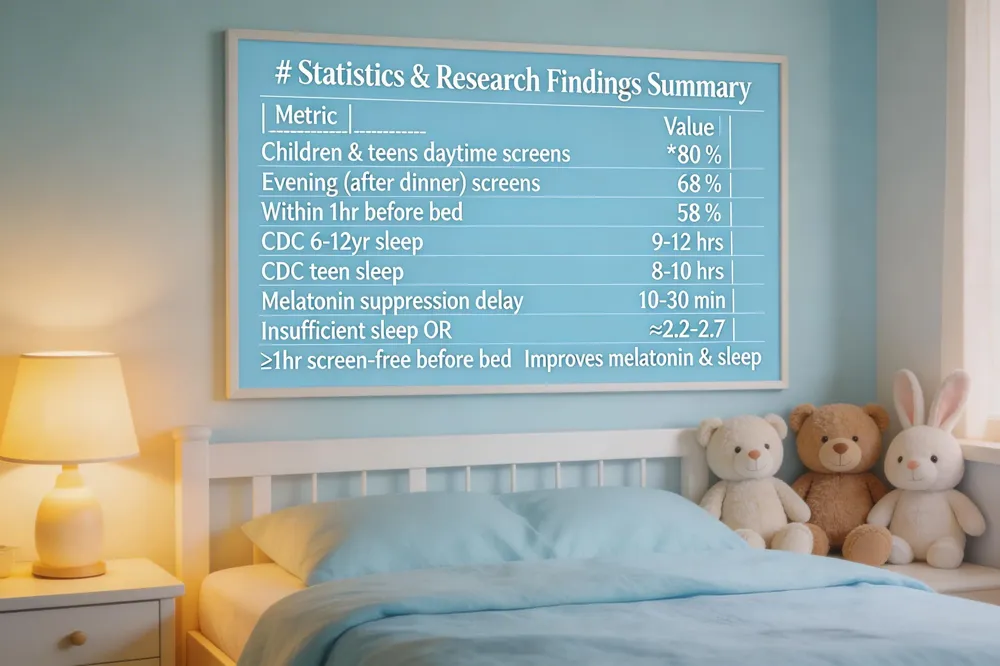 In the United States, 80 % of children and teens use screens during the day, 68 % in the evening, and 58 % within an hour before bedtime (National Sleep Foundation, 2022). The CDC advises 9‑12 hours of sleep for 6‑12‑year‑olds and 8‑10 hours for teens, yet many fall short because of evening screen exposure. Blue‑light from phones, tablets, and TVs suppresses melatonin, delaying sleep onset by 10‑30 minutes and fragmenting deep‑sleep stages. Stimulating content—videos, games, social media—keeps the brain aroused, increasing sleep latency and daytime sleepiness. Systematic reviews show children who use portable devices at bedtime have over twice the odds of insufficient sleep (OR ≈ 2.2‑2.7). Reducing screen time at least one hour before bed improves melatonin levels and overall sleep quality. Persistent sleep problems should prompt a pediatric consultation, as they may indicate underlying health issues requiring professional evaluation.
Age‑Specific Bedtime Routines
Age‑Specific Bedtime Routines
| Age Group | Recommended Sleep | Routine Start (min before lights‑out) | Core Activities |
|---|---|---|---|
| 12‑yr | 9‑12 hrs | 30‑60 | Warm bath, quiet reading, light stretching, cool dark room |
| 13‑yr | 8‑10 hrs | 30‑60 | Warm shower, soft music/guided meditation, dim lights, cool room |
| Teen | 8‑10 hrs | 30‑60 | Screen‑free hour, quiet reading/breathing, bed for sleep only |
| Baby (0‑12 mo) | N/A (sleep driven by age) | 30‑45 before longest stretch | Bath, feed, cuddle, lullaby; dim quiet environment, drowsy‑awake placement |
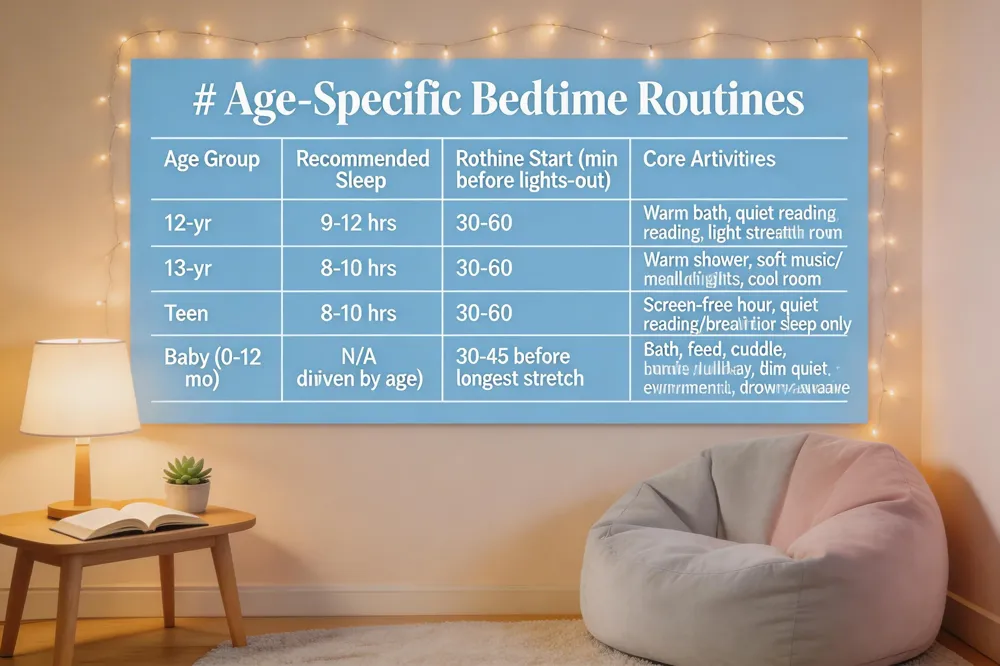 A consistent wind‑down routine is essential for every child, and pediatric guidance should be sought if sleep problems persist.
12‑year‑old – Target 9–12 hours of sleep. Keep a fixed bedtime and wake‑time, even on weekends (weekend wake‑up no later than two hours after weekdays). Begin a calming routine 30–60 minutes before lights‑out: warm bath, quiet reading, light stretching, and a cool, dark, quiet bedroom. Turn off all screens at least one hour before bedtime; replace them with a dim night‑light or a book. If asleep isn’t reached after 20 minutes, get out of bed and engage in a quiet activity until sleepy.
13‑year‑old – Aim for 8–10 hours. Follow the same consistent schedule, turn off phones/tablets an hour before bed, and dim lights. Use a warm shower, soft music, or guided meditation to wind down. Keep the room cool, free of TVs, and avoid caffeine after lunch.
Teens – Require 8–10 hours nightly. Enforce a screen‑free hour before bed, dim lights, and reserve the bed for sleep only. Encourage quiet activities (reading, breathing exercises) and maintain a regular sleep‑wake cycle, including weekends.
Baby (0‑12 months) – Start a short, predictable routine (bath, feed, cuddle, lullaby) 30‑45 minutes before the longest sleep stretch. Keep the environment dim, quiet, and place the infant down drowsy but awake to promote self‑soothing.
If a child consistently struggles with sleep onset, nighttime awakenings, or daytime sleepiness, consult a pediatrician to rule out underlying sleep disorders.
Natural Remedies, Supplements, and Quick Techniques
Natural Remedies, Supplements & Quick Techniques
| Remedy / Supplement | Typical Use | Timing / Dosage | Key Note |
|---|---|---|---|
| Warm milk / chamomile tea / tart‑cherry juice | Soothing bedtime drink | 30‑60 min before sleep | Supports relaxation, no strong evidence for major melatonin boost |
| Melatonin (pediatric‑approved) | Short‑term sleep aid | 1‑2 mg, 30‑60 min before bed | Use after doctor review; long‑term safety limited |
| Magnesium‑L‑theanine (gummy) | Hormone‑free calming aid | As per label, ~30 min before bed | Often combined with lemon balm; not a substitute for hygiene |
| 20‑minute wind‑down routine | Rapid sleep onset | Immediate before bed | Quiet play → brief bath → short story → dim lights → gentle rub; can achieve sleep in ~40 sec |
| White‑noise / cool dark room (65‑70 °F) | Environmental aid | Throughout night | Reduces awakenings & improves deep sleep |
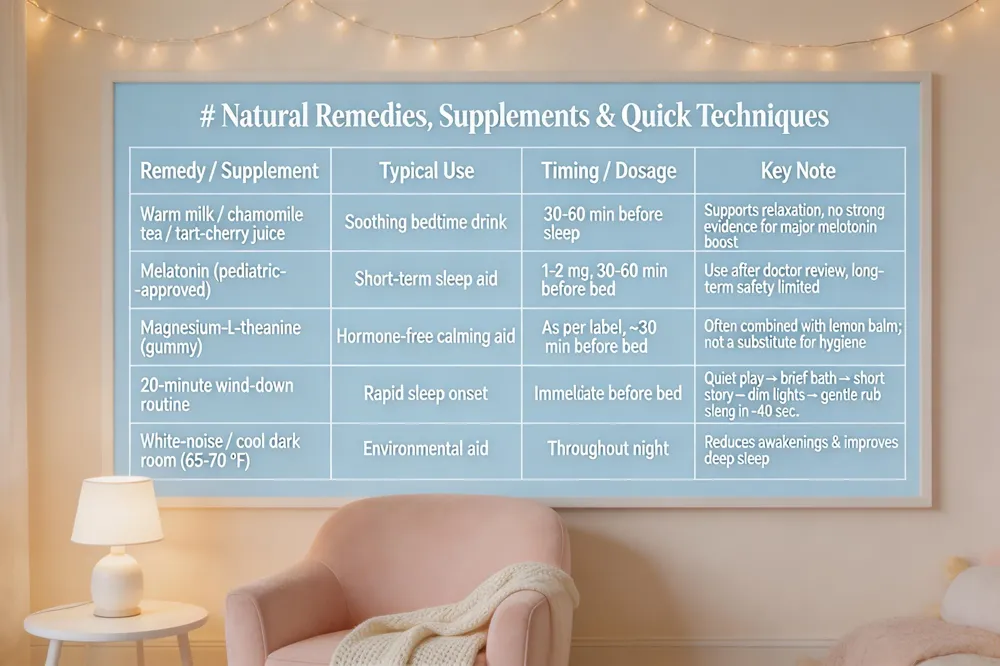 Evening screen exposure is a major sleep‑disruptor for children, but a calm, screen‑free wind‑down can restore melatonin and improve sleep quality. A soothing bedtime drink—warm milk, chamomile tea, or a splash of tart‑cherry juice—signals the body to relax, especially when the bedroom is kept cool (65‑70 °F) and dimmed at least an hour before sleep. Regular daylight activity and ending vigorous exercise two hours before bedtime further support a natural sleep drive.
For short‑term assistance, pediatric‑approved melatonin (1‑2 mg) taken 30‑60 minutes before bed may help, but only after a doctor’s review because long‑term safety data are limited. Parents preferring hormone‑free options can try magnesium‑L‑theanine blends, such as gummies that also contain lemon balm, while remembering that supplements never replace solid sleep hygiene.
Rapid sleep onset can be achieved with a predictable 20‑minute routine: quiet play, a brief bath, a short story, dim lights, and a gentle back‑rub or rocking. Consistency, calm lighting, and white‑noise often let children drift off within about 40 seconds.
For detailed guidance, download the free "Sleep‑Hygiene Handout" PDF from Kids & Teens Primary Healthcare, which outlines bedtime routines, screen limits, caffeine rules, and a simple sleep‑diary. Always discuss any supplement or persistent sleep problem with your child’s pediatrician.
Tools for Families: Worksheets, Handouts, and PDFs
Tools for Families – Printable Resources
| Tool | Format | Target Audience | Primary Purpose |
|---|---|---|---|
| Teen Sleep Log | Printable PDF | Teens | Track bedtime, wake‑time, hours, awakenings, set goals |
| Kid Sleep Diary | Printable chart | Younger kids | Mark sleep/wake times, dream recall, use "worry‑box" prompts |
| Family Media Plan | PDF checklist | Whole family | Define device‑free zones, evening curfew, weekly limits |
| Sleep Hygiene for Teens Worksheet | Teens | Checklist: 8‑10 hrs, consistent bedtime, caffeine limits, daylight exposure, mood reflection | |
| General Sleep Hygiene Handout | Parents & kids | Overview of routines, screen limits, caffeine rules, simple sleep diary |
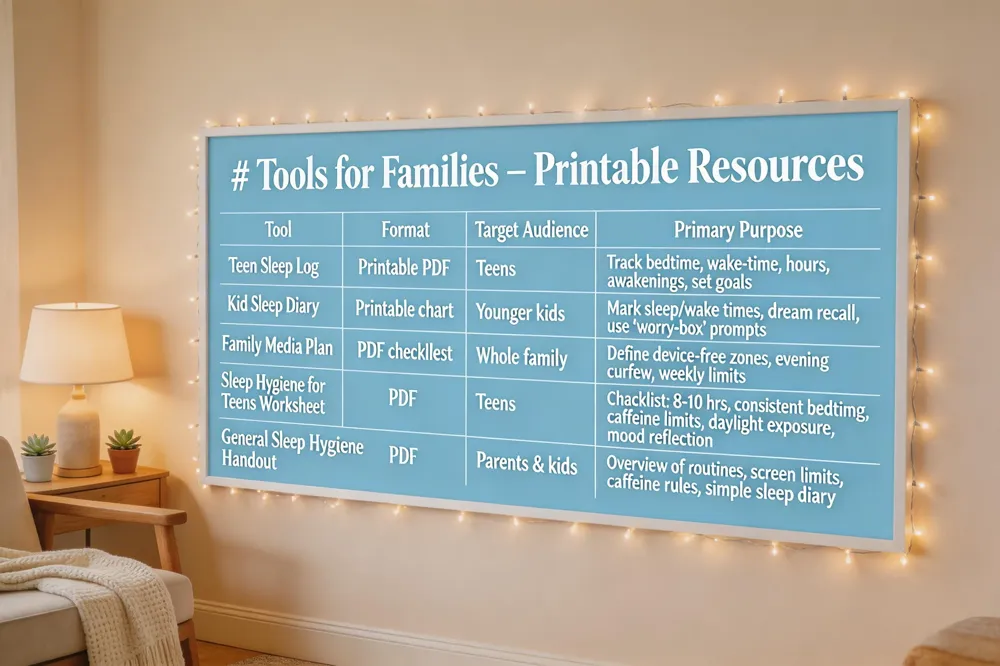 Printable sleep worksheets give families a way to track bedtime habits. A teen sleep log page records bedtime, wake‑time, total hours, awakenings and lets adolescents set goals for a cool, dark bedroom and screen‑free hour before lights out. Kid sleep diaries use charts so younger children can mark when they go to sleep, wake up and note dream recalls, while a “worry‑box” prompt helps calm the mind. Family media plans outline device‑free zones, evening curfew times, and weekly screen‑time limits, reinforcing the AAP recommendation to turn off screens at least one hour before bed. The “Sleep Hygiene for Teens” worksheet includes an overview of 8‑10 hour needs, check‑boxes for consistent bedtime, caffeine limits, daylight exposure, and a reflection section on mood and school performance. For kids, a printable PDF offers a log, checklist of good‑sleep practices, and space to set a personal improvement goal.
Broader Lifestyle Factors and Frequently Asked Questions
Lifestyle Factors & FAQs Summary
| Topic | Recommendation | Impact on Sleep |
|---|---|---|
| Physical activity | 30‑60 min daytime; finish vigorous activity ≥2 hrs before bed | Improves deep sleep, reduces latency |
| Caffeine | Avoid after early afternoon; limit sodas, chocolate, tea, coffee | Reduces sleep latency; even one cup can delay onset |
| Anxiety / ADHD & Screen‑stimulating content | Limit evening screens, cool dark bedroom, relaxation techniques | Lessens anxiety, reduces fragmented sleep |
| General FAQs – Teens | 8‑10 hrs, consistent schedule, screen‑free hour, bedroom for sleep only | Improves overall sleep quality |
| General FAQs – ADHD | Calming routine, cool dark room, daytime activity, professional guidance if needed | Supports better sleep onset & maintenance |
| Adults & Screen time | Same principles: limit blue‑light, reduce stimulating content before bed | Improves onset & quality, though effect smaller than in children |
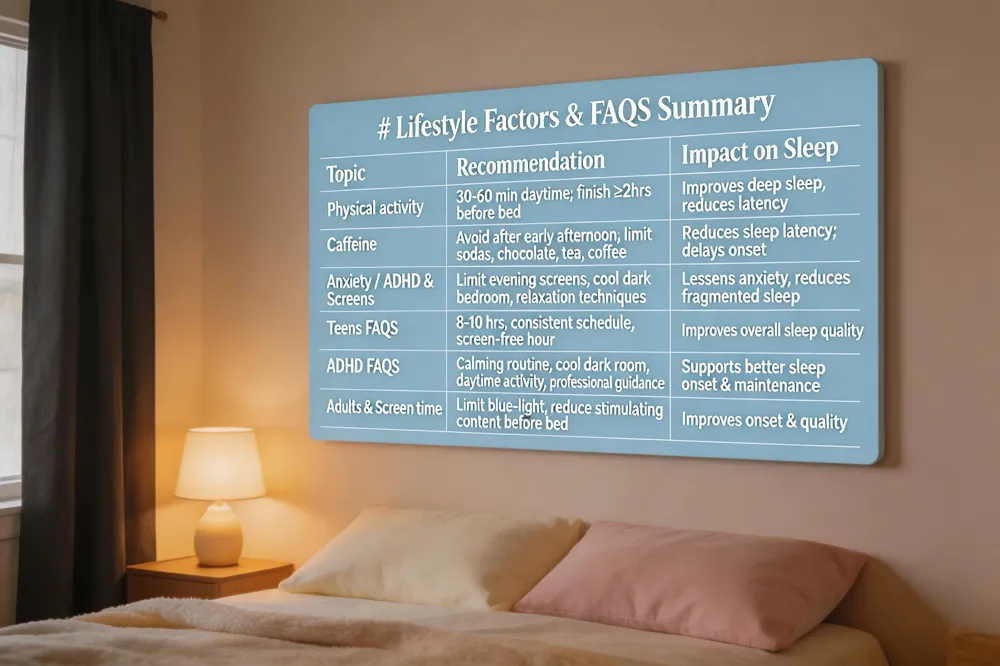 Physical activity and caffeine: Regular daytime exercise (30‑60 min) promotes deeper sleep, but vigorous activity should finish at least two hours before bedtime. Caffeine—found in sodas, chocolate, tea, or coffee—should be avoided after the early afternoon; even a single cup can lengthen sleep latency in teens.
Anxiety, ADHD, and mental health: Screen‑stimulating content and social‑media use can heighten anxiety and exacerbate ADHD symptoms, leading to later bedtimes and fragmented sleep. A calm, predictable bedtime routine—warm bath, reading, gentle stretching—helps regulate the circadian rhythm. For children with ADHD, consistent limits on evening screens, a cool dark bedroom, and relaxation techniques (deep‑breathing, progressive muscle relaxation) are essential; if needed, consult a pediatrician about melatonin or other interventions.
General sleep‑health FAQs:
- Healthy sleep habits for teens: Aim for 8‑10 hours, keep a consistent schedule, dim lights, turn off screens an hour before bed, and reserve the bedroom for sleep only.
- How to help a child sleep with ADHD: Follow a calming routine, limit screens, create a quiet cool environment, encourage daytime activity, and consider professional guidance if behavioral changes aren’t enough.
- What helps kids sleep at night: Consistent bedtime routine, cool dark bedroom, screen‑free hour before sleep, regular physical activity, and a quiet activity if they can’t fall asleep within 30 minutes.
- Does screen time affect sleep in adults: Yes—while blue‑light suppression is modest, stimulating content delays onset and reduces quality; limiting evening use improves sleep.
If sleep problems persist, seek evaluation from a pediatrician or sleep specialist.
Putting It All Together
Key takeaways: Every additional hour of screen use trims 10‑12 minutes of sleep for preschoolers, and bedtime screen exposure doubles the odds of insufficient sleep. Blue‑light suppresses melatonin, delaying sleep onset by up to 30 minutes, especially in children. Problematic gaming and social‑media scrolling add anxiety, further eroding sleep quality. Consistent bedtime routines, a cool, dark, screen‑free bedroom, and a digital curfew of at least one hour before lights‑out dramatically improve sleep duration and daytime alertness.
Next steps for families: 1) Set a household “screen‑free hour” before bedtime and remove devices from bedrooms. 2) Establish a calming routine (warm bath, reading, breathing). 3) Keep the sleep environment cool, quiet, and dark. 4) Monitor caffeine and evening meals. 5) If sleep problems persist—frequent awakenings, daytime sleepiness, or mood changes—consult a pediatrician or sleep specialist promptly for personalized guidance.