Why Screen Time Matters for Sleep
Digital devices emit blue‑light that suppresses melatonin, the hormone that tells the brain it’s time to wind down. Even 30‑60 minutes of screen exposure before bed can delay sleep onset by 20‑45 minutes and reduce total sleep time, especially in school‑age children and adolescents. This disruption interferes with bedtime routines, making it harder for families to keep a calm, predictable wind‑down period that supports healthy growth, mood regulation, and academic performance. Evidence‑based guidelines—from the American Academy of Pediatrics, National Sleep Foundation, and CDC—recommend screen‑free zones, a one‑hour “digital curfew,” and consistent sleep schedules to protect melatonin production and overall health. When screen‑related sleep problems persist—such as frequent night awakenings, daytime sleepiness, or mood swings—parents should seek pediatric evaluation to rule out underlying sleep disorders and receive personalized strategies. Early medical attention can prevent long‑term consequences like obesity, anxiety, and impaired learning.
Age‑Based Screen Time Guidelines and Resources
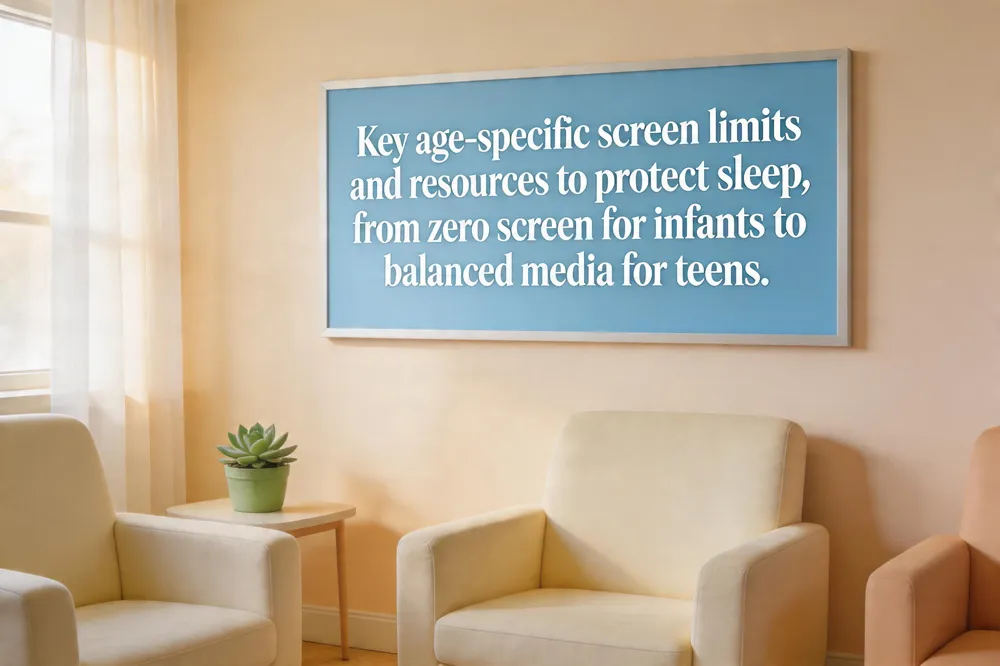 Understanding how much screen time is appropriate for each developmental stage is essential for protecting children’s sleep, mood, and overall health.
AAP screen‑time guidelines PDF – The American Academy of Pediatrics publishes a downloadable PDF titled Media Use Guidelines for Children and Adolescents on its Media & Children page. It outlines age‑specific limits—no screen exposure for infants under 18 months (except video‑chat), co‑viewed high‑quality content for 18‑24 months, and up to 1 hour per day of quality media for 2‑5‑year‑olds—while emphasizing balanced habits and providing a Family Media Plan template.
Screen‑time guidelines for children PDF – This PDF combines AAP and CDC recommendations into a quick‑reference chart. It stresses screen‑free meals, encourages at least 1 hour of daily physical activity for school‑age children, and recommends turning devices off ≥ 1 hour before bedtime to safeguard melatonin production and sleep quality.
Screen‑time recommendations by age chart - 0‑18 months: No screens (only brief video‑chat).
- 18‑24 months: Short, co‑viewed high‑quality programs.
- 2‑5 years: ≤ 1 hour daily, educational/interactive, adult present.
- 6‑12 years: Consistent limits, ≥ 1 hour activity, screen‑free ≥ 1 hour before sleep.
- 13‑18 years: Balance media with sleep, school, and activity; prioritize content quality.
Screen‑time recommendations by age CDC – The CDC mirrors the AAP: zero screen time for < 2 years, ≤ 1 hour of high‑quality media for 2‑5 years, family‑set limits plus physical activity for 6‑12 years, and flexible, sleep‑first rules for teens.
Parents should model healthy habits and seek pediatric guidance if a child shows persistent sleep problems, mood changes, or academic decline, as these may signal the need for a professional sleep evaluation.
Sleep‑Friendly Rules and Timelines for Kids
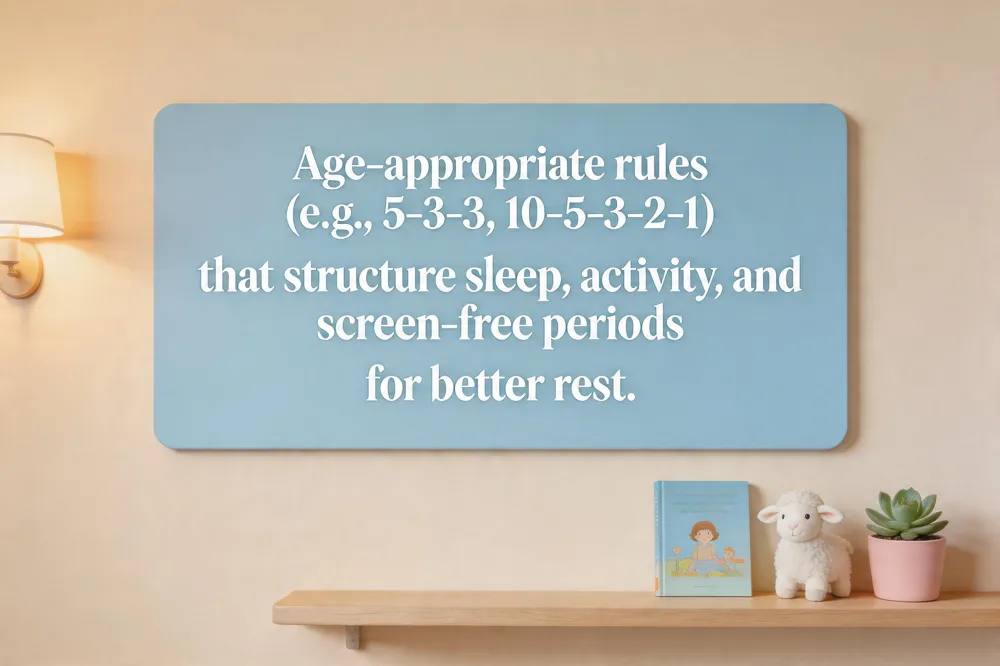 Helping children get the restorative sleep they need starts with clear, age‑appropriate rules.
5‑3‑3 rule for infants – This guideline suggests roughly five consecutive hours of nighttime sleep, a three‑hour wake period, then another three‑hour block of sleep split into one or two naps. By alternating sleep and wake periods, a baby’s circadian rhythm stabilises, leading to fewer night‑time awakenings and calmer evenings for caregivers.
10‑5‑3‑2‑1 rule for pre‑teens – Stop caffeine at least 10 hours before bedtime, avoid alcohol after 5 hours, finish vigorous exercise 3 hours before sleep, wrap up schoolwork 2 hours before, and turn off all screens 1 hour before lights‑out. This sequence cuts stimulants, mental arousal, and blue‑light exposure that delay melatonin release.
10‑4‑3‑2‑1 rule for teens – Similar to the pre‑teen rule but with a 4‑hour buffer for food/alcohol, ensuring digestion settles before sleep. The final hour is screen‑free and calm, supporting a smoother transition to rest.
9‑minute rule for parents – Spend three focused minutes with your child after waking, three after school, and three before bedtime. These brief, affectionate check‑ins boost attachment and emotional regulation, reducing bedtime anxiety.
Consistent bedtime routines – A predictable 20‑minute wind‑down (brush teeth, warm bath, reading a physical book) signals the brain that sleep is near. Keep the bedroom cool, dark, and quiet, and make it a screen‑free zone.
If sleep problems persist—persistent insomnia, frequent night‑time awakenings or daytime sleepiness—consult a pediatrician promptly. Professional guidance can uncover underlying issues such as sleep‑disordered breathing or anxiety, ensuring your child’s health and development stay on track.
Helping children get the restorative sleep they need starts with clear, age‑appropriate rules.
5‑3‑3 rule for infants – This guideline suggests roughly five consecutive hours of nighttime sleep, a three‑hour wake period, then another three‑hour block of sleep split into one or two naps. By alternating sleep and wake periods, a baby’s circadian rhythm stabilises, leading to fewer night‑time awakenings and calmer evenings for caregivers.
10‑5‑3‑2‑1 rule for pre‑teens – Stop caffeine at least 10 hours before bedtime, avoid alcohol after 5 hours, finish vigorous exercise 3 hours before sleep, wrap up schoolwork 2 hours before, and turn off all screens 1 hour before lights‑out. This sequence cuts stimulants, mental arousal, and blue‑light exposure that delay melatonin release.
10‑4‑3‑2‑1 rule for teens – Similar to the pre‑teen rule but with a 4‑hour buffer for food/alcohol, ensuring digestion settles before sleep. The final hour is screen‑free and calm, supporting a smoother transition to rest.
9‑minute rule for parents – Spend three focused minutes with your child after waking, three after school, and three before bedtime. These brief, affectionate check‑ins boost attachment and emotional regulation, reducing bedtime anxiety.
Consistent bedtime routines – A predictable 20‑minute wind‑down (brush teeth, warm bath, reading a physical book) signals the brain that sleep is near. Keep the bedroom cool, dark, and quiet, and make it a screen‑free zone.
If sleep problems persist—persistent insomnia, frequent night‑time awakenings or daytime sleepiness—consult a pediatrician promptly. Professional guidance can uncover underlying issues such as sleep‑disordered breathing or anxiety, ensuring your child’s health and development stay on track.
Screen Time’s Direct Impact on Sleep Across Ages
 Adolescents, infants, and toddlers are all vulnerable to the disruptive effects of evening screens. Research shows that teens who spend more than two hours on recreational devices each night go to bed later, sleep 30‑45 minutes less, and show poorer academic performance and higher rates of anxiety and depression. Limiting screen use at least one hour before bedtime, turning off blue‑light settings, and encouraging physical activity can restore normal circadian rhythms. Even babies are not immune: brief light exposure from phones or TVs suppresses melatonin, shortens total sleep time, and increases night awakenings. The American Academy of Pediatrics advises keeping all screens out of a baby’s bedroom and avoiding any screen exposure for at least an hour before sleep, favoring low‑light reading or singing instead. Toddlers experience similar delays in sleep onset when screens are used within 30‑60 minutes of bedtime; a screen‑free wind‑down routine with books or quiet play supports healthier sleep. National surveys reveal that roughly half of U.S. teens use screens four hours or more per day, and those exceeding the recommended two‑hour limit are 20‑30 % more likely to report insomnia symptoms. Neuroimaging studies confirm that evening screen exposure heightens activity in brain regions that promote alertness, making it harder to transition to sleep. Parents should model digital habits and seek pediatric guidance when sleep problems persist, ensuring children receive the restorative rest they need for growth and development.
Practical Sleep Hygiene Tools and Interventions
 A consistent bedtime routine, a cool dark bedroom, and a screen‑free wind‑down are the foundation of healthy sleep for all children. Printable PDF checklists and worksheets give families an easy visual cue and a habit‑tracker to monitor progress.
Medicine to help kids sleep – First, optimize sleep hygiene. Behavioral approaches such as CBT‑I are preferred. If insomnia persists, pediatricians may prescribe low‑dose melatonin, especially for ADHD or autism, because it safely resets the circadian clock. Prescription sleep aids are rare and used only after ruling out medical causes like sleep apnea. Discuss any medication with a pediatrician.
Sleep hygiene for kids PDF – The downloadable guide offers age‑appropriate checklists (bedtime, screen limits, relaxation), a habit‑tracker, and tips on morning light exposure. Parents can post it on the nightstand and track daily adherence.
Screen hygiene for kids worksheet – This worksheet lets children log bedtime, screen‑free minutes, calming activities, and morning mood. A weekly view highlights patterns and helps set realistic improvement goals.
How to help a child with ADHD sleep – Use a predictable routine, limit evening screens and caffeine, keep the room cool and dark, and ensure daytime physical activity with no vigorous play within two hours of bedtime. Review medication timing and consider melatonin under medical guidance.
What helps kids sleep naturally? – Aim for 20‑30 minutes of quiet activities (reading, warm bath), maintain a dark, quiet, cool bedroom, encourage daytime outdoor play, and avoid bright devices and caffeine after 2 p.m.
Screen time and sleep quality questionnaire – A brief pediatric screening asks about screen use in the hour before bed, device turn‑off time, total night sleep, morning restfulness, and nighttime awakenings. High screen use together with poor sleep scores flags families for targeted counseling on bedtime routines and blue‑light reduction.
Family Strategies and Modeling for Healthy Sleep
 Creating a family media plan that designates clear screen‑free zones—especially the bedroom and the dinner table—provides a structural foundation for healthier sleep. The American Academy of Pediatrics and the National Sleep Foundation both stress that removing TVs, tablets, and smartphones from sleeping areas reduces nighttime awakenings and improves overall sleep quality.
Modern devices offer **blue‑light filters,**night‑shift modes, and “Do Not Disturb” settings that can lower the amount of short‑wavelength light emitted in the evening. While these tools mitigate some melatonin suppression, the most effective strategy remains to stop screen use at least one hour before bedtime. If a device must be used, parents should enable the night‑mode feature and keep brightness to a minimum.
Parental modeling is crucial: parents who turn off their own screens during family meals and adopt a consistent nightly “digital curfew” set a powerful example. Consistent bedtime routine—same bedtime, same wind‑down activities such as reading, gentle stretching, or a warm bath—helps the brain recognize when it is time to sleep.
Regular physical activity and outdoor play during the day further support sleep, as they reinforce the circadian rhythm and reduce the urge for evening screen time. Combining a screen‑free bedroom policy with these habits creates a calm, dark, and cool sleep environment that encourages children to fall asleep faster and stay asleep through the night.
Putting It All Together for Better Rest
Recap of age‑based limits The AAP advises no screens for infants <18 months, high‑quality co‑viewed media only for 18‑24 months, and ≤1 hour of non‑educational screen time for ages 2‑5. School‑age children (6‑13) should get 9‑11 hours of sleep, teens (14‑17) 8‑10 hours, and screen use should end ≥1 hour before bedtime.
Key sleep‑hygiene rules Keep a consistent bedtime/wake‑time schedule, create a cool, dark, quiet bedroom, and reserve the bed for sleep only. Remove all devices from the bedroom and dim lights 30‑60 minutes before sleep. Include a calming 20‑minute wind‑down routine (brush teeth, warm bath, reading) and encourage daytime physical activity.
Practical tools for families Use built‑in night‑mode or blue‑light filters, set family device‑free zones (bedrooms, meals), and adopt a “digital curfew” alarm. A weekly sleep diary helps spot patterns; parental modeling of screen‑free moments reinforces habits.
Next steps for pediatric visits Bring the sleep diary to well‑child appointments, discuss any insomnia, daytime sleepiness, or mood changes, and ask the pediatrician about tailored screen‑time plans or referrals for sleep disorders. Early medical guidance can prevent long‑term academic, behavioral, and health issues.