Why Early Detection Matters
RSV is the single leading cause of hospitalization for infants and toddlers in the United States. In the first two years of life, most children contract the virus, and even a mild‑looking cold can quickly turn into bronchiolitis or pneumonia, especially in those under six months, premature babies, or children with heart or lung disease. Early detection is crucial because the illness often escalates between days three and five, when wheezing, rapid breathing, chest retractions, or dehydration may appear. Prompt medical evaluation allows clinicians to provide supportive care—hydration, oxygen, and, if needed, hospital monitoring—before complications develop. This article first outlines typical RSV signs, then explains when to seek urgent care, and finally reviews preventive options such as maternal vaccination and monoclonal antibodies, empowering parents to act quickly for their child.
Understanding RSV Transmission and Contagiousness
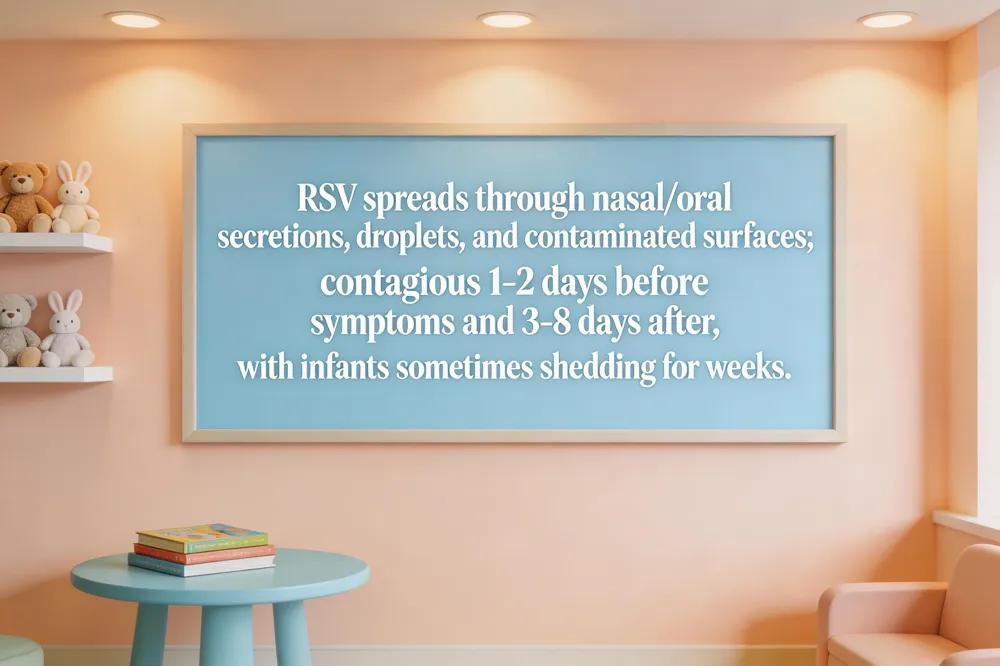 Transmission occurs via nasal/oral secretions, contaminated surfaces, or inhaled droplets, and the virus can land on hands, toys, and surfaces that are then touched and face. It also lives on hard surfaces for several hours, making shared items a common source. The contagious period begins 1–2 days before symptoms appear and lasts 3–8 days in most children, but infants, especially those under 6 months or with weakened immunity, may shed virus for weeks. Because the virus is transmissible, families and day‑cares should practice frequent hand‑washing, clean toys and surfaces, and keep sick children home until at least 24 hours after fever resolves without fever‑reducing medication.
Is RSV contagious? Yes—see above.
Can adults get RSV? Yes. Healthy adults usually have a mild cold, but older adults and those with chronic heart or lung disease, diabetes, obesity, or weakened immune systems can develop serious pneumonia or bronchitis, and vaccination is now recommended for high‑risk adults.
Early Signs and Incubation in Toddlers
 Incubation period
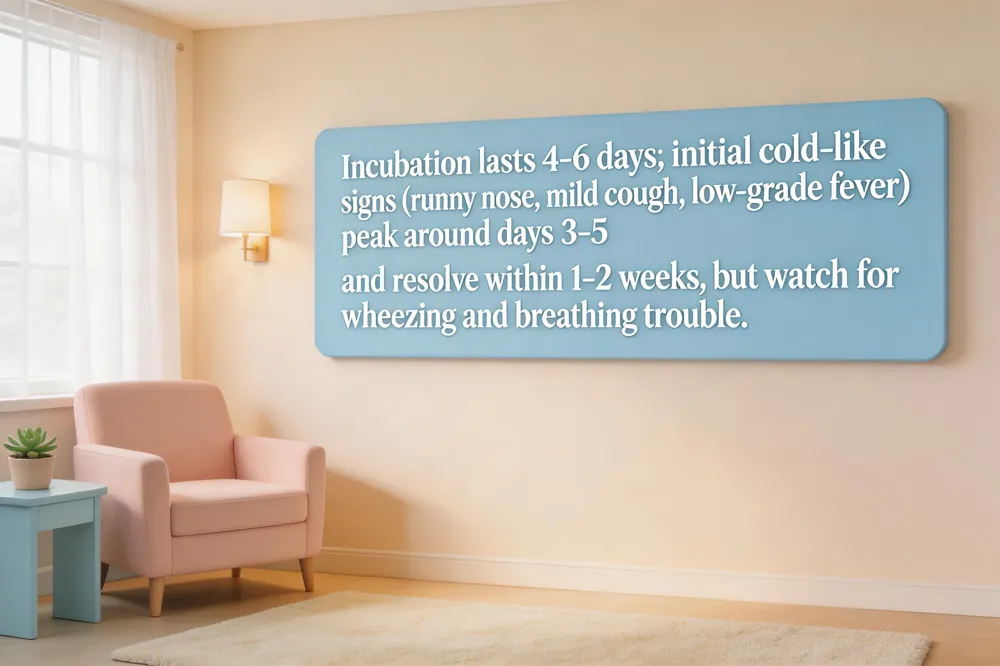
RSV usually appears 4‑6 days after a toddler is exposed. During this window the child may seem well before cold‑like signs start.
Incubation period
RSV usually appears 4‑6 days after a toddler is exposed. During this window the child may seem well before cold‑like signs start.
Initial cold‑like symptoms The first signs often mimic a common cold: runny nose, mild cough, low‑grade fever (often ≤100.4 °F), sneezing, reduced appetite, and irritability. These symptoms typically peak around days 3‑5 and resolve within one to two weeks with supportive care.
When to suspect RSV If the runny‑nose phase is followed by wheezing, rapid or labored breathing, flaring nostrils, chest/abdominal retractions, difficulty feeding, or a bluish tint to lips or fingertips, the infection may have moved into the lower airways (bronchiolitis or pneumonia). These red‑flag signs require prompt medical evaluation.
How long does it take RSV to show up in toddlers? RSV typically has an incubation period of about four to six days after a toddler is exposed to the virus. During this time the child may feel fine, and then begin to develop cold‑like symptoms such as a runny nose, cough, low‑grade fever, and sneezing. In most toddlers these signs are mild and resolve within one to two weeks with supportive care. If the infection spreads to the lower airway, more concerning signs—wheezing, rapid breathing, or difficulty feeding—can appear a few days after the initial symptoms. Parents should watch for any worsening breathing problems and seek medical attention promptly.
How do I tell if my toddler has RSV? Look for the classic RSV signs that often start like a common cold—runny nose, fever, and cough—then watch for breathing problems such as rapid or difficult breathing, wheezing, flaring nostrils, or chest/abdominal straining. In toddlers, you may also notice short pauses in breathing (apnea), trouble eating or drinking, and a bluish tint around the lips or fingertips when oxygen levels drop. If any of these symptoms appear, especially the breathing difficulties, contact your pediatrician promptly for an evaluation. The doctor will perform a physical exam and may take a nasal swab or wash to confirm RSV. Early medical attention can ensure appropriate care, such as fluids, suctioning, or oxygen support, and help prevent the illness from worsening.
What are the stages of RSV in children? Symptoms usually appear 2‑5 days after exposure. The early stage resembles a mild cold (runny nose, cough, low‑grade fever). In children under 3 years, the infection can progress to the lower airway, causing wheezing, coughing, and breathing difficulty. In severe cases, RSV can lead to bronchiolitis or pneumonia.
Typical Symptom Timeline by Age
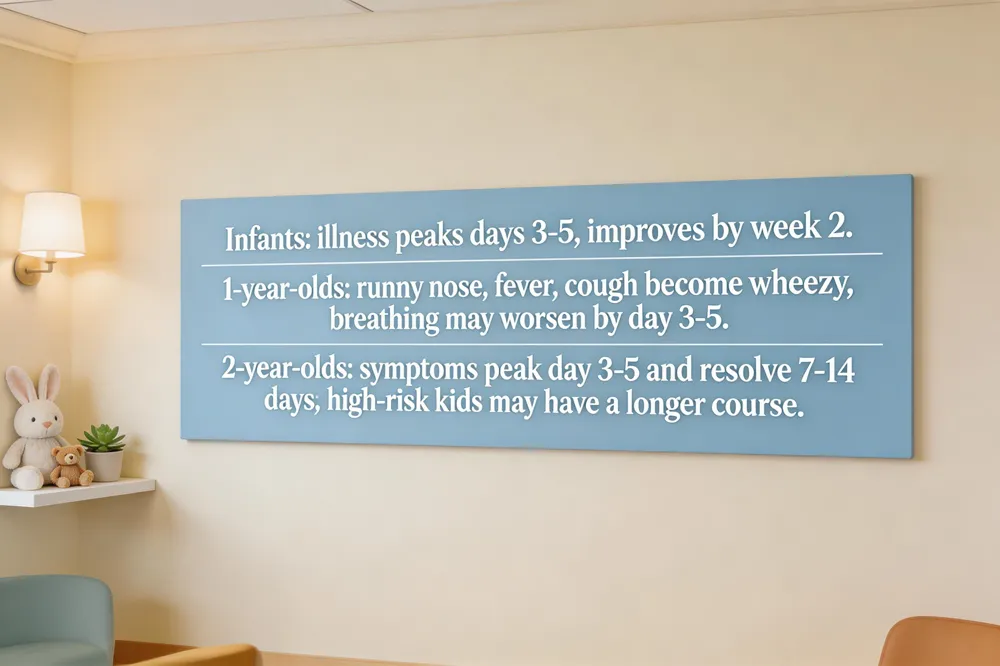 RSV runs its course in infants for about one to two weeks. In babies the illness starts mildly, worsens by day 3‑5, then improves, with many returning to normal by the end of the second week. Premature infants or those with heart, lung, or immune issues may linger longer, and any sudden increase in breathing difficulty, fever, or feeding problems warrants care.
A 1‑year‑old often begins with a runny nose, low‑grade fever and a cough that can become wheezy. Within a few days the breathing may speed up, chest retractions or nostril flaring can appear, and the child may become irritable and eat less. Watch for rapid, shallow breaths, grunting, or bluish lips—red‑flag signs needing evaluation.
In a typical 2‑year‑old, symptoms appear, peak around day 3‑5 and generally resolve over 7‑10 days, with recovery by 10‑14 days. Children with underlying conditions may have a longer or more severe course; worsening after the peak (high fever, rapid breathing, dehydration) should prompt contact with the pediatrician.
When to Seek Medical Care for Babies
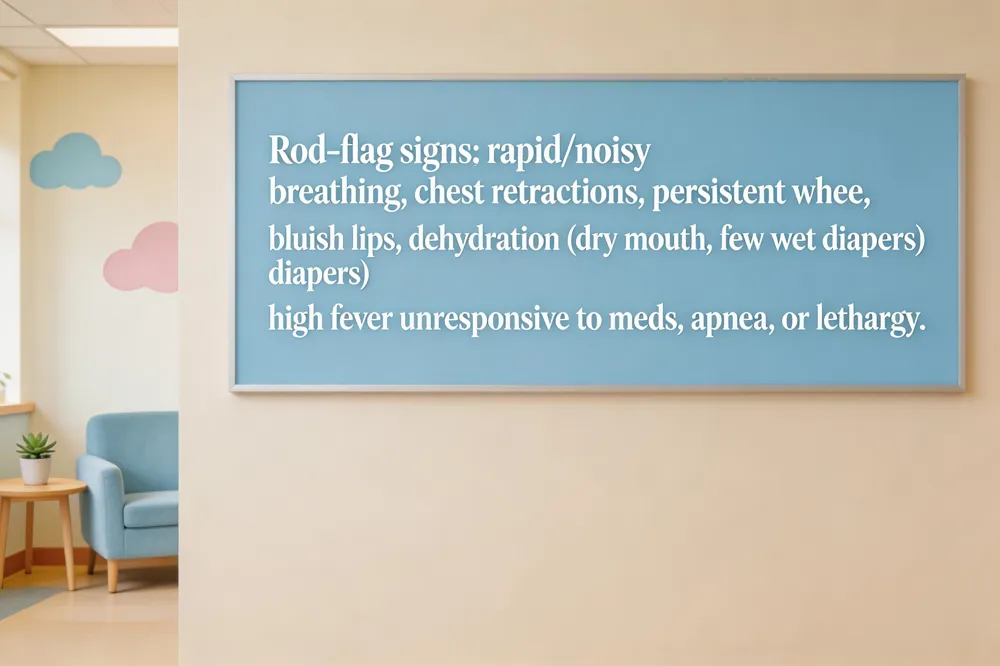 Red‑flag breathing signs – If your infant shows rapid or noisy breathing, chest wall retractions, persistent wheezing, or a bluish tint around the lips or fingertips, go to the emergency department immediately. These are classic signals of severe RSV lower‑airway involvement.
Dehydration indicators – Dry mouth, no tears when crying, fewer than one wet diaper in eight hours, or a sunken fontanelle mean the baby is dehydrated and likely needs IV fluids in the hospital.
Hospital admission criteria – Persistent high fever (≥100.4 °F/38 °C) that does not respond to fever‑reducers, apnea episodes, or any sudden drop in activity or alertness also warrant admission.
When should a baby with RSV be taken to the hospital? Any breathing trouble, persistent fever, dehydration signs, or lethargy are emergencies. High‑risk infants (premature, chronic lung/heart disease) should be evaluated early and admitted if any red‑flags appear.
Is RSV fatal in infants? Fatalities are rare and usually occur in infants with underlying conditions such as prematurity, chronic lung disease, or congenital heart defects. Prompt supportive care dramatically reduces risk.
Is RSV life‑threatening for a 2‑year‑old? Most healthy 2‑year‑olds have mild illness, but those with risk factors can develop bronchiolitis or pneumonia requiring oxygen, fluids, or ventilation. Watch for breathing difficulty, fever, chest retractions, or bluish lips and seek care right away.
When to Seek Medical Care for Toddlers
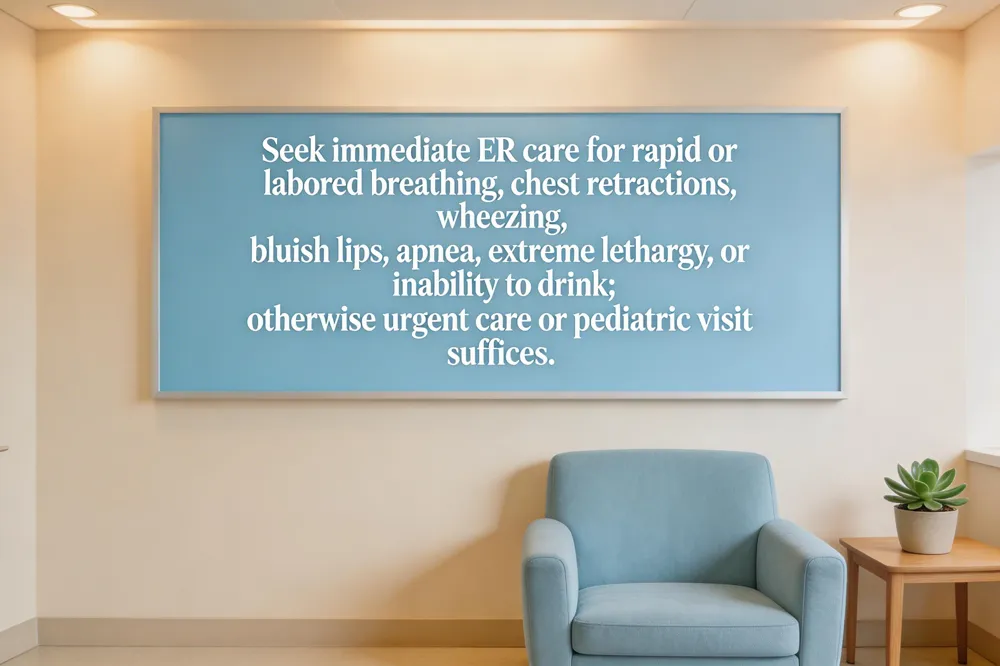 RSV in toddlers often looks like a cold, but parents must know when urgent‑care is enough and when the emergency department is required. Red‑flag signs that demand immediate ER care include rapid or labored breathing with chest‑muscle retractions, wheezing, bluish lips or nails, pauses in breathing (apnea), extreme lethargy, or inability to drink fluids and reduced urine output. If the child has only a runny nose, mild cough, low‑grade fever and is drinking well, call the pediatrician or go to urgent care for evaluation and supportive treatment.
Should I take my 2‑year‑old to the ER for RSV? Go to the ER if any red‑flag symptom appears; otherwise urgent care or a pediatric visit is appropriate.
Should a child with RSV go to daycare? No. Keep the child home until fever‑free for ≥24 h without medication and respiratory symptoms have improved, usually about a week after onset. Notify the daycare and follow its exclusion policy.
Supportive Treatment Strategies at Home
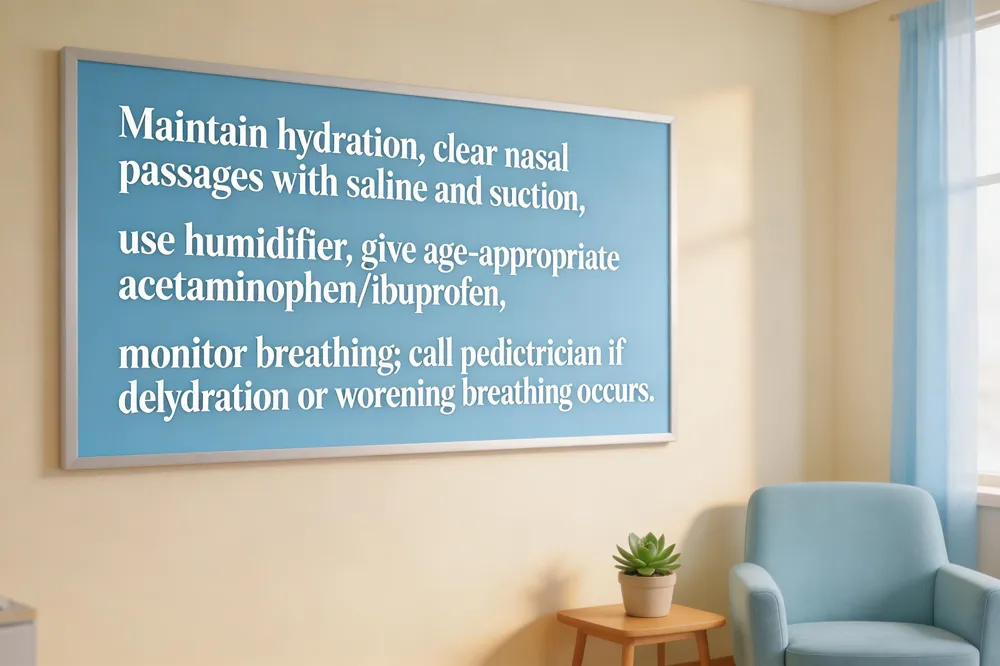 Keeping a toddler with RSV hydrated and well‑fed is the first priority—offer breast‑milk, formula, water, electrolyte drinks, or popsicles frequently and watch for at least one wet diaper every 6‑8 hours. Clear nasal passages with saline drops followed by gentle suction using a bulb syringe; a cool‑mist humidifier or steamy bathroom helps loosen mucus. For fever or discomfort, give age‑appropriate acetaminophen (or ibuprofen if over 6 months) and, for children older than one year, a teaspoon of honey can soothe cough. Monitor breathing closely: rapid or labored breaths, persistent wheezing, chest retractions, or bluish lips demand immediate medical care. Call the pediatrician if the child shows dehydration, cannot drink, or symptoms worsen rapidly. High‑risk toddlers should discuss preventive options such as the monoclonal antibody nirsevimab (Beyfortus) or maternal vaccination. Early detection and prompt supportive care reduce complications and hospitalizations.
Preventive Options for High‑Risk Children
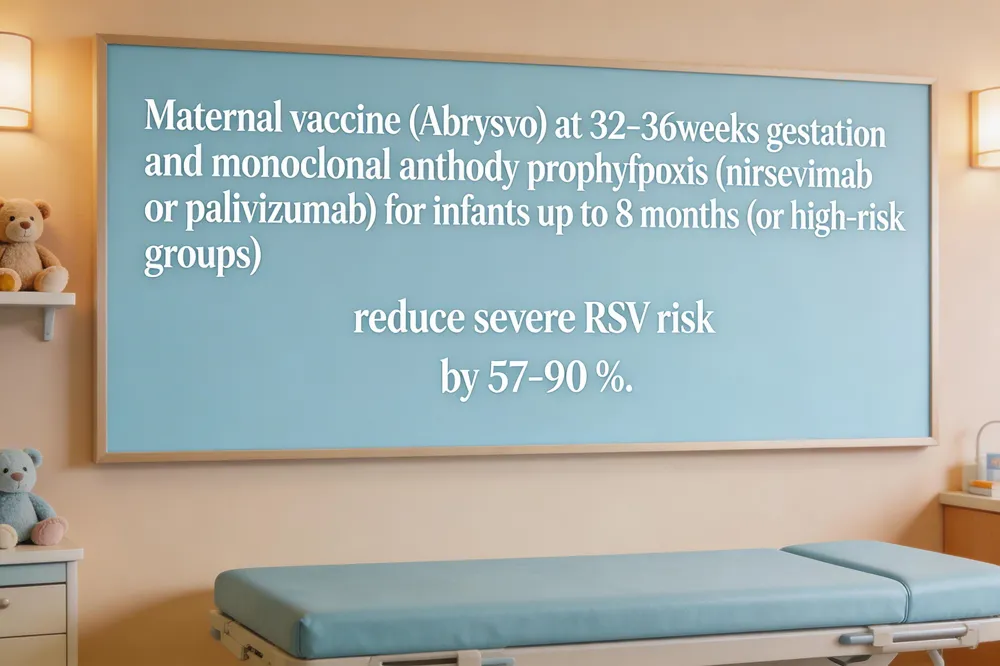 For infants and toddlers who are most vulnerable to severe RSV, the CDC and pediatric societies recommend two proven preventive strategies.
Maternal vaccination – Administered between 32‑36 weeks of pregnancy, the RSV vaccine (Abrysvo) transfers protective antibodies across the placenta, reducing the newborn’s risk of hospitalization by about 57 % during the first six months of life.
Monoclonal antibody prophylaxis – A single‑dose of nirsevimab (Beyfortus) or, for certain high‑risk infants, monthly palivizumab injections provide passive immunity that cuts severe‑disease risk by 80‑90 %.
Eligibility criteria – All infants up to 8 months old are candidates for nirsevimab; palivizumab is reserved for premature babies, those with chronic lung or heart disease, or immunocompromised children up to 19 months.
Timing of administration – Maternal vaccine is given during the third trimester; nirsevimab is administered shortly after birth or before the RSV season begins, while palivizumab starts at the season’s onset and repeats monthly.
Early detection and prompt medical evaluation remain essential—parents should seek care if a toddler shows difficulty breathing, dehydration, or worsening symptoms, even when prophylaxis is in place.
Long‑Term Outlook and Follow‑Up
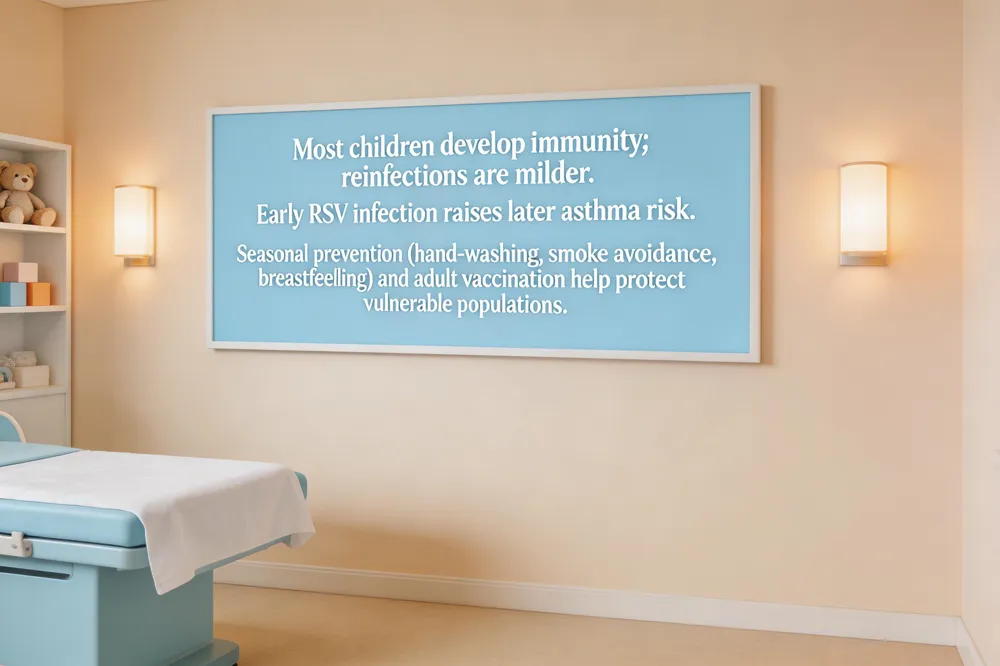 Early RSV infection is linked to increased asthma risk later in life.
While Most children are infected with RSV by the age of two years and develop immunity, reinfection can occur throughout life—usually with milder symptoms because partial immunity remains.
For broader community protection, the CDC and AAP now recommend RSV vaccination for adults 60 + and a maternal RSV vaccine given during pregnancy and a monoclonal antibody (e.g., nirsevimab) administered to the infant after birth to shield newborns; older children, especially those with chronic lung or heart disease, may benefit from seasonal monoclonal‑antibody prophylaxis such as nirsevimab.
Seasonal prevention remains crucial: Prevention: hand washing, avoid tobacco smoke, limit sick contacts, and promote breastfeeding.
Parents should seek emergency care if a toddler shows signs of severe difficulty breathing, is unable to drink enough fluids, or symptoms worsen rapidly.
Key Takeaways for Parents
Watch closely for red‑flag signs such as rapid breathing, chest retractions, nasal flaring, persistent high fever, bluish lips, or a sudden drop in fluid intake. Keep your toddler well‑hydrated with breast milk, formula, water, or electrolyte solutions, and use saline drops or a bulb syringe to clear nasal passages. If the child shows any of the warning signs—difficulty breathing, dehydration, lethargy, or fever that does not improve—contact your pediatrician or go to the emergency department right away. Throughout RSV season, practice frequent hand‑washing, avoid exposing the child to sick individuals or crowded indoor spaces, keep the home smoke‑free, and discuss maternal vaccination or monoclonal‑antibody prophylaxis with your doctor to reduce the risk of severe disease. Early detection and prompt care can prevent complications and help your child return to play faster.