Why Early Recognition Matters
Spotting strep throat early can cut the child’s illness in half, lower the fever within a day, and prevent serious complications such as rheumatic fever or kidney inflammation. Many parents assume every sore throat is a cold, believing cough, runny nose or sneezing are normal, which can delay testing and treatment. This guide aims to separate viral colds from bacterial strep, explain why a rapid swab test matters, and give clear steps for parents to seek care, start antibiotics promptly, and keep families safe. Recognizing signs—sore throat, high fever, swollen neck glands, patches—lets parents act fast, limit spread, protect child.
Recognizing Early Signs in Young Children
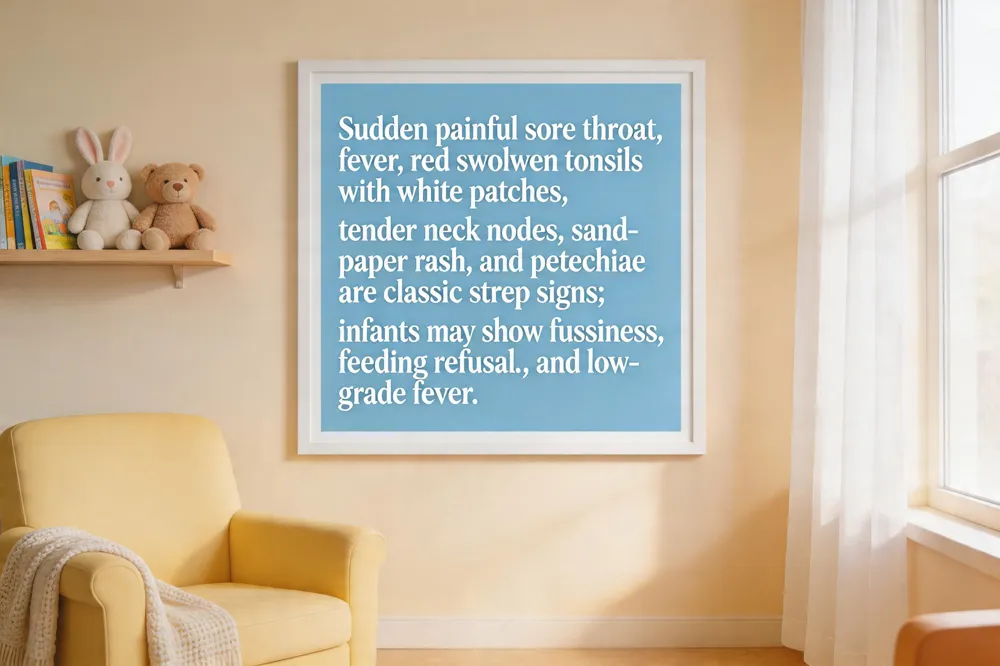 Strep throat in kids symptoms usually begin with a sudden, painful sore throat that worsens when swallowing. Fever and red and swollen tonsils with white patches or pus and tender neck lymph nodes are classic signs. Many children also develop headache, stomach ache, nausea, vomiting, loss of appetite, or a fine “sand‑paper rash” (scarlet fever). Small red spots on the roof of the mouth (petechiae) and a bright red tongue may appear, while cough, runny nose or hoarseness point toward a viral illness.
Strep throat symptoms in 1‑year‑old – Though rare, a one‑year‑old may present with low‑to‑moderate fever, increased fussiness, refusal to feed, swollen neck glands, and a red inflamed throat. A sand‑paper rash or thick nasal discharge can accompany the infection; seek pediatric evaluation promptly.
Strep throat symptoms in 2‑year‑old – Look for sudden fever, irritability, refusal to eat, bright red throat with white‑patched tonsils, and swollen neck nodes. Absence of cough, runny nose helps differentiate from a cold.
Strep throat symptoms in babies – Infants may show low‑grade fever, irritability, feeding refusal, thick nasal discharge, and tender neck lymph nodes. A red throat or sand‑paper rash can be present; a rapid strep test or culture is needed for confirmation.
When to Seek Medical Care
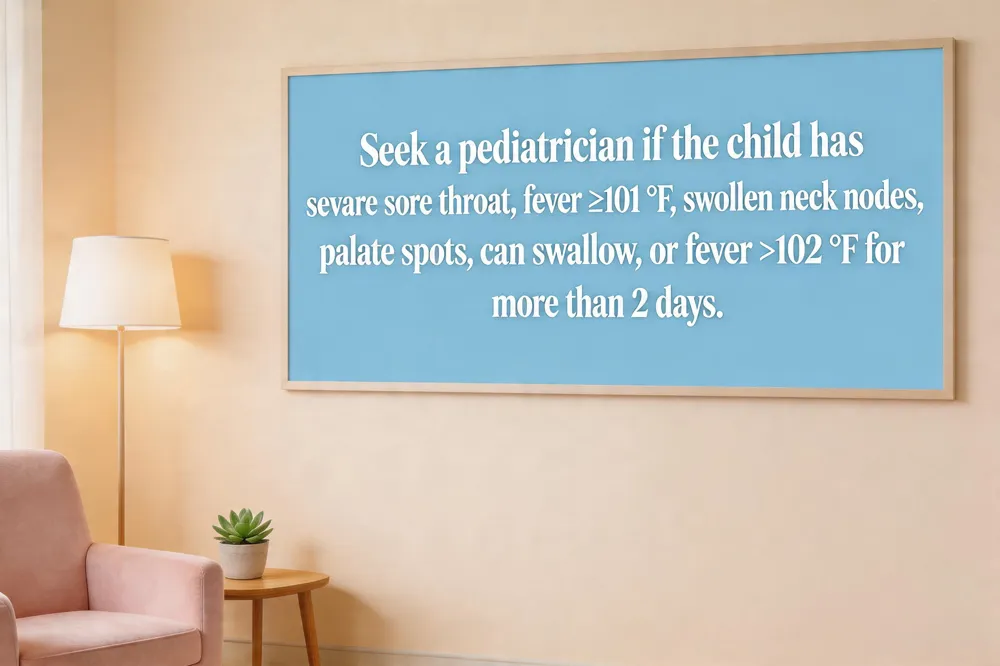 Key red‑flags for strep throat are sudden severe sore throat, fever ≥101 °F, swollen neck nodes, red palate spots, or white‑yellow tonsillar patches. If the child can’t swallow, has a rash, or fever stays >102 °F >2 days, see a pediatrician. The doctor will perform a rapid antigen test (minutes) and, if needed, a throat culture, then prescribe a 10‑day penicillin/amoxicillin course.
Should I take my child to the doctor for strep throat?
Fever, painful throat, swollen neck nodes, or palate spots → doctor visit; rapid test confirms strep and starts antibiotics.
Strep throat in toddlers under 2
Rare but possible; low‑grade fever, irritability, poor appetite, swollen glands, throat patches. Call pediatrician if fluids refused or rash appears.
Strep throat in toddlers under 3
Uncommon; sudden throat pain, fever, red tonsils with pus, drooling, swallowing trouble. Rapid test or culture guides treatment.
Is it rare for a 2‑year‑old to get strep?
2‑year‑olds rarely get strep; if they have sudden throat pain, fever, swollen tonsils without cough, test and treat.
Can strep go untreated in kids?
Untreated strep risks rheumatic fever and kidney disease. Prompt test and 10‑day antibiotics prevent complications.
Complete the full antibiotic course even if symptoms improve early.
Diagnostic Tools and Confirmation
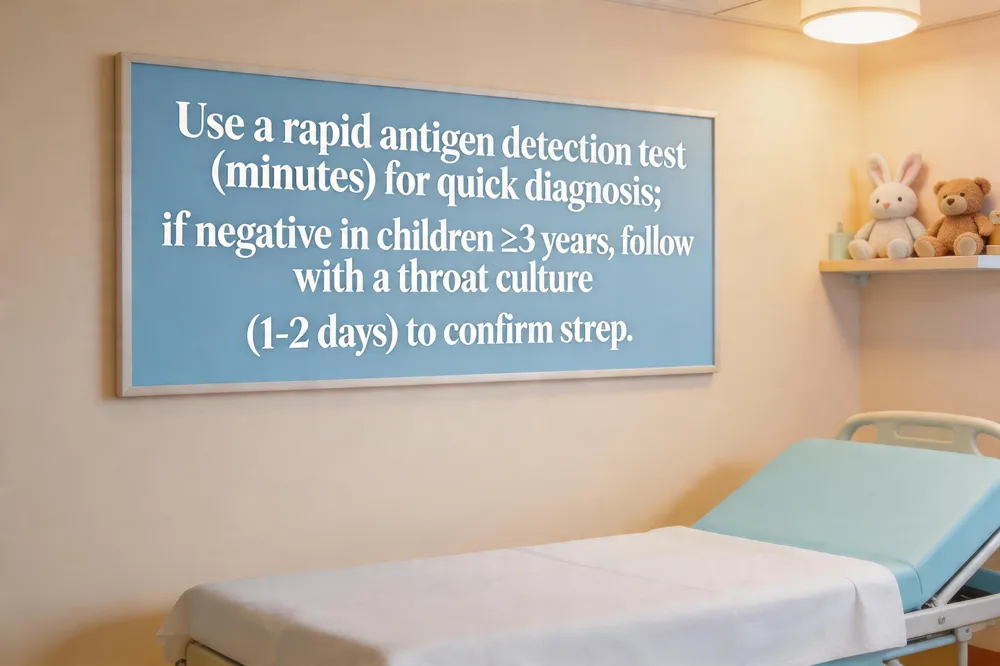 When a child or teen shows the classic signs of strep throat—sudden painful sore throat, fever, swollen neck glands, and white patches on the tonsils—healthcare professionals rely on two key diagnostic tools. The first is a rapid antigen detection test (RADT), a quick throat swab that identifies group A streptococcus antigens in minutes; a positive RADT is highly specific and usually sufficient to start antibiotics. If the rapid test is negative, especially in children three years or older, a throat culture is performed as the gold‑standard confirmatory test, with results in 1–2 days. Interpreting these results is straightforward: a positive RADT or culture confirms strep infection and prompts a ten‑day course of penicillin or amoxicillin, while a negative result—coupled with the presence of viral symptoms like cough or runny nose—suggests a viral cause, sparing the child unnecessary antibiotics. Prompt testing and accurate interpretation ensure timely treatment, reduce transmission, and protect against serious complications such as rheumatic fever.
Antibiotic Treatment Strategies
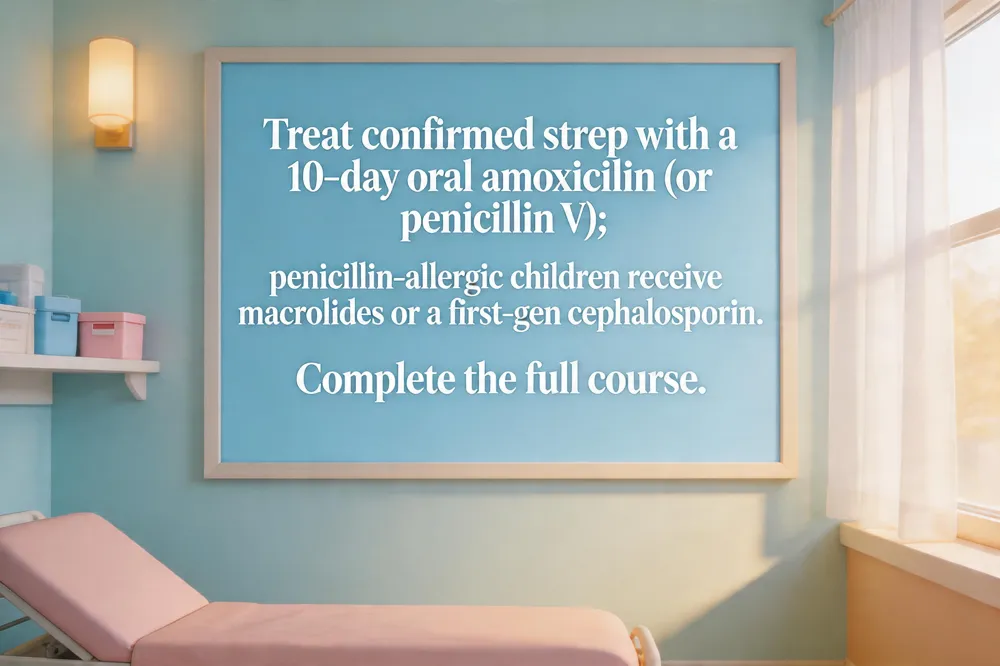 When a child’s rapid strep test or throat culture confirms group A Streptococcus, the first‑line therapy is a 10‑day oral course of amoxicillin (or penicillin V if preferred). For children allergic to penicillin, clinicians switch to macrolides such as azithromycin or clarithromycin, or to a first‑generation cephalosporin when appropriate. The full ten‑day regimen must be completed even if the child feels better after 1–2 days; stopping early risks recurrence, antibiotic resistance, and rare complications like rheumatic fever or kidney inflammation.
Strep throat under 2 years old treatment – Although uncommon, infants with a confirmed infection receive the same 10‑day amoxicillin (or azithromycin if allergic) course, supportive care, and close monitoring for fever or irritability.
Strep throat in kids treatment – A short oral antibiotic course (usually 10 days) relieves pain, reduces fever within 24–48 hours, and makes the child non‑contagious after about 12 hours of therapy. Over‑the‑counter acetaminophen or ibuprofen, fluids, and soft foods aid comfort.
Strep throat treatment – Penicillin or amoxicillin is prescribed for the full course; children can return to school after 24 hours of antibiotics and being fever‑free. Hand‑washing and avoiding sharing utensils help prevent spread.
Preventing Spread and Contagiousness
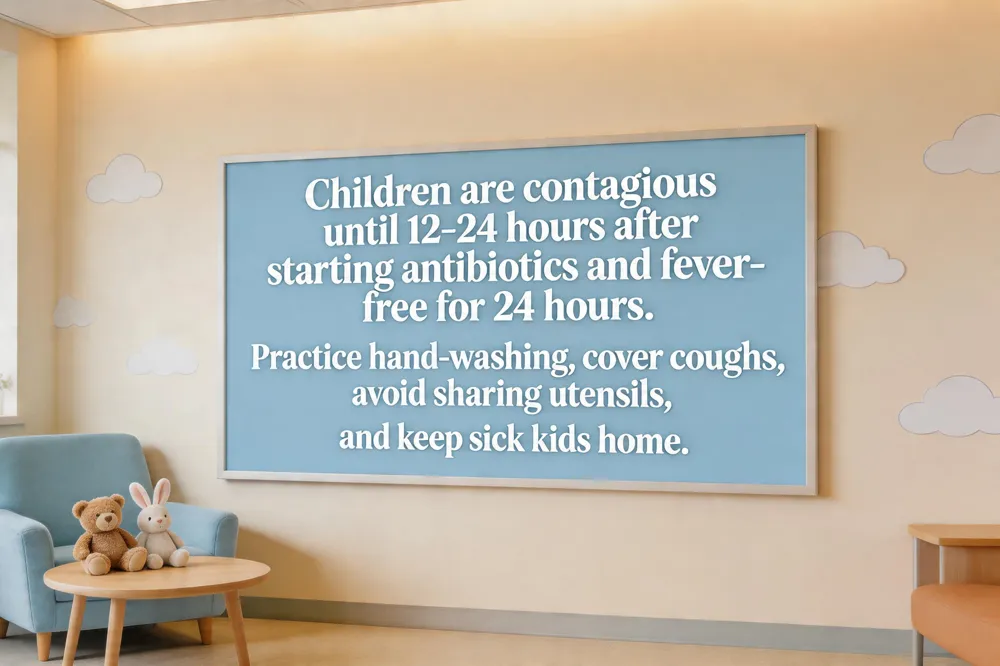 Strep throat spreads very easily among school‑age children because the group A Streptococcus bacteria travel in tiny respiratory droplets when a child coughs, sneezes, or talks. Touching a contaminated surface and then the nose or mouth can also transmit the germs. Untreated children may remain contagious for up to three weeks, but once appropriate antibiotics are started they typically become non‑contagious after 12–24 hours.
Isolation guidelines – Keep a child at home until they have been fever‑free for at least 24 hours and have taken antibiotics for a minimum of 12 hours. This reduces the chance of spreading the infection to classmates, daycare peers, and family members.
Hygiene practices – Frequent hand‑washing with soap for 15–20 seconds or an alcohol‑based sanitizer (≥60 % alcohol) is essential. Teach children to cover coughs and sneezes with a tissue or the elbow, avoid sharing drinks, utensils, or towels, and clean commonly touched surfaces regularly.
Why prompt treatment matters – If left untreated, strep throat can lead to serious complications such as rheumatic fever, kidney inflammation (post‑streptococcal glomerulonephritis), or spread to the ears, sinuses, and skin. Early testing and a 10‑day course of penicillin or amoxicillin dramatically shortens illness, prevents these complications, and makes the child non‑contagious within a day of therapy.
Antibiotics, most commonly amoxicillin, are required to treat strep throat, reduce symptom duration, prevent spread, and minimize complications such as rheumatic fever.
Supporting Your Child at Home
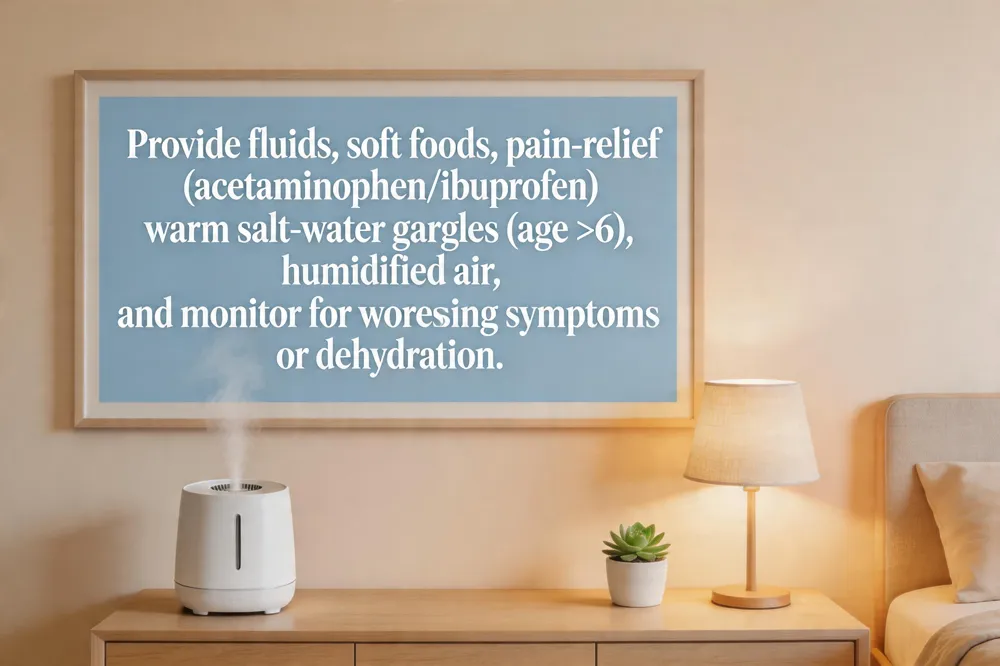 When a child is diagnosed with strep throat, the home routine focuses on comfort, fever and pain control, and vigilant monitoring for complications.
Comfort measures – Offer plenty of fluids (water, diluted juice, Popsicles) and soft foods that are easy to swallow, such as warm soup, applesauce, or yogurt. A warm salt‑water gargle (½ tsp salt in 8 oz warm water) can soothe the throat for children over age 6. Keep the bedroom humidified and avoid irritants like cigarette smoke.
Pain and fever control – Age‑appropriate acetaminophen or ibuprofen can reduce throat pain and lower fever; give the dose as directed on the label or by the pediatrician. Avoid aspirin in anyone under 18.
Monitoring for complications – Watch for worsening pain, high fever >104 °F, difficulty swallowing, drooling, rash, or signs of dehydration (dry mouth, no tears, reduced urine). Prompt medical evaluation is needed if these appear.
Common questions
- Can a child have a cough with strep throat? A cough is not typical of bacterial strep; its presence usually points to a viral illness. However, a mild cough can coexist with classic strep signs, so testing is still warranted.
- Strep throat symptoms in kids diarrhea? Diarrhea may occur due to the infection, immune response, or antibiotics like amoxicillin. Persistent or severe diarrhea with dehydration signs should prompt a clinician’s call.
- How do kids act when they have strep? They often develop a sudden, severe sore throat, fever, and swollen neck glands. Younger children may become fussy, lose appetite, or vomit; older kids may complain of headache, body aches, or a sandpaper‑like rash, but they usually lack a runny nose or cough.
Key Takeaways for Parents
When your child shows a sore throat, fever above 101°F, red tonsils with white patches, or swollen neck glands, seek medical evaluation promptly. A strep test or throat culture performed by a clinician confirms the diagnosis in minutes, allowing antibiotics to be started within 24‑48 hours. Finish the prescribed course—ten days of amoxicillin or penicillin—even if symptoms improve, to prevent rheumatic fever and other complications. At home and school, practice hand‑washing, cover coughs with an elbow or tissue, avoid sharing utensils or drinks, and keep child home until they have been on antibiotics for at least 12 hours and are fever‑free.