Why Early Detection Matters
Strep throat can quickly turn a sore throat into a serious health issue for kids. Fever, swollen tonsils, and painful swallowing may be accompanied by headache, stomach pain, or even the sand‑paper rash of scarlet fever, and if left untreated the infection can lead to rheumatic fever, kidney inflammation, or neck infections. Because the bacteria spread through droplets and contaminated surfaces, a case in a classroom can ignite an outbreak that moves through schools and day‑care centers within days. Rapid antigen testing or a throat culture confirms the diagnosis in minutes to a few days, allowing doctors to start a ten‑day course of penicillin or amoxicillin. Prompt therapy shortens illness, makes the child non‑contagious after about 12 hours, and protects community from complications.
Recognizing the Classic Signs
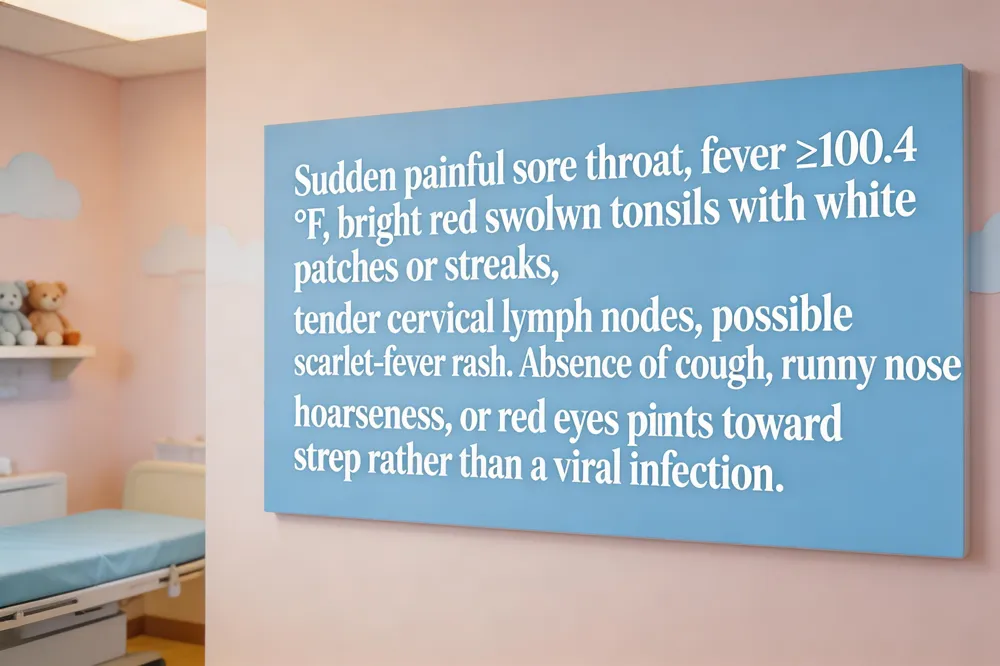 Strep throat in children often appears suddenly with a painful sore throat that worsens with swallowing and a high fever (often above 101 °F). The tonsils become bright red, swollen, and may be dotted with white patches or streaks of pus; tiny red spots (petechiae) can be seen on the palate. Swollen or tender lymph nodes in the front of the neck are also typical. Additional clues include headache, stomach upset, nausea, vomiting, or a sand‑paper‑like rash (scarlet fever). Importantly, a cough, runny nose, hoarseness, or red eyes are usually absent—these signs point toward a viral infection rather than strep.
What are the common symptoms of strep throat in kids? The classic picture is a sudden, painful sore throat, fever, red‑swollen tonsils with white exudate, and tender neck glands. Children may also complain of headache, abdominal pain, or loss of appetite, and a few develop the characteristic scarlet‑fever rash. The lack of cough or cold‑like symptoms helps differentiate strep from a viral sore throat.
How can I tell if my child has strep throat? Look for the sudden throat pain that gets worse with swallowing, accompanied by fever ≥ 100.4 °F (38 °C). Check the tonsils for red swelling and white patches, and feel for tender cervical lymph nodes. If these signs are present, especially in school‑age children (5‑15 years), a rapid strep test or throat culture by a pediatrician is essential to confirm the diagnosis. Prompt testing leads to timely antibiotic treatment, which shortens illness and prevents complications such as rheumatic fever.
Can a child have a cough with strep throat? A cough is not typical of strep throat and usually suggests a viral cause. While a child can be infected with both a virus and strep bacteria simultaneously, the cough itself is not caused by the strep infection. If a cough is present, the clinician will still test for strep to rule out bacterial involvement; antibiotics are prescribed only when a strep infection is confirmed.
Behavioral Clues in Young Children
 How do kids act when they have strep throat?
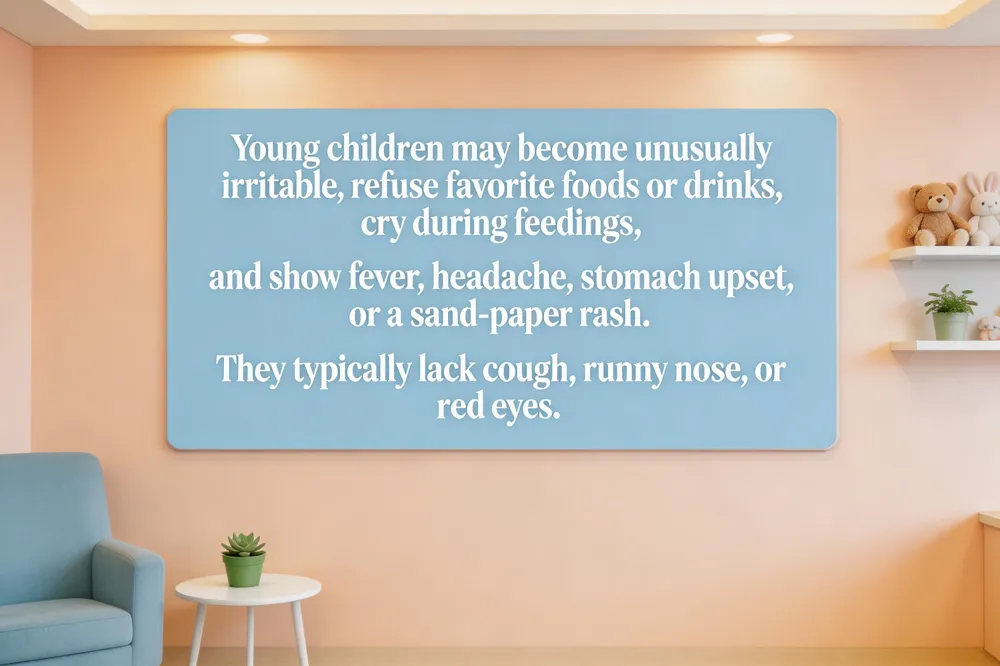
Children with strep throat often become unusually fussy and may suddenly refuse favorite foods or drinks, sometimes crying during feedings. They complain of a sore, raw‑feeling throat that hurts more when they swallow, and develop fever, headache, and stomach aches or nausea. Unlike a cold, they typically do not have a cough, runny nose, or red eyes. A red, swollen tonsil with white patches or streaks may be visible, and a fine, sandpaper‑like rash (scarlet fever) can appear on the neck or torso. The peak age is school‑age children (5‑15 years), but younger kids may show the same signs through irritability and feeding refusal.
Strep throat in toddlers under 2 – what to watch for?
Toddlers under 2 cannot verbalize throat pain, so watch for sudden irritability, crying during feedings, or refusal to take favorite foods and liquids. A fever of 100 °F (38 °C) or higher, along with a red, swollen throat that may have white patches or streaks on the tonsils, is a key clue. Look for red spots on the palate, maybe ear‑pulling, and a fine, sandpaper‑like rash (scarlet fever). Absence of cough, runny nose, or red eyes helps distinguish strep from a viral illness. Because dehydration can develop quickly, any of these signs warrants a prompt pediatric evaluation and possible rapid strep test or throat culture.
Transmission and Prevention
 Strep throat spreads easily among school‑age children. The bacteria travel in respiratory droplets when an infected child coughs, sneezes, or talks, and they can also hitch a ride on shared objects such as cups, utensils, toys, or doorknobs. Because children spend long hours in close contact at school, daycare, or during play, a single case can seed many new infections within a few days.
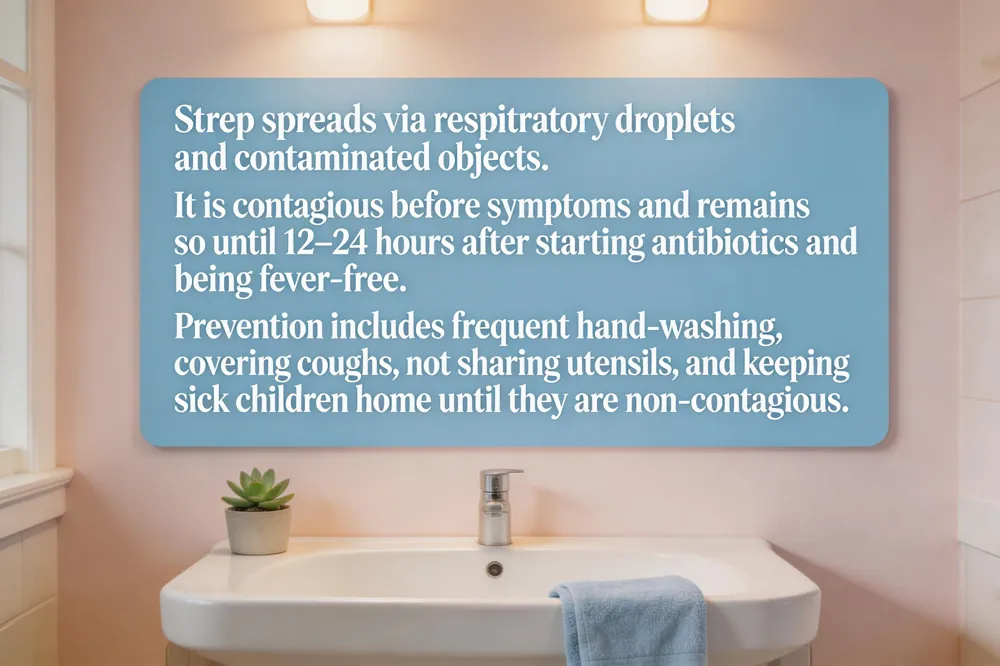
Is strep throat contagious? Yes. Group A Streptococcus is highly contagious; children can begin shedding bacteria a day or two before symptoms appear and remain contagious until at least 12–24 hours after starting a 10‑day antibiotic course and being fever‑free.
How do kids get strep throat (transmission)? The most common route is inhaling droplets from an infected peer, especially in crowded classrooms or during play. Touching a contaminated surface and then touching the mouth, nose, or eyes also spreads the bacteria. Sharing drinks, food, or personal items further raises risk.
Can strep be asymptomatic in children? Up to 15‑20 % of school‑aged kids may carry the bacteria without any illness. These carriers can still transmit the infection, especially in close‑contact settings, which is why testing close contacts during an outbreak is sometimes recommended.
Prevention tips: Frequent hand‑washing (15‑20 seconds with soap or alcohol‑based sanitizer), covering coughs and sneezes with an elbow or tissue, and avoiding sharing utensils or drinks dramatically cut transmission. Keep a child home from school or daycare until they have taken antibiotics for at least 12 hours and are fever‑free, and practice regular cleaning of high‑touch surfaces. Prompt medical evaluation and rapid testing are essential to start antibiotics early, protect the child, and stop the spread to classmates and family members.
Diagnosis and Testing
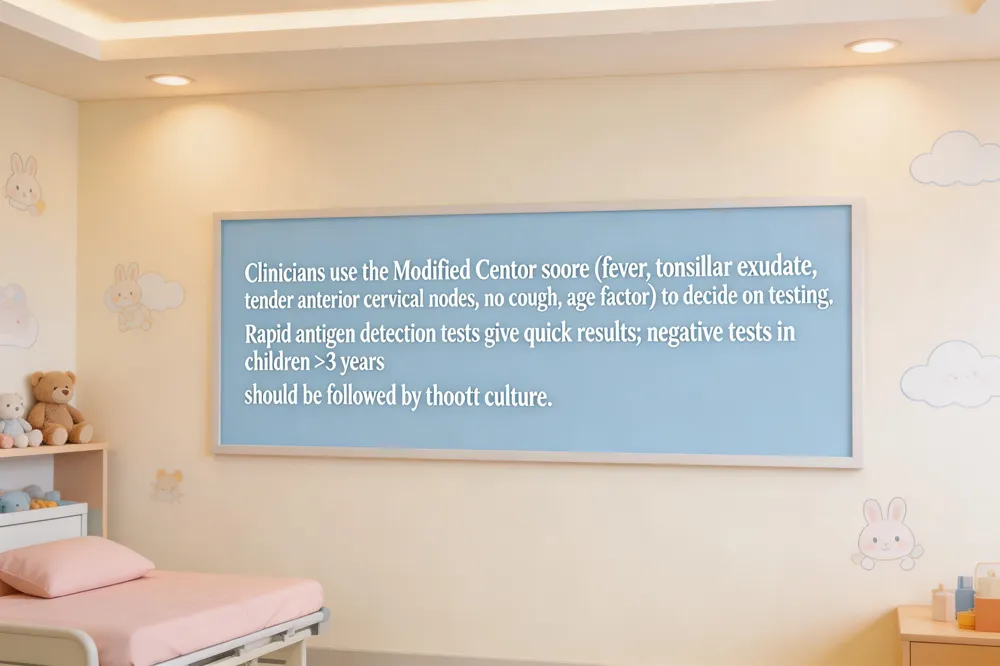 When a child or teen develops a sudden, painful sore throat, clinicians first decide whether the illness is likely viral or bacterial. The Centor criteria—fever, tonsillar exudate, tender anterior cervical lymph nodes, and absence of cough—each earn one point. For pediatric patients the Modified Centor score adds an age factor (children 3‑14 years receive an extra point) to better reflect the higher prevalence of group A streptococcus (GAS) in school‑age kids. A low score (0‑1) usually means testing isn’t needed, a moderate score (2‑3) prompts a rapid antigen detection test (RADT), and a high score (4‑5) may justify either testing or empiric antibiotics.
The RADT uses a soft throat swab and delivers a result in minutes, allowing the clinician to start a 10‑day penicillin or amoxicillin course within hours. Because the test can miss some infections, a negative RADT in children older than 3 should be followed by a throat culture, which takes 1‑2 days but is more sensitive.
Testing is essential before prescribing antibiotics to avoid unnecessary drug exposure and to prevent serious complications such as rheumatic fever or kidney disease. Prompt medical evaluation ensures the child receives the right treatment and returns to school safely.
Treatment and Home Care
What is the recommended treatment for strep throat in children?
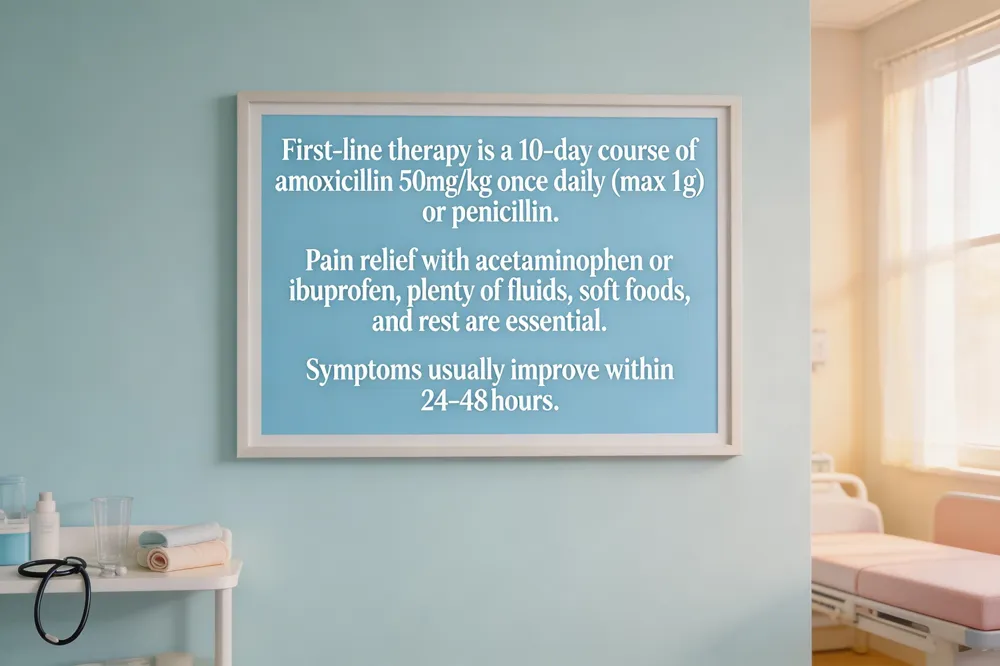
The first‑line therapy is a 10‑day course of oral penicillin (or amoxicillin, which is easier to dose). Antibiotics should be started promptly after a positive rapid strep test or throat culture to shorten the illness, make the child non‑contagious within about 12 hours, and prevent complications such as rheumatic fever or kidney disease. Pain relievers such as acetaminophen or ibuprofen can be given for fever and throat pain, and the child should stay well‑hydrated and rested while the medication works. Follow‑up is usually unnecessary if the child improves, but persistent symptoms after 48‑72 hours warrant re‑evaluation.
What antibiotic is preferred for strep throat in kids and dosage?
Amoxicillin is the preferred first‑line antibiotic for group A streptococcal pharyngitis in children. The recommended dose is 50 mg per kilogram of body weight once daily, not to exceed 1 gram per day, for a total of 10 days. For children with a penicillin allergy, a macrolide such as azithromycin may be used (12 mg/kg on day 1, then 6 mg/kg daily for the next 4 days). These regimens achieve rapid symptom relief and reduce the risk of rheumatic fever and other complications.
How to manage strep throat symptoms at home (pain relief, fluids)?
Give age‑appropriate acetaminophen or ibuprofen according to dosing guidelines. Encourage plenty of fluids—water, diluted juice, warm broth, or a honey‑lemon drink for children over 1 year—to keep the throat moist and prevent dehydration. Offer soft foods (yogurt, applesauce, scrambled eggs, oatmeal) and avoid acidic or crunchy items that may irritate the throat. Warm salt‑water gargles (for children who can safely spit) or a cool‑mist humidifier can add comfort. Ensure the child gets adequate rest and completes the full antibiotic course.
How long does strep throat last in children?
With appropriate antibiotics, most children feel better within 24–48 hours, and the infection is usually cleared after 5–7 days of treatment. Untreated strep throat can linger for 1–2 weeks and may lead to serious complications. Even after symptoms improve, the child remains contagious for about 24 hours on antibiotics. If the sore throat persists longer than 48 hours without improvement, or if a rash, difficulty breathing, or swollen lymph nodes develop, contact the pediatrician promptly.
Returning to School and When to Seek Emergency Care
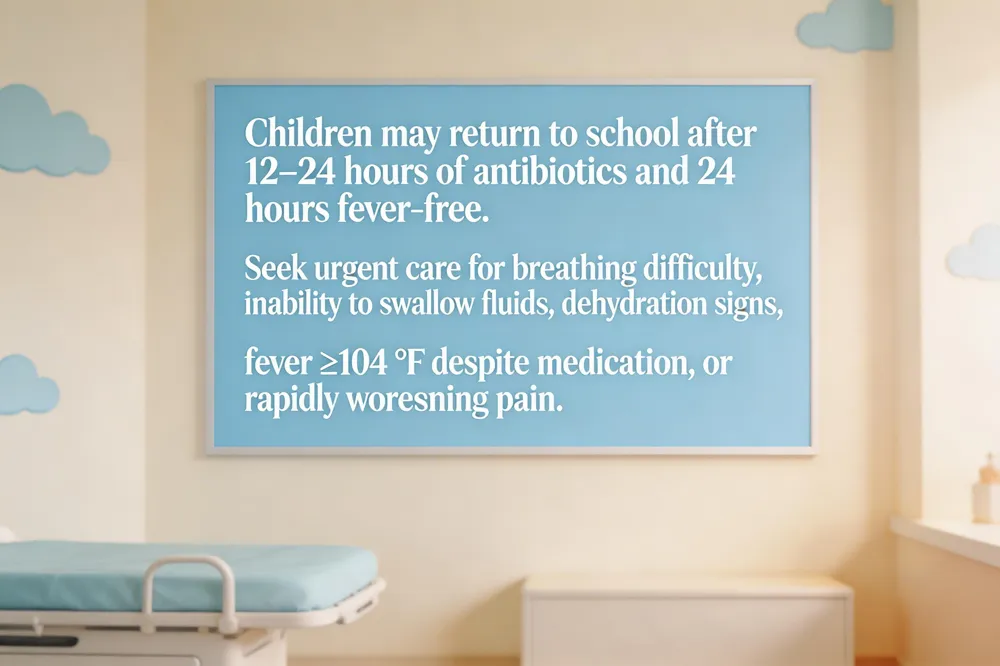 Children with strep throat are safe to return to school after at least 12‑24 hours of appropriate antibiotics and a fever‑free period of 24 hours without antipyretics. They should feel well enough to eat, drink, and concentrate, and have no severe throat pain or complications such as scarlet‑fever rash.
Red‑flag signs that warrant urgent evaluation include difficulty breathing, inability to swallow fluids (drooling), signs of dehydration (no tears, dry mouth, scant urine), a fever ≥104 °F (40 °C) despite medication, or rapid worsening of pain.
Most cases are managed by a pediatrician with a rapid strep test and a 10‑day antibiotic course. The emergency department is reserved for the serious symptoms listed above, not for routine sore throats.
Key Take‑aways for Parents
Watch closely for the classic strep signs—sudden sore throat that hurts with swallowing, high fever, red swollen tonsils with white patches, and tender neck lymph nodes—as well as behavioral clues in younger kids such as fussiness, poor appetite, stomach pain, or a sand‑paper rash. If any of these appear, seek prompt testing; a rapid strep test or throat culture can confirm the infection within minutes and allows antibiotics to start within 12 hours, which shortens illness and prevents serious complications like rheumatic fever. Meanwhile, practice strict hand‑washing, cover coughs and sneezes, and avoid sharing utensils or drinks. These simple steps protect the child, siblings, classmates, and the broader community from the highly contagious bacteria.