Why Insurance Compatibility Matters for Pediatric Care
Choosing a pediatric primary‑care provider who is in‑network with your family’s insurance can dramatically lower out‑of‑pocket expenses. When a practice is out‑of‑network, insurers often cover only a fraction of the bill, leaving families to pay higher copays, deductibles or even the full charge. In‑network providers negotiate rates with the insurer, so routine well‑child visits, immunizations and sick‑care appointments are typically covered at little or no cost.
The primary‑care provider (PCP) is the cornerstone of a child’s health. The PCP coordinates preventive care, monitors growth and development, manages chronic conditions such as asthma or obesity, and serves as the gateway for specialist referrals. Early, consistent contact with a trusted PCP improves health outcomes and reduces emergency‑room visits.
Quick checklist before you schedule a visit:
- Verify the doctor’s name appears on your insurer’s provider directory.
- Confirm the practice accepts your specific plan (including any Medicaid or CHIP component).
- Ask about after‑hours contact, nurse phone support and interpreter services if needed.
- Bring a current insurance card and a brief list of questions about the child’s health history. Doing these steps ensures a smooth, cost‑effective first appointment.
Finding In‑Network Pediatricians in Decatur, Georgia
 Choosing a pediatrician who is in‑network with your insurance is the first step to affordable, timely care for your child. In Decatur, Georgia, families can locate Apple Health (Medicaid) providers through the state’s online Provider Directory—enter "Decatur" or ZIP 30030 and filter for "Primary Care" and the Apple Health plan. The same tool is available via the Coordinated Care "Find a Provider" portal (https://www.coordinatedcarehealth.com) and Zocdoc’s insurance filter. If you prefer speaking with a person, call the Apple Health member‑services line at 1‑877‑644‑4613 (TTY 711) or the Georgia Medicaid Customer Service line at 1‑877‑423‑4747; representatives can pull a current list of pediatric practices that accept Medicaid and even help schedule your first visit.
For children who qualify for the Children’s Health Insurance Program (CHIP) – known in Georgia as PeachCare for Kids – eligibility depends on household income falling above the Medicaid threshold but below a state‑specific limit. Applications are accepted year‑round online at the Georgia Medicaid portal or by phone, and coverage begins as soon as approval is confirmed. CHIP covers well‑child check‑ups, immunizations, and treatment for chronic conditions at little or no cost, making it an excellent alternative when private insurance is out of reach.
How can I find an Apple Health (Medicaid) provider in Decatur, GA? You can locate an Apple Health provider by using the Georgia Medicaid Provider Search tool, calling 1‑877‑644‑4613, or checking the Coordinated Care online portal. Kids & Teens Primary Healthcare can also verify its network status and schedule an appointment for you.
Where can I find a list of Apple Health primary‑care providers in Decatur? The Medicaid Provider Search on medicaid.georgia.gov, the Apple Health Provider Finder, and the Aylo Health directory all let you filter by city and insurance. Phone assistance is available at 1‑877‑423‑4747 for a printed list.
Online directories, phone hotlines, and direct office verification together ensure you quickly connect with a pediatrician who accepts your coverage, so your child can receive the preventive and urgent care they need without surprise bills.
Understanding CHIP and Medicaid Eligibility in Georgia
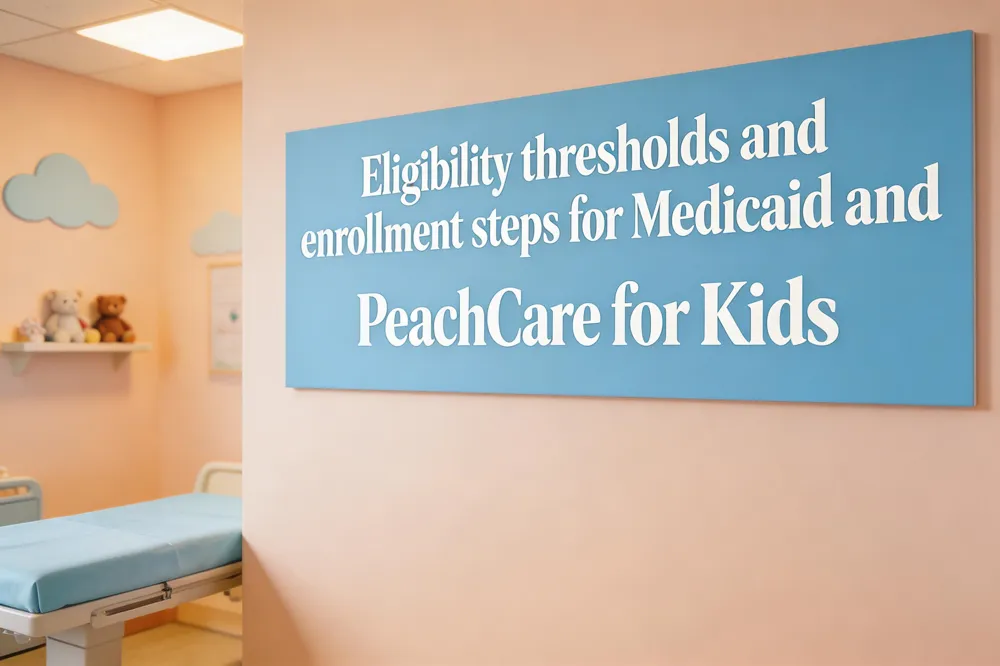 In Georgia, children can obtain free or low‑cost health coverage through two primary programs: Medicaid (Apple Health) and the Children’s Health Insurance Program (CHIP), known locally as PeachCare for Kids®.
Income thresholds for PeachCare for Kids – To qualify for PeachCare for Kids, a child must be under 19 years old, a resident of Georgia, and come from a household whose income is above the Medicaid limit but does not exceed 247 percent of the Federal Poverty Level (FPL). For example, a family of four may earn up to about $6,422 per month ($77,064 per year) and still be eligible.
Citizenship and residency requirements – The child must be a U.S. citizen, national, or belong to an eligible legal‑immigrant category. Residents must provide proof of Georgia residency. Children already enrolled in Medicaid or another qualifying plan are not eligible for PeachCare.
Automatic enrollment through SNAP/TANF/WIC – Families receiving SNAP, TANF, WIC, or similar assistance are automatically considered for PeachCare via the Express Lane process, streamlining enrollment when income and citizenship criteria are met.
Free health‑insurance options – Georgia’s Medicaid (Apple Health) offers free coverage for children who meet its stricter income limits. For those who earn too much for Medicaid, PeachCare for Kids provides comprehensive, no‑premium coverage that includes doctor visits, immunizations, dental, vision, prescriptions, and mental‑health services. Eligibility is confirmed at application and renewed each year, with coverage beginning immediately once approved.
Insurance Basics: Costs, Primary Coverage, and Specialty Care
 Having health coverage for children and teens is essential for timely care, from routine check‑ups to emergencies.
Premium ranges for child‑only plans differ by type and location. A basic HMO or EPO costs $70‑$150 per month; a PPO runs $120‑$200. Medicaid or state CHIP may pay $0‑$60, with larger families receiving capped fees. Employer‑sponsored family plans cost $775‑$2,250 per month for the whole household.
When both parents have coverage, the “birthday rule” decides the primary insurer: the parent whose birthday (month and day) is earlier in the year provides primary coverage, the other plan is secondary. If birthdays match, the longest‑active plan becomes primary; custodial parents remain primary unless a court order says otherwise.
Migraine treatment for children is generally covered. Office visits, prescription meds, and neurologist referrals are paid when a physician documents medical necessity, but newer therapies such as CGRP drugs or Botox often need prior authorization and may be denied as experimental, so families should be ready to appeal.
Emergency dental issues like a tooth abscess are reimbursed. Private plans may exclude routine dental work but often cover medically necessary emergency treatment; Medicaid and CHIP routinely cover emergency dental care.
Choosing a plan that meets these needs helps families avoid surprise bills and keeps kids healthy.
Practical Tips for Choosing the Right Pediatric Provider
 How do I choose the right pediatric primary‑care provider for my child?
Start by listing your child’s health needs—whether a healthy, have a chronic condition, or need special services—and match those to a provider’s expertise. Verify that the practice accepts your insurance (e.g., Medicaid, CHIP, Aetna, Cigna) and is affiliated with a trusted hospital. Check board certification, years in practice, and any additional training. Practical factors matter: choose a location with easy parking, hours that include evenings or weekends, and reliable after‑hours contact (phone or email). Schedule an introductory visit to tour the office, meet the clinician and staff, and ask about communication methods, emergency protocols, and care philosophy. Trust your instincts about the warmth of the environment.
How do I choose the right pediatric primary‑care provider for my child?
Start by listing your child’s health needs—whether a healthy, have a chronic condition, or need special services—and match those to a provider’s expertise. Verify that the practice accepts your insurance (e.g., Medicaid, CHIP, Aetna, Cigna) and is affiliated with a trusted hospital. Check board certification, years in practice, and any additional training. Practical factors matter: choose a location with easy parking, hours that include evenings or weekends, and reliable after‑hours contact (phone or email). Schedule an introductory visit to tour the office, meet the clinician and staff, and ask about communication methods, emergency protocols, and care philosophy. Trust your instincts about the warmth of the environment.
How can I find the best pediatrician for my child in Decatur, GA?
Ask family, friends, and school nurses for referrals and review online ratings for Decatur practices such as Kids & Teens Primary Healthcare, Snapfinger Woods Pediatrics, and Milestone Pediatrics. Confirm the doctor is board‑certified and accepts your plan (Medicaid, CHIP, Blue Cross, etc.). Look for services you need—well‑child check‑ups, immunizations, sick‑visit care, and specialty programs. Schedule a brief meet‑and‑greet to see how the provider communicates, how comfortable your child feels, and whether the office layout (separate well and sick areas, MyChart portal) fits your preferences. Compare office hours, location, and insurance acceptance, then choose the practice that combines professional expertise with a caring, family‑centered approach.
Navigating Billing, Payments, and Coverage Details at Kids & Teens Primary Healthcare
 Accepted insurance plans and verification process
Kids & Teens Primary Healthcare accepts a broad mix of private carriers (Aetna, Cigna, Blue Cross/Blue Shield, United Healthcare, Humana, etc.), Medicaid, CHIP and many state‑run plans such as Florida Healthy Kids and Georgia’s PeachState. Before scheduling, families should log into their insurer’s member portal or call the provider‑directory line to confirm that the specific plan is in‑network. When you call the office, bring the insurance card; the staff will scan it, verify eligibility, and note any network tier or prior‑authorization requirements.
Accepted insurance plans and verification process
Kids & Teens Primary Healthcare accepts a broad mix of private carriers (Aetna, Cigna, Blue Cross/Blue Shield, United Healthcare, Humana, etc.), Medicaid, CHIP and many state‑run plans such as Florida Healthy Kids and Georgia’s PeachState. Before scheduling, families should log into their insurer’s member portal or call the provider‑directory line to confirm that the specific plan is in‑network. When you call the office, bring the insurance card; the staff will scan it, verify eligibility, and note any network tier or prior‑authorization requirements.
Self‑pay estimates and sliding‑scale discounts If you lack coverage, the practice can provide a competitive self‑pay quote by calling 813‑422‑6316. For families whose income falls below eligibility thresholds, a sliding‑scale discount program is available—ranging from 100 % off for incomes at or below 100 % of the federal poverty level to no discount above 200 %‑ the level. Documentation of income is required to qualify.
Coordination of records and interpreter services The office works with NICU teams to receive discharge summaries promptly and can arrange interpreter services for the first visit to ensure clear communication. Providing the pediatrician’s name and contact information to the hospital staff speeds record transfer.
What insurance is considered primary for a child when both parents have coverage? The “birthday rule” applies: the parent whose birthday (month and day) occurs earlier in the calendar year provides the primary insurer. If birthdays match, the plan active longest becomes primary. Custodial‑parent coverage is primary in most divorce or custody situations unless a court order states otherwise.
How can I find out which doctors accept my child’s health insurance? Use your insurer’s online provider directory or call member services for a list of in‑network pediatricians. When you call a office, ask the staff to confirm acceptance of your exact plan and verify coverage by presenting your insurance card.
What are the best health‑insurance options for kids in the United States? State programs—Medicaid for very low‑income families and CHIP for those slightly above Medicaid limits—are the most affordable. Employer‑provided child‑only plans or private PPO/EPO policies with pediatric benefits are alternatives when employer coverage isn’t available. Compare premiums, copays, out‑of‑pocket maximums, and network inclusion of your preferred practice before enrolling.
Putting It All Together – Your Path to Seamless Pediatric Care
Before you schedule your child’s first visit, verify that the pediatric practice is in‑network for your insurance. Call the office or use the insurer’s online directory to confirm participation, as networks can change frequently (Seattle Children’s, HealthyChildren.org). If your family qualifies, tap into public programs such as Medicaid or the Children’s Health Insurance Program (CHIP) for free or low‑cost coverage of well‑child visits, immunizations, and chronic‑condition management (CHIP eligibility guides, All Kids, Florida Healthy Kids). These programs often require no copay for preventive services, easing the financial burden. Once a provider is chosen, establish a communication routine: share your preferred contact method (phone or email), ask about after‑hours nurse lines, and keep a list of questions ready—especially regarding high‑risk infant care, lactation support, or language needs (NICU discharge checklist). Providing your pediatric team with timely updates, interpreter requests, and insurance information ensures records flow smoothly and that your child receives coordinated, high‑quality care from birth through adolescence.