Why Pediatric Allergies Matter
Allergies affect more than one‑in‑four U.S. children, with up to 40 % experiencing allergic rhinitis each year. Persistent sneezing, itchy eyes, congestion and skin rashes can ruin bedtime, lower school concentration, and trigger asthma flares, turning ordinary days into exhausting battles. Spotting the pattern early—through a thorough history, skin‑prick or IgE testing—lets pediatricians prescribe safe antihistamines, nasal steroids, or, when needed, immunotherapy. Prompt, personalized care not only eases symptoms but also protects against severe reactions and long‑term health problems.
Understanding Common Triggers and Symptoms
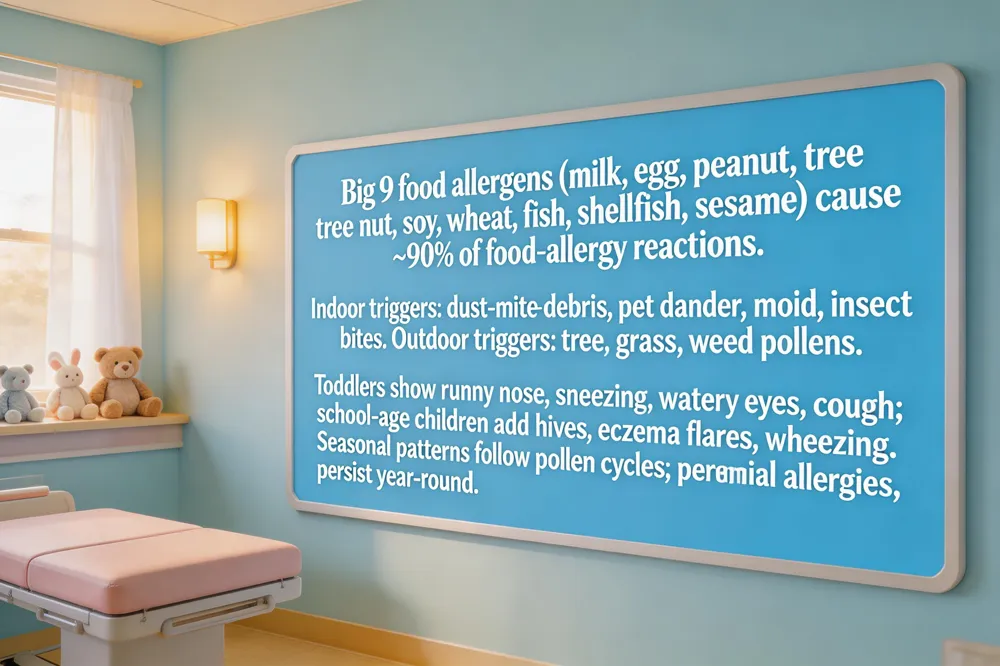 Children’s allergies most often involve the “Big 9” foods—milk, eggs, peanuts, tree nuts, soy, wheat, fish, shellfish and sesame—which account for about 90 % of food‑allergy reactions in the United States. Environmental triggers are equally common: indoor culprits include dust‑mite debris, pet dander, mold spores and insect bites or stings, while outdoor allergens are tree, grass and weed pollens. In toddlers, seasonal allergies typically appear as a clear, persistent runny nose or nasal congestion that recurs each year at the same time, accompanied by frequent sneezing, red watery eyes, eye rubbing and a cough or post‑nasal drip. Dark circles under the eyes and fatigue are also frequent, but fever is absent. School‑age children may show the same nasal and ocular symptoms, plus itchy hives or eczema flare‑ups and occasional wheezing that signals allergy‑triggered asthma. Allergic rhinitis (hay fever) follows a seasonal pattern—spring tree pollen, summer grass pollen, fall weed pollen—whereas perennial allergies from dust mites, mold, animal dander, indoor year‑round. Early identification, allergen avoidance, and a personalized plan created with a pediatric allergist are essential to keep children comfortable and reduce complications.
Medication Options for Young Children
Age‑specific OTC options:
- Age 3: cetirizine or loratadine syrup (2.5‑5 mL or 5 mL daily) + Nasacort nasal spray (once daily).
- Age 2: FDA‑approved cetirizine or loratadine syrup (5 mg per 5 mL) for up to 24 h relief; low‑dose nasal steroid if needed.
- Age 1: only cetirizine syrup (2.5 mL of 1 mg/mL).
- Under 2: cetirizine and loratadine liquids dosed by weight; avoid decongestants and aspirin.
- Chewable loratadine (5 mg) & cetirizine (2.5 mg) tablets for ages 2 +. Use calibrated syringes and pediatrician guidance.
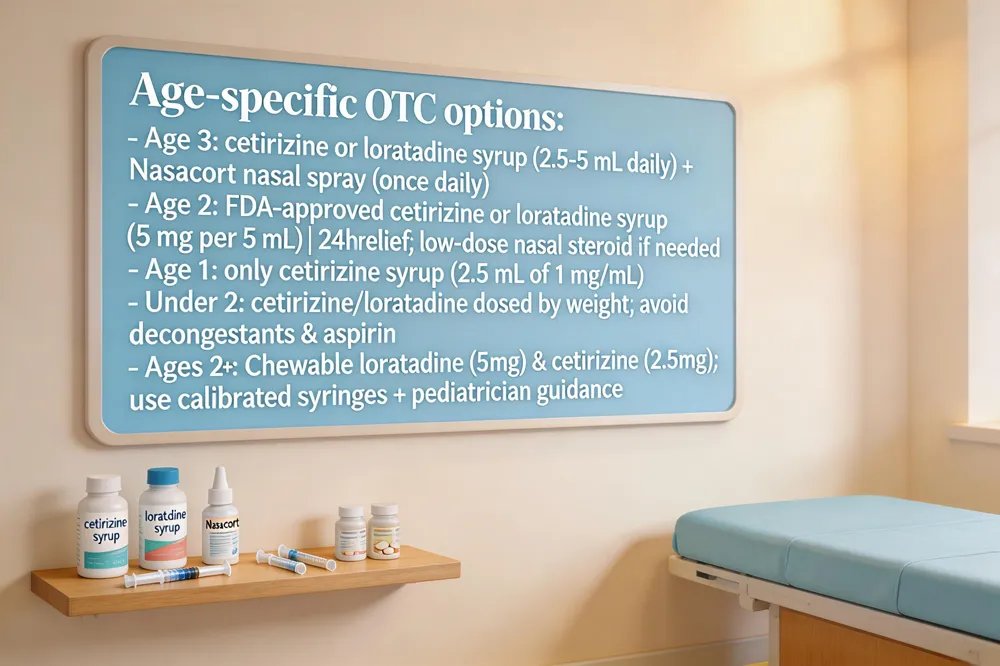 Choosing the right allergy medicine for kids under five can feel overwhelming, but the good news is that safe, effective OTC choices exist when parents follow age‑specific dosing and involve their pediatrician.
Allergy medicine for toddlers age 3 – First‑line options are nondrowsy antihistamines such as cetirizine (Zyrtec) or loratadine (Claritin). Cetirizine syrup 2.5‑5 mL once daily or loratadine syrup 5 mL once daily works well for sneezing, itchy eyes, and a runny nose. If symptoms persist, an OTC steroid nasal spray like Nasacort (triamcinolone) can be used – one spray per nostril daily for ages 2‑5. Decongestants and Benadryl are avoided because of side‑effect risk.
Allergy medicine for toddlers age 2 – Nondrowsy oral antihistamines (Children’s Zyrtec® syrup or Claritin Children’s syrup) are FDA‑approved for ages 2 + and provide up to 24 hours relief at the labeled dose (e.g., 5 mg cetirizine per 5 mL). A low‑dose nasal steroid may be added under a doctor’s guidance.
Allergy medicine for toddlers age 1 – Only cetirizine syrup (2.5 mL of 1 mg/mL) is approved for infants ≥ 6 months. Other antihistamines and nasal sprays are not recommended; non‑medication measures (saline rinses, humidity control) become essential.
Allergy medicine for toddlers under 2 – Cetirizine and loratadine liquids are the sole FDA‑approved OTC antihistamines, dosed by weight. Decongestants and aspirin‑containing products must be avoided.
Children's allergy medicine chewable – Chewable loratadine (5 mg) and cetirizine (2.5 mg) tablets, flavored grape or bubble‑gum, are approved for ages 2 + and perfect for school. Follow the dosing chart and keep an epinephrine auto‑injector on hand for any severe reactions.
Always review the label, use a calibrated syringe for liquids, and discuss any new medication with your child’s pediatrician to ensure safe, effective allergy control.
Managing Reactions and Emergency Planning
Keep a written action plan and epinephrine auto‑injector.
- Mild hives/itching: give pediatrician‑approved antihistamine, monitor, call doctor.
- Moderate‑severe signs (swelling, wheezing, vomiting, dizziness): inject epinephrine, call 911, position child (flat with legs elevated or sit up if breathing difficulty), consider second dose after 5‑15 min.
- Infant protocol similar but keep baby flat or upright as needed.
- Record triggers, symptoms, and follow up with allergist.
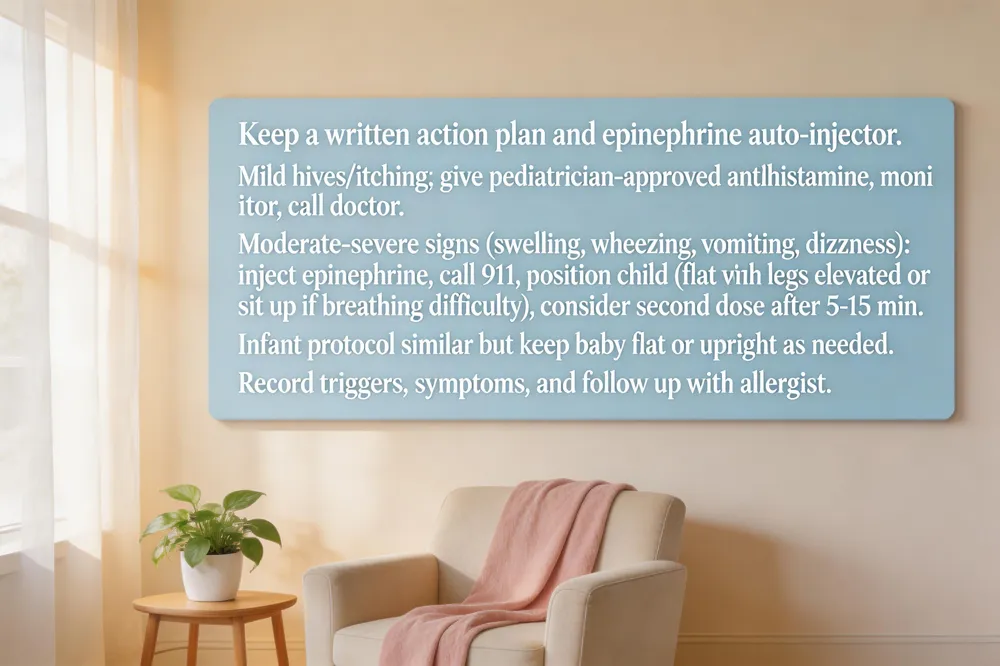 Allergic reactions can range from a few itchy hives (mild) to life‑threatening anaphylaxis (severe). For any reaction, keep a written action plan, the prescribed epinephrine auto‑injector, and contact your pediatrician promptly.
How to treat toddler allergic reaction – If only hives or mild itching appear, give the pediatrician‑approved antihistamine (e.g., cetirizine), watch closely, and call the doctor. If swelling, wheezing, vomiting, or dizziness develop, inject epinephrine immediately, call 911, lay the child flat with legs elevated (or sit up if breathing is difficult), and stay calm. A second epinephrine dose may be needed after 5‑15 minutes.
Baby allergic reaction treatment – For a single mild symptom, use the prescribed antihistamine, stay with the infant, and monitor. Severe signs (trouble breathing, lip/tongue swelling, vomiting) require immediate epinephrine, 911, and keeping the baby lying flat (or upright if breathing is compromised).
What to do if baby has allergic reaction to new food – Stop the food, contact the pediatrician, and if any swelling or breathing difficulty occurs, give epinephrine and call 911. Record the food and symptoms for follow‑up.
Child allergic reaction rash – A mild rash can be eased with an OTC antihistamine and cool oatmeal bath. Watch for respiratory or gastrointestinal signs; if present, inject epinephrine and seek emergency care.
Allergy in child treatment – Focus on avoidance, appropriate medications (antihistamines, nasal steroids, epinephrine for anaphylaxis), and, when needed, immunotherapy.
Pediatric allergy treatment guidelines – Begin with history and testing, use avoidance and antihistamines or nasal steroids, provide epinephrine for severe reactions, consider immunotherapy or biologics for persistent disease, and schedule regular follow‑up to adjust the plan.
Seasonal, Environmental, and Teen Allergy Management
Babies: limit pollen exposure (closed windows, HEPA purifier), wash after outdoor play, use saline drops, keep environment clean.
- Severe kids: add prescription‑strength nasal steroid, consider antihistamine eye drops, refer for testing/immunotherapy.
- Teens: avoid triggers; first‑line non‑drowsy antihistamines (loratadine, fexofenadine, cetirizine, levocetirizine) + intranasal corticosteroids (fluticasone, triamcinolone); consider allergy shots or SLIT for persistent disease; carry epinephrine if food/insect‑sting allergy.
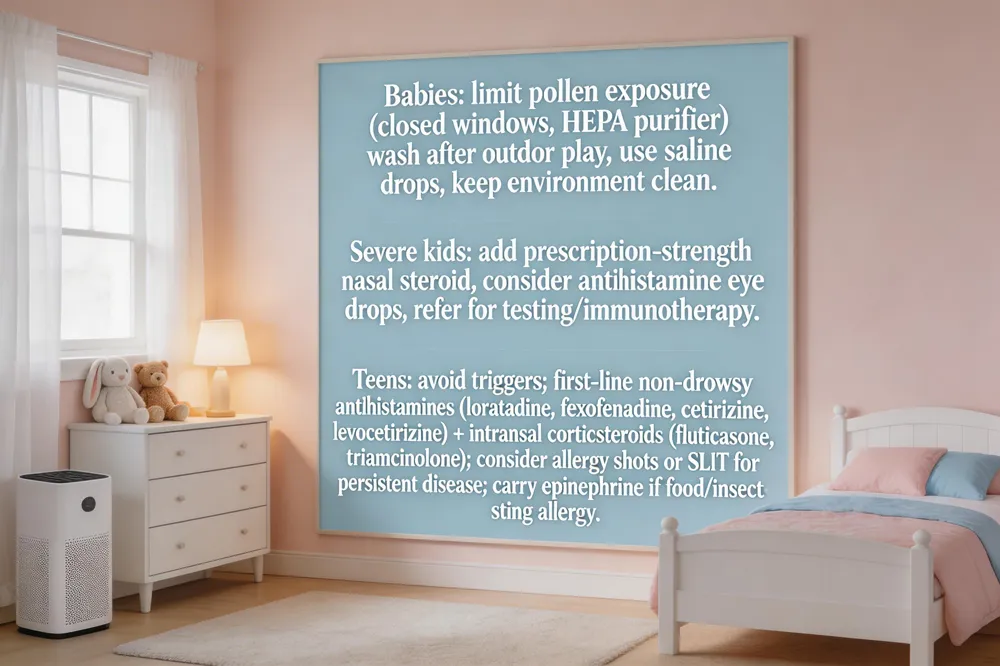 How to treat seasonal allergies in babies – Reduce exposure first: keep windows closed on high‑pollen days, run air‑conditioners on recirculate, and use a HEPA purifier in the nursery. After outdoor play, wash the baby’s hands, face, and hair, and change into clean clothes. Use sterile saline drops or a gentle suction bulb for nasal congestion; avoid OTC oral antihistamines unless the pediatrician says they’re safe for children over two. Keep bedding, stuffed animals, and carpets clean with regular washing and HEPA‑vacuuming. Discuss persistent symptoms with your pediatrician for possible referral to an allergist.
Severe seasonal allergies in kids – Persistent congestion, intense itching, frequent sneezing, and asthma‑triggered wheezing signal severe disease. Begin with exposure control and OTC non‑drowsy antihistamines (cetirizine, loratadine) plus a prescription‑strength nasal steroid spray. If symptoms remain uncontrolled, a pediatrician may add antihistamine eye drops or refer for allergy testing and immunotherapy (allergy shots). Prompt evaluation is essential when breathing is affected, ear/sinus infections recur, or daytime sleepiness interferes with school.
How to treat allergies in teens – Identify triggers and avoid them. First‑line therapy includes non‑drowsy oral antihistamines (loratadine, fexofenadine, cetirizine, levocetirizine) and intranasal corticosteroid sprays (fluticasone, triamcinolone). For persistent or severe cases, consider allergy immunotherapy (shots or SLIT). Teens with food or insect‑sting allergies must carry an epinephrine auto‑injector and know its use. Regular follow‑up with a pediatric or allergy specialist ensures optimal control and safety.
Home, Natural Strategies and Long‑Term Immunotherapy
Immediate natural relief: saline nasal rinse, shower, change clothes, keep windows closed, run HEPA purifier, wear mask on high‑pollen days, sip warm herbal tea.
- Home care: air‑conditioning with HEPA, dehumidify, regular vacuuming, OTC non‑drowsy antihistamines, steroid nasal spray under pediatrician direction.
- Long‑term: immunotherapy (shots or sublingual tablets) desensitizes over 3‑5 years for lasting remission.
- Skin itching: oral cetirizine/loratadine or topical diphenhydramine (≥2 yr); avoid diphenhydramine under six years unless prescribed.
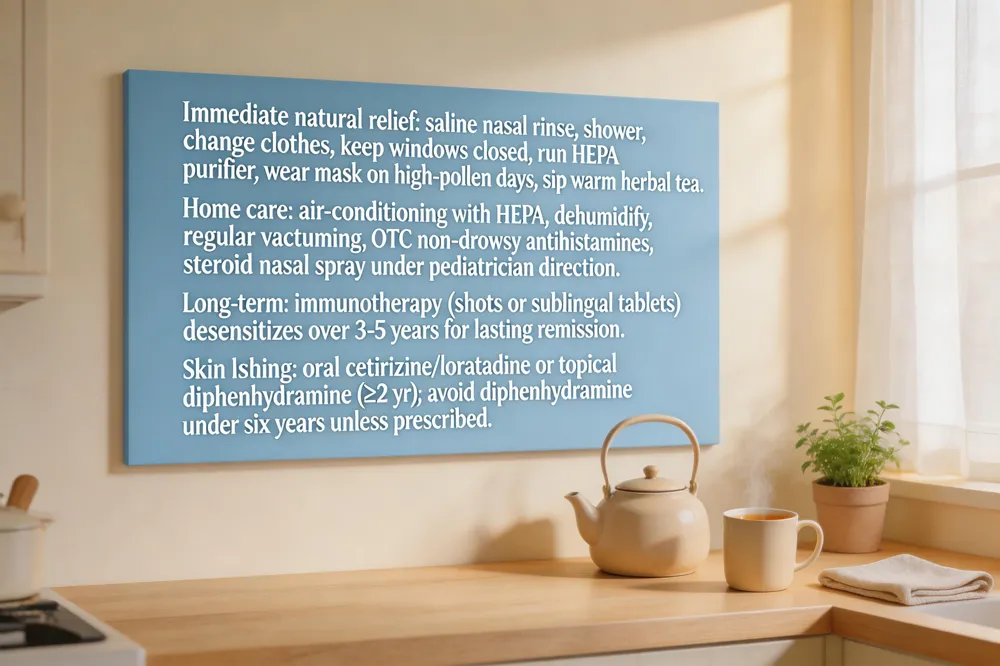 Seasonal and indoor allergies affect many U.S. children; quick relief helps, but lasting control usually needs a pediatric specialist.
How to stop allergies immediately naturally – Rinse nasal passages with saline, shower, change clothes, keep windows closed, run HEPA purifier, wear mask on high‑pollen days, sip warm herbal tea.
Allergy treatment at home – Use air‑conditioning with HEPA filters, dehumidify, vacuum regularly, saline nasal rinses, OTC non‑drowsy antihistamines (cetirizine, loratadine) or steroid nasal spray; consult pediatrician if symptoms persist.
How to cure pollen allergy permanently – Immunotherapy (allergy shots or sublingual tablets) gradually desensitizes the immune system over 3‑5 years, providing long‑term remission while maintaining environmental controls; seek allergist evaluation.
Anti‑allergy medicine for skin itching – Oral cetirizine or loratadine and topical diphenhydramine creams relieve itching; avoid diphenhydramine in children under six years unless prescribed.
Child skin allergy treatment at home – Keep skin clean, moisturize with fragrance‑free ointments, use cool compresses or oatmeal baths, consider OTC antihistamines, track triggers, use air purifiers; see doctor for worsening rash.
Skin allergy medicine for kids – Topical diphenhydramine is safe for children two years and older; oral cetirizine or loratadine preferred for broader symptoms; severe cases need pediatric evaluation.
Allergy medicine name – Common pediatric options include cetirizine (Zyrtec), loratadine (Claritin), fexofenadine (Allegra), azelastine nasal spray, fluticasone nasal spray, ketotifen eye drops, and allergy shots.
Dosage, Safety, and Practical Tips for Parents
Diphenhydramine (Benadryl) liquid 12.5 mg/5 mL dosing by weight (4 mL for 20‑24 lb up to 20 mL for ≥100 lb); chewable 12.5 mg tablets similarly. Do NOT give to children <1 yr; repeat every 4‑6 h (≥6 yr) or 6‑8 h (younger).
- Avoid duplicate active ingredients when using multiple allergy products.
- Refer to pediatric allergist if symptoms persist despite OTC therapy, if asthma/eczema recurs, or if anaphylaxis risk warrants epinephrine and a formal action plan.
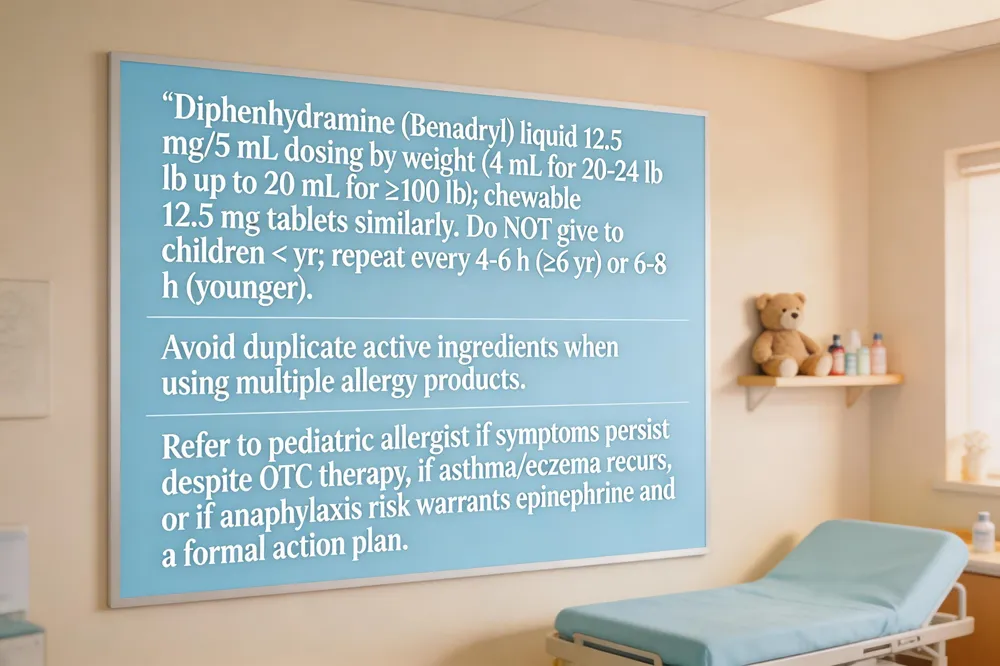 Children's Allergy Relief Dosage by Weight
For diphenhydramine (Benadryl) liquid 12.5 mg/5 mL, give 4 mL for 20‑24 lb, 5 mL for 25‑37 lb, 7.5 mL for 38‑49 lb, 10 mL for 50‑99 lb, and 20 mL for ≥100 lb. Chewable 12.5 mg tablets: 1 tablet for 25‑37 lb, 1½ tablets for 38‑49 lb, 2 tablets for 50‑99 lb, 4 tablets for ≥100 lb. Do not give diphenhydramine to children under 1 year; for ages 6 years + repeat every 4‑6 h, otherwise every 6‑8 h.
Allergy Medicine for Toddlers Age 2
First‑line is a nondrowsy oral antihistamine—cetirizine (Children’s ZYRTEC® syrup) or loratadine (Claritin Children’s syrup). Both are FDA‑approved for ages 2 + and provide up to 24‑h relief. Decongestants and older antihistamines like Benadryl should be avoided.
Allergy Medicine for Toddlers Age 1
Only cetirizine syrup (2.5 mL of 1 mg/mL) is FDA‑approved for 12‑month‑old children. Loratadine and fexofenadine are not recommended under 2 years; diphenhydramine should be used only with physician direction.
Avoiding Duplicate Active Ingredients
When giving multiple allergy products, always check labels to ensure the same antihistamine or decongestant is not present in more than one formulation. Duplicate dosing can cause overdose and heightened side effects.
When to Seek Specialist Care
Refer to a pediatric allergist if symptoms persist despite OTC therapy, if the child has asthma, eczema flares, recurrent sinus or ear infections, or if anaphylaxis risk warrants an epinephrine auto‑injector and a formal allergy action plan.
Key Takeaways for Parents
Every child’s allergy needs a personalized plan. Work with your pediatrician to write a clear allergy action plan that lists triggers, symptoms, emergency steps, and where epinephrine auto‑injectors are stored. Choose medications that match your child’s age and weight—use non‑sedating antihistamines or nasal steroid sprays as directed, and never combine products without a doctor’s guidance. Keep regular follow‑up appointments with both the pediatrician and an allergist to adjust treatment, monitor growth, and ensure safety throughout the year daily.