Why Nutrition Matters
Proper nutrition fuels the brain’s rapid development, supporting attention, memory and learning. It supplies calcium, vitamin D, protein and calories essential for bone lengthening, muscle building and overall physical growth. Rich vitamins and minerals also strengthen the immune system, helping children fight infections and recover quickly. Because nutritional needs vary by age, activity and health status, parents should consult pediatricians or registered dietitians to ensure each child receives the right balance for optimal development throughout their childhood and teenage years daily.
Core Food Groups & Portion Guidelines
Core Food Groups & Portion Guidelines (Typical 7‑year‑old)
| Food Group | Daily Amount (cups or oz) | Example Portion Size |
|---|---|---|
| Fruits & Vegetables | 1 – 1½ cups each | 1 medium apple (≈½ cup) or ½ cup cooked veggies |
| Whole‑Grain Carbohydrates | 3 – 5 oz | 1 slice whole‑grain bread (≈1 oz) or ½ cup cooked rice/pasta |
| Lean Protein | 2 – 4 oz | 2 oz cooked chicken (≈½ cup) or ½ cup beans |
| Low‑Fat Dairy / Fortified Soy | 2 – 2½ cups | 1 cup milk or yogurt, ½ cup fortified soy milk |
| Healthy Fats (vegetable oil, nuts) | 1 – 2 tbsp or small handful | 1 tsp oil in cooking or ¼ cup nuts |
Portion sizes increase with age; adjust based on activity level and growth needs.
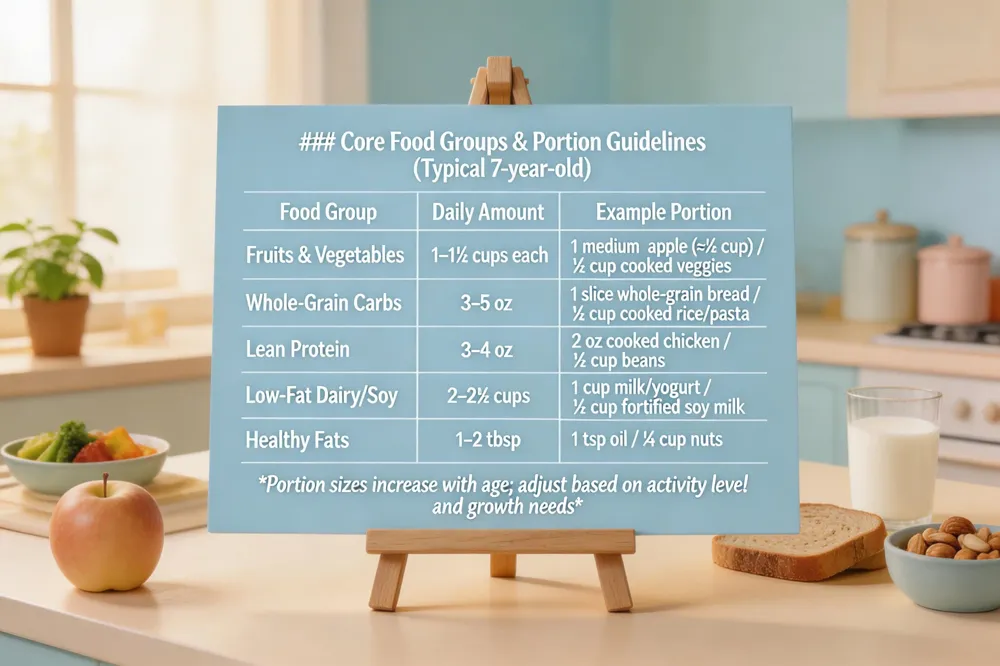 A balanced diet for kids centers on nutrient‑dense foods: colorful fruits and vegetables (1‑1½ cups each daily), whole‑grain breads, rice, pasta or cereals (3‑5 oz), lean protein such as seafood, poultry, beans, nuts, eggs (2‑4 oz), and low‑fat dairy or fortified soy alternatives (2‑2½ cups). Portion sizes grow with age; a 7‑year‑old typically needs 1,300‑1,500 kcal, 1‑1.5 cups fruit, 1‑1.5 cups veg, 3‑5 oz grains, and 2‑4 oz protein. Children 5‑12 years should aim for at least five servings of fruits and veg each day, half the plate with these foods, a quarter with whole grains, and a quarter with protein, plus a dairy side. Limit added sugars, saturated fats, and sodium by choosing fresh or low‑sodium canned produce, vegetable oils, and water as the primary beverage. Because growth needs vary, parents should consult a pediatric health‑care provider or a registered dietitian for personalized guidance and to address any concerns about nutrition or development.
Age‑Specific Calorie and Nutrient Needs
Age‑Specific Calorie & Nutrient Needs
| Age Range | Calories (kcal) | Protein (oz) | Calcium (cups) | Vitamin D (IU) |
|---|---|---|---|---|
| Toddlers (2‑4 y) | 1 000 – 1 600 | 2 – 5 | 1 – 2 | 400 – 600 |
| School‑age (5‑13 y) | 1 200 – 2 000 | 4 – 6 | 2 – 3 | 600 – 800 |
| Teens (14‑18 y) | 2 000 – 3 200 | 5.5 – 7 | 3 (or fortified soy) | 600 – 1 000 |
These ranges are for average activity levels; active children may need more.
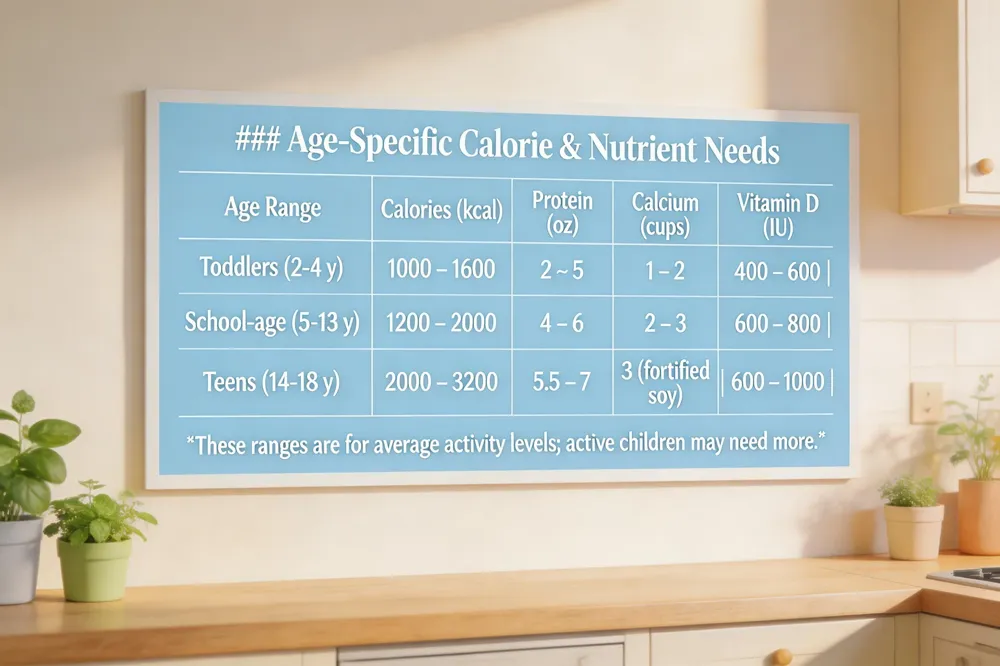 Children’s nutrient needs change rapidly with age, gender, and activity level. The Mayo Clinic and CDC agree that nutrient‑dense foods—lean proteins, whole‑grain carbohydrates, fruits, vegetables, and low‑fat dairy—should form the core of every child’s diet while added sugars, saturated fats, and sodium are kept low.
Calorie Ranges – Toddlers (2‑4 y) need 1,000‑1,600 kcal, school‑age kids (5‑13 y) 1,200‑2,000 kcal, and teens (14‑18 y) 2,000‑3,200 kcal, adjusted for activity.
Protein Requirements – Daily protein starts at 2‑5 oz for ages 2‑4, rises to 4‑6 oz for ages 5‑8, and reaches 5.5‑7 oz for adolescents. Sources include seafood, lean meat, eggs, beans, peas, soy, and unsalted nuts.
Calcium & Vitamin D – Essential for bone mineralization. Kids 4‑8 y need 2‑3 cups low‑fat dairy; teens need 3 cups plus fortified soy drinks to meet ~1,300 mg calcium and 600‑1,000 IU vitamin D.
Iron and Zinc – Critical for growth and cognition. Include iron‑rich meats, beans, fortified cereals, and pair with vitamin C‑rich foods for absorption; zinc is supplied by beans, nuts, and dairy.
Frequently Asked Questions
- Pediatric Nutrition pdf: The AAP’s Pediatric Nutrition (8th edition) is purchasable as a PDF at https://www.aap.org/pediatric-nutrition-8th-edition-paperback (DOI 10.1542/9781610023610). Free handouts are on HealthyChildren.org.
- Pediatric Nutrition guidelines: Emphasize nutrient‑dense foods, limit added sugars, saturated fats, and sodium; follow age‑specific calorie and portion targets; consult a pediatrician or dietitian for concerns.
- Nutritional requirements for different age groups pdf: The U.S. Dietary Guidelines for Americans website offers downloadable PDFs detailing calorie ranges, macro‑ and micronutrient recommendations, portion sizes, and strategies to limit added sugars, saturated fat, and sodium for each age group.
- Nutritional needs for growing kids: Children need vitamins, minerals, carbs, protein, and healthy fats in age‑appropriate amounts; prioritize whole foods, monitor intake of added sugars and sodium, and seek professional guidance for any growth or dietary issues.
Practical Strategies to Improve Your Child’s Diet
Practical Strategies to Improve Your Child’s Diet
| Strategy | How to Implement |
|---|---|
| Stock nutrient‑dense foods | Keep fresh fruit, colorful veg, whole‑grain breads, low‑fat dairy, lean proteins visible and accessible |
| Limit sugary drinks | Replace soda/juice with water or milk; keep sugary drinks ≤1 oz per day |
| Family meals | Eat together at least once a day; model balanced portions |
| Involve kids in food prep | Let children wash produce, assemble snacks, or help plan meals |
| Balanced lunchbox | Half box = fruit/veg, quarter = whole‑grain carbs, quarter = lean protein; add dairy side |
| Use water as primary beverage | Provide a reusable water bottle for school and outings |
| Choose healthy fats | Cook with plant oils; offer small portions of nuts/seeds |
| Keep mealtimes pressure‑free | Avoid “clean‑plate” demands; let kids listen to hunger cues |
Consistency and positive modeling are key to lasting habits.
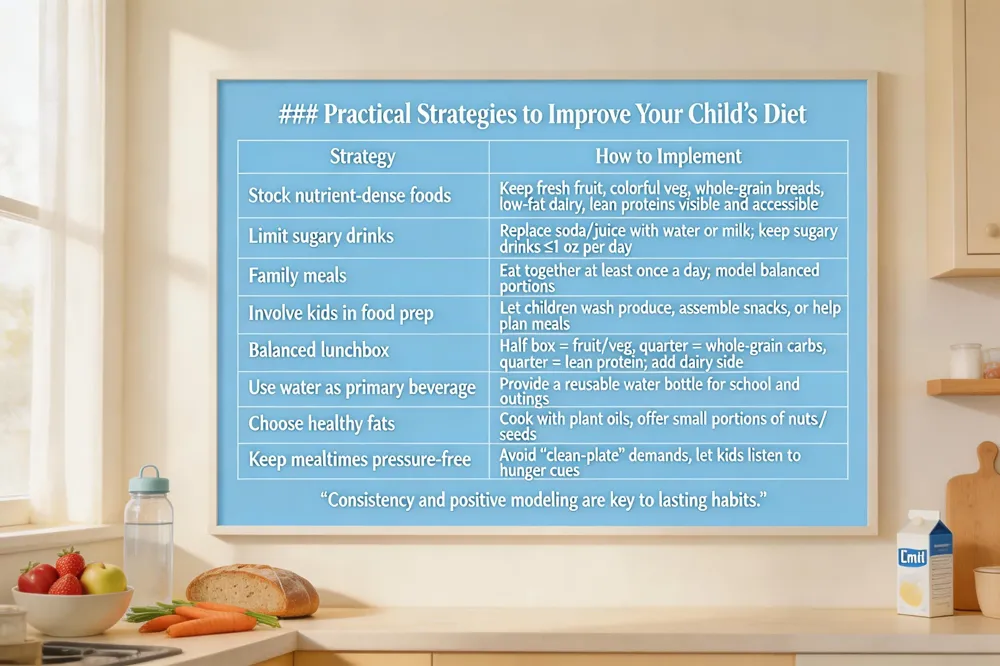 How can I improve my child's nutrition? Stock the kitchen with nutrient‑dense foods—fresh fruit, colorful vegetables, whole‑grain breads, low‑fat dairy, lean proteins such as fish, eggs, beans, and nuts. Keep sugary drinks and fried snacks out of easy reach. Eat together as a family whenever possible; shared meals model balanced portions and give parents a chance to guide choices. Let children help plan meals, wash produce, and assemble simple snacks, fostering ownership without pressuring a “clean plate”.
Healthy food for kids for school Fill half the lunchbox with fruits and vegetables, a quarter with whole‑grain carbs (brown‑rice pasta, quinoa, whole‑wheat wraps), and the remaining quarter with a lean protein (grilled chicken, hummus, beans, or a hard‑boiled egg). Add a low‑fat cheese stick or plain yogurt for calcium and a water bottle for hydration. A small homemade trail‑mix of nuts, seeds, and dried fruit provides extra energy.
10 good eating habits for kids 1) Consistent family meals; 2) Regular snack times; 3) Colorful produce at every meal; 4) Whole‑grain carbs; 5) Lean protein; 6) Water as the primary drink; 7) Limit sugary beverages to ≤1 oz per day; 8) Use plant oils; 9) Model healthy choices; 10) Keep mealtimes pressure‑free.
Promoting healthy growth and development Adequate nutrition, safe environments, and responsive caregiving lay the foundation for physical, cognitive, and emotional health. Routine well‑child check‑ups and pediatric guidance ensure any dietary concerns are addressed early, supporting optimal growth and lifelong well‑being.
Resources, PDFs, and Professional Guidance
Resources, PDFs, and Professional Guidance
| Resource | Description | Link |
|---|---|---|
| Child Nutrition PDF (USDA) | Age‑appropriate meal‑planning tips & portion visuals | https://example.com/child-nutrition-guide.pdf |
| Eating Well for 5‑11 Year‑Olds (Caroline Walker Trust) | Five daily servings guide, portion photos, snack ideas | https://www.eatright.org/food/planning/meals-and-snacks/nutrition-for-growing-bodies |
| Child Health & Development Milestones | Physical, cognitive, socio‑emotional milestones checklist | https://example.com/child-health-development.pdf |
| School‑Age Child Nutrition Guide (University of Nebraska‑Lincoln Extension) | Five food groups, recommended servings, breakfast & lunch tips | https://nutritionsource.hsph.harvard.edu/kids-healthy-eating-plate/ |
| Pediatric Nutrition (AAP 8th edition) | Comprehensive pediatric nutrition textbook (PDF for sale) | https://www.aap.org/pediatric-nutrition-8th-edition-paperback |
| HealthyChildren.org Handouts | Free printable handouts on nutrition for families | https://www.healthychildren.org/English/healthy-living/nutrition/Pages/default.aspx |
Consult a pediatrician or registered dietitian for personalized guidance.
 Child nutrition pdf
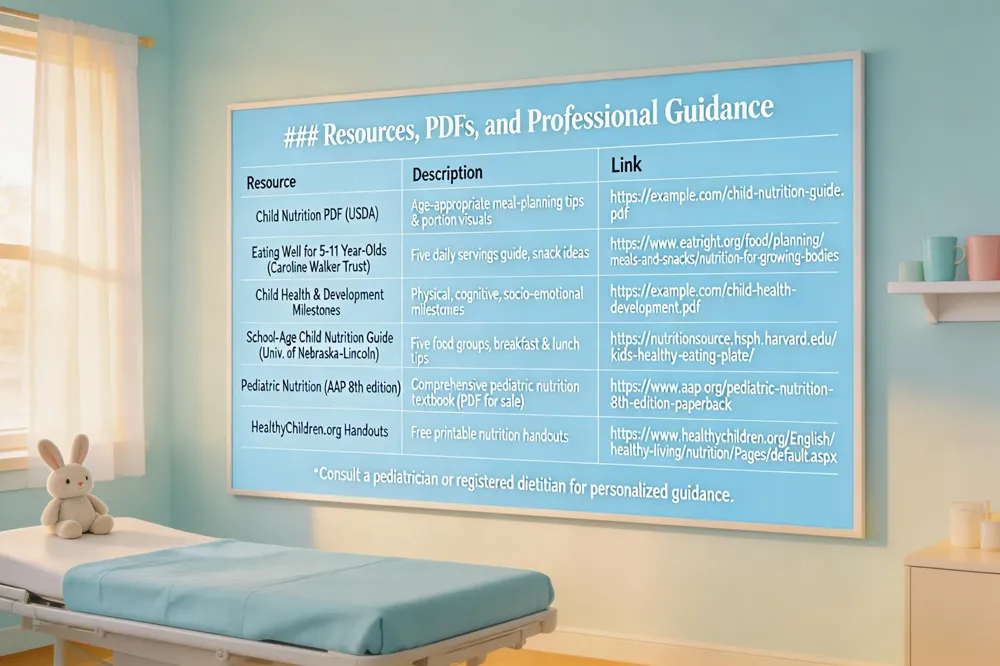
For a quick, trustworthy guide on child nutrition, download the USDA‑based “Child Nutrition Guide” PDF. It offers age‑appropriate meal‑planning tips, portion‑size visuals, and healthy‑eating recommendations for kids from birth through age 12. The handout is also free through the Georgia Department of Early Care and Learning’s Child Care Wellness Kit and can be accessed via the Kids & Teens Primary Healthcare website.
Child nutrition pdf
For a quick, trustworthy guide on child nutrition, download the USDA‑based “Child Nutrition Guide” PDF. It offers age‑appropriate meal‑planning tips, portion‑size visuals, and healthy‑eating recommendations for kids from birth through age 12. The handout is also free through the Georgia Department of Early Care and Learning’s Child Care Wellness Kit and can be accessed via the Kids & Teens Primary Healthcare website.
Balanced diet for child of 5 to 12 years pdf A printable guide such as the Caroline Walker Trust’s “Eating Well for 5‑11 Year‑Olds” PDF outlines five daily servings of fruits and veg, whole‑grain carbs, lean protein, calcium‑rich dairy or fortified alternatives, and limited added sugars. It includes portion‑size photos and practical snack ideas.
Child health and development pdf This PDF lists milestones for physical, cognitive, and socio‑emotional growth, emphasizing nutrition, sleep, activity, and safety. It provides caregiver checklists, printable charts, and links to state health agencies for easy reference.
Nutrition for school‑age child pdf The “School‑Age Child Nutrition Guide – PDF” (University of Nebraska‑Lincoln Extension) covers the five food groups, recommended servings, and key nutrients like calcium, iron, and vitamin C, plus tips for breakfast, school lunches, and limiting sugary drinks.
Pediatric Nutrition pdf The American Academy of Pediatrics’ Pediatric Nutrition (8th edition) is available as a PDF through the AAP website (ISBN 978‑1‑61002‑361‑0). Free handouts are also on “HealthyChildren.org”.
For personalized advice, schedule a visit with our pediatric team or a registered dietitian.
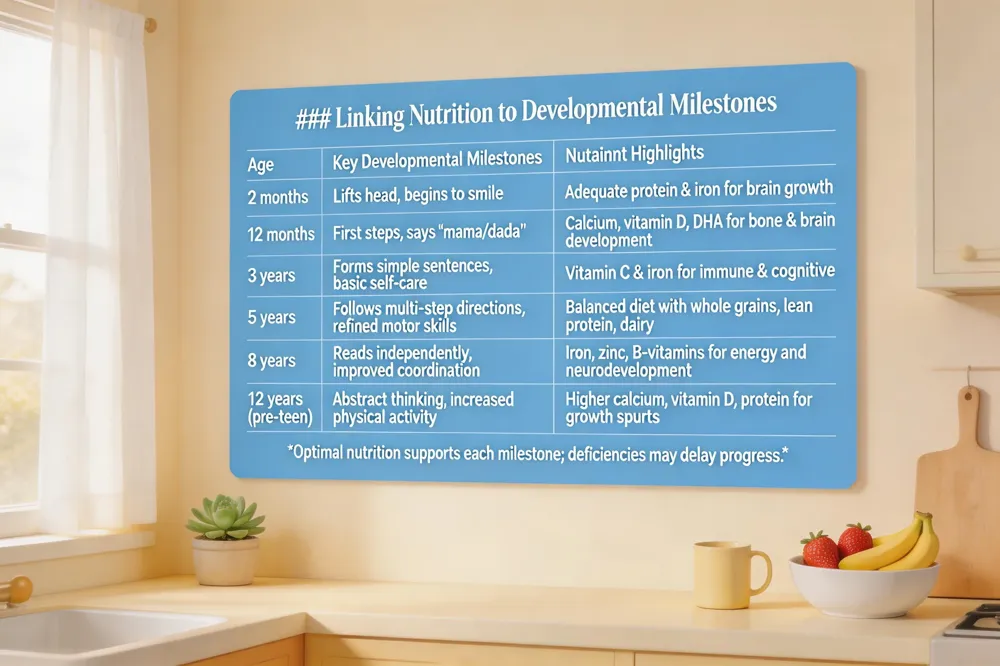
Linking Nutrition to Developmental Milestones
Linking Nutrition to Developmental Milestones
| Age | Key Developmental Milestones | Nutrient Highlights |
|---|---|---|
| 2 months | Lifts head, begins to smile | Adequate protein & iron for brain growth |
| 12 months | First steps, says “mama/dada” | Calcium, vitamin D, DHA for bone & brain development |
| 3 years | Forms simple sentences, basic self‑care | Vitamin C & iron for immune & cognitive function |
| 5 years | Follows multi‑step directions, refined motor skills | Balanced diet with whole grains, lean protein, dairy |
| 8 years | Reads independently, improved coordination | Iron, zinc, B‑vitamins for energy and neurodevelopment |
| 12 years (pre‑teen) | Abstract thinking, increased physical activity | Higher calcium, vitamin D, protein for growth spurts |
Optimal nutrition supports each milestone; deficiencies may delay progress.
 Child development milestones
Developmental milestones are age‑specific behaviors—smiling, crawling, talking, problem‑solving—that reflect brain and body growth. They fall into cognitive, language/communication, social‑emotional, and motor groups and are tracked at well‑child visits. Key signs include a 2‑month‑old lifting the head, a 12‑month‑old’s first steps, a 3‑year‑old forming simple sentences, and a 5‑year‑old following multi‑step directions. Delays should prompt a pediatric discussion for early intervention.
What are examples of healthy child development?
Healthy development blends physical, cognitive, and social‑emotional growth. Regular family interactions—playing, singing, reading—fuel language and bonding. Nutrient‑dense meals (fruits, vegetables, whole grains, lean proteins, low‑fat dairy) and adequate sleep sustain brain function and growth. Positive parenting—warmth, predictable routines, gentle discipline—supports emotional regulation and social skills. Meeting motor milestones (crawling, walking) and language milestones (sentences) signals progress.
Health and child development in education
Schools and families must ensure proper nutrition, daily activity, and sleep to boost academic performance. Responsive caregiving and stable home routines foster focus and learning. Early screening of milestones through pediatric visits identifies delays before they affect school success, allowing timely referrals.
Child development resources for parents
ZERO TO THREE and Pathways.org provide evidence‑based milestone guides, videos, and tracking tools aligned with CDC and AAP standards. Combined with regular check‑ups at Kids & Teens Primary Healthcare, these resources empower parents to nurture their child’s full potential.
What is healthy growth and development?
It means a child progresses physically, cognitively, emotionally, and socially, meeting age‑appropriate milestones. Adequate nutrition, regular health care, safe environments, and nurturing care—loving, responsive interactions—are essential. When these elements are present, children are more likely to reach their full potential and enjoy a healthy childhood.
Putting It All Together
Creating daily routines of balanced meals, hydration, and active play sets a stable foundation for growth. Pair these consistent practices with regular pediatric check‑ups, where professionals assess nutrition, development, and address concerns early. Family involvement—modeling healthy choices, cooking together, and discussing food—reinforces habits and ensures children feel supported. Together, these steps empower kids and teens to thrive while safeguarding their health through timely medical guidance for their future and wellbeing.