Understanding Newborn Sleep Basics
Newborns need a lot of rest—about 14‑17 hours each day, spread over many short bouts. Their sleep‑wake cycle is only 40‑60 minutes long, moving from a quiet alert state to active alert and then a crying phase that signals hunger. Because their tiny stomachs cannot hold enough milk, they wake every 2‑3 hours for feeding, which also helps reset the cycle. Safe‑sleep rules are simple but vital: always place the baby on its back on a flat surface such as a crib or bassinet, keep the sleep area free of pillows, blankets, bumper pads and toys, and share the room (not the bed) for the first six months. Dress the infant, avoid overheating, and keep the environment smoke‑free. If a newborn consistently sleeps far less than 14 hours, shows signs of excessive sleepiness, or you notice any unusual patterns, contact your pediatrician promptly—medical guidance supports healthy growth and prevents sleep‑related concerns.
Daytime Naps, Wake Windows and Breast‑Feeding Cues
 Newborns need 14‑17 hours of sleep in each 24‑hour day, but the bulk of that rest occurs in short daytime naps. Most babies nap every 1.5–2 hours of awake time, with each nap lasting 30 minutes to two hours; keeping any single nap under two hours helps preserve a balanced schedule. Wake windows are brief—generally 30–90 minutes between sleep periods, and for infants under four weeks the window narrows to 35–60 minutes. These short periods of alertness build enough "sleep pressure" for the baby to fall asleep quickly. Feeding patterns are tightly linked to daytime sleep: newborns should be fed every 2‑3 hours on demand, whether breast‑ or bottle‑fed. Breast‑fed infants often wake every 2‑3 hours because milk supply follows demand, and a feeding frequently ends with the baby drifting into sleep. Parents may need to wake a baby for a feeding if the infant sleeps longer than four hours without eating, to ensure adequate caloric intake and healthy weight gain. Safe sleep practices—back‑sleeping on a firm, flat surface with no loose bedding—apply to all daytime naps, whether the baby sleeps in a crib, bassinet, or portable crib.
Nighttime Feeding Gaps and Long Sleep Stretches
 Newborns need frequent calories for rapid growth, so feeding every 2‑3 hours (breast‑fed) or 3‑4 hours (formula‑fed) is essential. A stretch longer than 4‑5 hours without a feed can lead to weight loss, dehydration, and overtiredness. Newborn slept 7 hours without feeding – this exceeds the safe window. Gently wake the baby, offer a feeding, and monitor weight gain and diaper output. If long stretches persist, contact your pediatrician promptly, especially for premature or low‑weight infants.
How long should a newborn sleep without feeding – aim for no more than 4‑5 hours between feeds during the first three months. Once the baby reaches a stable weight (≈12‑13 lb) and is around three months old, six‑hour nighttime stretches become normal.
How long should a 2‑week‑old sleep at night – expect 30‑minute to 2‑hour segments, with frequent wake‑ups for feedings. Total daily sleep is 16‑17 hours total across day and night. Prioritize total sleep and the baby’s cues over rigid schedules, and always seek medical advice if you notice poor feeding, excessive sleep, or concerning signs.
Safe‑Sleep Position, Surface and Cycle Length
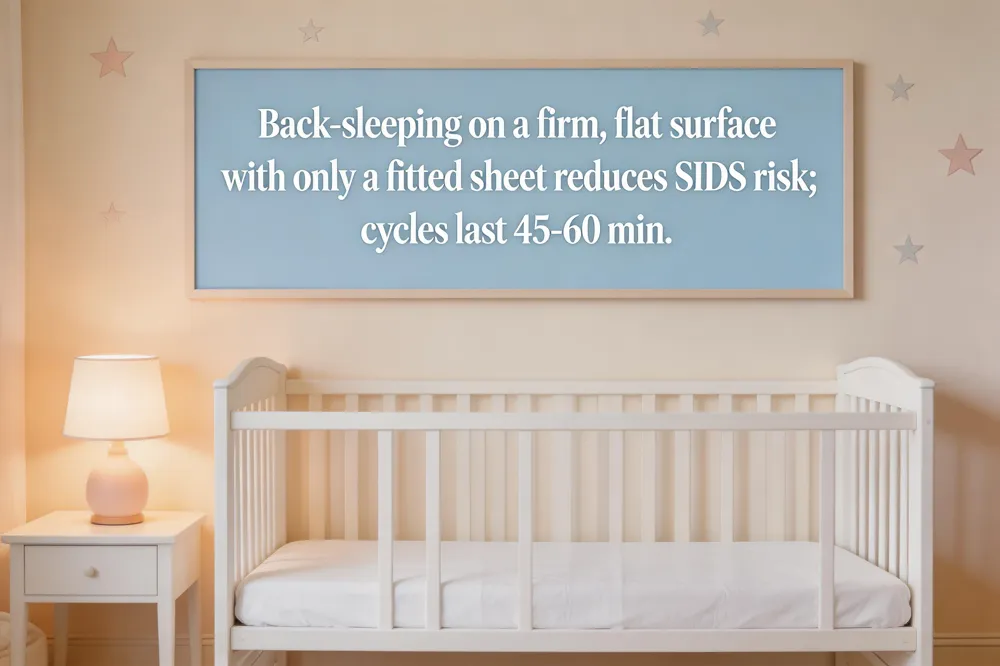 Newborns are safest when they sleep on their back (the supine position). The American Academy of Pediatrics (AAP) recommends placing the baby on a firm, flat mattress with only a fitted sheet and no loose blankets, pillows, bumpers, or toys. This "ABC" safe‑sleep rule – Alone, Back, Crib – dramatically reduces the risk of sudden infant death syndrome (SIDS) and ensures the baby can breathe freely.
A newborn’s sleep‑cycle length is brief, typically 45‑60 minutes, moving from light (active/REM) sleep to deeper (quiet/NREM) sleep and back again. Because the cycles are short, babies often wake every 1‑3 hours, usually to feed. Over a 24‑hour period they accumulate about 16‑17 hours of sleep, split between day and night. As the infant matures, cycles lengthen and nighttime stretches become longer.
Best sleeping position for newborn after feeding The safest sleep position for a newborn after a feeding is on the back, also known as the supine position. Place the baby on a firm, flat mattress with only a fitted sheet, and keep the sleep area free of pillows, blankets, and toys. Even if the baby seems a little gassy or has mild reflux, you can hold them upright for a few minutes after feeding, but always return them to their back for sleep. This position has been shown to reduce the risk of SIDS and promotes safe breathing. Continue to follow the same routine for every nap and nighttime sleep, regardless of the feeding schedule.
Newborn sleep cycle length A newborn’s sleep cycle typically lasts about 45 to 60 minutes, moving through light (active/REM) sleep, deeper (quiet/NREM) sleep, and then back again. Because the cycles are short, babies often wake every 1‑3 hours, usually to feed. Over a 24‑hour period a newborn will accumulate roughly 16‑17 hours of sleep, split between daytime and nighttime. These cycles become longer as the infant grows, reaching about 90 minutes by toddler age. The short cycle length is normal and reflects the baby’s developing brain and small stomach.
Day‑Night Confusion and Developing a Circadian Rhythm
 Newborns often mix day and night because their internal clock is still immature; they receive only brief light cues and rely on hunger to drive wake‑ups, leading to frequent, short sleep bouts around the clock. Providing bright, lively environments during daylight and keeping evenings dim and quiet helps the baby learn the difference between day and night. A simple bedtime ritual—soft lullaby, diaper change, gentle rocking—paired with a consistent bedtime (7 p.m.–9 p.m.) signals that sleep is for night. In the first week babies sleep 14‑17 hours in 1‑3‑hour fragments with no clear pattern. By weeks 2‑4 the same fragmented schedule persists, but a modestly longer nighttime stretch often appears. Around 4‑6 weeks a rudimentary circadian rhythm emerges, producing 3‑4‑hour night stretches and longer daytime naps. By weeks 9‑12 the schedule resembles a 24‑hour cycle with 3‑4‑hour night sleep and 2‑3 daytime naps. If a newborn shows extreme fussiness, poor feeding, or abnormal sleep duration, parents should consult their pediatrician promptly, as early medical evaluation can rule out weight‑gain issues or health concerns.
Flexible Routines, Reddit Insights and the 5‑3‑3 Rule
 Newborns need 14‑17 hours of sleep in a day, but it comes in short, irregular bursts. Pediatric guidelines agree that wake windows are only 35‑60 minutes in the first four weeks and lengthen to 60‑90 minutes thereafter; feeding on demand every 2‑3 hours supports growth and prevents overtiredness. Parents on Reddit echo these recommendations, noting that a rigid clock‑based schedule is unrealistic. Instead they suggest a flexible routine with three to four daytime naps (each under two hours) and a nighttime stretch that gradually lengthens as the baby matures. A simple bedtime ritual—diaper change, pajamas, lullaby, swaddle, and crib placement—helps signal sleep time and reduces fussy "witching".
The 5‑3‑3 rule, typically introduced around six months when the circadian rhythm is more stable, calls for a five‑hour nighttime block, a three‑hour wake period, then another three‑hour sleep block. This gentle framework encourages self‑soothing and longer night sleep while still meeting nutritional needs.
For a two‑month‑old, aim for about 15½ hours total sleep, with 4‑5 naps and a bedtime around 7‑8 p.m. Keep the sleep environment safe—back‑to‑sleep, firm surface, no loose bedding—and consult your pediatrician if the baby shows signs of poor weight gain, excessive sleepiness, or persistent waking. Early medical guidance ensures healthy growth and development.
Allergies, Overtiredness and Milk‑Protein Sensitivities
 Can CMPA affect sleep?
Cow’s Milk Protein Allergy (CMPA) can disturb an infant’s rest. Babies with CMPA often have trouble falling asleep, wake frequently at night, or show restless sleep. These sleep issues usually accompany other signs such as colic, reflux, skin rash, or chronic coughing. Because many factors can cause sleep problems, parents should record sleep patterns together with any allergy‑related symptoms and discuss them with a pediatrician.
How long should a newborn be awake in 24 hours?
Newborns need 14‑17 hours of sleep, leaving roughly 7–10 hours of wake time each day. Wake windows are brief—about 30–90 minutes (35–60 minutes in the first four weeks). During these short periods babies feed, change diapers, and have brief interaction. Overly long wake periods can lead to overtiredness; if your baby seems unusually fussy, seek medical advice.
Can milk allergy affect sleep?
When a milk allergy is clinically evident, chronic insomnia may appear. If you notice persistent sleep disruption alongside feeding, gastrointestinal, or skin symptoms, consider an allergy evaluation and consult your child’s health provider.
Parent Night‑Shift Strategies and Early Feeding Intervals
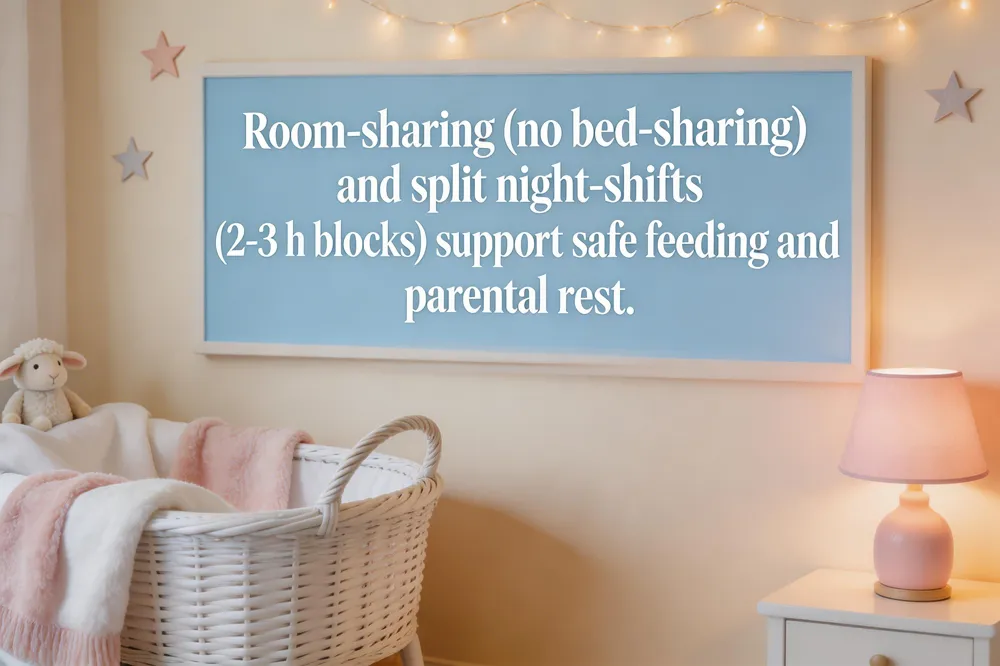 Newborns (0‑3 months) need 14‑17 hours of sleep in short 1‑2‑hour bouts and must be fed every 2‑3 hours because their tiny stomachs cannot hold enough milk for longer stretches. Co‑sleeping vs. bed‑sharing: The American Academy of Pediatrics recommends room‑sharing—placing the crib or bassinet in the parents’ bedroom—while avoiding bed‑sharing, which raises SIDS risk.
Night‑shift feeding schedules for parents: Split nighttime duties into 2‑hour or 3‑hour blocks. One parent handles two consecutive feedings and diaper changes, then swaps so the other can enjoy a 3‑4‑hour uninterrupted stretch. Keep the baby’s sleep space within arm’s reach, dim lights, and limit stimulation to preserve the night‑time sleep cue.
Feeding frequency for a 1‑month‑old: Expect a feeding roughly every 2‑3 hours, meaning wake windows of 35‑60 minutes early the first month. Total daily sleep remains 14‑17 hours, spread across multiple naps and a few nighttime stretches. If the baby consistently exceeds or falls short of these intervals, consult a pediatrician.
A calm bedtime routine (diaper change, pajamas, lullaby, swaddle) and a safe sleep environment—back‑to‑sleep on a firm, flat surface without loose bedding—support both infant and parent rest.
Developmental Trends: Sleep by Age, Month and Cycle
 Baby sleep patterns by age
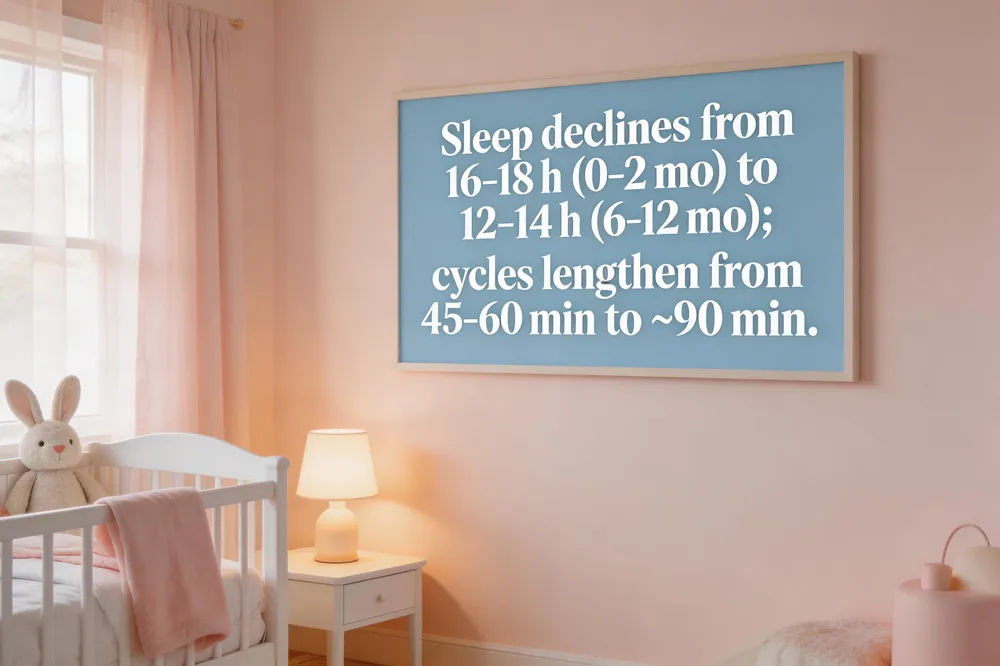
Newborns (0‑3 months) need 16‑17 hours a day, sleeping in 1‑2‑hour bursts and waking often for feeds because their circadian clock is not yet set. By 4‑6 months most babies develop a rhythm, getting 12‑16 hours total with longer night stretches (5‑6 hours) and two‑to‑three naps. At 6‑12 months nighttime sleep consolidates to 10‑12 hours, with two regular naps and fewer awakenings. Toddlers (1‑2 years) require 11‑14 hours, usually a solid 10‑12‑hour night sleep and one daytime nap. REM sleep declines as deep NREM rises, making cycles longer and more adult‑like.
Baby sleep patterns by age
Newborns (0‑3 months) need 16‑17 hours a day, sleeping in 1‑2‑hour bursts and waking often for feeds because their circadian clock is not yet set. By 4‑6 months most babies develop a rhythm, getting 12‑16 hours total with longer night stretches (5‑6 hours) and two‑to‑three naps. At 6‑12 months nighttime sleep consolidates to 10‑12 hours, with two regular naps and fewer awakenings. Toddlers (1‑2 years) require 11‑14 hours, usually a solid 10‑12‑hour night sleep and one daytime nap. REM sleep declines as deep NREM rises, making cycles longer and more adult‑like.
Baby sleep patterns by month In the first two months babies sleep 14‑18 hours in 45‑60‑minute wake windows, feeding every 2‑3 hours. By 3‑4 months total sleep drops to 12‑16 hours and night stretches lengthen (8‑10 hours). At 4‑6 months wake windows extend to 1½‑2 hours, daytime naps total 3‑5 hours and nighttime 9‑11 hours. By 6 months many can sleep 6‑8 hours straight; by one year the pattern stabilizes at roughly 12‑16 hours with 2‑3 naps.
Newborn sleep schedule by month 0‑2 months: 14‑18 hours total, 45‑60‑minute wake windows, 1‑2‑hour naps, ~6‑8 hours day, ~8‑10 hours night in short bouts. 2‑4 months: 12‑16 hours total, 4‑6 hours day naps, night 8‑10 hours, feeds every 3‑4 hours. 4‑6 months: 12‑16 hours, 3‑5 hours day naps (2‑3 naps), night 9‑11 hours, some 6‑8‑hour stretches. 6‑12 months: 12‑14 hours, 2‑3 hours day naps (2 naps), night 10‑12 hours, occasional 8‑hour uninterrupted sleep. Flexible routines and attentive cues promote healthy sleep; consult your pediatrician if patterns seem abnormal.
Weight‑Gain, Diapers and When to Wake a Newborn

Newborn schedule week 1
In the first week a newborn needs 14‑17 hours of sleep, usually in 30‑minute to 2‑hour fragments. Wake windows are short—35‑60 minutes—so babies are awake only briefly before needing another nap. Feeding occurs every 2‑3 hours (≈8‑12 feeds per day) to support growth; if the infant is losing weight, is very small, or has jaundice, pediatricians advise gentle waking for feeds. Diaper changes happen every 2‑3 hours; a wet or soiled diaper is a quick gauge of hydration and nutrition. During awake periods, offer skin‑to‑skin contact, soothing talk, and cuddles to promote bonding.
Newborn sleeps 22 hours a day
Sleeping 22 hours can still be normal, as newborns may reach up to 22 hours in the first weeks. The key is that the baby wakes for feeds every 2‑3 hours and appears alert when awake. If the infant is unusually drowsy, not feeding, or not gaining weight, contact a pediatrician promptly.
What to expect sleep wise with a newborn?
Expect 16‑17 hours of sleep per day, split into short 1‑2‑hour stretches both day and night. Safe‑sleep practices—back‑sleeping on a firm, flat surface, no loose bedding, and swaddling only until the baby can roll—help promote longer, more restful periods. Watch for sleep‑readiness cues (yawning, eye‑rubbing) and use a calm bedtime routine to ease transitions.
Key Takeaways for Newborn Sleep
Newborns (0‑3 months) need 14‑17 hours of sleep in a 24‑hour day, but the total can range from 11 to 19 hours depending on the baby’s size, feeding method, and individual temperament. Because their stomachs are tiny, they wake every 2‑4 hours to eat; parents should feed on hunger cues and, if a baby sleeps longer than 3‑4 hours, gently wake the infant for a feed until weight gain is adequate. Safe‑sleep guidelines are non‑negotiable for every nap and nighttime sleep: place the baby on its back on a firm, flat surface; keep the crib free of blankets, pillows, bumper pads, and toys; room‑share (but never bed‑share) for at least the first six months; dress the infant lightly to avoid overheating. Rather than imposing a rigid clock, follow the baby’s sleepy cues—quiet alert, yawning, rubbing eyes—and use a simple routine (diaper change, lullaby, swaddle) to signal sleep time. If the infant shows persistent overtiredness, poor weight gain, or unusual sleep patterns, consult a pediatrician promptly.