Why Lifestyle Matters for Children with Chronic Illnesses
Healthy nutrition, regular physical activity, adequate sleep, and strong mental‑health habits are the foundation of chronic‑illness management for kids. Balanced meals rich in fruits, vegetables, whole grains, and lean protein help control blood‑sugar, reduce inflammation, and support growth, while daily 60‑minute activity improves lung function, bone density, and mood. Consistent 9‑12 hour sleep schedules lower stress hormones and lessen asthma or diabetes flare‑ups. Family involvement—modeling good eating, joining exercise, and providing weekly coaching calls—creates a supportive home environment. Community resources such as the free Get Up & Go program, YMCA memberships, and school‑based nutrition workshops extend these habits beyond the house. Evidence shows 86 % of participants adopt healthier habits and 63 % lower BMI after a 10‑week curriculum, underscoring the power of lifestyle change.
Building Healthy Foundations at Home
Quick‑Reference Table for Home Nutrition Foundations
| Key Practice | What to Do | Why It Matters |
|---|---|---|
| Label literacy | Teach kids to read nutrition labels and use the go, slow, whoa system. | Helps children identify healthier foods and avoid excessive added sugars, fats, and sodium. |
| Family cooking | Involve children (age 9 +) in preparing meals like whole‑wheat pizza or black‑bean burgers. | Increases acceptance of nutritious foods and builds cooking confidence. |
| Grocery‑store tours | Walk the aisles, pick the healthiest options, practice portion control. | Reinforces label reading and makes healthier choices routine. |
| Stock the pantry | Keep fresh fruit, veg, whole‑grain breads, low‑fat dairy, lean proteins. | Provides easy access to nutrient‑dense foods, reducing reliance on processed snacks. |
| Hydration | Offer water as the primary drink; limit sugary drinks & juice. | Supports cognition, growth, and prevents excess calorie intake. |
| Visual reminder | Hang a colorful “healthy‑eating infographic” on the fridge. | Daily visual cue reinforces the balanced‑plate concept. |
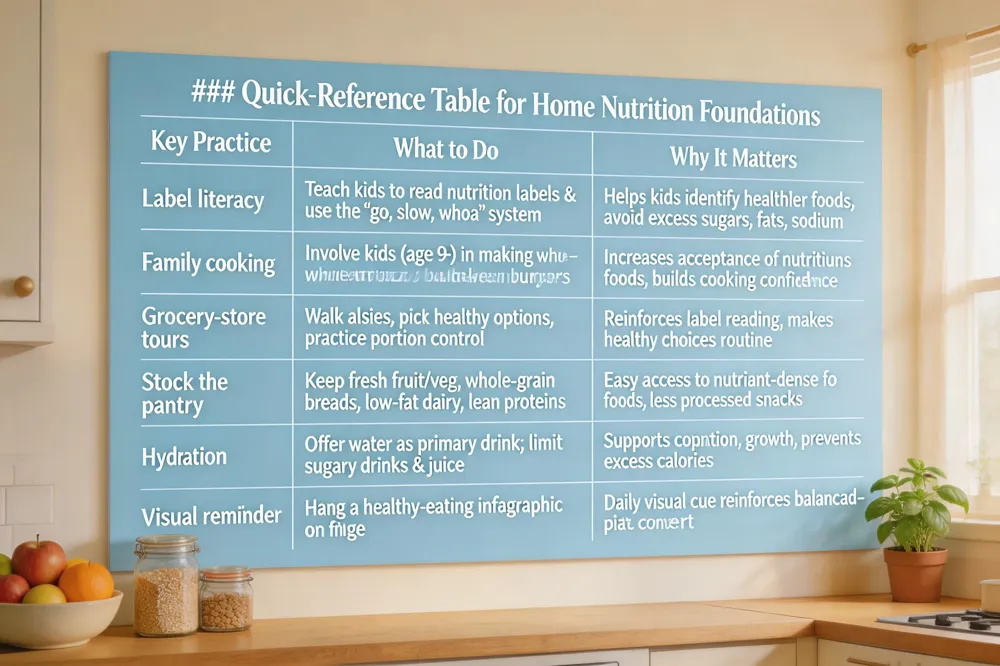 Balanced nutrition and label literacy are the first step toward healthier kids. Teach children to read nutrition labels and categorize foods using the “go, slow, whoa” system—a strategy used by the Get Up & Go program.
Family cooking and grocery planning reinforce these lessons. The Get Up & Go Family Cooking Program shows children (age 9 +) how to prepare balanced meals like whole‑wheat pizza and black‑bean burgers with guidance from registered dietitians. Grocery‑store tours teach families to pick the healthiest options, read labels, and practice portion control.
Practical tips for everyday meals include:
- Stock the kitchen with fresh fruits, veggies, whole‑grain breads, low‑fat dairy, and lean proteins.
- Involve kids in meal planning and preparation to boost acceptance of nutritious foods.
- Use water as the primary beverage and limit sugary drinks and fruit‑juice servings.
- Keep a visual "healthy‑eating infographic" on the fridge (see below).
Healthy Eating infographic for kids
A kid‑focused infographic should picture a colorful plate divided into five sections: half filled with a variety of vegetables and fruits, one‑quarter with whole‑grain foods, and one‑quarter with lean proteins such as beans, nuts, fish, eggs, or poultry. It should also highlight small portions of low‑fat dairy, a splash of healthy plant oils, and plenty of water as the drink of choice while limiting juice, sugary drinks, and processed snacks. Simple icons or photos of whole foods (e.g., carrots, berries, brown rice, salmon) make the message easy to understand, and a brief note about staying active reinforces the full “plate‑plus‑movement” concept. Adding quick tips—like choosing whole fruits over juice, swapping white bread for whole‑grain, and using olive oil for cooking—helps families apply the advice at home. The design should be bright, engaging, and printable so parents and kids can display it in the kitchen or classroom as a daily reminder.
Facts about healthy food for kids
Healthy food for kids should include a colorful variety of fruits and vegetables, whole‑grain breads and pastas, low‑fat dairy, and lean protein sources such as poultry, fish, beans, and nuts. The Dietary Guidelines for Americans recommend limiting solid fats, added sugars, and sodium, because excess intake can lead to obesity, high blood pressure, type 2 diabetes, and other chronic diseases. Drinking water throughout the day supports hydration and cognitive function, while sugary drinks and fruit‑juice excess should be kept to a minimum. A balanced plate—half vegetables and fruit, a quarter whole grains, and a quarter protein with a side of dairy—helps children obtain essential vitamins, minerals, and fiber while maintaining a healthy body weight. Establishing these habits early promotes growth, development, and long‑term health for children and teenagers.
Why healthy eating is important for children
Healthy eating provides the essential nutrients that support children’s rapid growth, brain development, and strong immune systems. A balanced diet rich in fruits, vegetables, whole grains, and lean proteins helps maintain healthy skin, teeth, eyes, bones, and muscles while keeping energy levels stable throughout the day. By establishing good eating habits early, children are more likely to achieve and maintain a healthy weight and reduce their risk of chronic diseases such as obesity, diabetes, and heart conditions later in life. Proper nutrition also supports mental clarity, mood, and overall mental health, enabling kids to focus and learn more effectively. Consistently providing nutrient‑dense foods sets a lifelong foundation for lifelong health and well‑being.
Active Living and Physical Activity
Active‑Living Checklist for Kids
| Activity | Frequency / Duration | Suggested Resources |
|---|---|---|
| Structured play | 2–3 active play periods per day (≥30 min total) | GoNoodle, "Get Moving Today" calendar |
| Family dance‑party | Weekly 30‑min session | Playlists on streaming services |
| Aerobic exercise | 60 min moderate‑intensity (e.g., walking, cycling) | Neighborhood walks, bike rides |
| Muscle‑strengthening | 3 days/week (body‑weight moves) | Push‑ups, squats, resistance bands |
| Screen‑time limit | ≤ 2 hrs recreational, replace with active options | Set timers, use parental controls |
| Sleep | 9–12 hrs (younger) / 8–10 hrs (teens) | Consistent bedtime routine |
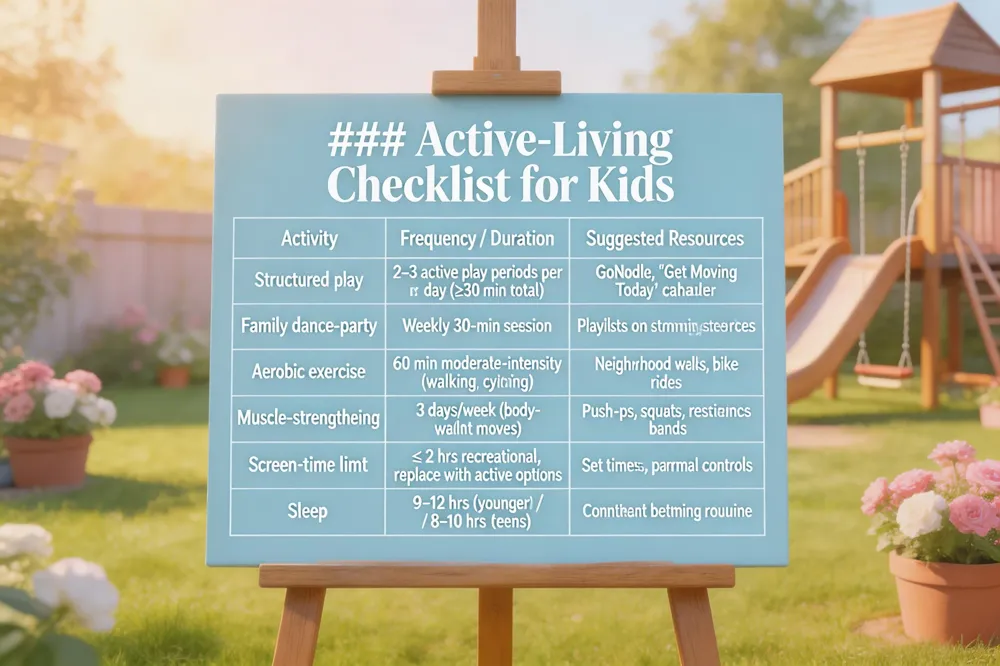 Healthy habits activities for kids – Encourage two to three active play periods each day, using free resources like GoNoodle or a "Get Moving Today" calendar. Pair movement with nutrition lessons—stretch while chanting the names of colorful fruits. Involve the whole family in weekly dance‑party nights, cooking together, or neighborhood walks to reinforce lifelong wellness.
Physical activity and obesity – Active youth consistently show lower body‑fat levels. Structured programs that mix aerobic exercise (walking, cycling) with muscle‑strengthening moves improve insulin sensitivity and reduce fat mass. Limiting screen time and embedding enjoyable activity into daily routines are essential for long‑term weight management.
Obesity and screen time – Excessive screen exposure displaces movement and promotes high‑sugar snack intake, raising obesity risk. Set clear limits, replace TV time with sports or outdoor play, and monitor food‑related media content.
8‑ and 10‑healthy‑habit lists – Prioritize daily activity, balanced nutrition, adequate sleep, good hygiene, regular check‑ups, positive mental habits, and family involvement. Modeling these behaviors helps children adopt lasting, healthy lifestyles.
Managing Chronic Respiratory Conditions
Asthma Management Summary
| Component | Action | Key Points |
|---|---|---|
| Medication plan | Step‑wise approach: quick‑relief (albuterol) + daily controller (inhaled corticosteroid). | Use rescue at first wheeze; keep controller consistent for inflammation control. |
| Monitoring | Peak‑flow or spirometry at home; track triggers. | Detect early loss of control, adjust meds promptly. |
| Night‑time safety | Rescue inhaler + spacer on nightstand; cool (18‑20 °C) bedroom; hypoallergenic bedding; HEPA purifier. | Reduces nocturnal symptoms & improves sleep quality. |
| Cough at night | Use rescue inhaler at first cough; monitor peak flow; keep room dust‑free. | Prevents escalation; seek pediatric follow‑up if persistent. |
| Medication caution | Avoid OTC cough suppressants; use pediatric‑approved expectorants only under doctor guidance. | Prevents bronchospasm and ensures asthma control. |
| Prognosis | Chronic condition; many children experience remission but need ongoing action plan. | Continue trigger avoidance and periodic review. |
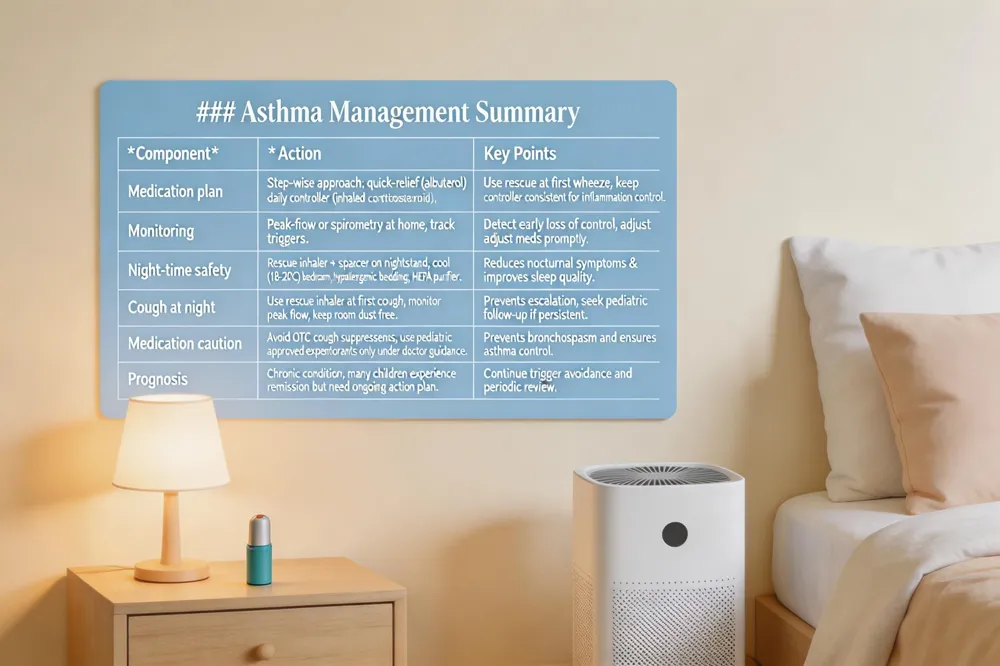 Effective asthma control hinges on a step‑wise medication plan that keeps symptoms minimal while allowing full activity. Quick‑relief inhalers (e.g., albuterol) are used at the first sign of wheezing, and daily controller meds—most often inhaled corticosteroids—reduce airway inflammation. If needed, leukotriene modifiers or low‑dose long‑acting β‑agonists are added, and severe cases may require specialist‑prescribed biologics. Regular spirometry or peak‑flow monitoring, trigger avoidance, and a written asthma action plan ensure doses are appropriately adjusted without compromising growth.
Childhood asthma treatment guidelines
Parents should keep a current action plan, schedule routine check‑ups, and ensure immunizations are up‑to‑date. The goal is symptom‑free nights, unrestricted play, and the lowest effective medication dose.
How to help a child with asthma sleep
Maintain controller therapy, place a rescue inhaler and spacer on the nightstand, and eliminate bedroom triggers: hypoallergenic bedding, pet‑free room, HEPA purifier, and a cool (18‑20 °C) environment. A consistent bedtime routine and a slight head‑elevation aid airway patency.
How to help a child with asthma cough at night
Use the rescue inhaler at the first cough, keep the device handy, and monitor peak flow each evening. Keep the room dust‑free, cool, and allergen‑proof. Persistent cough warrants a prompt pediatric follow‑up.
Best cough medicine for a child with asthma
The preferred “cough medicine” is the rescue inhaler (albuterol). Over‑the‑counter suppressants are not recommended; a pediatric‑approved expectorant may be used only under physician guidance after asthma is well‑controlled.
Does childhood asthma go away?
Asthma is chronic and not curable, but many children experience remission as they age. Even when symptoms disappear, an up‑to‑date action plan and trigger avoidance remain essential because flare‑ups can recur later in life.
Addressing Childhood Obesity and Metabolic Health
Childhood Obesity Intervention Overview
| Intervention Component | Details |
|---|---|
| Screening | Annual BMI check for ages 2‑18 (AAP/USPSTF). |
| Referral | Multicomponent lifestyle programs ≥ 26 contact hours (family‑centered). |
| Nutrition counseling | Emphasize whole foods, portion control, limit added sugars & solid fats. |
| Physical activity | ≥ 60 min moderate‑to‑vigorous activity daily; integrate into family routines. |
| Behavioral support | Goal‑setting, self‑monitoring, positive reinforcement. |
| Community resources | Get Up & Go, YMCA "Healthy Weight" programs, local parks, Houston Food Bank nutrition aid. |
| Disparities | Higher obesity rates in Hispanic (26.2 %) & non‑Hispanic Black (24.8 %) children; income‑related gaps. |
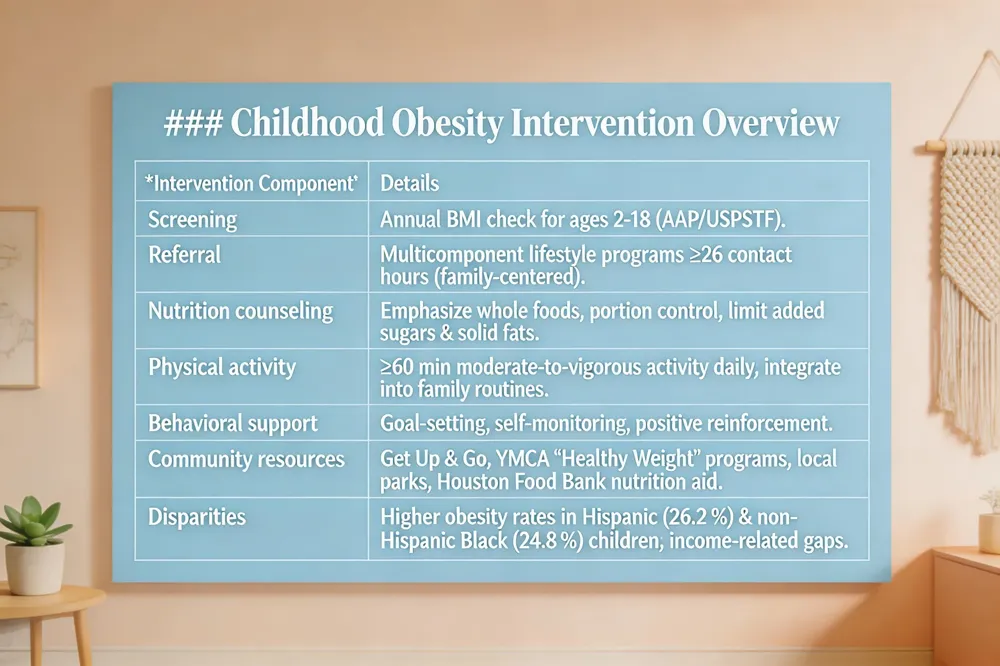 Interventions for obesity in children
Effective obesity interventions for children combine dietary counseling, regular physical activity, and behavioral support, ideally delivered through intensive, family‑centered programs. The American Academy of Pediatrics and USPSTF recommend annual BMI screening for ages 2‑18 and referral to multicomponent lifestyle treatment when excess weight is identified. Programs that involve parents, schools, or community settings and provide at least 26 contact hours are associated with the greatest improvements. Early, consistent counseling and referral to evidence‑based, intensive behavioral interventions are key to preventing and managing childhood obesity.
CDC child obesity statistics
The CDC reports that, from 2017 through March 2020, about 19.7 % of U.S. children and adolescents ages 2‑19—roughly 14.7 million youths—had obesity. Prevalence rises with age, affecting 12.7 % of children 2‑5, 20.7 % of those 6‑11, and 22.2 % of adolescents 12‑19. Racial and ethnic disparities are pronounced, with obesity highest among Hispanic children (26.2 %) and non‑Hispanic Black children (24.8 %). Income also matters—obesity affects 25.8 % of children in families at ≤130 % of the Federal Poverty Level versus 11.5 % in higher‑income families.
Most common childhood chronic diseases
The most common chronic conditions seen in U.S. youth include asthma, ADHD/ADD, and autism spectrum disorder, with mental‑health illnesses such as depression and anxiety also prevalent. Type 1 diabetes, early‑onset metabolic disease, and pediatric obesity are growing concerns, while allergic rhinitis and food allergies round out the top chronic illnesses.
Resources for overweight children
Families can tap into community programs like the free Get Up & Go initiative by Children’s Health in Dallas, which offers after‑school active‑play sessions, 10‑week weight‑management classes, family cooking workshops, and YMCA memberships. Additional resources include local YMCA “Healthy Weight” programs, affordable activity classes through parks and recreation, nutrition guidance from the Houston Food Bank, and AAP‑endorsed online tools. Regular pediatric check‑ups, dietitian counseling, and a supportive home environment complete a comprehensive approach to healthy weight management.
School and Community Support for Chronic Conditions
School‑Based Support Pillars
| Pillar | Implementation Tips |
|---|---|
| Individualized health plans | 504 plan or IEP with medication schedule, emergency actions, classroom accommodations. |
| Mental‑health & anti‑bullying | Programs teaching recognition & intervention; stigma reduction for overweight/chronically ill peers. |
| Peer support & networking | Shared recipes, photo boards, regular meet‑ups; create a sense of community beyond classroom. |
| Staff training | Annual asthma emergency drills, medication administration education. |
| Parent‑school communication | Regular updates, shared responsibility for health plan adherence. |
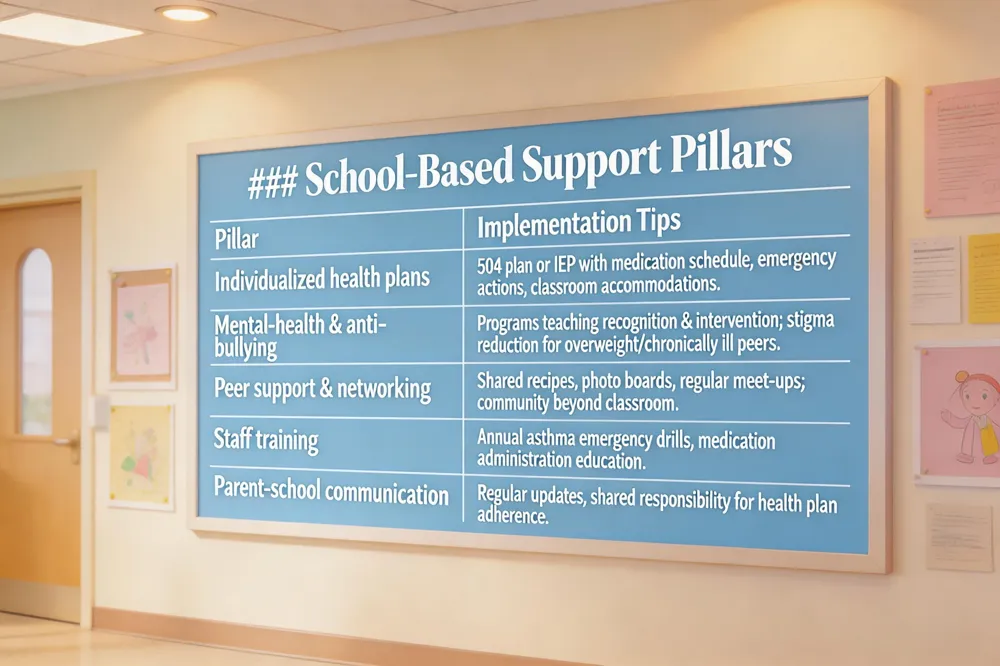 A child with a chronic illness thrives when school and community teams work together to create a safe, supportive environment. Individualized health plans—whether a 504 plan or an IEP—provide a written roadmap that outlines medication schedules, emergency actions, and classroom accommodations, ensuring teachers and staff know how to respond quickly and confidently. Mental‑health and bullying awareness are equally vital; programs that teach students to recognize and intervene in bullying, especially toward peers who are overweight or have visible health challenges, reduce stigma and improve emotional well‑being. Finally, peer support and networking give families a lifeline: shared recipes, photo boards, and regular meet‑ups create a community of encouragement that extends beyond the classroom, reinforcing healthy habits and fostering friendships that keep children motivated to follow their medical plans. By integrating these three pillars—customized health plans, psychosocial education, and peer connections—schools become true partners in managing chronic disease and promoting lifelong wellness.
Putting It All Together: A Family‑Centered Approach
Family‑Centered Health Checklist
| Daily Habit | Action |
|---|---|
| Physical activity | 2–3 short active play periods; step counter or 7‑minute routines. |
| Nutrition | Balanced meals (½ veg/fruit, ¼ whole grains, ¼ protein, dairy side); limit sugary drinks. |
| Hydration | Water as primary beverage; keep reusable water bottle handy. |
| Sleep | 9–12 hrs (younger) / 8–10 hrs (teens) with consistent bedtime routine. |
| Hygiene | Hand‑washing, teeth‑brushing, regular baths. |
| Preventive care | Routine check‑ups, vaccinations, weight/blood‑pressure monitoring. |
| Mental wellness | Family meals, gratitude practice, reading together, positive role‑modeling. |
| Organization | Clean study space, balanced backpack, alternating sit/stand. |
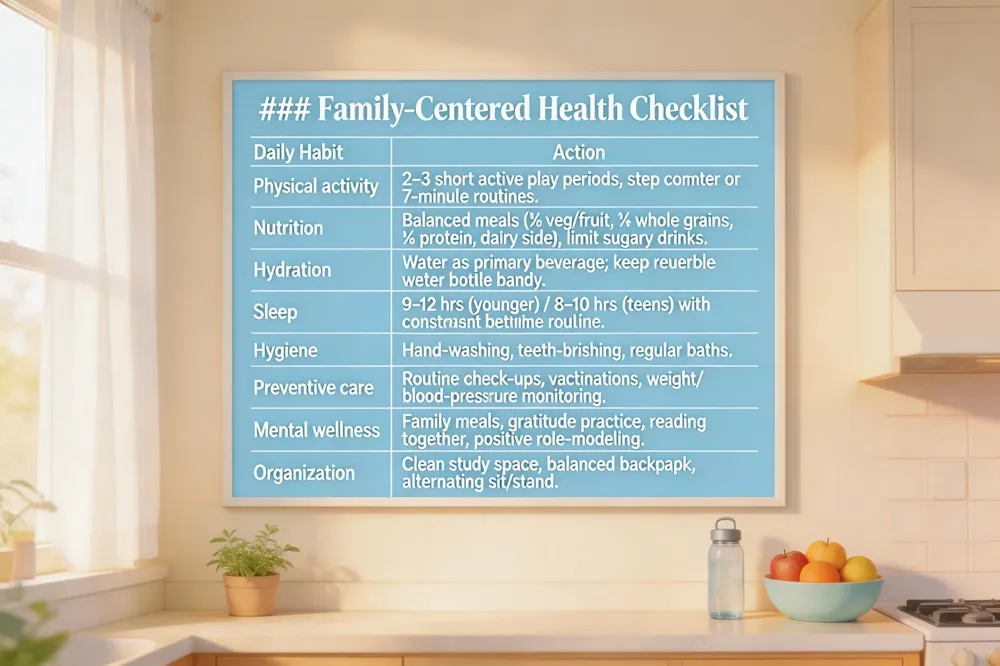 A strong family‑centered routine is the foundation for preventing chronic disease and supporting kids with existing conditions.
5 health tips for students – Keep active by fitting short workouts or walks into the day (a step counter or quick 7‑minute routines between classes). Pack a balanced backpack and avoid over‑loading to protect posture. Create a clean, organized study space and alternate sitting and standing. Choose nutritious snacks such as fruit with nut butter or Greek yogurt and stay hydrated with water. Prioritize 8‑10 hours of quality sleep each night to boost concentration, mood, and overall health.
Healthy lifestyle for children – Adequate sleep (9–12 hours for younger kids, 8–10 hours for teens), daily aerobic activity, and a balanced diet rich in fruits, vegetables, whole grains, lean proteins, and low‑fat dairy are essential. Limit sugary drinks, added sugars, saturated fats, and screen time; replace drinks with water. Involve the whole family in meal planning, breakfast preparation, and lunch‑box choices. Consistent daily routines help children feel secure and develop lasting habits.
8 healthy habits for kids – Encourage daily active play, limit sedentary screen time, provide a diet low in added sugars, maintain a regular bedtime routine, and teach good hygiene (hand‑washing, teeth‑brushing). Stay current with preventive care: regular check‑ups, vaccinations, and monitoring of weight, blood pressure, and respiratory health. Foster positive mental habits through family meals, reading together, gratitude practices, and resilient role‑modeling.
By weaving these practices into everyday life and partnering with pediatric providers, families create a supportive network that promotes long‑term wellness and reduces the burden of chronic disease.
A Roadmap for Healthier Futures
A successful fight against chronic disease begins when nutrition, physical activity, and medical care are woven together. Children learn to read food labels, choose “go” foods, and practice portion control while families attend Get Up & Go cooking workshops and receive weekly coaching calls that reinforce healthy habits. Schools become partners by integrating a written asthma or diabetes action plan, offering daily activity breaks, and modeling screen‑time limits, ensuring kids receive consistent medical guidance across home and classroom. Community resources—YMCA memberships, local recreation centers, and online diabetes‑prevention courses—provide the infrastructure for families to sustain these changes beyond the program weeks. By aligning diet, exercise, and professional oversight, families and schools create a resilient support network that empowers children and teens to thrive while reducing the need for emergency medical interventions.