Understanding In‑Office Pediatric Labs
Parents often wonder why a pediatrician can draw blood, urine, or swabs right in the exam room. Doing the test in the office eliminates a separate trip, cuts travel time, and lets the doctor see the child’s vital signs and symptoms at the moment. Families benefit from quicker results—within minutes to a few days—so treatment decisions can be made during the visit. For providers, in‑office labs streamline workflow, reduce missed appointments, and improve care coordination. The testing is scheduled as part of the well‑child check, aligning with screenings such as anemia, lead exposure, or cholesterol, making preventive care especially child‑friendly.
Why In‑Office Lab Testing Matters
Advantages of In‑Office Pediatric Lab Testing
| Advantage | Description |
|---|---|
| Convenient scheduling & reduced travel | Blood draw, urine screen, or rapid strep test can be performed during a regular well‑child visit; appointments can be booked online or by phone, minimizing missed school or work days. |
| Rapid turnaround for timely diagnosis | Point‑of‑care tests return results in minutes; routine labs are available within 24‑48 hours, allowing the pediatrician to discuss findings and start treatment during the same visit or a short follow‑up. |
| Child‑friendly environment lowers anxiety | Age‑appropriate language, distraction tools (toys, videos, VR headsets), parent hand‑holding, small‑gauge needles, topical numbing creams, and “pretend‑play” rehearsals make the experience less scary. |
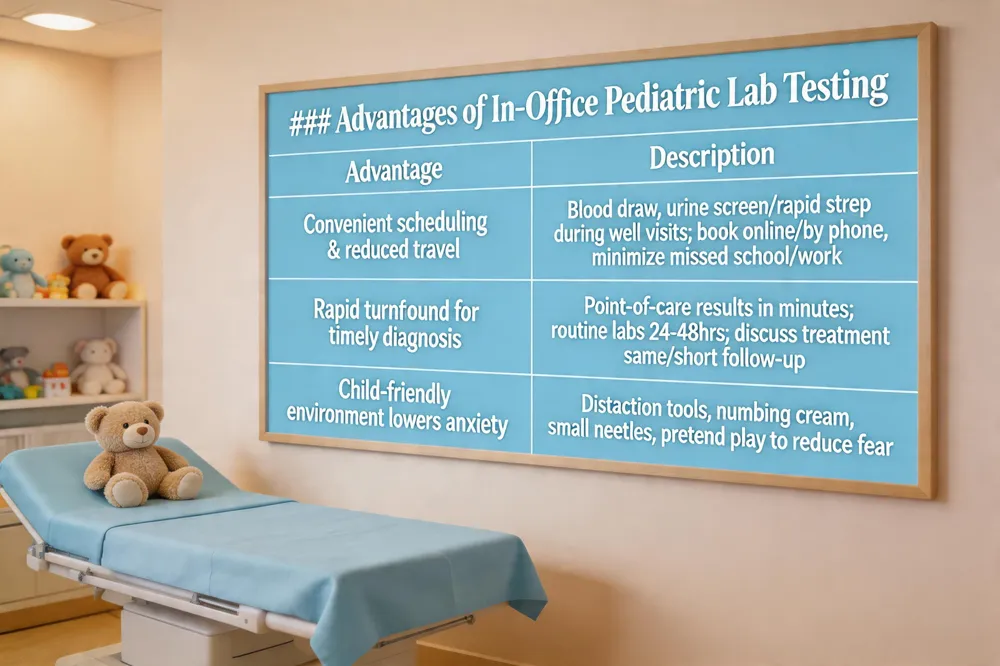 In‑office pediatric laboratory testing brings three big advantages that make health care smoother for families. First, convenient scheduling and reduced travel means that a blood draw, urine screen, or rapid strep test can be done during a regular well‑child visit, eliminating the need for a separate trip to a distant laboratory. Parents can book the appointment online or by phone, often at a time when the child is well‑rested and not hungry, which cuts down on missed school or work days.
Second, rapid turnaround for timely diagnosis allows clinicians to receive results within minutes (for point‑of‑care tests) or within 24‑48 hours for routine labs. This speed lets the pediatrician discuss findings and start treatment during the same visit or a short follow‑up, reducing anxiety for families and improving health outcomes.
Third, the child‑friendly environment lowers anxiety. Pediatric offices use age‑appropriate language, offer distraction tools like toys, videos, or virtual‑reality headsets, and allow a parent to hold the child’s hand. Specialized equipment—small‑gauge needles, topical numbing creams, and “pretend play” rehearsals—makes the experience less scary, turning a potentially stressful event into a routine part of preventive care.
Common Pediatric Lab Tests and When They’re Ordered
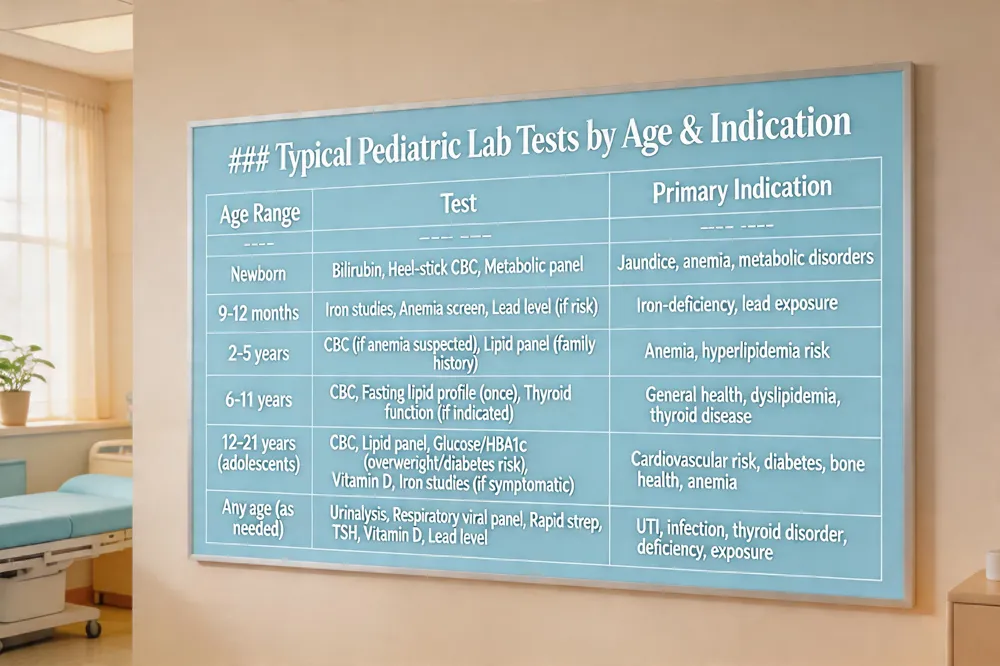
Typical Pediatric Lab Tests by Age & Indication
| Age Range | Test | Primary Indication |
|---|---|---|
| Newborn | Bilirubin, Heel‑stick CBC, Metabolic panel | Jaundice, anemia, metabolic disorders |
| 9‑12 months | Iron studies, Anemia screen, Lead level (if risk) | Iron‑deficiency, lead exposure |
| 2‑5 years | CBC (if anemia suspected), Lipid panel (family history) | Anemia, hyperlipidemia risk |
| 6‑11 years | CBC, Fasting lipid profile (once), Thyroid function (if indicated) | General health, dyslipidemia, thyroid disease |
| 12‑21 years (adolescents) | CBC, Lipid panel, Glucose/HbA1c (overweight/diabetes risk), Vitamin D, Iron studies (if symptomatic) | Cardiovascular risk, diabetes, bone health, anemia |
| Any age (as needed) | Urinalysis, Respiratory viral panel, Rapid strep, TSH, Vitamin D, Lead level | UTI, infection, thyroid disorder, deficiency, exposure |
 What blood tests are recommended by age for children?
Typical age‑based screening labs in the U.S. follow AAP guidelines: newborns receive bilirubin, a heel‑stick CBC, and metabolic panel; 9‑12 months get iron studies, anemia screening, and lead level if risk factors exist; 2‑5 years may have a CBC when anemia is suspected and a lipid panel if there’s a family history; 6‑11 years include CBC, a once‑only fasting lipid profile, and thyroid function tests when indicated; adolescents (12‑21 years) are screened with CBC, lipid panel, glucose/HbA1c for overweight or diabetic risk, vitamin D, and iron studies if symptomatic.
What blood tests are recommended by age for children?
Typical age‑based screening labs in the U.S. follow AAP guidelines: newborns receive bilirubin, a heel‑stick CBC, and metabolic panel; 9‑12 months get iron studies, anemia screening, and lead level if risk factors exist; 2‑5 years may have a CBC when anemia is suspected and a lipid panel if there’s a family history; 6‑11 years include CBC, a once‑only fasting lipid profile, and thyroid function tests when indicated; adolescents (12‑21 years) are screened with CBC, lipid panel, glucose/HbA1c for overweight or diabetic risk, vitamin D, and iron studies if symptomatic.
What are the most common pediatric lab tests? What are the most common pediatric lab tests?: 1) Complete Blood Count (CBC) – anemia, infection; 2) Basic Metabolic Panel (BMP) – electrolytes and kidney function; 3) Lipid Profile – cholesterol screening; 4) Urinalysis – UTIs, kidney issues; 5) Thyroid‑Stimulating Hormone (TSH) – thyroid disorders; 6) Iron studies – iron‑deficiency anemia; 7) Lead level – exposure screening; 8) Vitamin D level – deficiency; 9) HbA1c or fasting glucose – diabetes risk; 10) Respiratory viral panel when the child is sick.
What are the top 10 pediatric diagnoses? The ten most common conditions seen in U.S. children are: common cold, influenza, acute otitis media, streptococcal pharyngitis, sinusitis, other upper‑respiratory infections (e.g., bronchitis), urinary‑tract infections, bacterial or viral skin infections (impetigo, cellulitis), and gastrointestinal viral infections (gastroenteritis).
How do you perform a blood test on a 2‑year‑old child? A pediatric phlebotomist cleans the arm, applies a tourniquet, and uses a tiny butterfly or finger‑stick needle. Topical anesthetic cream or spray may be applied 30‑60 minutes before. The parent stays close, holds the child’s hand, and offers distraction (toy, video, deep‑breathing). After collection, gentle pressure and a bandage are applied, and a small reward is given. Warmth and hydration improve vein access.
Where can I find pediatric blood labs near me? Child‑friendly networks include Labcorp, Quest Diagnostics, and local children’s‑hospital labs (e.g., Children’s Wisconsin). Use the provider‑locator on each lab’s website or call the pediatric line (Labcorp (262) 682‑3253, Quest (877) 607‑5280) to request a “pediatric collection” appointment with age‑appropriate techniques and possible numbing sprays.
Preparing Your Child for a Lab Visit
Checklist for Preparing Your Child for a Lab Visit
| Step | Details |
|---|---|
| Explain the procedure in simple terms | Use age‑appropriate language; describe why the test is important |
| Hydrate the child | Encourage water intake the night before and the morning of the draw |
| Schedule at a convenient time | Choose a time when the child is rested and not hungry (fasting labs early morning) |
| Bring a comfort item | Favorite toy, book, or tablet for distraction |
| Use topical anesthetic if needed | Apply cream 30‑60 min prior to needle insertion |
| Offer choices & rewards | Let the child pick a video, count breaths, or earn a sticker after the test |
| Involve a child‑life specialist for high anxiety | Professional support for severe fear or needle phobia |
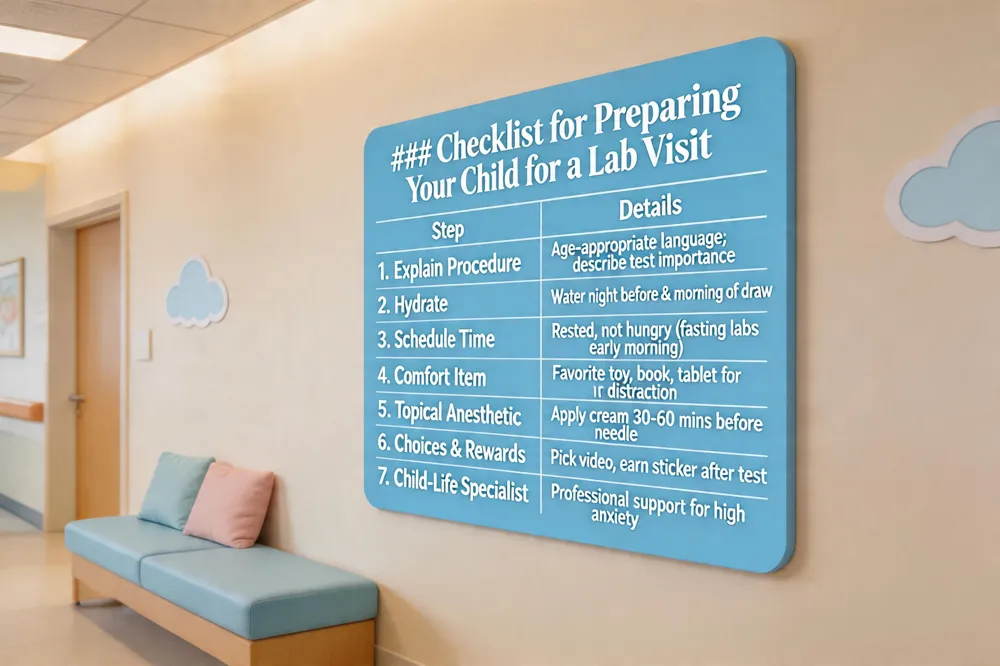 When a lab test is ordered, start by talking to your child in language they understand—use simple words for toddlers and more detail for older kids. Tell them why the test matters and that a quick pinch may happen, but it will be brief. Hydration is key: have them drink water the night before and the morning of a blood or urine draw, and schedule the appointment when they’re rested and not hungry (fasting tests are best first‑thing in the morning, with a snack afterward). Bring a favorite toy, book, or tablet for distraction, and let the child hold a parent’s hand or a comfort object during the procedure. If they refuse a blood draw, stay calm, offer choices (video, counting breaths, a sticker reward), use topical anesthetic cream if needed, and involve a child‑life specialist for severe anxiety. The most common parental worry is fever, which often prompts visits for infections like colds or ear infections. Blood tests are ordered for specific medical reasons (fever, fatigue, bruising) or routine age‑based screens (iron at 12 months, lipids at 9‑11 years). Recommended pediatric screenings include vision, hearing, blood pressure, BMI, iron deficiency, lipid panels, lead levels, depression, STI/HIV for sexually active teens, TB exposure, and sickle‑cell disease at 6‑9 months. Well‑child visits follow the AAP schedule: birth, 2‑5 days, 1 month, 2 months, 4 months, 6 months, 9 months, 12 months, 15 months, 18 months, 2 years, then annually through age 21, each including growth measurements, physical exam, developmental checks, immunizations, anticipatory guidance, and age‑appropriate screenings.
Special Considerations: Phlebotomy, Pain Management, and Alternatives
Pain‑Management Strategies & Alternatives for Pediatric Phlebotomy
| Strategy | How It Works |
|---|---|
| Topical anesthetic cream/spray | Applied 30‑60 min before draw; numbs skin to reduce needle sting |
| Distraction devices | Videos, tablets, VR headsets, or interactive toys divert attention during the draw |
| Small‑gauge needles (23‑25 g) | Smaller diameter causes less tissue trauma and pain |
| “Pretend‑play” rehearsal | Child practices the procedure with a toy or doll to reduce fear |
| Capillary finger‑stick devices (e.g., TAP®) | Collect a tiny drop of blood without venipuncture; useful for glucose, HbA1c, or quick screens |
| Parental hand‑holding & comfort object | Physical reassurance lowers anxiety and perceived pain |
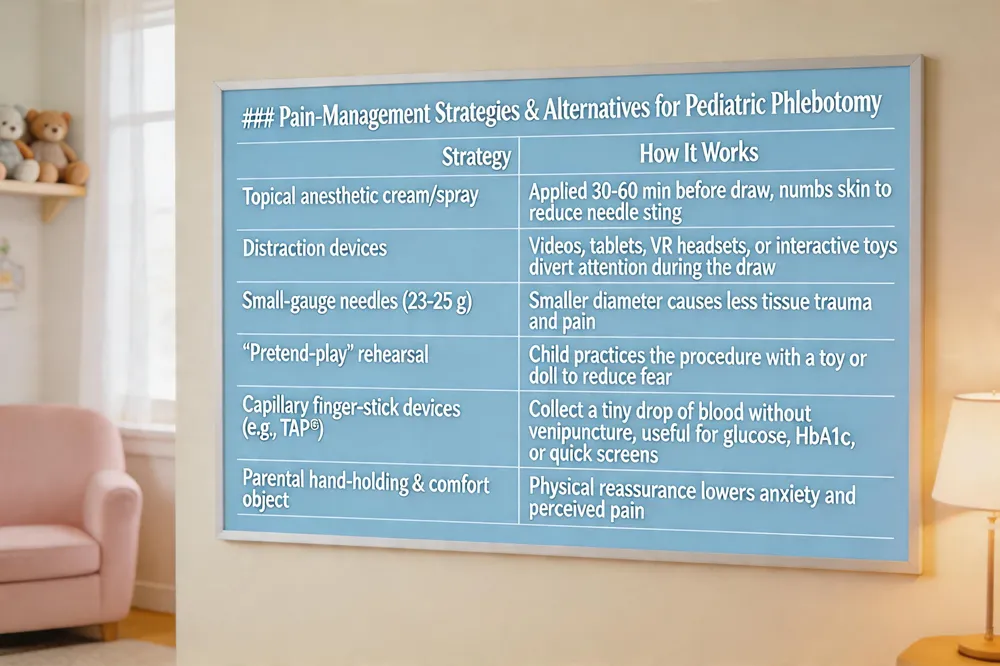 Children’s blood draws are a challenge. Kids often fear needles, have smaller veins, and may move unpredictably. Successful phlebotomy relies on gentle technique, parental comfort, and distraction such as videos or games.
Routine blood work is scheduled at key ages. Term infants receive iron studies at 9‑12 months; pre‑term infants at 5‑6 months. Children 9‑11 years get a fasting lipid panel, and adolescents 12‑21 years may need CBC, iron, thyroid, vitamin D, or glucose/HbA1c when risk factors exist. Lead screening is done when risk is identified or universally at 1‑2 years in high‑risk settings.
For a 1‑year‑old, a small butterfly needle (23‑25 gauge) or heel‑stick is used. The child is kept warm, a topical anesthetic applied, and a parent holds the child for reassurance while the arm or heel is immobilized and the specimen collected. A quick bandage and a small reward follow.
The five basic tests are: Basic Metabolic Panel, Lipid Profile, Complete Blood Count, Thyroid Panel, and Blood‑glucose/electrolyte panel. Results are compared to age‑specific ranges and interpreted by the pediatrician.
Labcorp provides pediatric phlebotomy services with trained staff, topical anesthetic options, and a child‑friendly environment.
A pediatric lab test is a diagnostic sample—blood, urine, or saliva—collected to diagnose, screen, or monitor health, guiding the pediatrician’s plan.
FAQs and Resources for Parents
Quick FAQ Reference
| Question | Brief Answer |
|---|---|
| What is a full pediatric assessment? | Comprehensive exam covering history, growth measurements, vitals, developmental screen, immunizations, nutrition, safety, and labs as needed. |
| How can blood tests be made painless? | Use topical lidocaine, capillary finger‑stick devices, distraction (videos, toys, VR), and small‑gauge needles. |
| What are general danger signs (IMNCI)? | Inability to feed, excessive vomiting, convulsions, lethargy/unconsciousness, severe breathing difficulty. |
| Typical well‑child visit labs? | CBC or anemia screen, clean‑catch urine, point‑of‑care glucose, rapid strep/influenza swabs, age‑specific screenings (lead, cholesterol, thyroid). |
| When to seek urgent medical attention? | High fever unresponsive to meds, breathing trouble, dehydration signs, persistent pain, sudden lethargy, behavioral change, loss of consciousness. |
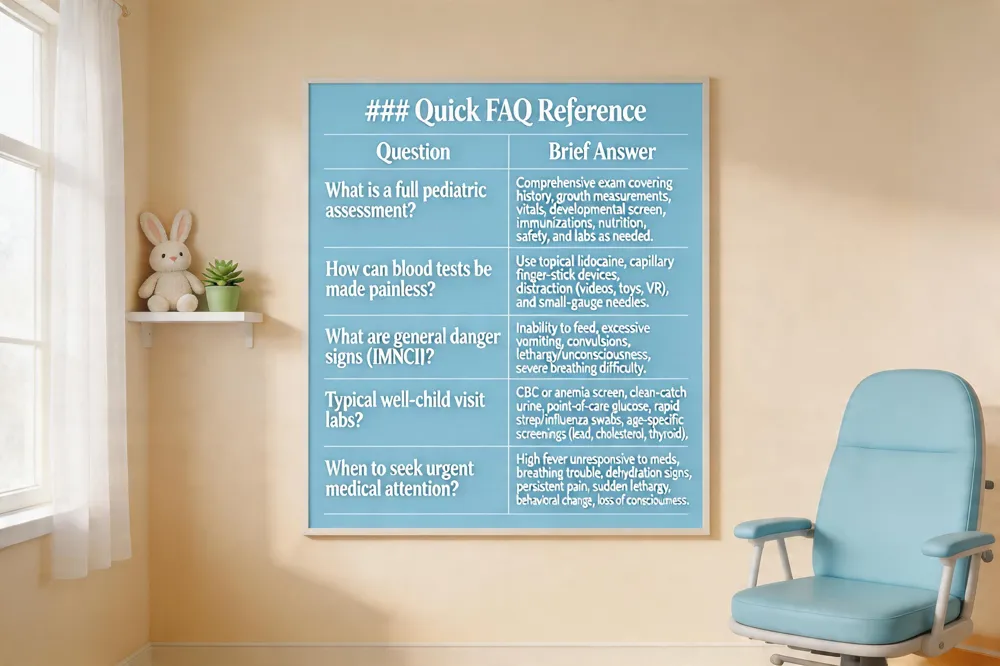 Full pediatric assessment – A comprehensive exam gathers the child’s medical and family history, measures height, weight, head circumference and vital signs, conducts a head‑to‑to‑system exam, screens developmental milestones, reviews immunizations, discusses nutrition, safety and anticipatory guidance. Labs or specialist referrals are added as needed.
Painless blood‑test options – While a needle is used, pain can be minimized. Capillary blood devices (e.g., TAP®) collect a tiny drop via finger‑stick, topical lidocaine creams numb the site 30‑60 min before draw, and distraction tools (videos, toys, VR) make the experience virtually painless for most kids.
General danger signs (IMNCI) – 1) cannot feed or breast‑feed, 2) cannot drink or vomits excessively, 3) convulsions, 4) lethargic or unconscious, 5) severe chest indrawing/breathing difficulty.
Typical well‑child visit labs – CBC or anemia screen, clean‑catch urine analysis, point‑of‑care glucose, rapid strep or influenza swabs when indicated, and age‑specific screenings (lead, cholesterol, thyroid) based on risk.
Urgent‑attention warning signs – High fever unresponsive to medication, breathing trouble or wheeze, signs of dehydration (dry mouth, no tears, scant urine), persistent pain or inability to walk, sudden lethargy, behavioral change, or loss of consciousness require immediate medical care.
Putting It All Together
In‑office pediatric labs let families skip extra trips, get rapid results, and keep children in a familiar, comforting environment—key for reducing anxiety and ensuring accurate samples. To make the most of this convenience, parents should discuss the test’s purpose with the pediatrician, schedule it when the child is rested and well‑hydrated, use age‑appropriate explanations and play‑based rehearsals, and bring a favorite toy or distraction. Simple calming techniques—deep breaths, counting, or a short video—help the child stay still. If the child becomes distressed, experiences unexpected pain, or the results are abnormal, contact the provider promptly for reassurance, possible repeat testing, or specialist referral.