Why Early Detection Matters
Untreated anxiety can silently wreck a teen’s academic progress and erase social confidence. Persistent worry, irritability, and the physical aches that accompany it often lead to missed classes, lower grades, and withdrawal from friends, setting a cascade that harms future college and career opportunities. Pediatric well‑child visits provide a trusted window for early screening; brief questionnaires and conversational cues can reveal hidden distress before it spirals. When families join the treatment team early, they create a supportive scaffold that reinforces coping skills, normalizes help‑seeking, and reduces stigma. Early, family‑centered intervention not only restores emotional balance but also safeguards learning, relationships, and long‑term mental health, making timely medical attention a crucial lifeline for every adolescent. Doctors can coordinate school counselors and mental‑health specialists, creating a plan that tracks progress and adapts.
Understanding the Roots of Teen Anxiety
Key contributors to teen anxiety:
| Category | Specific Factors |
|---|---|
| Biological | Genetics, hormonal changes (puberty), brain‑chemistry differences |
| Environmental | Family conflict, academic pressure, bullying, school transitions, COVID‑19 fallout |
| Social Media | Constant comparison, peer‑approval cravings, exposure to global headlines |
| Family History | Hereditary anxiety or other mental‑health conditions |
| Lifestyle | Poor sleep, nutrition, excessive caffeine |
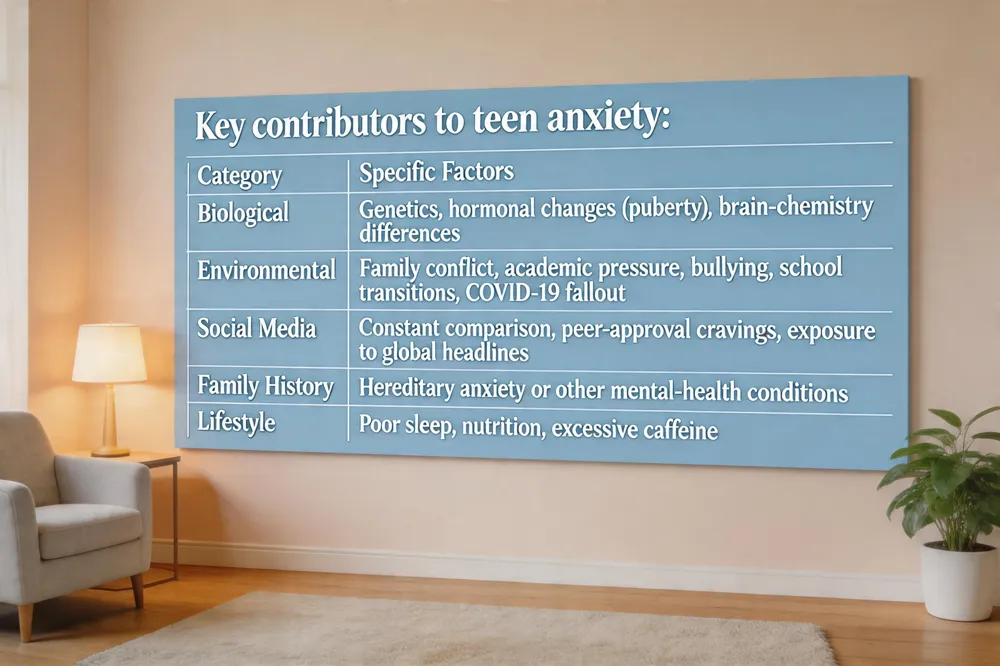 Teen anxiety stems from a blend of biological, hormonal, environmental, and social influences. Pubertal hormone shifts heighten emotional reactivity, while genetic predispositions and brain‑chemistry differences make some adolescents more prone to worry. Stressful events—family conflict, academic pressure, bullying, school transitions, and the lingering fallout of the COVID‑19 pandemic—add external pressure. Social‑media amplifies comparison, peer‑approval cravings, and exposure to global headlines, intensifying fear of judgment and uncertainty. A family history of anxiety or other mental‑health conditions further raises risk.
What causes anxiety in teens? A combination of genetics, hormonal changes, stressful life events, social‑media expectations, and family dynamics can trigger persistent, excessive worry that interferes with daily life.
Why does my 14‑year‑old have anxiety? School and sports demands, peer fitting‑in pressures, bullying, and high expectations from parents can spark anxiety, especially if a family history or poor sleep, nutrition, or caffeine use compounds stress. Persistent, impairing symptoms merit a pediatrician’s evaluation.
Can a 13‑year‑old be diagnosed with anxiety? Yes. About one‑third of adolescents aged 13‑18 meet criteria for an anxiety disorder. Primary‑care screening tools (e.g., SCARED, GAD‑7) can identify significant symptoms, leading to early, evidence‑based interventions such as CBT and, when needed, medication.
Spotting Early Warning Signs
Common warning signs (emotional, cognitive, physical) and gender‑specific patterns:
| Domain | Typical Signs |
|---|---|
| Emotional | Persistent nervousness, irritability, feeling “on edge” |
| Cognitive | Difficulty concentrating, “blank mind”, excessive worry |
| Physical | Headaches, stomachaches, muscle tension, sleep problems (no medical cause) |
| Girls (internalizing) | Mood swings, perfectionism, social withdrawal, body‑image concerns |
| Boys (somatic) | Outward irritability, more frequent physical complaints |
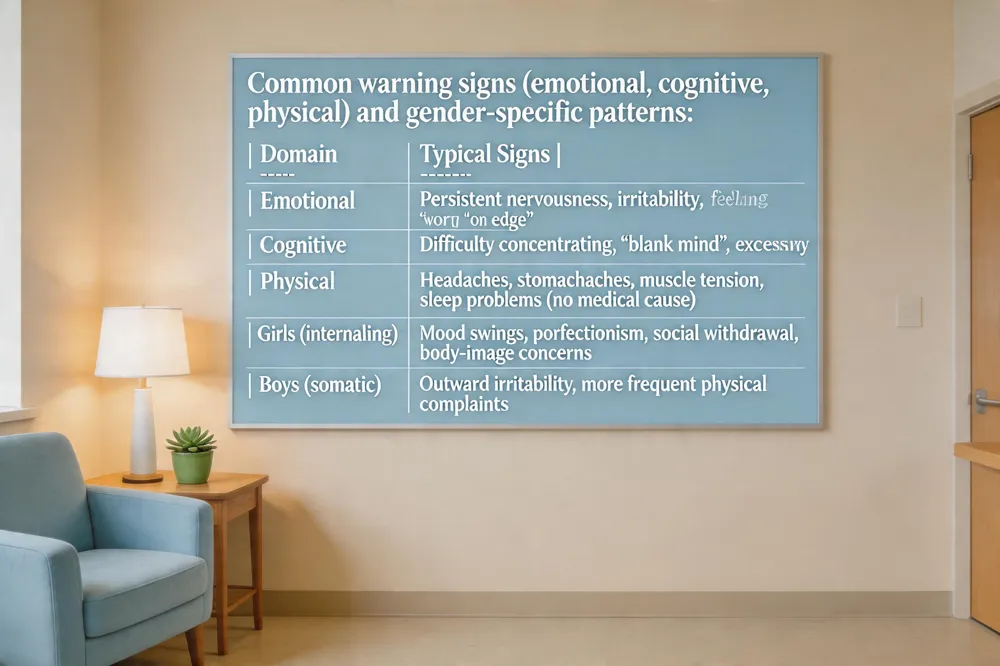 Teen anxiety often begins with emotional and cognitive red flags such as persistent nervousness, irritability, and a “blank mind” that makes concentrating on schoolwork or conversations difficult. These mental signs are frequently accompanied by physical complaints without a medical cause—frequent headaches, stomachaches, muscle tension, or trouble sleeping—especially when the teen reports no illness. Gender‑specific symptom patterns emerge: teenage girls tend to internalize anxiety, showing excessive worry about school, friendships, and appearance, mood swings, perfectionism, and sleep disturbances, while boys may display more outward irritability and somatic complaints. A quick brief anxiety test (e.g., a GAD‑7 or SCARED questionnaire) asks about the frequency of worry, restlessness, irritability, and sleep problems over the past weeks. Though not diagnostic, a high score flags the need for a professional evaluation.
What are three warning signs that a teenager may be struggling with anxiety? 1. Persistent nervousness or irritability, feeling “on edge.” 2. Difficulty concentrating or a blank mind with restlessness. 3. Physical complaints—headaches, stomachaches, muscle tension, or sleep problems—without a clear medical cause.
Anxiety in teenage girl symptoms include excessive worry about school, friendships, and health; irritability, mood swings, and difficulty concentrating; frequent headaches, stomachaches, dizziness, racing heart; sleep disturbances; social withdrawal; perfectionism; and fear of failure.
Teenage anxiety test is a brief, evidence‑based screening that asks about thoughts, feelings, and behaviors over recent weeks using simple frequency options. Positive results guide families toward evaluation, coping strategies, and possible referral to CBT or medication, emphasizing early identification for better outcomes.
Statistics You Need to Know
Recent U.S. teen anxiety statistics:
| Metric | Percentage |
|---|---|
| Adolescents (12‑17) with any diagnosed mental/behavioral condition | 20 % |
| Anxiety prevalence (12‑17) | 16 % |
| Depression prevalence (12‑17) | 8 % |
| Gender difference – anxiety (girls vs boys) | 12 % vs 9 % |
| Rise in diagnoses (2016‑2023) | From 15 % to 20 % (35 % increase) |
| COVID‑19 impact – ED visits for anxiety (2020‑2021) | ↑24‑31 % |
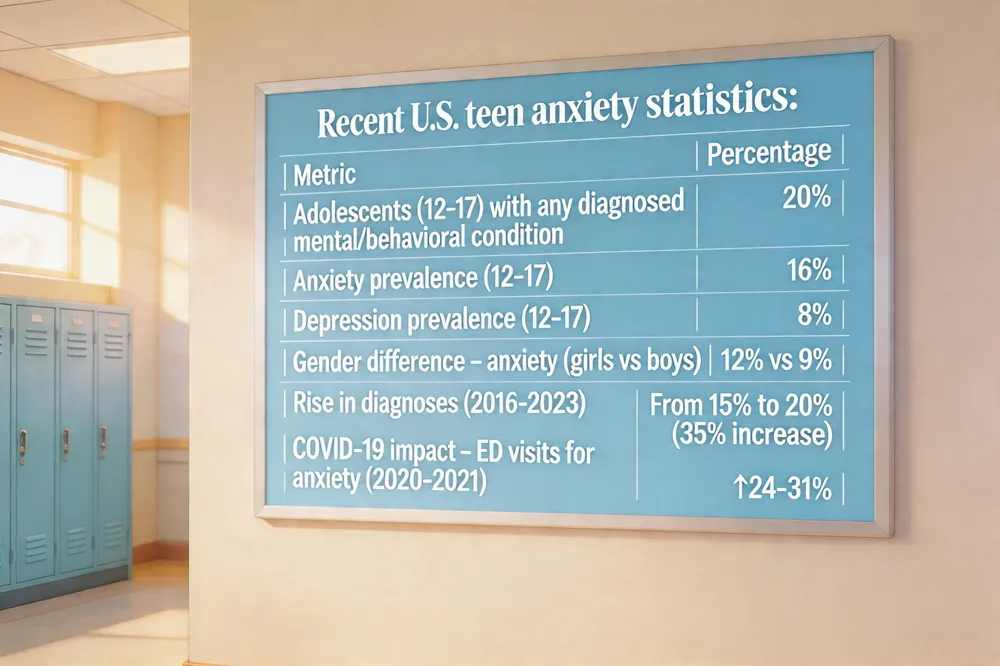 Youth mental health Statistics 2026 – In 2026, CDC data show that 11 % of U.S. children ages 3‑17 have a current diagnosed anxiety disorder, 8 % have depression, and 21 % have ever been diagnosed with any mental, emotional, or behavioral condition.
What percent of teens struggle with mental health – Roughly 20 % of U.S. teens (about 1 in 5) aged 12‑17 have a diagnosed mental or behavioral health condition: anxiety 16 %, depression 8 %, and conduct/behavior problems 6 %.
Anxiety in teens statistics – 16 % of adolescents 12‑17 have been diagnosed with anxiety, with higher rates in females (12 %) than males (9 %). Anxiety is the most common emotional disorder among teens.
Youth mental health statistics over the years – From 2016 to 2023, teen mental‑health diagnoses rose from 15 % to 20 % (a 35 % increase). Anxiety diagnoses increased from 10 % to 16 %, and depression from 6 % to 8 %.
CDC mental health Statistics Youth – 40 % of high‑school students reported persistent feelings of sadness in 2023; 20 % seriously considered suicide, and 11 % of children 3‑17 have a current anxiety diagnosis.
National prevalence and trends – Anxiety prevalence climbs with age, affecting 16 % of teens versus 2 3 % of preschoolers. The COVID‑19 pandemic amplified rates, with emergency‑department visits for anxiety up 24‑31 % in 2020‑2021 and remaining above pre‑pandemic levels through 2023.
Gender differences – Girls are more likely to internalize anxiety (12 % versus 9 % in boys), while boys often present with somatic complaints such as headaches or stomachaches.
Long‑term outcomes of untreated anxiety – Early identification and evidence‑based treatment ([CBT] ± [SSRIs]) markedly improves trajectories.
Evidence‑Based Treatments for Teen Anxiety
First‑line and adjunctive treatments:
| Treatment | When Used | Key Points | |---|---| | Cognitive‑behavioral therapy (CBT) | All severity levels | Teaches thought re‑framing, exposure, coping skills | | Selective serotonin‑reuptake inhibitor (SSRI) | Moderate‑to‑severe or CBT‑non‑responsive | Fluoxetine, sertraline; monitor for suicidal ideation (black‑box) | | Combined CBT + SSRI | Co‑occurring depression or high functional impairment | Often yields best outcomes | | Gender‑specific CBT focus | Girls: body‑image, social acceptance; Boys: relaxation, mindfulness for somatic symptoms |
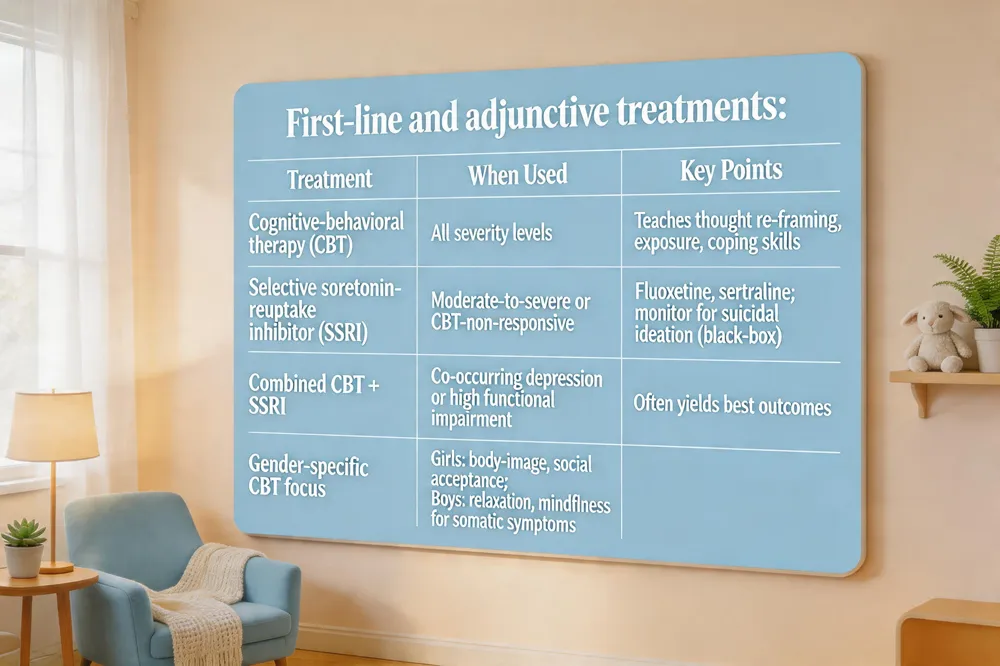 Cognitive‑behavioral therapy (CBT) is the first‑line, evidence‑based treatment for teen anxiety, teaching skills to reframe thoughts, tolerate distress, and gradually face feared situations. When anxiety is moderate‑to‑severe, or when CBT alone does not bring sufficient relief, a selective serotonin‑reuptake inhibitor (SSRI) such as fluoxetine or sertraline is the recommended medication; all SSRIs carry an FDA black‑box warning for increased suicidal thoughts in individuals under 25, so close monitoring is essential. For many adolescents, a combined CBT + SSRI approach yields the best outcomes, especially in cases with co‑occurring depression or high functional impairment. Gender‑specific considerations matter: girls often internalize anxiety and may benefit from therapy that emphasizes body‑image and social‑acceptance coping, while boys may present more with somatic complaints and benefit from CBT that includes relaxation and mindfulness. Early identification, regular follow‑ups, and supportive family involvement are critical to ensure safe and effective treatment.
Practical Home and Natural Strategies
Daily habits that can lower anxiety:
| Strategy | How It Helps |
|---|---|
| Regular physical activity (sport, walk, yoga) | Increases endorphins, reduces cortisol |
| Balanced diet (magnesium‑rich foods, omega‑3s) | Supports brain chemistry |
| Consistent sleep hygiene | Stabilizes mood and stress response |
| Limited caffeine & screen‑free wind‑down | Reduces physiological arousal |
| Mindfulness practices (deep‑breathing, meditation) | Calms nervous system |
| Herbal teas (chamomile) & magnesium supplements (doctor‑approved) | Gentle relaxation for girls |
| Open, non‑judgmental family communication | Provides emotional safety net |
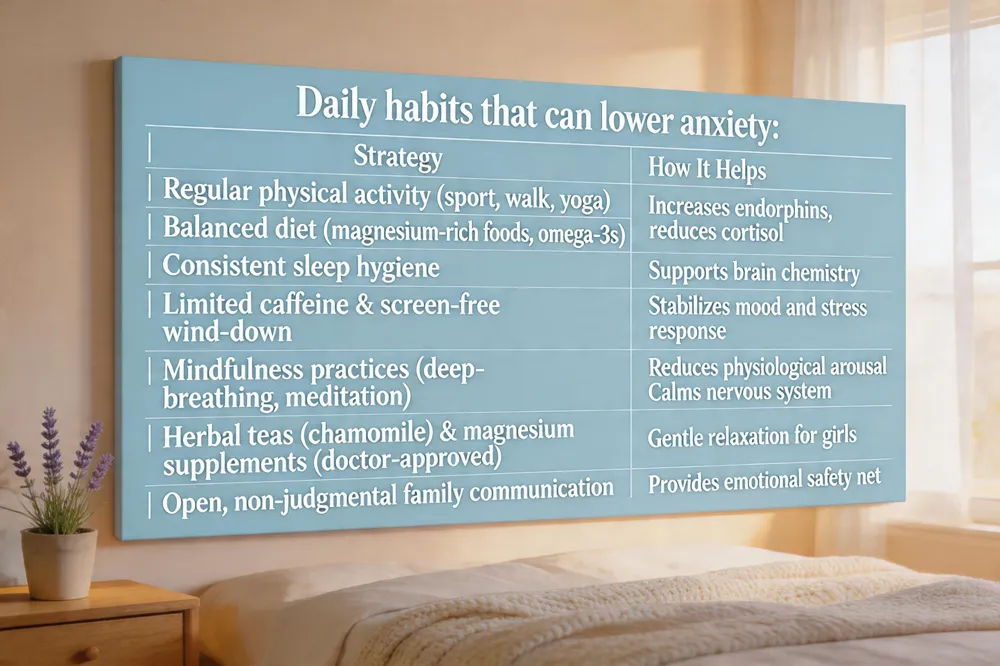 A teen’s daily routine can be a powerful tool against anxiety. Regular physical activity—whether it’s a sport, brisk walk, or yoga—boosts endorphins and lowers cortisol, while a balanced diet rich in magnesium (leafy greens, nuts, seeds) and omega‑3s (salmon, walnuts) supports brain chemistry. Consistent sleep hygiene, limited caffeine, and screen‑free wind‑down time further stabilize mood.
Natural remedies for anxiety in teenage girls – Herbal teas such as chamomile, a doctor‑approved magnesium supplement, and omega‑3 capsules can ease nervous tension. Pair these with mindfulness practices like deep‑breathing, guided meditation, or progressive muscle relaxation; just a few minutes each day can calm the nervous system. Creating a supportive home environment—open, non‑judgmental conversation and empathy—provides the emotional safety net teens need.
Early intervention in mental health – Spotting and treating anxiety early dramatically improves long‑term outcomes. Routine screenings during well‑child visits or school check‑ins catch warning signs before they become disabling, reducing the risk of substance use, depression, and academic decline. Prompt access to CBT, SSRIs when needed, and family‑centered support ensures teens stay on track socially and academically.
Benefits of early detection of mental‑health conditions – Early identification lets clinicians use evidence‑based therapies while the adolescent brain is still highly adaptable, shortening treatment duration and preventing secondary complications. Families gain peace of mind, schools can provide accommodations, and teens develop coping skills that foster resilience for life.
Resources, Screening Tools, and Next Steps
Key tools and next steps for families and clinicians:
| Tool | Format | Primary Use | |---|---| | GAD‑7 | 7‑item questionnaire (paper or digital) | Screen generalized anxiety severity | | SCARED | 41‑item questionnaire | Identify specific anxiety disorders | | PSC‑17 | 17‑item psychosocial checklist | Broad mental‑health screening | | Teen anxiety test (online) | Brief self‑report | Flag need for professional evaluation | | PDF “Anxiety in Adolescence” (doi 10.1007/978‑1‑4614‑6633‑8_32) | Downloadable scholarly chapter | In‑depth prevalence & treatment overview | | 5 C’s framework (competence, confidence, character, caring, connection) | Conceptual guide | Aligns interventions with teen developmental needs |
Next steps:
- Complete a screening tool (GAD‑7, SCARED, or PSC‑17).
- Discuss results with a pediatrician or school counselor.
- If indicated, obtain a referral to a CBT‑trained therapist; consider medication evaluation when needed.
- Implement home strategies and schedule follow‑up appointments to monitor progress.
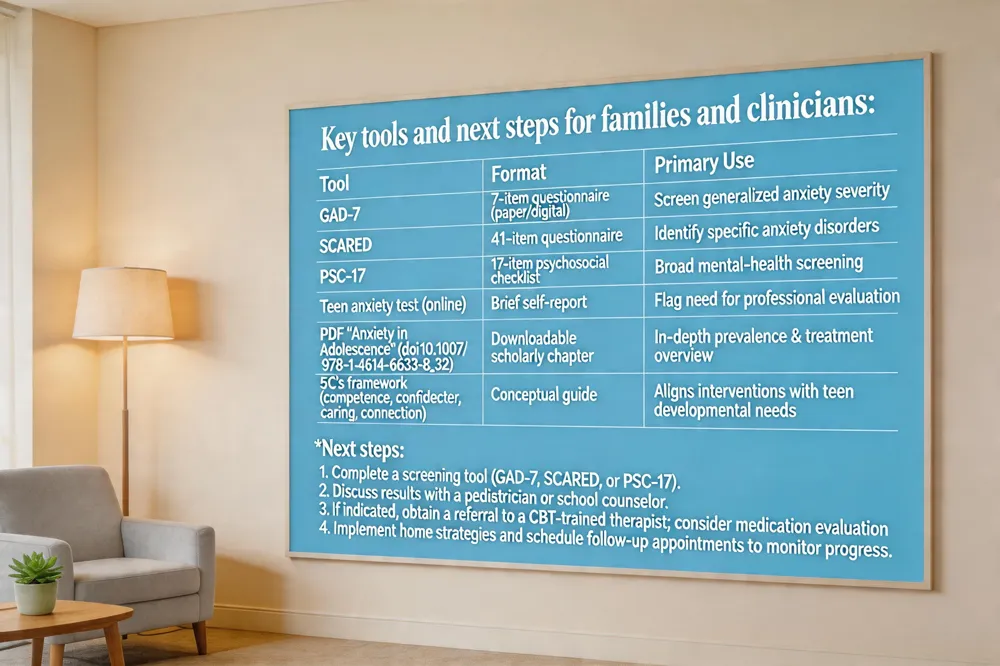 Validated screening tools such as the GAD‑7, SCARED, and PSC‑17 are quick, evidence‑based questionnaires that can be completed in a pediatric office or at home.
They ask about worry, irritability, sleep, and physical complaints and flag when symptoms exceed normal teen stress.
Parents can download PDFs like the scholarly chapter “Anxiety in Adolescence” (doi 10.1007/978‑1‑4614‑6633‑8_32) from Springer or university repositories; the PDF reviews prevalence, disorder types, risk factors, and treatment options, emphasizing early identification.
The 5 C’s of anxiety—competence, confidence, character, caring, and connection—mirror the core domains where teens often feel threatened. Social anxiety, physical symptoms, separation anxiety, and harm avoidance are the four anxiety dimensions that map onto these C’s.
A teenage anxiety test is a brief questionnaire that captures excessive worry, restlessness, irritability, and sleep problems over the past weeks.
While not a diagnosis, a high score signals the need for a full evaluation.
To seek professional help, start with a pediatrician or school counselor, who can administer the screening tools and refer to a therapist trained in cognitive‑behavioral therapy.
Combining CBT with medication when needed is the most effective evidence‑based approach.
Taking Action Today
Detecting anxiety early is crucial because untreated symptoms can derail academic performance, social development, and overall mental health throughout the teen years. Routine mental‑health screening at well‑child and sports physicals lets clinicians spot subtle signs—such as irritability, sleep problems, or unexplained stomachaches—before they become chronic. Early identification opens the door to evidence‑based interventions like cognitive‑behavioral therapy and, when needed, medication, dramatically improving long‑term outcomes and reducing the risk of depression or substance use. Families are encouraged to discuss any worries with their pediatrician and to request a brief anxiety questionnaire at each visit. If you notice persistent worry, avoidance, physical complaints, or changes in mood or school performance, reach out today to Kids & Teens Primary Healthcare. Our team offers confidential assessments, personalized treatment plans, and a caring environment to help your teen regain confidence and thrive.