Understanding the Importance of Sun Safety for Children
Why Sun Protection is Vital for Children
Children’s skin is especially delicate and vulnerable to ultraviolet (UV) radiation from the sun. Nearly 23% of a person’s lifetime sun exposure happens before age 18. This early exposure significantly increases the risk of skin damage and skin cancer later in life, including melanoma, the deadliest form of skin cancer. Preventing sunburns during childhood is critical, as having more than five sunburns doubles the lifetime risk of melanoma.
Risks Associated with UV Exposure
UV rays can cause DNA mutations in skin cells, leading to early skin aging, painful sunburns, and increased chances of developing skin cancer. The eyes and immune system are also at risk from sun damage. UV exposure can contribute to cataracts and retinal damage, especially in children, whose eyes are more transparent to harmful rays.
Overview of Childhood Skin Sensitivity
Babies and young children have more sensitive skin that burns more easily and reacts more severely to UV rays. Infants under 6 months should be kept out of direct sunlight as their skin cannot effectively regulate and protect itself. For older children, wearing protective clothing, broad-spectrum sunscreen with SPF 30 or higher, hats, and UV-blocking sunglasses provides essential defense against harmful rays. Caregiver vigilance and proper sun safety habits help ensure children’s skin stays protected now and for a lifetime.
Sunscreen Use Guidelines for Children
What are the guidelines for sunscreen use for children?
Experts recommend that children should always wear a broad-spectrum sunscreen with an SPF of 30 or higher to shield their skin from harmful UVA and UVB rays. This type of sunscreen offers comprehensive protection and is usually a water-resistant sunscreen, making it especially suitable for active children who play outdoors or swim.
Sunscreen should be applied generously about 15 to 30 minutes before going outside to allow it to absorb properly. For ongoing protection, it must be reapplied every two hours and more frequently if children are sweating or swimming.
Mineral-based sunscreens containing zinc oxide or titanium dioxide are often preferred for children older than six months and those with sensitive skin. These ingredients act as a physical barrier that reflects UV rays, reducing the risk of irritation.
In addition to sunscreen, other protective strategies are crucial. Dressing children in tightly woven, lightweight long-sleeved shirts, wide-brimmed hats, and sunglasses that block 99% or more of UV rays adds meaningful defense. Seeking shade during peak sun hours—between 10 a.m. and 4 p.m.—further decreases UV exposure.
For infants younger than six months, sunscreen use is limited; they should be kept out of direct sunlight and protected with clothing, hats, and shade instead. This careful approach helps safeguard their delicate skin while avoiding potential risks from sunscreen ingredients.
Together, these measures provide the most effective approach for reducing UV damage and promoting lifelong sun safety habits in children.
Sun Protection Measures for Infants and Babies Under 6 Months
What sun protection measures are recommended for babies under 6 months?
Protecting babies under 6 months from the sun primarily involves keeping them out of direct sunlight. Caregivers should seek shade whenever UV levels reach 3 or above to minimize UV exposure.
Dressing infants in tightly woven, UPF-rated clothing provides an effective physical barrier against harmful rays. Lightweight, long-sleeved garments paired with wide-brimmed hats that shield the face, ears, and neck offer additional essential coverage.
Sunscreen use is generally discouraged for this age group due to the delicate nature of their skin and the potential risk of irritation outweighing benefits. Instead, reliance on shade and protective clothing is emphasized.
Consistently utilizing shaded areas, covering vulnerable skin adequately, and monitoring the baby’s exposure are critical practices for maintaining their sun safety.
These precautions reduce the risk of painful sunburns and long-term UV damage, helping prevent skin cancer risks that increase with early sun exposure.
Parents and caregivers play a vital role by modeling and maintaining vigilant sun protection habits for the youngest children.
Comprehensive Sun Safety Practices for Children
How can I protect my child's skin from sun exposure?
Protecting children from the sun requires a multi-layered approach. First, apply a broad-spectrum sunscreen with an SPF of 30 or higher about 15-20 minutes before outdoor activity. Reapply sunscreen every two hours, especially after swimming or sweating. For infants under 6 months, avoid direct sun whenever possible and apply sunscreen only to small exposed areas if necessary.
Dressing children in protective clothing is vital. Opt for lightweight, tightly woven long-sleeved shirts and pants. Wide-brimmed hats with brims around three inches or more protect the face, ears, and neck from harmful UV rays.
UV-protective sunglasses blocking at least 99% of UVA and UVB rays are important for shielding children's eyes, which are vulnerable to UV damage that can lead to cataracts later in life.
What are recommended sun safety tips for kids?
Limit sun exposure between 10 a.m. and 4 p.m., the peak hours when UV rays are strongest. Encourage children to seek shade under trees, umbrellas, or sunshades during these hours.
In addition to sunscreen and clothing, staying hydrated is crucial during outdoor activities. Children should drink plenty of water to prevent dehydration, especially on sunny days.
Adults should model sun-safe behavior consistently by wearing hats, sunglasses, and applying sunscreen themselves. This modeling helps children adopt protective habits that can last a lifetime.
Remember, sun safety is important year-round because UV rays penetrate clouds and reflect off surfaces like water, snow, and sand.
| Practice | Purpose | Details |
|---|---|---|
| Protective Clothing | Blocks UV rays | Lightweight, long sleeves, UPF-rated fabrics |
| Wide-Brimmed Hats | Shields face, neck, ears | At least 3-inch brim |
| UV-Protective Sunglasses | Protects eyes | 99%-100% UVA/UVB blocking, impact resistant |
| Avoiding Peak Hours | Reduces UV exposure | Stay outdoors early morning or late afternoon |
| Seeking Shade | Lowers direct UV contact | Trees, umbrellas, tents |
| Hydration | Prevents dehydration | Regular water breaks during outdoor activities |
| Role Modeling Sun Safety | Encourages lifelong habits | Parents and caregivers demonstrate protection |
Understanding UV Levels and Their Impact on Child Sun Exposure
What UV level is considered safe for children regarding sun exposure?
For children, UV levels of 3 or higher are considered unsafe without protection. UV radiation exposure during childhood significantly contributes to skin damage and increases the risk of skin cancer later in life. Therefore, sun protection is essential whenever UV levels rise above 3.
Significance of UV index and peak sun hours
The UV index measures the strength of the sun's ultraviolet rays at a given place and time. Levels peak between 10 a.m. and 4 p.m., when UV radiation is strongest. Limiting outdoor activity during these hours, seeking shade, and applying protective measures reduce harmful exposure (UV index factors, peak UV ray hours).
Monitoring UV exposure to reduce risk
Checking daily UV forecasts helps parents know when to apply extra sun protection. Even on cloudy days, UV rays penetrate clouds and can cause damage, so precautions should not be relaxed (UV protection during cloudy days.
Vitamin D considerations and safe exposure
While vitamin D synthesis requires some sun, brief exposure when UV levels are below 3 is often sufficient, especially on arms and legs. Parents should balance this need with caution, using protective clothing for sun safety (lightweight long-sleeved shirts, wide-brimmed hats.
Comprehensive sun protection strategies based on UV intensity
Effective sun safety combines several methods:
- Using broad-spectrum sunscreen (SPF 30 or higher sunscreen) applied 15-30 minutes before sun exposure and reapplying every two hours.
- Wearing UV-protective clothing (UPF) and wide-brimmed hats.
- Protecting eyes with sunglasses with UV protection blocking 99% or more of UV rays.
- Staying in the shade during peak UV ray hours.
Together, these steps help protect children from acute sunburn and long-term skin damage, promoting healthier skin now and in the future.
The 5 S's of Sun Safety: A Practical Guide for Families
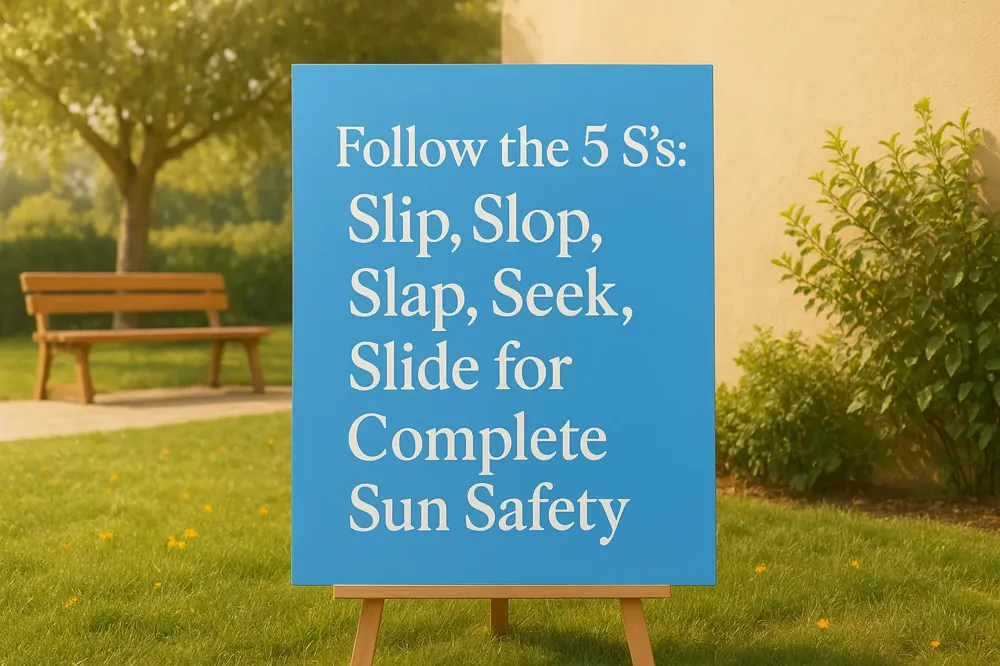
What are the 5 S's of sun safety for kids?
The 5 S's of sun safety for kids are simple, memorable actions that help protect children from harmful UV rays:
- Slip: Slip on protective clothing for sun safety such as lightweight long-sleeved shirts to cover the skin effectively.
- Slop: Slop on a broad-spectrum sunscreen with SPF 50 or higher at least 20 minutes before going outdoors. Remember to reapply every two hours, especially after swimming or sweating.
- Slap: Slap on a wide-brimmed hats for sun protection to shield the face, ears, and neck from sun exposure.
- Seek: Seek shade whenever possible, particularly between 10 a.m. and 4 p.m. when UV rays are strongest.
- Slide: Slide on UV-protective sunglasses with 99% or greater UV protection to safeguard the eyes from UV damage.
Each step plays an important role in reducing the risk of sunburn treatments for kids, skin damage, and long-term risks like melanoma, the deadliest skin cancer. Combining all five ensures comprehensive protection against harmful ultraviolet rays.
Why is practicing all 5 steps important?
Integrating all five actions into daily routines creates a positive sun safety for kids culture for kids and caregivers. Children learn good habits early on when adults model these behaviors consistently. Protective clothing for sun safety and hats block UV rays physically, sunscreen chemically shields the skin, and shaded areas reduce direct exposure. Sunglasses protect delicate eyes from early damage that can cause cataracts later in life. This holistic approach is more effective than any single method alone.
By following the 5 S's, families can enjoy healthy outdoor activities while greatly minimizing Sun Safety Prevention Tips. It supports skin health through childhood and reduces skin cancer risks in adulthood, making it a practical and proactive strategy for families everywhere.
Encouraging Lifelong Sun-Safe Habits
The importance of early sun protection education
Starting sun safety education early is crucial because childhood UV exposure significantly increases the risk of skin cancer later in life. Teaching children about sun protection helps prevent sunburn and long-term skin damage.
Modeling sun safety behavior for children
Parents and caregivers play a vital role by demonstrating good sun safety habits themselves, such as regularly applying broad-spectrum sunscreen, wearing protective hats and sunglasses, and seeking shade during peak sun hours.
Reinforcing habits through schools and caregivers
Schools and childcare providers can reinforce sun-safe behaviors by scheduling outdoor activities outside peak UV hours, encouraging the use of protective clothing and sunscreen, and educating children on the risks of UV exposure. This collaborative approach ensures children develop and maintain lifelong sun-safe practices.