Why Preventive Care Matters
Regular well‑child visits give pediatricians a chance to spot problems before they become emergencies. Early detection of growth delays, hearing or vision loss, and mental‑health concerns lets families intervene with therapy, medication or counseling, dramatically cutting the odds of a crisis that would end up in the emergency department. Up‑to‑date immunizations are a cornerstone of this strategy; vaccines against influenza, measles, pertussis and COVID‑19 have been shown to lower pediatric ER visits by 50‑90 % and reduce hospitalizations for vaccine‑preventable illnesses. Routine screenings for chronic conditions—especially asthma, obesity, and diabetes—provide action plans, medication adjustments and nutrition counseling that keep exacerbations at bay. Finally, family education during preventive visits empowers parents to recognize true emergencies, practice safety (car‑seat use, helmet wear, safe water activities) and navigate after‑hours options, which reduces unnecessary trips to the ER. Together, these preventive measures create a medical home that keeps children healthier, lowers health‑care costs and eases crowding in emergency departments.
Core Preventive Services that Keep Kids Out of the ER
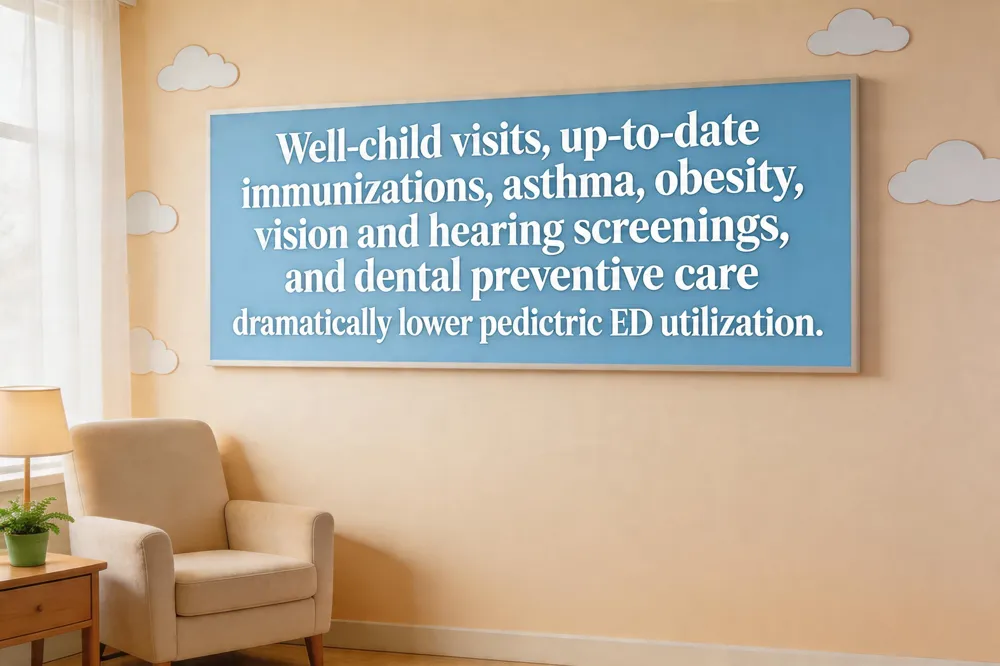 Regular well‑child visits are the cornerstone of pediatric preventive care. They are classified as preventive services because they focus on growth monitoring, developmental screening, immunizations, and early detection of health problems rather than treatment of an illness. Most health plans—including Marketplace, Medicaid, and private insurers—cover them at no out‑of‑pocket cost when provided by an in‑network provider.
Immunizations protect children from vaccine‑preventable diseases such as influenza, measles, and pertussis—common reasons for pediatric emergency department visits. The CDC estimates that up‑to‑date vaccinations can reduce related ED visits by up to 90 %.
Screenings for asthma, obesity, vision, and hearing are routinely performed during well‑child visits. Early identification of asthma and an individualized action plan lowers severe attacks; obesity counseling reduces diabetes and hypertension crises; vision and hearing checks prevent falls and injury‑related ED visits.
Dental preventive care—fluoride varnish, sealants, and oral‑health risk assessments—greatly diminishes dental pain and abscesses that otherwise drive families to emergency rooms.
AAP Preventive Care Guidelines are outlined in the Bright Futures Periodicity Schedule, an age‑by‑age roadmap that includes universal screening for development, behavior, mental health, nutrition, safety, and oral health from birth through age 21.
Pediatric Preventive Care is a proactive, age‑based approach that keeps children healthy through regular visits, screenings, and vaccinations, ultimately reducing the need for emergency department utilization.
Managing Chronic Conditions and Mental Health
 Effective pediatric care hinges on early detection and coordinated management of chronic conditions and mental health. Asthma action plans—developed during well‑child visits—teach families trigger avoidance, proper inhaler technique, and when to seek urgent care, which has been shown to cut asthma‑related emergency department (ED) visits by up to 50 %. Obesity counseling, following the 5‑2‑1‑0 rule (≥5 servings of fruits/vegetables, ≤2 hours screen time, ≥1 hour activity, 0 sugar‑sweetened drinks), reduces weight‑related complications and lowers the risk of asthma attacks, diabetes emergencies, and injury‑related ED trips. Routine mental‑health screenings for anxiety, depression, and behavioral concerns enable timely referrals, preventing crises that often end up in the ER. Coordinated care plans for chronic diseases such as cystic fibrosis, epilepsy, or sickle cell disease ensure regular follow‑up, medication adjustments, and education, further decreasing acute exacerbations.
A pediatric preventive visit—also called a well‑child check‑up—is a scheduled appointment focused on growth, development, immunizations, and screenings rather than treating illness.
When to seek emergency care: Immediate ER evaluation is warranted for infants <1 month with fever ≥100.4 °F, any child with trouble breathing, bluish color, unresponsiveness, or a fever >105 °F.
Urgent‑care thresholds: Take a child to urgent care for a cough lasting >1 week, high fever, thick colored mucus, or if the cough disrupts sleep, causes vomiting, or leads to irritability.
General health promotion: Regular well‑child visits, vaccination adherence, nutrition counseling, safe‑sleep and injury‑prevention guidance, and family‑centered risk‑reduction strategies together keep children healthy and out of emergency departments.
Access, Convenience, and After‑Hours Options
 Pediatric urgent care clinics give families a same‑day, walk‑in alternative when a regular office is closed. They manage non‑life‑threatening problems—fevers, colds, ear infections, minor cuts, sprains, asthma flare‑ups, and rashes—using on‑site X‑rays and labs for rapid diagnosis. In Decatur, GA, Kids & Teens Primary Healthcare offers pediatric urgent care near you at 1230 Oak St., Ste. 101, open Monday‑Friday 8 am‑5 pm and Saturday 9 am‑2 pm for walk‑in visits without an appointment.
Telehealth and nurse‑line services extend care beyond office hours. A 24‑hour nurse triage line or AI‑driven symptom checker directs parents to the appropriate level of care, preventing unnecessary trips to the emergency department. Same‑day appointments in primary‑care offices further reduce wait times for urgent concerns, while after‑hours pediatric services—including evening and weekend clinics—provide convenient access for children who need prompt attention but not emergency care.
To cut down on unnecessary ER visits, educate families on when to use urgent care versus the ED, display clear flyers, and post videos in waiting rooms. Remember, an ER visit is not primary care; primary care focuses on preventive health, routine well‑child exams, and coordinated follow‑up. The National Pediatric Readiness Project and its Pediatric Readiness Checklist help hospitals improve child‑specific emergency care, while the NHAMCS database tracks national trends in ED utilization. Most time‑sensitive medications can be given up to 30 minutes before or after the prescribed time, and although endoscopy is usually a diagnostic service, colonoscopy for cancer screening is covered as preventive care. Approximately 5,000 children yearly present to the ED for medication problems—true.
Insurance, Coverage, and Financial Barriers
 Ensuring that children receive preventive care without financial obstacles is a cornerstone of pediatric health. The Affordable Care Act (ACA) mandates that most Marketplace, Medicaid, and CHIP plans cover a comprehensive set of preventive services—immunizations, well‑child checkups, vision and hearing screenings, developmental assessments—at no out‑of‑pocket cost when provided by an in‑network provider.
HTTPS www.healthcare.gov coverage preventive care benefits
HealthCare.gov explains that all required preventive services are covered without copay, deductible, or coinsurance, even if the deductible has not been met.
Healthcare.gov preventive care benefits
The site reiterates that routine immunizations, well‑child visits, and screenings are provided at zero cost to families under most health plans.
Are well‑child visits free with insurance?
Yes, for families enrolled in ACA‑compliant plans. Grandfathered, certain self‑insured, or faith‑based plans may still charge fees.
How often are well‑child visits covered by insurance?
Coverage follows the Bright Futures schedule: multiple visits in the first two years, then annual visits from age 3 through 21.
Age 12‑19 health insurance prevention and screening
Adolescents receive free height, weight, BMI, blood‑pressure checks, vision/hearing screens, depression/substance‑use assessments, and vaccines (flu, HPV, meningococcal).
Is endoscopy covered as preventive care?
Generally it is billed as a diagnostic procedure with cost‑sharing; colorectal‑cancer screening colonoscopy is an exception and is often covered preventatively.
What is preventive health and why is it important for kids?
Preventive health includes well‑child visits, vaccinations, screenings, and counseling that detect problems early, allowing simple interventions and avoiding emergencies.
What are the 7 basic needs for a child?
Safety, soothing/attunement, reliable caregiving, supportive encouragement, novelty/play, clear boundaries, and structure form the essential foundation for healthy development.
Building a Medical Home and Family Engagement
 Risk reduction and health promotion of the pediatric patient
Effective risk reduction and health promotion start with a family‑centered approach that evaluates protective factors—parental resilience, social connectedness, and emotional‑social competence—while actively listening to family priorities and challenges. Regular well‑child visits provide the platform for this assessment and for early interventions that keep children out of the emergency department.
Risk reduction and health promotion of the pediatric patient
Effective risk reduction and health promotion start with a family‑centered approach that evaluates protective factors—parental resilience, social connectedness, and emotional‑social competence—while actively listening to family priorities and challenges. Regular well‑child visits provide the platform for this assessment and for early interventions that keep children out of the emergency department.
What is a pediatric preventive visit? A pediatric preventive visit, or well‑child check‑up, is a scheduled appointment focused on keeping a child healthy rather than treating illness. The clinician takes a complete history, performs a head‑to‑toe exam, administers age‑appropriate immunizations, and conducts routine screenings (vision, hearing, oral health, behavioral health). These visits are covered at no out‑of‑pocket cost under most insurance plans, removing financial barriers to early detection.
Health promotion for kids Health promotion combines regular preventive visits with daily habits that support physical, mental, and social well‑being. Encouraging at least 60 minutes of physical activity, adequate sleep, and a balanced diet reduces obesity, asthma, and other chronic conditions while boosting mood and learning.
Health promotion for children and adolescents Coordinated effort among families, schools, providers, and community resources fosters overall well‑being. Routine services—immunizations, developmental screenings, and annual well‑child visits—enable early identification of issues and timely treatment, cutting unnecessary emergency department use.
What is the 5‑2‑1‑0 rule for kids? The “5‑2‑1‑0” guideline advises children to eat ≥5 servings of fruits/vegetables, limit screen time to ≤2 hours, get ≥1 hour of physical activity, and drink 0 sugar‑sweetened beverages each day.
What is considered a medical emergency for a child? Signs of a pediatric emergency include persistent high fever, difficulty breathing, severe pain, lethargy, unresponsiveness, airway compromise, severe bleeding, loss of consciousness, or serious injury. Any of these symptoms warrants immediate emergency care.
Putting It All Together
When preventive care becomes a regular part of a family’s routine, it stops being a chore and turns into a powerful shield against emergencies. Parents can weave well‑child visits into school calendars, use reminder apps, and schedule vaccinations alongside annual physicals so that no appointment is missed. If a child develops a fever, a mild rash, or a sore throat after office hours, urgent‑care centers and telehealth video visits offer quick, pediatric‑trained assessment without the long wait and cost of an emergency department. Because most private plans, Medicaid, and Marketplace policies cover well‑child check‑ups, immunizations, screenings, and even fluoride varnish at $0 out‑of‑pocket, families should verify that their provider is in‑network and that the visit is billed as a preventive service—removing financial barriers before they appear. Finally, empowering families means giving them clear, jargon‑free guidance on when a symptom truly warrants an ER trip versus a phone call to the pediatrician. Simple tools—like a symptom‑triage checklist, a 24‑hour nurse line, and a brief “What to Expect” handout—build confidence, reduce unnecessary ER crowding, and keep children healthy and safe.