Brief Overview
Flu in kids hits fast and hard. Typical signs include a sudden high fever (often 103‑105°F/39‑41°C), severe body aches, headache, sore throat, a worsening cough, runny or stuffy nose, extreme fatigue, and sometimes nausea, vomiting or diarrhea. Unlike a common cold, the flu brings a rapid, high‑grade fever and intense aches that can leave a child exhausted for weeks, while a cold usually presents with low‑grade or no fever, mild congestion and a gradual onset. Spotting these differences early matters: children can spread the virus a day before symptoms appear and remain contagious for up to a week. More importantly, early detection lets parents start antiviral therapy within the 48‑hour window, reduces the risk of complications such as pneumonia or ear infections, and prompts timely medical care if warning signs like trouble breathing, dehydration, or a fever over 104°F develop. Prompt attention can keep a child out of the hospital and back to health faster.
Early Symptoms and Age‑Specific Presentations
Key Early Symptoms by Age
| Age Group | Typical Fever | Common Respiratory Signs | GI Symptoms | Dehydration Red Flags |
|---|---|---|---|---|
| Infants (<12 mo) | ≥100.4 °F, may rise >104 °F | Dry cough, rapid breathing | May vomit | No tears, dry mouth, <6 wet diapers |
| Toddlers (1‑3 yr) | 103‑105 °F, high spikes | Dry cough, sore throat | Nausea, vomiting, diarrhea | Dry mouth, no tears when crying |
| Preschool (3‑5 yr) | 101‑104 °F | Cough, congestion, sore throat | Occasionally vomiting | Decreased urine output, lethargy |
| School‑age (6‑12 yr) | 100‑103 °F | Cough, chest discomfort | Rare | Persistent fever >5 days, fatigue |
Red‑flag triggers: Fever >104 °F, fever >5 days, signs of dehydration, rapid breathing, or mental‑status changes. Call pediatrician or seek emergency care.
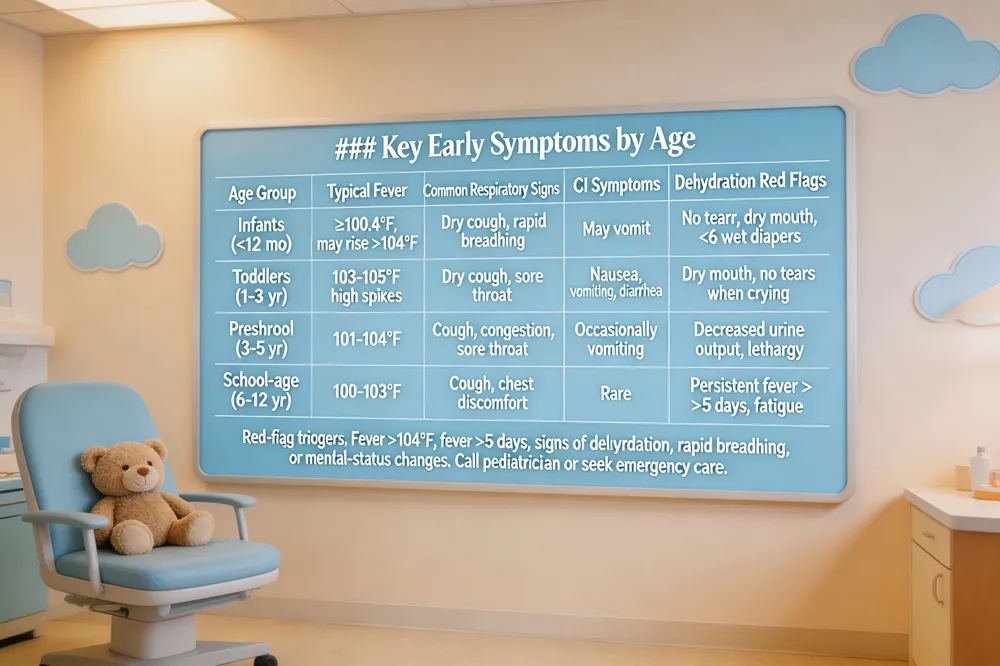 Flu in children often begins with a high fever (≥100.4 °F) and a dry cough. Gastrointestinal upset—nausea, vomiting, or diarrhea—can appear, especially in toddlers, and may signal dehydration; keep fluids flowing and call a pediatrician if vomiting persists or fever stays above 104 °F. Typical illness lasts about one week: fever and aches peak by days 2‑4 and subside by day 5‑7, while a mild cough or fatigue may linger up to two weeks. Fever persists 3‑4 days, sometimes up to a week; a fever over 104 °F or lasting >5 days warrants medical evaluation. New patterns observed in 2026 include onset, higher fevers in children under 2, and increased GI symptoms with the H3N2 strain. In toddlers, watch for rapid breathing, dry mouth, or no tears when crying—signs of dehydration. For a 2‑year‑old, sudden fever 103‑105 °F, severe cough, sore throat, and possible vomiting are common; seek care promptly if fever remains high, breathing becomes difficult, or dehydration signs appear.
Treatment Options and Antiviral Use
Treatment Overview
| Intervention | Who Should Receive | Timing | Typical Dose (Weight‑Based) | Common Side Effects |
|---|---|---|---|---|
| Supportive care (hydration, rest, acetaminophen/ibuprofen) | All children | Immediately | Acetaminophen 10‑15 mg/kg q4‑6 h (max 75 mg/kg/day) <br> Ibuprofen 5‑10 mg/kg q6‑8 h (max 40 mg/kg/day) | Mild stomach upset, rash |
| Oseltamivir (Tamiflu) | Children ≥2 weeks, high‑risk (asthma, cardiac, immunocompromised) or severe symptoms | Within 48 h of symptom onset | 3 mg/kg BID (max 75 mg BID) for 5 days | Nausea, headache, mild vomiting |
| Rapid flu test | When diagnosis will change management (e.g., start antivirals) | At presentation | – | – |
When to start antivirals: High‑risk or severe illness, or if symptom onset ≤48 h. If >48 h but still high risk, discuss with pediatrician.
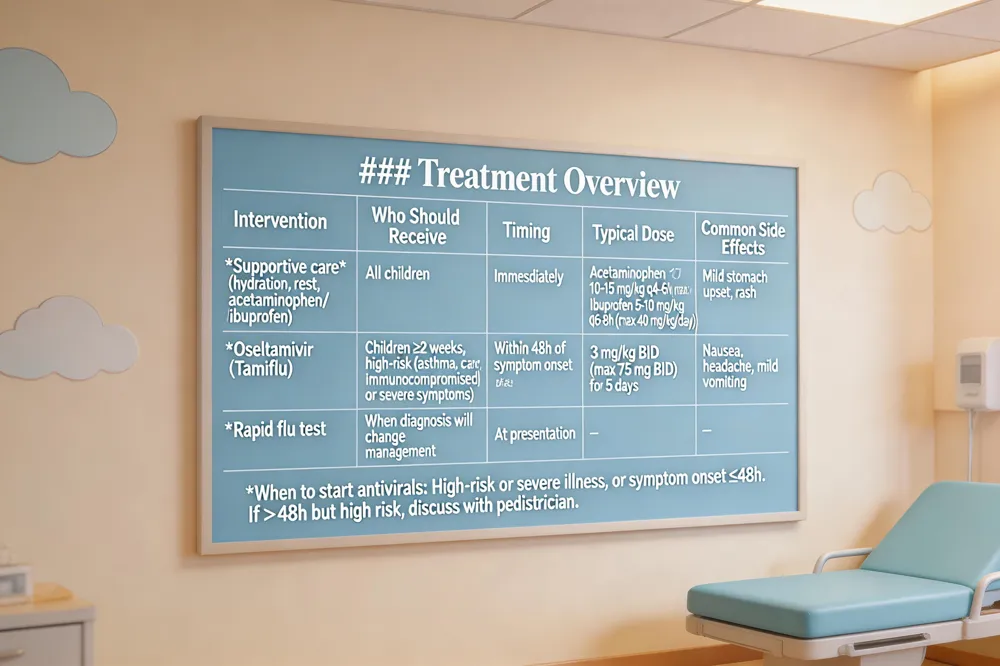 Flu in kids treatment
Supportive care is the foundation: keep your child well‑hydrated, rested, and comfortable. Use age‑appropriate acetaminophen or ibuprofen for fever and aches—avoid aspirin unless a doctor advises.
Tamiflu for kids
Oseltamivir (Tamiflu) shortens flu by 1‑2 days when started within 48 hours. It’s recommended for children ≥2 weeks old who are high‑risk (asthma, heart disease, immune suppression) or have severe symptoms. Dose is weight‑based; common side‑effects are mild nausea or headache.
Can a pediatrician do anything for the flu?
A pediatrician can confirm flu with a rapid test, prescribe antivirals, and give precise home‑care guidance. They monitor high‑risk or very young children for dehydration, ear infections, or worsening breathing, and advise when to seek further care.
What to watch for when your child has the flu?
Watch for fever >101 °F lasting >48 hours, difficulty breathing, chest pain, persistent vomiting, dehydration signs (no tears, few wet diapers), or sudden mental‑status changes. High‑risk kids (under 5, chronic illness) need prompt evaluation.
When to worry about flu in child
Seek emergency care for trouble breathing, bluish lips/skin, unresponsiveness, seizures, severe dehydration, or fever ≥104 °F not responding to medication. Contact your pediatrician immediately if any red‑flag signs appear.
Influenza A & B: Timelines and Complications
Typical Illness Timeline
| Day Range | Flu A | Flu B |
|---|---|---|
| 0‑2 | Sudden high fever (101‑104 °F), chills, body aches, dry cough | Abrupt high fever (>103 °F), severe aches, chills, headache |
| 3‑5 | Fever peaks, fatigue deepens, congestion, sore throat, reduced appetite | Fever peaks, cough worsens, sore throat, extreme fatigue; possible vomiting/diarrhea in young kids |
| 5‑7 | Fever subsides, energy returns, lingering cough | Fever falls, energy improves, cough may persist |
| 7‑10 | Full recovery if fever‑free ≥24 h, normal intake | Full recovery similar; monitor for complications |
| >10 | Possible lingering fatigue up to 3‑4 weeks | Same as Flu A |
Complications to watch: Persistent high fever >4‑5 days, breathing difficulty, dehydration, secondary bacterial infection (ear, sinus, pneumonia).
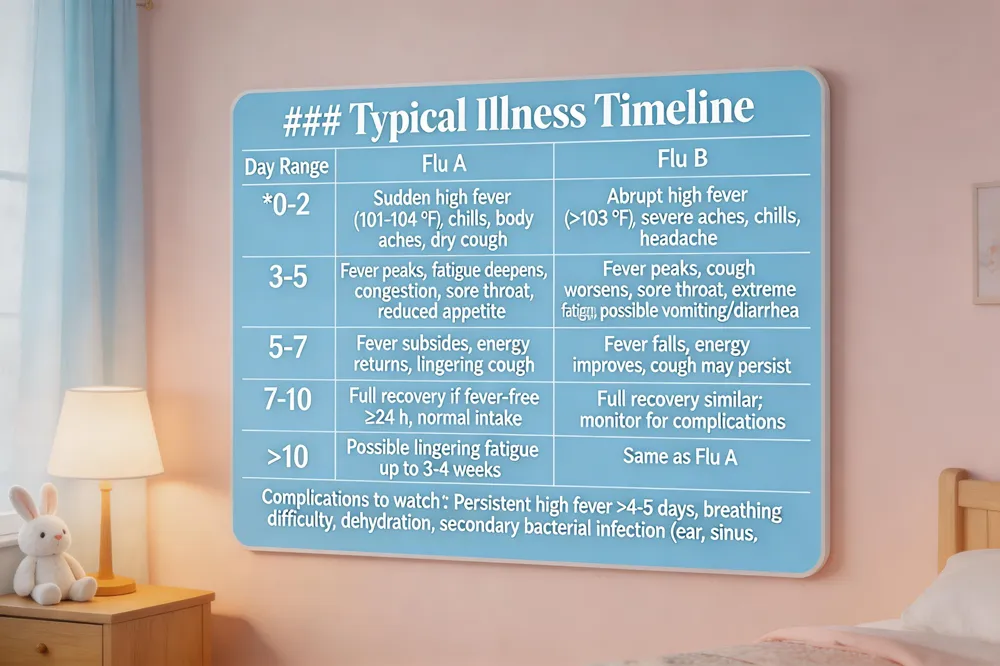 Influenza A in kids timeline – Influenza A usually hits suddenly. Within the first 24‑48 hours a child develops a high fever (101‑104 °F), chills, body aches, and a dry cough. Fever peaks around days 3‑5 while fatigue deepens and congestion, sore throat, and reduced appetite appear. By days 5‑7 the fever subsides, energy returns, and a lingering cough may stay for another week. Full recovery is typical by days 7‑10 when the child is fever‑free for 24 hours, eating normally, and ready for school. Watch for persistent high fever beyond 4‑5 days, breathing trouble, dehydration, or sudden worsening and contact a pediatrician promptly.
Flu B symptoms in kids – Influenza B also begins with an abrupt high fever (often >103 °F), severe aches, chills, and headache. A runny or stuffy nose, worsening cough, sore throat, and extreme fatigue follow; younger children may vomit or have diarrhea. Muscle pain can be intense. Most recover within a week, but persistent fever, breathing difficulty, or dehydration merit immediate care.
Flu in kids timeline – Symptoms appear on day 1‑2 with fever, chills, aches, sore throat, and cough. The peak (days 3‑5) brings the highest fever and deepest fatigue. By days 5‑7 most children improve; fever falls, energy rises, though cough may linger. Full recovery usually by days 7‑10, with lingering fatigue possible for up to 3‑4 weeks. Seek care if fever lasts >4‑5 days, breathing fast, dehydration signs appear, or the child worsens after an initial improvement.
High‑Risk Children and Emergency Warning Signs
Red‑Flag Emergency Signs
| Sign | Age Concern | Immediate Action |
|---|---|---|
| Rapid or labored breathing | All, especially infants | Call 911 / go to ER |
| Bluish lips/skin | All | Emergency care |
| Fever ≥ 104 °F not responding to meds | All, especially <5 yr | Seek urgent care |
| Dehydration (dry mouth, no tears, <6 wet diapers) | <3 mo, toddlers | Call pediatrician ASAP; consider ER if severe |
| Seizures or altered mental status | All | Emergency services |
| Persistent vomiting >24 h | All, especially <5 yr | Seek medical evaluation |
| Chest pain or severe muscle aches preventing walking | >5 yr | Urgent pediatric assessment |
High‑risk groups: Infants <3 mo, children with chronic lung/heart disease, diabetes, immunosuppression, or asthma. Prompt evaluation is essential.
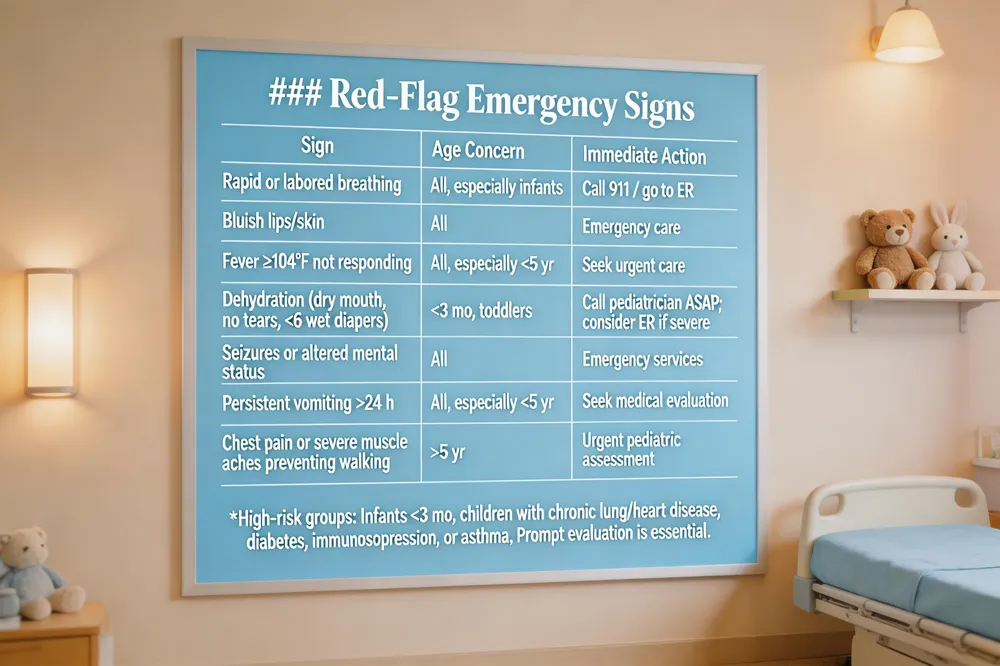 Red‑flag symptoms that demand immediate medical attention include rapid or labored breathing, bluish lips or skin, chest pain, severe muscle aches that prevent walking, seizures, altered mental status, and persistent high fever (≥104 °F/40 °C) that does not respond to medication. Dehydration signs—dry mouth, no tears when crying, urine output <8 hours, sunken eyes—are also critical. Hospitalization is required when any of these warnings appear, especially in infants under 3 months (fever, poor feeding, few wet diapers) or children with chronic conditions (asthma, heart disease, diabetes, immune suppression).
Influenza A – when to go to hospital: Any emergency warning sign listed above, a fever ≥104 °F unresponsive to treatment, or a newborn with fever and poor feeding.
Emergency symptoms of flu in kids: Trouble breathing, bluish lips, chest pain, severe muscle pain, seizures, dehydration, drowsiness, or persistent vomiting.
When to go to hospital for flu child: Same red‑flags; for otherwise healthy kids, fever alone isn’t enough—call the pediatrician if fever lasts >3 days or the child is lethargic.
When to hospitalize: Presence of any emergency sign, especially respiratory distress, severe dehydration, or unresponsiveness.
Influenza B – when to go to hospital: Identical red‑flags as Influenza A; infants under 3 months need urgent care for any fever.
Flu in babies <6 months: Call pediatrician immediately for fever, poor feeding, or irritability; early antiviral therapy may be indicated.
3‑year‑old flu – when to worry: Watch for breathing difficulty, bluish lips, fever ≥104 °F, seizures, severe dehydration, or lethargy.
4‑year‑old flu – when to worry: Same as age 3, plus persistent fever >3 days, inability to stay hydrated, chest pain, or severe muscle pain.
Recovery Phases, Red Flags, and Practical Tips
Recovery Stages & Practical Care
| Phase | Typical Duration | What to Expect | Practical Tips |
|---|---|---|---|
| Acute | Days 1‑5 | Fever, aches, cough, possible GI upset | Keep fluids (OR fluids), fever‑reducers, rest, monitor temperature |
| Sub‑acute | Days 5‑10 | Fever resolves, cough may linger, fatigue continues | Continue hydration, light activity, avoid school until fever‑free 24 h |
| Convalescent | Days 10‑21 | Energy builds, cough may persist up to 2 weeks | Encourage nutrition, gradual return to normal activity, watch for secondary infection signs |
| Long‑term | >3 weeks (rare) | Persistent fatigue, low‑grade fever | Re‑evaluate with pediatrician; consider post‑viral syndrome or complications |
Red‑flag reminders: Fever ≥ 104 °F, labored breathing, persistent vomiting, lethargy, or new rash → seek immediate care.
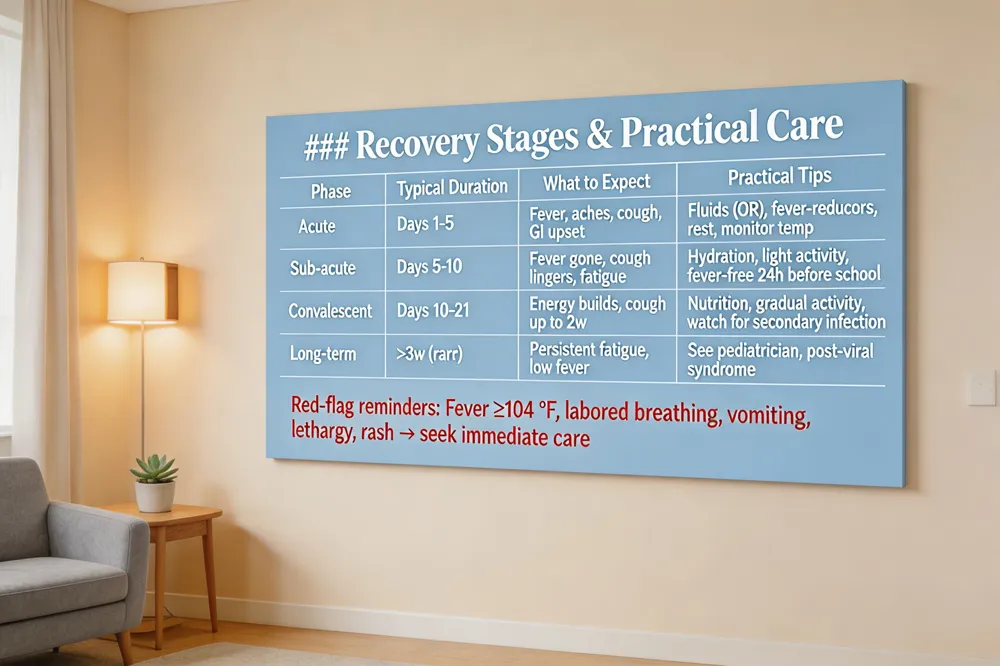 Because flu‑related fatigue is profound, children often sleep most of the day. This deep rest is a normal part of healing, but parents should monitor temperature, breathing and hydration. Give fever‑reducing medication as needed, offer fluids frequently, and watch for red‑flag signs such as fever ≥ 104 °F, labored breathing or persistent vomiting or difficulty arousing the child—these warrant immediate medical attention.
Early detection hinges on the sudden onset of a high fever (often ≥ 103 °F/39.4 °C), severe body aches, headache, sore throat and a rapidly worsening cough. Flu symptoms appear abruptly and are more intense than a common cold, which usually has a low‑grade or no fever and milder aches. If your child shows these signs, especially a high fever, call your pediatrician promptly for evaluation and possible antiviral therapy. Stay alert for warning signs—difficulty breathing, persistent vomiting, or worsening pain—and seek care right away if they develop.
Prevention Strategies and Vaccination
Prevention Checklist
| Action | Who | Frequency |
|---|---|---|
| Annual flu vaccine | All children ≥6 mo (2‑dose schedule for first‑time 6 mo‑8 yr) | Once per season (Oct‑Nov) |
| Hand hygiene | All | Wash ≥20 s, especially before meals & after restroom |
| Respiratory etiquette | All | Cover coughs/sneezes with tissue or elbow, discard tissue |
| Surface cleaning | Household | Disinfect high‑touch surfaces daily during flu season |
| Protect high‑risk infants | Household members, caregivers | Vaccinate all close contacts, limit exposure, seek early antiviral if exposed |
| Stay home when sick | Child & caregivers | Until fever‑free ≥24 h without antipyretics, symptoms improving |
Vaccine side effects: Mild soreness, low‑grade fever, runny nose – typically resolve within 48 h.
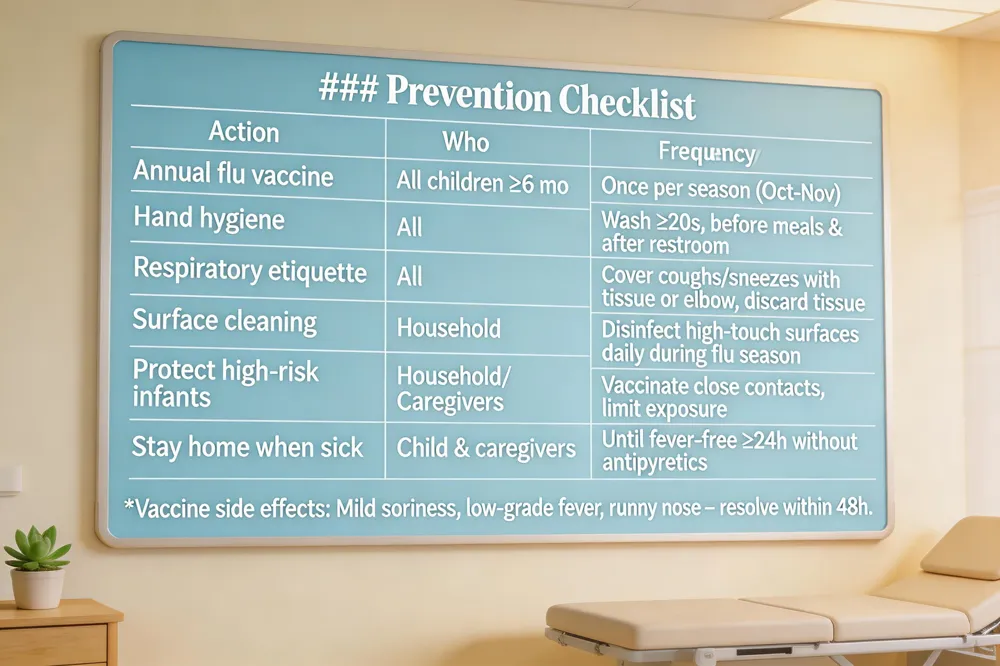 Annual flu vaccination remains the single most effective weapon against pediatric influenza. All children six months and older should receive a flu shot each season, with a two‑dose schedule for first‑time recipients aged six months to eight years. The vaccine may be an injectable shot or, for healthy children two years and older, a nasal spray; side effects are typically mild (soreness, low‑grade fever). Hand hygiene and respiratory etiquette are the next essential defenses: children should wash their hands with soap for at least 20 seconds, avoid touching their face, and cover coughs and sneezes with a tissue or elbow. Regular cleaning of high‑touch surfaces further reduces virus spread. Protecting high‑risk infants—those under two, especially under six months, or with chronic conditions—requires early vaccination of household members, prompt antiviral treatment if exposure occurs, and vigilant monitoring for fever or breathing difficulties. Together, these measures keep families healthier and lessen the need for emergency care.
Takeaway and Next Steps
Flu can feel overwhelming, but knowing when to act keeps your child safe. Call urgent‑care or head to the ER if you see any red‑flag signs: rapid or labored breathing, bluish lips or skin, persistent fever ≥ 104 °F that won’t drop with medication, seizures, severe dehydration (no tears when crying, few wet diapers), or a sudden change in mental status. These symptoms signal a possible complication that needs immediate medical attention.
Prevention is the best medicine—ensure every child 6 months and older receives the annual flu vaccine. The shot (or approved nasal spray for healthy kids 2 years+) dramatically lowers the risk of hospitalization, severe illness, and spread to vulnerable family members.
At home, monitor recovery closely. Keep a fever log, watch for worsening cough, ear pain, or new vomiting. Encourage fluids, rest, and age‑appropriate fever reducers. If fever persists beyond three days, symptoms worsen, or dehydration signs appear, contact your pediatrician promptly. With vigilant care and yearly vaccination, most children bounce back quickly and stay healthy.