Why Understanding Fever Matters
Fever is not just a number on a thermometer; it is the body’s alarm system that signals infection or inflammation. Across different measurement sites the cut‑off for a true fever is consistent: a rectal, ear or forehead reading of 100.4 °F (38 °C) or higher, an oral temperature of 100 °F (37.8 °C) or higher, and under‑arm (axillary) 99 °F (37.2 °C) or higher. These thresholds help parents and clinicians decide when a child needs closer attention. Children’s normal temperature fluctuates throughout the day, typically ranging from 97.6 °F to 99.6 °F (36.5 °C‑37.5 °C) with a slight morning dip and an evening rise. Age dramatically influences interpretation: infants younger than 3 months with any fever should be evaluated immediately because their immune systems are still developing and serious bacterial infections are more common. Older toddlers and school‑age children can often be managed at home for low‑grade fevers, but persistent or high fevers—especially above 104 °F (40 °C)—require prompt medical evaluation. Recognizing these nuances empowers families to act wisely, keeping children safe while avoiding unnecessary alarms. When in doubt, contacting a pediatrician early can prevent complications and provide peace of mind.
Defining Fever and How to Measure It Accurately
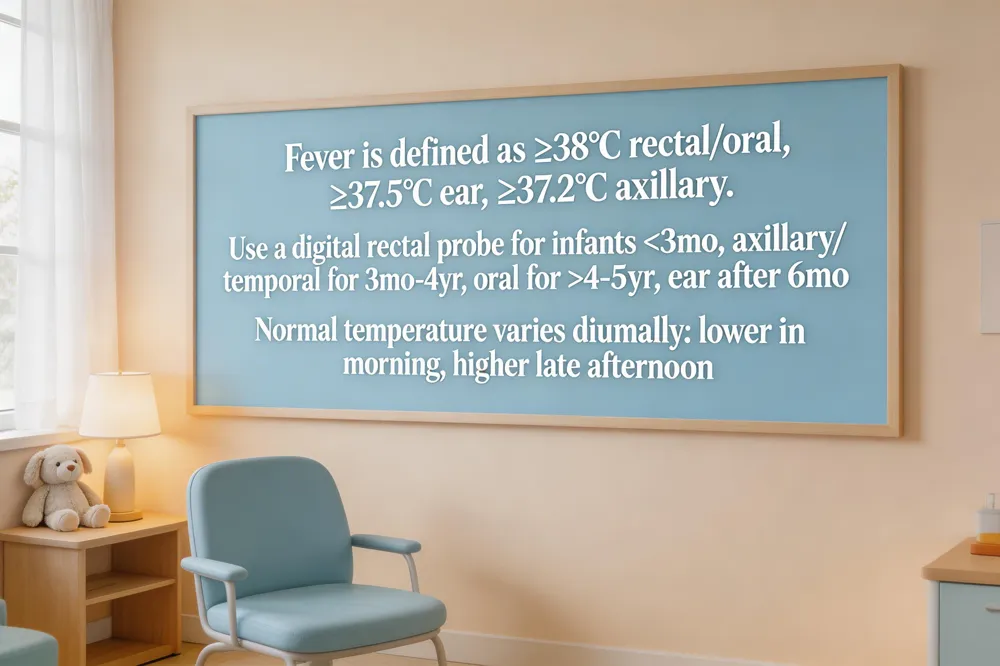 A fever in children is usually defined as a temperature of ≥ 38 °C (100.4 °F) when taken rectally or orally, ≥ 37.5 °C (99.5 °F) for ear readings, and ≥ 37.2 °C (99 °F) for axillary (under‑arm) measurements. The most reliable thermometer for infants under‑3 months is a digital rectal probe; for children 3 months‑4 years a reliable axillary or temporal‑artery (forehead) thermometer works well, and oral digital meters are appropriate for kids older than 4‑5 years. Ear (tympanic) thermometers are accurate only after 6 months of age and should not be used in younger infants. Normal body temperature fluctuates throughout the day—usually a degree lower in the morning and higher in the late afternoon—so a single reading may not tell the whole story.
Is 37.7 °C a fever in a child? A temperature of 37.7 °C (99.9 °F) is generally considered low‑grade, not a true fever. Fever thresholds start at 38 °C (100.4 °F) for rectal/oral sites and slightly lower for ear or axillary readings. If the child feels fine, stays hydrated, and shows no concerning symptoms, observe and re‑check in a few hours. Contact a pediatrician if the child is unusually irritable, lethargic, or develops cough, vomiting, rash, or signs of dehydration.
Is 99.9 °F (37.7 °C) a fever when measured under the arm? Axillary temperatures run about 0.5 °C (1 °F) lower than oral readings, and a fever under the arm is defined as ≥ 100.4 °F (38 °C). An axillary reading of 99.9 °F (37.7 °C) falls within the normal range. Continue routine care, ensure adequate fluids, and monitor for any rise above 100.4 °F or new symptoms. If the temperature climbs or the child appears ill, call the pediatrician promptly.
Age‑Specific When to Seek Medical Care
Infants Under 3 Months
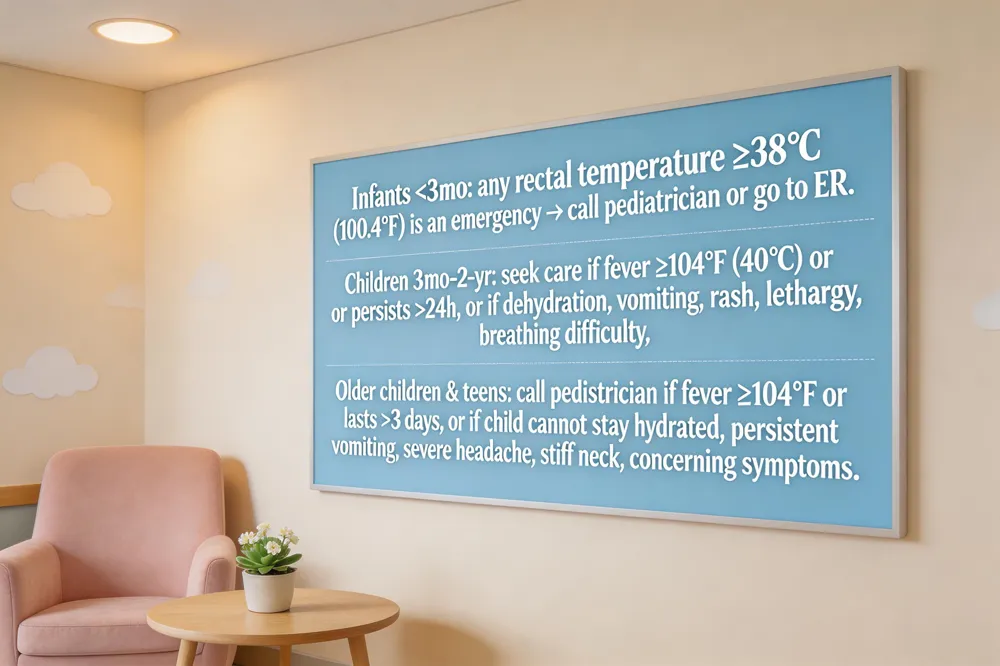
Any rectal temperature ≥ 100.4 °F (38 °C) in a newborn is a medical emergency. Call your pediatrician or go straight to the emergency department. Even if the baby looks calm, fever in this age group can signal a serious infection such as sepsis or meningitis. Red‑flag signs include extreme irritability, lethargy, difficulty breathing, a new rash, persistent vomiting, or a sudden drop in wet diapers. If you notice any of these, seek care immediately.
Children 3 Months‑2 Years
A fever is worrisome when it reaches 104 °F (40 °C) or when it persists > 24 hours. Watch for dehydration (dry mouth, no tears when crying), persistent vomiting or diarrhea, a stiff neck, or a rash that does not blanch. If the child is unusually drowsy, has a seizure, or shows signs of breathing trouble, call emergency services right away. Otherwise, keep the child well‑hydrated, dressed lightly, and consider acetaminophen (10‑15 mg/kg) or ibuprofen (5‑10 mg/kg) for comfort.
Older Children and Teens
For kids over 2 years, a fever ≥ 104 °F (40 °C) or a fever lasting > 3 days warrants a pediatric call. Seek urgent care if the child cannot stay hydrated, has persistent vomiting, severe headache, stiff neck, or any new concerning symptom. Mild fevers (under 102 °F/38.9 °C) with normal activity can be managed at home, but always monitor behavior and hydration.
When should I be worried about a fever in a baby? If your baby is under 3 months, any temperature ≥ 100.4 °F (38 °C) is an emergency. For 3‑month‑to‑2‑year olds, seek care if the fever hits 104 °F (40 °C) or lasts > 24 hours, especially with irritability, lethargy, breathing difficulty, rash, vomiting, or dehydration. Immediate evaluation prevents complications.
What are general fever guidelines for kids? Fever ≥ 100.4 °F (38 °C) is defined by rectal, ear, oral, or axillary readings. Use a reliable thermometer (rectal for infants < 3 months). Offer fluids, keep clothing light, and give acetaminophen or ibuprofen for comfort. Call a doctor if fever ≥ 104 °F, persists > 3 days, or is accompanied by vomiting, rash, difficulty breathing, or lethargy.
When should I take my 2‑year‑old to the hospital for a fever? Take the child to the ER if the fever is ≥ 104 °F, the child is drowsy, has a seizure, cannot stay hydrated, or shows a concerning rash or breathing trouble. For lower fevers, call the pediatrician if fluids are refused > 24 hours, vomiting/diarrhea is persistent, or the fever lasts > 3 days. Trust your instincts—early contact can provide peace of mind and prevent serious illness.
Home Management: Comfort, Fluids, and Non‑Medication Strategies
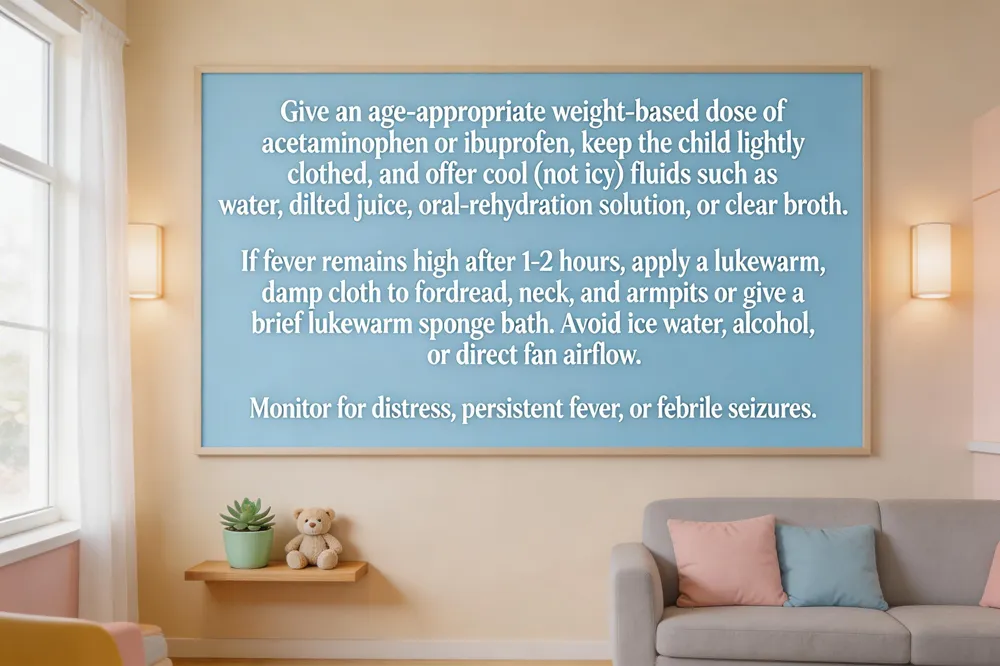 When a child’s temperature climbs to 104 °F (40 °C), the first step is to give an age‑appropriate dose of acetaminophen or ibuprofen as directed on the label or by your pediatrician. Repeat the dose only after the recommended interval and keep the child lightly clothed. Offer cool, not icy, fluids—water, diluted fruit juice, oral‑rehydration solution, or clear broth—to prevent dehydration. If the fever stays high after 1–2 hours, gently apply a lukewarm, damp cloth to the forehead, neck, and armpits or give a brief lukewarm sponge bath; avoid ice water, alcohol, or a fan blowing directly on the skin. Monitor for signs of distress, persistent fever, or febrile seizures, and seek medical care promptly—especially for infants under three months or children with underlying health conditions.
Hydrating foods are essential for lowering a fever. Offer frequent sips of water, electrolyte solutions, or diluted juice. Light, easy‑to‑digest foods such as applesauce, bananas, plain toast, or plain yogurt provide calories without overheating the body. Soups and clear broths supply electrolytes and gentle protein, helping the child stay nourished while the fever breaks. Heavy, greasy, or sugary foods should be avoided.
For a milder fever of 101 °F (38.3 °C), give acetaminophen or ibuprofen if the child is uncomfortable, keep the room at a comfortable 70‑74 °F, and dress the child in breathable clothing. A lukewarm sponge bath or a cool, damp cloth on the forehead can aid heat loss without causing shivering. Watch closely; if the temperature rises above 103 °F, lasts more than 24 hours, or if the child shows lethargy, persistent vomiting, or a rash, call your pediatrician right away. Reassure your child, encourage rest, and remember that fever is often a sign the immune system is working hard to fight infection.
Medication Safety, Dosage, and When to Use Antipyretics
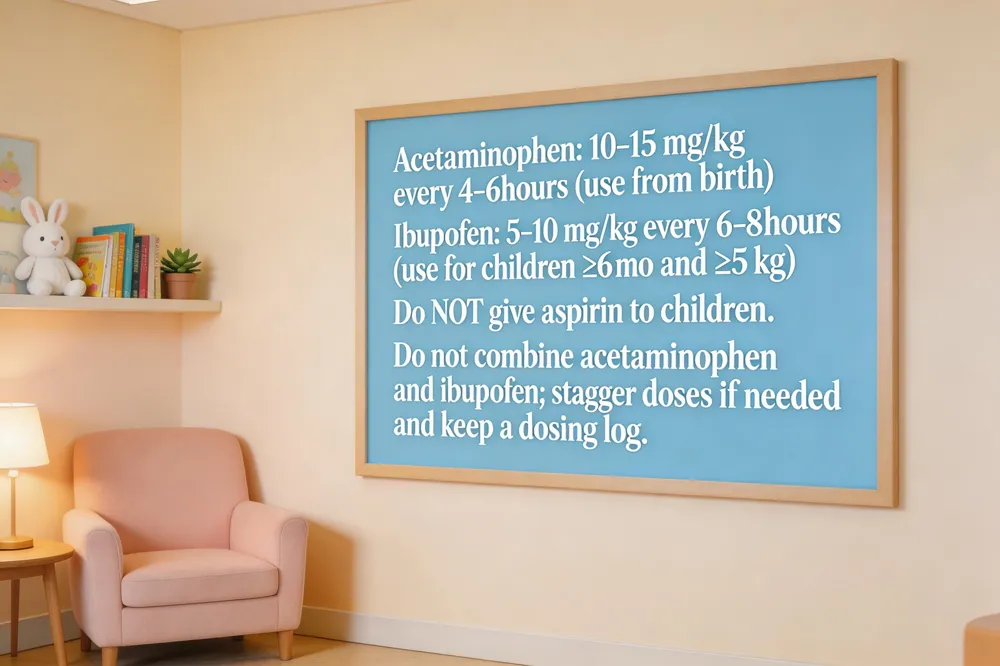 Fever in children is usually harmless, but treating it for comfort requires careful medication choices. The first‑line agents are acetaminophen (Tylenol) and ibuprofen (Advil or Motrin). Acetaminophen can be used from birth onward, while ibuprofen is safe for kids at least 6 months old and weighing ≈ 5 kg (12 lb). Both should be dosed by weight—not age—using the product label or a pediatrician’s chart (acetaminophen 10‑15 mg/kg every 4‑6 h; ibuprofen 5‑10 mg/kg every 6‑8 h). Aspirin should never be given to children because of the risk of Reye syndrome, and avoid giving acetaminophen and ibuprofen together; stagger doses if needed and keep a dosing log.
What is the best medicine for fever in kids? Acetaminophen and ibuprofen are the preferred antipyretics. Infants younger than 3 months with a fever should be evaluated by a healthcare professional promptly. Ensure the child stays well‑hydrated, dressed in light clothing, and in a comfortable room.
How can I reduce a 102°F (38.9°C) fever? Give an appropriate weight‑based dose of acetaminophen or ibuprofen, repeat as directed, and encourage fluids (water, diluted juice, oral rehydration solution). Keep the room cool (~21 °C), dress the child lightly, and consider a lukewarm sponge bath if they feel hot. Seek medical advice if the fever exceeds 104 °F, lasts >24 h, or is accompanied by severe symptoms.
What does a 40°C (104°F) fever mean? It is a high fever that warrants prompt treatment with an antipyretic and fluid support. Watch for seizures, persistent vomiting, lethargy, breathing difficulty, or rash; these require immediate medical attention. If the fever does not start to fall within an hour of medication or persists >24 h, contact your pediatric provider.
Red‑Flag Symptoms and When to Call the Doctor
 Fever duration thresholds
A low‑grade fever (100‑102 °F) often resolves without medication, but any fever lasting more than 24 hours in infants under 2 years, more than 48 hours in toddlers, or more than 72 hours in older children should prompt a call to the pediatrician. Persistent fever beyond three days warrants a medical evaluation to rule out bacterial infection or other complications.
Fever duration thresholds
A low‑grade fever (100‑102 °F) often resolves without medication, but any fever lasting more than 24 hours in infants under 2 years, more than 48 hours in toddlers, or more than 72 hours in older children should prompt a call to the pediatrician. Persistent fever beyond three days warrants a medical evaluation to rule out bacterial infection or other complications.
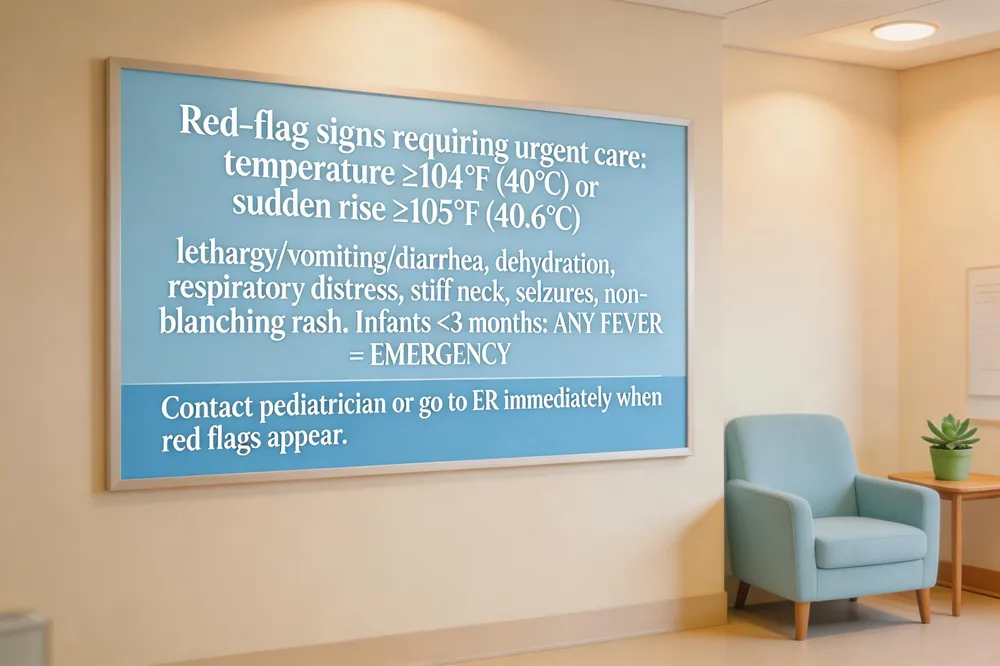
Associated serious symptoms Red‑flag signs that demand urgent attention include:
- Temperature ≥104 °F (40 °C) or a sudden rise above 105 °F (40.6 °C)
- Lethargy, extreme irritability, or difficulty waking
- Persistent vomiting, diarrhea, or signs of dehydration (dry mouth, no tears, reduced urine output)
- Respiratory distress, stiff neck, severe headache, rash that does not blanch, or seizures
- New or worsening cough with difficulty breathing.
When to go to urgent care or ER If any of the above symptoms appear, or if a child under 3 months develops any fever, go directly to the emergency department. Otherwise, contact your pediatrician for a same‑day appointment when the fever meets the duration thresholds or is accompanied by concerning signs.
My child has a 105°F (40.6°C) fever—what should I do? A temperature of 105 °F is a medical emergency. Call 911 or go to the nearest ER immediately. Keep the child lightly dressed, offer fluids if alert, and consider a lukewarm sponge bath. Give an age‑appropriate dose of acetaminophen (or ibuprofen if over 6 months) but never aspirin. Follow up with the pediatrician after emergency care.
A child has had a fever for 5 days and a cough—when should I seek medical care? A five‑day fever, especially with cough, requires prompt evaluation. Call the pediatrician right away if any red‑flag signs develop; otherwise, schedule a visit as soon as possible. Keep the child hydrated, use fever‑reducers as directed, and monitor breathing.
My toddler has a fever but no other symptoms—what should I do? If the toddler is otherwise normal, provide supportive care: fluids, light clothing, and an age‑appropriate dose of acetaminophen or ibuprofen for comfort. Watch for new symptoms and contact the pediatrician if the fever lasts beyond 48 hours, exceeds 103 °F, or any concerning signs appear.
Key Takeaways and Resources
Age‑specific fever thresholds
- Infants < 3 months: any rectal temperature ≥ 100.4 °F (38 °C) is a medical emergency – call the pediatrician or go to the ER immediately.
- 3 months‑2 years: treat discomfort if the fever reaches ≥ 102 °F (38.9 °C) or if it lasts > 24 hours. Persistent fever > 24 hours, or any fever ≥ 104 °F (40 °C) should prompt a pediatric call.
- Children 2‑5 years: moderate fevers (102‑104 °F) can be managed with acetaminophen or ibuprofen for comfort; high fevers > 104 °F deserve medication and close observation.
- Kids > 5 years and teens: antipyretics are recommended when temperature ≥ 102 °F (38.9 °C) and the child feels uncomfortable; seek care if fever lasts > 3 days or is accompanied by severe symptoms.
When to treat versus monitor
- Use medication (acetaminophen or ibuprofen) for comfort, not to “cure” the illness.
- Low‑grade fevers (100‑102 °F) often need only fluids, light clothing, and rest.
- Seek prompt medical attention for any infant < 3 months, fever > 104 °F, fever lasting beyond the age‑specific limits, or red‑flag signs such as lethargy, dehydration, persistent vomiting, rash, stiff neck, or seizures.
Resources for further information
- American Academy of Pediatrics (AAP) Fever Handouts – www.healthychildren.org
- Children’s Mercy Hospital Fever Guide – www.childrensmercy.org
- Children’s Hospital Colorado Fever FAQ – www.chop.org
- CDC Fever & Vaccination FAQs – www.cdc.gov/fever These trusted sources offer detailed charts, dosing tables, and when‑to‑call‑your‑doctor guidelines, helping parents keep children safe while navigating fevers with confidence.