Introduction to Child Car Seat Safety
Importance of car seat safety for children
Car seats play a crucial role in protecting children during vehicle travel. Motor vehicle crashes remain the leading cause of death for children ages 1 to 13 in the United States. Properly used car seats significantly reduce the risk of severe injury and death—by as much as 71-82% compared with seat belts alone.
Overview of child car seat guidelines
Guidelines recommend that children remain in rear-facing car seats from birth until at least age 2 or until they reach the seat's height or weight limits. Once outgrown, they should use forward-facing seats with harnesses, typically until age 4 to 7. Booster seats are then used until the child is tall enough (about 4 feet 9 inches) and between 8 to 12 years old to properly fit adult seat belts. Importantly, children under 13 should always ride in the back seat for optimal safety.
Role of manufacturers and safety regulations
All car seats sold in the United States must meet Federal Motor Vehicle Safety Standards and pass rigorous crash testing. Manufacturers provide essential instructions, height and weight limits, and expiration dates to ensure seats remain effective over time. Registering car seats is recommended to receive timely safety recall notifications. Certified child passenger safety technicians help parents correctly install seats, maximizing protection for young passengers.
General Car Seat Recommendations for Children
How long should children use rear-facing car seats?
Children should ride in a rear-facing car seats recommendations from birth until they reach the maximum height or weight limit specified by the car seat manufacturer. This period often lasts until around age 2 or longer, especially when using convertible and all-in-one car seats that accommodate higher limits. Rear-facing car seats for infants provide crucial protection for a child's developing neck and spine in a crash.
When should children transition to forward-facing seats?
Once children outgrow their rear-facing seat's limits, they should transition to a forward-facing car seat with harness and tether. Forward-facing seats are typically used until the child reaches the seat's height or weight limits, which usually occurs between ages 4 and 7. Staying in a forward-facing seat with a harness offers optimal safety before moving to a booster.
What are the criteria for booster seat use?
Children should move to a booster seat use for ages 4 to 7 once they exceed their forward-facing seat limits. Booster seats are designed for children about 4 to 12 years old and help position the vehicle’s seat belt correctly—lap belt snug on the upper thighs and shoulder belt across the chest and shoulder, avoiding the neck or face. Booster use continues until the seat belt fits properly, generally when the child is around 4 feet 9 inches tall, following proper seat belt fit for children.
Why is back seat safety important?
All children under age 13 should always ride in the back seat safety for children, the safest place in a vehicle. The back seat reduces the risk of injury in crashes and protects children from dangers associated with front-seat airbags.
How important is proper installation and seat belt fit?
Proper Child Car Seat Installation is critical for safety. Seats should be tightly secured using either the vehicle's seat belt or LATCH system, with less than 1 inch of movement side-to-side or front-to-back. Forward-facing seats require a top tether to limit movement during a crash. Seat belts must fit correctly, with the lap belt low across the upper thighs and the shoulder belt across the middle of the shoulder and chest. Incorrect installation or belt positioning greatly reduces protection.
Parents and caregivers are encouraged to follow Following car seat manufacturer instructions, Registering your car seat to receive recall notifications, and seek professional help from Certified Child Passenger Safety Technicians to ensure correct installation and use.
CDC Recommendations on Child Passenger Safety
What are the CDC recommendations for child passenger safety?
The CDC strongly advises keeping children in rear-facing car seats from birth until at least ages 2 to 4 years, or until the child reaches the maximum weight or height allowed by the car seat manufacturer. This position offers the best protection for a young child's head, neck, and spine in the event of a crash.
Once children outgrow their rear-facing seats, they should transition to forward-facing car seats equipped with harnesses and a top tether. The CDC recommends using this setup until the child is at least 5 years old or reaches the forward-facing seat's size limits.
When children surpass the forward-facing seat limits, booster seats are recommended until the vehicle’s seat belts fit correctly. This typically happens between ages 9 to 12. Proper seat belt fit means the lap belt lays snugly across the upper thighs—not the stomach—and the shoulder belt crosses the middle of the chest and shoulder, avoiding the neck or face.
Why is proper installation important, and what techniques does the CDC recommend?
Correct installation of car seats is crucial for maximizing safety benefits. The CDC highlights the use of the LATCH system (Lower Anchors and Tethers for Children) as an effective method for securing car seats without using the vehicle seat belt. Whether using LATCH or seat belts, it's vital that the seat does not move more than one inch side-to-side or front-to-back to ensure stability.
Certified Child Passenger Safety Technicians can assist families with installation to guarantee seats are secured properly according to both car seat and vehicle manufacturer guidelines.
Why should children under 13 always ride in the back seat?
The CDC emphasizes that children 12 years old and younger should always ride buckled in the back seat safety for children, as it is the safest location in a vehicle. The back seat keeps children away from active airbags designed for adults, which can cause serious injury to young passengers. Placing children in the back seat reduces their risk of injury in crashes significantly and is a critical part of child passenger safety.
Following these guidelines ensures that caregivers provide optimal protection during travel, helping to reduce the risk of injury or fatality in motor vehicle incidents.
American Academy of Pediatrics (AAP) Car Seat Guidelines
What are the American Academy of Pediatrics (AAP) recommendations for car seats?
The AAP advises that infants and toddlers should remain in rear-facing car seats until they reach the maximum weight or height limits set by the car seat manufacturer, which usually means staying rear-facing beyond age 2. This position best protects a child's vulnerable head, neck, and spine in a crash.
How should children transition to forward-facing seats and harness use?
After outgrowing the rear-facing seat, children should switch to a forward-facing car seat with a harness and tether. Forward-facing seats with harnesses typically accommodate children up to about 65 pounds and ensure maximum restraint during travel.
When is the booster seat stage recommended and how is seat belt fit determined?
Once children outgrow forward-facing harness seats, they should use a belt-positioning booster seat. Booster seats hold children in the correct position for using the car’s lap and shoulder belts safely. Proper seat belt fit involves the lap belt lying snugly across the upper thighs and the shoulder belt fitting securely across the shoulder and chest, not the neck or face. Usually, children between 8 and 12 years old or at least 4 feet 9 inches tall achieve this fit.
Why should children ride in the back seat?
Children under 13 years old are safest when seated in the back seat safety for children. This positioning helps avoid risks posed by airbags and improves protection in crashes.
What role do certified safety technicians play in car seat safety?
Proper installation is crucial to maximize car seat protection. Certified child passenger safety technicians offer expert assistance to parents and caregivers, ensuring that car seats are installed correctly and used according to manufacturer instructions. This guidance reduces misuse, which is common, and helps secure safer travel for children.
Understanding Car Seat Stages by Age, Weight, and Height
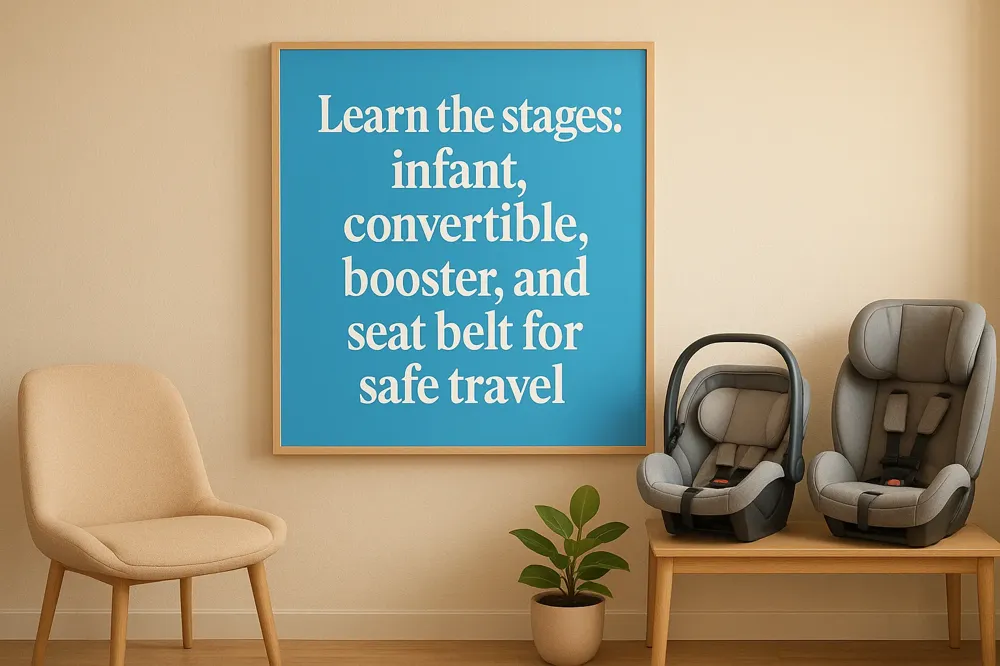
What are the stages of car seats by age, weight, and height?
Car seat stages are designed to fit children safely as they grow, based on age, weight, and height.
Infant Car Seat Specifications and Rear-Facing Limits
Infant car seats are tailored for newborns up to about 2 years old or until the child reaches 22 to 30 pounds. These seats must always be installed rear-facing car seats for infants, as this position offers the best protection for a baby's head, neck, and spine. It's important to keep your child rear-facing car seats until age 1 until they exceed the manufacturer's height or weight limits. Convertible car seats and some all-in-one car seats often allow a longer rear-facing period, accommodating heavier and taller infants.
Convertible and All-in-One Car Seats Functions
Convertible seats can be used from birth and accommodate children from about 5 pounds up to 65 pounds or more, depending on the model. These seats adjust from rear-facing to forward-facing with a harness as the child grows. All-in-one car seats combine rear-facing, forward-facing, and booster seat functions, growing with your child from infancy through the booster stage.
Harness and Booster Seat Weight and Age Ranges
Children should remain in forward-facing car seats with a harness until they outgrow the upper limits, typically around 40 to 65 pounds, which is generally between ages 4 and 7. After outgrowing harnessed seats, booster seats help position the vehicle seat belt correctly until the child is tall enough, around 4 feet 9 inches, usually between ages 8 and 12. Booster seats typically support weights from 40 pounds up to 100 pounds or more.
Importance of Adhering to Expiration Dates and Regular Safety Inspections
Car seats generally expire 6 to 7 years from the manufacture date because materials degrade and safety standards evolve. Using expired or damaged seats can compromise safety. Proper installation is critical and can be complex, so consulting a Certified Child Passenger Safety Technician for installation checks and routine inspections is strongly recommended to ensure your car seat continues to offer maximum protection.
These guidelines safeguard children as they transition through different car seat stages, emphasizing the importance of fitting your child’s size and following Car Seat Safety Guidelines.
When to Transition from Rear-Facing to Forward-Facing Seats
Age and size criteria for rear-facing extension
Children should remain in rear-facing car seats for infants for as long as possible. The American Academy of Pediatrics and NHTSA Car Seat Safety Guidelines recommend staying rear-facing until at least age 2, but ideally until the child reaches the maximum height or weight limits allowed by their car seat manufacturer. Many convertible and all-in-one car seats accommodate rear-facing use up to 40 or 50 pounds, often allowing extended rear-facing use beyond age 2, commonly until ages 3 or 4.
Risks of premature transition
Moving a child to a forward-facing seat too early increases the risk of injury, particularly to the neck and spine, which are more vulnerable in young children. Rear-facing car seat benefits provide vital support in crashes and significantly reduce injury risk. Premature transition diminishes these safety benefits.
Guidelines for moving to forward-facing seats with harness
Once a child exceeds the rear-facing seat’s limits, they should transition to a forward-facing car seat equipped with a five-point harness and a tether. Children often remain in these harnessed seats until around ages 4 to 7, or until they reach the seat’s specified height or weight limits — typically up to 65 pounds. Proper installation using the vehicle's seat belt or LATCH system and tether is essential.
Next steps after forward-facing limits
After outgrowing the forward-facing seat with a harness, children should use a booster seat to ensure that the vehicle’s seat belt fits correctly. Booster seats are typically used until children reach about 4 feet 9 inches in height and between ages 8 and 12. Throughout these stages, children under 13 should always ride in the back seat for optimal safety.
Proper seat installation, following manufacturer instructions, and ensuring correct seat belt fit—lap belt snugly on upper thighs and shoulder belt across the chest—are critical for child safety in all stages.
| Stage | Age Range | Main Safety Focus |
|---|---|---|
| Rear-facing car seat | Birth to 2-4 years | Protect fragile neck and spine |
| Forward-facing with harness | 2 to 7 years | Secure restraint with harness |
| Booster seat | 4 to 12 years | Achieve proper seat belt fit |
| Seat belt only | 8+ years (if fits) | Correct lap and shoulder belt fit |
Following these guidelines maximizes child safety during vehicle travel and significantly reduces injury risks in crashes.
Safe Forward-Facing Age and Weight Limits for Babies
When Can Babies Safely Face Forward in a Car Seat?
Children should stay in rear-facing car seats until age 1 until they reach the weight or height limits specified by the seat's manufacturer. This is usually around or beyond age 2 and over 20 pounds. Many safety experts and organizations recommend keeping infants rear-facing car seats for infants until at least 3 or 4 years old for the best protection.
Why Is Rear-Facing Recommended for So Long?
Rear-facing car seats for infants provide superior support and protection for a child’s head, neck, and spine. In crashes, these seats better absorb impact forces and reduce the risk of serious injury compared to forward-facing seats. This extended rear-facing use period ensures that vulnerable infants and toddlers have maximum safety during travel.
Transitioning to Forward-Facing Seats
After children outgrow their rear-facing seats—often between ages 2 to 4—they should move to a forward-facing car seat with harness and tether. This type of seat keeps them secure until they reach the maximum limits set by the car seat manufacturer, commonly around age 5.
Continuing Safety Steps
Once children exceed the forward-facing seat limits, they should use booster seats until the adult seat belt fits properly. The proper fit means the lap belt crosses snugly over the upper thighs and the shoulder belt lies across the shoulder and chest without touching the neck or face. Children under age 13 should always ride in the back seat, as it is the safest location in the vehicle. Proper installation and consistent use of restraints are essential in protecting children and reducing injury risk in car crashes.
Booster Seat Requirements and Usage in the United States
What Are the Age and Weight Ranges for Booster Seat Use?
Children typically transition to booster seat use for ages 4 to 7 after outgrowing forward-facing car seats with harnesses. In the U.S., this usually occurs between ages 4 and 8, when children weigh between approximately 40 and 100 pounds. Booster seats help position the vehicle’s seat belt correctly on the child’s body, ensuring that the lap belt rests snugly on the upper thighs and the shoulder belt crosses the shoulder and chest without touching the neck or face.
How Do You Know If a Seat Belt Fits Properly?
Proper seat belt fit is the key factor in determining when a booster seat can be safely retired. The lap belt must lie low and flat across the upper thighs—not the stomach—and the shoulder belt must fit across the middle of the shoulder and chest. The child should be able to sit with their back against the seat, knees bending naturally at the seat edge, and feet flat on the floor. If these criteria aren’t met, a booster seat should continue to be used according to proper seat belt fit for children.
What Are the State Law Requirements and Recommendations?
Booster seat laws vary by state but commonly require children to use booster seats until at least age 8 or until they reach 4 feet 9 inches tall. Some states extend this requirement up to age 12 unless the adult seat belt fits properly. Additionally, laws uniformly recommend that children under 13 ride in the back seat for safety. Parents are encouraged to follow both state regulations and guidelines from organizations like the National Highway Traffic Safety Administration (NHTSA) and the American Academy of Pediatrics (AAP), which advocate booster seat use until proper seat belt fit is achieved.
What Are the Safety Benefits of Using Booster Seats and Riding in the Back Seat?
Booster seats significantly reduce the risk of injury by improving seat belt fit during crashes. For children aged 4 to 8, booster seats reduce serious injury risk by about 45% compared to seat belts alone. Sitting in the back seat is also critical; children under 13 benefit from rear placement, reducing potential injury from airbags and front-seat collisions. Combining booster seat use for ages 8 to 12 with back seat safety for children offers the safest environment for children during vehicle travel.
Parents and caregivers should prioritize using age- and size-appropriate booster seats, ensure proper installation, and keep children in the back seat until at least 13 years old to maximize protection on every trip.
Overview of United States Car Seat Laws and Regulations
Variation of Laws by State
Car seat laws in the US vary significantly among states, with each having its own age, height, and weight requirements for child restraints. States such as California, Georgia, and Connecticut have specific mandates, often requiring children under two years to ride rear-facing and setting booster seat requirements for children up to age 8 or until they reach a certain height (typically 57 inches). Despite differences, the underlying goal across all states is consistent: to ensure children are properly restrained based on their size and age.
Federal Safety Standards for Car Seats
All car seats sold in the U.S. must meet Federal Motor Vehicle Safety Standards for car seats (FMVSS 213) and pass crash tests to guarantee minimum safety performance. These standards regulate seat design, material quality, and performance during collisions. Car seats also carry expiration dates, usually 6 to 10 years from manufacture, as materials may degrade over time.
Age, Height, and Weight Requirements for Car Seats and Boosters
Children must remain rear-facing until reaching the maximum height or weight limits specified by the seat manufacturer, generally at least until age 2. After outgrowing rear-facing seats, children transition to forward-facing seats with a harness until about age 4 to 7, or until seat limits are exceeded. Booster seats are then used for children aged 4 through 12 until seat belts fit properly — which usually occurs around 4 feet 9 inches tall and between ages 8 to 12. Proper seat belt fit means the lap belt lies snugly across the upper thighs and the shoulder belt crosses the chest and shoulder without touching the neck.
Back Seat Riding Mandates
Safety experts and most states recommend that all children under age 13 ride in the back seat to reduce injury risk from airbags and front-end collisions. The back seat remains the safest location for child passengers.
Consequences for Non-Compliance
Child passenger safety laws are strictly enforced, with primary seat belt and child restraint laws allowing police to stop vehicles solely for violations. Penalties vary by state but typically include fines ranging from $10 to $500 and points on the driver’s license. Correct car seat usage drastically reduces the risk of injury and death in crashes, making adherence vital.
In Summary
| Aspect | Key Requirements | Notes |
|---|---|---|
| Rear-facing seats | Used until seat height/weight limits, usually age 2 or more | Convertible and all-in-one seats extend usage |
| Forward-facing seats | Used with harness till outgrown (age 4-7) | Harness and tether car seats recommended |
| Booster seats | Until seat belts fit properly (typically age 8-12, height ~4'9") | Ensures proper belt positioning (Proper seat belt fit for children) |
| Back seat riding | Required for children under 13 | Safest seating location |
| Enforcement | Primary laws with fines and driver penalty points | Ensures compliance and safety |
Car Seat Installation, Safety Checks, and Maintenance Tips

Proper installation techniques
Ensuring that a car seat is installed correctly is vital for the safety of child passengers. The car seat should not move more than one inch side-to-side or front-to-back at the belt path. Harness straps must be snug and correctly positioned at or below the child's shoulders for rear-facing seats and at or above for forward-facing seats. The seat should be reclined at the correct angle to keep the child’s airway open and prevent head slump in rear-facing seats. Refer to Proper car seat installation for detailed guidance.
Use of LATCH and seat belts
Modern vehicles generally offer two methods to secure car seats: the LATCH system (Lower Anchors and Tethers for Children) and the vehicle’s seat belts. Both methods provide excellent safety when used properly. The top tether should always be attached with forward-facing seats to limit head movement during a collision. It is important to follow manufacturer instructions for both car seats and vehicles to ensure a secure and safe installation. For more information, see Using vehicle lower anchors and tethers for car seats and Vehicle and car seat installation instructions.
Importance of certified child passenger safety technicians
Certified Child Passenger Safety Technicians (CPSTs) play a crucial role in helping parents and caregivers properly install car seats. They offer professional guidance that can reduce common errors—nearly 63% of car seats are improperly installed. CPSTs are available through various community programs, fire departments, and safety inspection stations, providing essential assistance to keep children safe on every trip. For more details, visit Certified Child Passenger Safety Technicians and Child passenger safety technicians.
Car seat expiration and crash safety
Car seats come with expiration dates, typically 6 to 10 years from the manufacture date, due to potential material degradation and evolving safety standards. Using an expired seat can compromise child safety. Furthermore, car seats used in moderate or severe accidents should be replaced even if no visible damage exists because crash forces can weaken the seat's protective capabilities. See Car seat expiration timeline and Car seat safety guidelines for more information.
Registration and recall alerts
Registering your car seat with the manufacturer is strongly recommended. This ensures you receive timely safety recall notifications that might include important fixes, part replacements, or updates. Using a car seat without knowledge of recalls can expose children to unnecessary risk. Registration can be completed through the manufacturer or the National Highway Traffic Safety Administration (NHTSA). Additional information is available about Registering your car seat and Car seat recall registration.
Maintaining vigilance with installation, routine checks, and staying informed about recalls can significantly enhance the safety of child passengers.
Ensuring Safe Travel for Children: Summary and Best Practices
Car Seat Safety Guidelines at a Glance
Keeping children safe in vehicles requires following essential car seat safety practices that adapt as children grow. Infants under one year should always be kept in rear-facing seats, ideally until at least age two or until they outgrow the seat’s height or weight limits. Once outgrown, children transition to forward-facing car seats with harnesses and tethers, generally used until around ages 4 to 7. Booster seats come next, helping children fit seat belts properly until they reach about 4 feet 9 inches tall between ages 8 to 12. Children under 13 should always ride in the back seat for added protection.
Adhering to Safety Recommendations and Laws
Following these guidelines is not just about compliance but saving lives. Data shows over 40% of children killed in crashes are unrestrained. Laws across states vary but commonly require children under certain ages and sizes to be properly secured in age-appropriate seats. Parents must observe both federal and local laws and use seats approved to pass safety standards.
Role of Parents and Caregivers
Parents and caregivers are vital in maintaining child safety by regularly checking that car seats fit correctly and are installed properly. Harness straps should be snug and positioned correctly, while the seat itself should not move more than an inch when secured. It's crucial to avoid bulky clothing that can interfere with harness snugness.
Seeking Professional Help and Using Resources
Installation can be complex; certified Child Passenger Safety Technicians are invaluable resources, offering expert guidance to ensure seats are used as intended. Registering seats with manufacturers helps families stay informed about recalls and safety updates, further protecting children.
By committing to these best practices and utilizing available support, parents and caregivers can greatly reduce the risk of injury and ensure safer travel for children at every stage.