Why a First Visit Matters
A first well‑child visit marks the start of pediatric preventive care, where the pediatrician conducts growth measurements, developmental screenings, and immunization checks to protect the child from common illnesses. This appointment also establishes a medical home—a trusted, continuous relationship with a specific practice that knows the family’s health history and can coordinate care across years. Early health monitoring catches issues such as anemia, lead exposure, or developmental delays before they become serious, allowing timely interventions, nutrition counseling, and safety guidance that set the foundation for a healthy childhood and smoother future visits.
Preparing for the Appointment
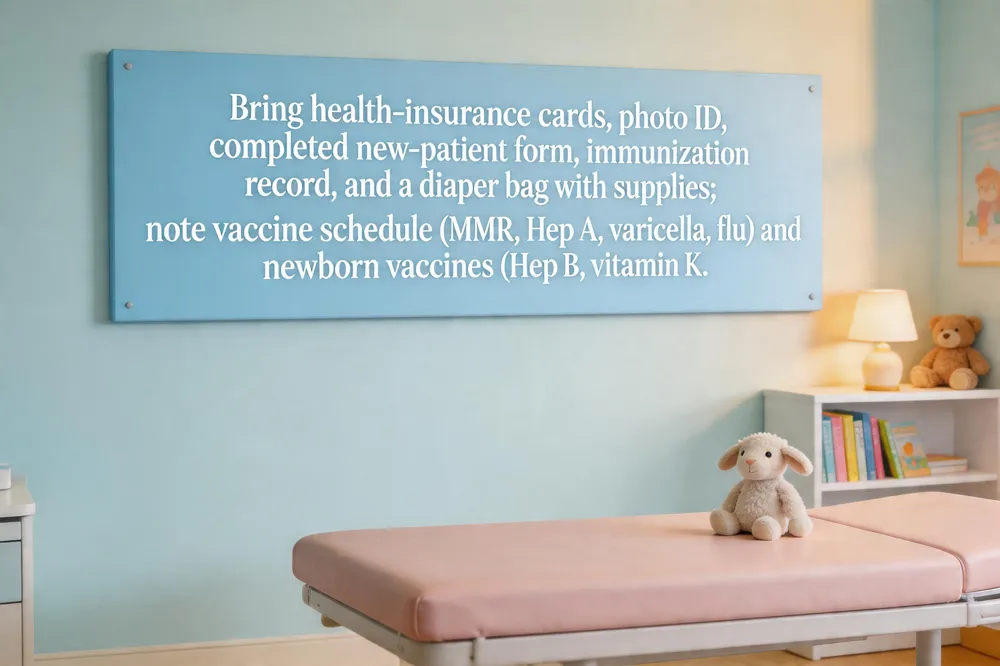 Essential documents and identification – Bring health insurance cards and a photo ID for the parent or guardian to the first pediatrician appointment. A completed new‑patient form (if provided ahead of time) and the immunization record or vaccination card should also be on hand.
What to pack for the baby – a diaper bag with a clean diaper, wipes, a changing pad, a spare outfit, and any feeding supplies (bottle, formula, or breast‑pump) will keep the infant comfortable. Add a favorite blanket or stuffed animal for soothing, and a list of current medications, allergies, and any supplements.
Vaccination preparation – At the first pediatric office visit (typically around 12 months of age), the American Academy of Pediatrics recommends immunizations for measles‑mumps‑rubella (MMR), hepatitis A, varicella (chickenpox), and an influenza vaccine if it is flu season. Bring any questions about vaccine timing or side‑effects so you can discuss them on the spot.
What should I bring to my child's first pediatrician appointment? Bring health insurance cards and a photo ID for the parent or guardian to the first pediatrician appointment.
First newborn appointment vaccines The newborn visit (within the first 24 hours) includes only the hepatitis B vaccine, vitamin K, and newborn screening tests. All other routine childhood vaccines are scheduled for the 2‑month visit.
What to Expect During the Exam
 At a well‑child visit the pediatrician first records the child’s weight, length/height and head circumference, then plots each measurement on the CDC growth chart to confirm the child is tracking along the expected percentile curves. This data guide feeding and nutrition counseling.
Next comes a comprehensive head‑to‑toe physical exam. The clinician checks vital signs, heart and lung sounds, eyes, ears, mouth, abdomen, hips and skin, and performs age‑appropriate vision and hearing screens. The exam also includes a safety audit of the home environment—car‑seat positioning, stair guards, crib bedding and water‑safety measures—to prevent injuries.
Developmental screening follows, using tools such as the Ages‑and‑Stages Questionnaire to verify milestones like standing, walking with support, simple gestures and early words. The provider reviews immunizations (MMR, Varicella, HepA, flu if in season) and updates the record.
Newborn visit checklist – measure and plot weight, length, head circumference; assess feeding, diaper output, sleep; perform a head‑to‑toe exam; review newborn screens, update vaccines, discuss vitamin D and safe sleep.
Well‑child visit checklist for providers – focused history, growth measurements, comprehensive exam, immunization review, age‑specific screenings (anemia at 12 months, developmental questionnaires), anticipatory guidance, documentation and referrals.
Five danger signs needing emergency care – trouble breathing (wheezing, chest retractions, cyanosis), uncontrolled bleeding >10 min, fever ≥104 °F in infants <3 months or fever with neck stiffness/seizures, severe dehydration (dry mouth, no tears, few wet diapers), sudden mental status change (lethargy, seizures, unresponsiveness).
Key Questions to Ask Your Pediatrician
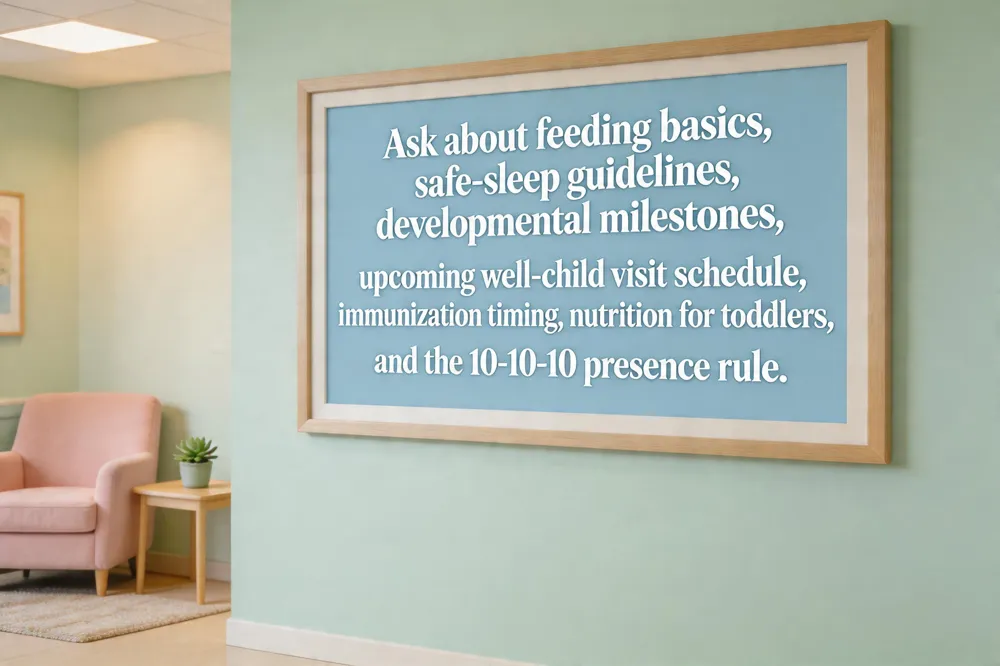 When you walk into the office for your child's first pediatric visit, bring essential items—insurance card, growth charts, a change of clothes, and a list of questions. Ask about feeding basics, safe‑sleep guidelines, and the developmental milestones you should see in the coming weeks. Confirm the schedule for upcoming well‑child visits, immunizations, and any screening tests.
First pediatrician visit questions (general) When you arrive for your child’s first pediatrician visit, bring a list of essential items—insurance card, any growth charts, and a change of clothes—so the provider can verify records and conduct a thorough exam. Ask about feeding basics, such as how often and how much the baby should eat, signs of adequate intake, and whether vitamin D or iron supplements are needed. Inquire about safe sleep practices, including recommended sleep duration, positioning on the back, and how to reduce the risk of sudden infant death syndrome. Discuss developmental milestones you should expect in the coming weeks, like head‑raising, smiling, and tummy‑time, and learn how you can support your child’s growth at home. Finally, confirm the schedule for upcoming well‑child visits, immunizations, and any screening tests that will be part of your child’s preventive care plan.
1‑year‑old doctor visit questions When you arrive for your 1‑year‑old’s well‑child visit, start by asking whether your child’s weight, length, head circumference, and overall growth curve are on track. Next, confirm which vaccinations are due today, what they protect against, and what shots will be needed at future visits. Ask about nutrition—specifically how much whole milk, juice, and iron‑rich foods your toddler should be having and which choking hazards to avoid. Inquire about developmental milestones, such as walking, saying “mama/dada,” and social skills, and what you should expect by the next appointment. Finally, discuss sleep patterns, nap needs, and any safety concerns (e.g., child‑proofing, car‑seat use) that are appropriate for a one‑year‑old.
10‑10‑10 rule for kids (how to be present with children) The 10‑10‑10 rule helps parents be truly present with their children by carving out three short, focused windows of connection each day. Spend the first 10 minutes after your child wakes up sharing a cuddle, a quick chat, or a playful activity to start the day with love rather than rush. Give another 10 minutes when you reunite after school, work, or errands—look them in the eye, listen to their story, and let them know you missed them. Reserve a final 10‑minute moment before bedtime for a calming ritual such as reading, sharing affirmations, or simply holding them close. Even a single 10‑minute “do‑nothing” pause—where you sit beside your child without phones, instructions, or multitasking—can deepen trust and reduce stress for both of you.
Safety, Development, and Follow‑Up
 Well‑child visits by age (schedule)
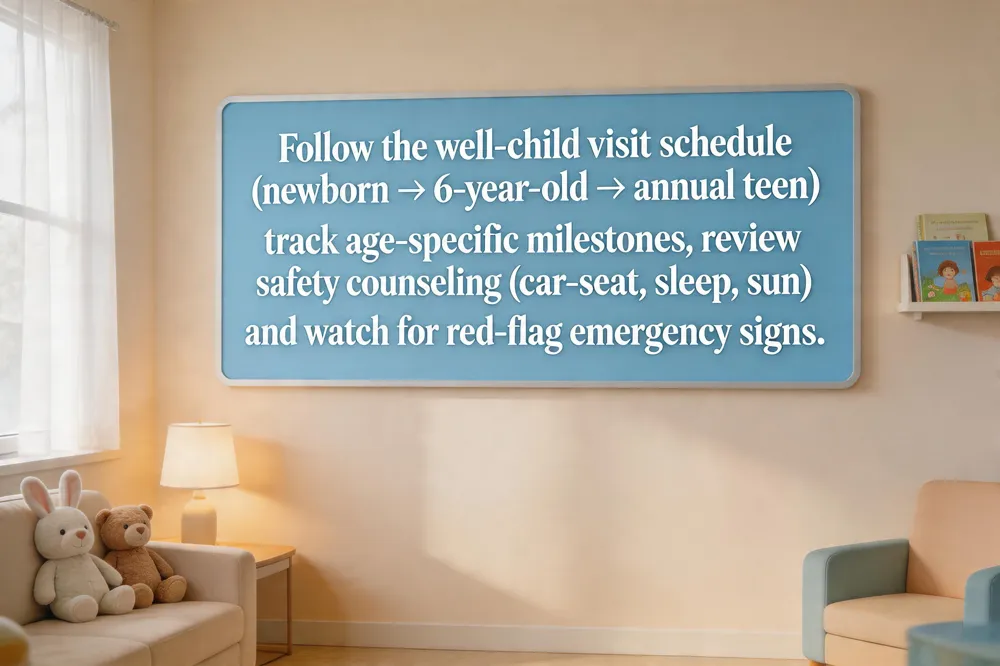
A well‑child schedule begins with a newborn visit within the first week of life, followed by check‑ups at 1 month, 2 months, 4 months, 6 months, 9 months and 12 months. The next visits occur at 15 months, 18 months, 2 years (24 months) and 2½ years (30 months), then at ages 3, 4 and 5 years. Starting at age 6, children are seen annually through middle school (6‑10 years) and early adolescence (11‑13 years). From age 14 through 18, well‑child exams continue each year to address teenage health, growth, and preventive care. This schedule aligns with the American Academy of Pediatrics’ periodicity recommendations and ensures timely monitoring of development, immunizations, and overall health.
Well‑child visits by age (schedule)
A well‑child schedule begins with a newborn visit within the first week of life, followed by check‑ups at 1 month, 2 months, 4 months, 6 months, 9 months and 12 months. The next visits occur at 15 months, 18 months, 2 years (24 months) and 2½ years (30 months), then at ages 3, 4 and 5 years. Starting at age 6, children are seen annually through middle school (6‑10 years) and early adolescence (11‑13 years). From age 14 through 18, well‑child exams continue each year to address teenage health, growth, and preventive care. This schedule aligns with the American Academy of Pediatrics’ periodicity recommendations and ensures timely monitoring of development, immunizations, and overall health.
Age‑specific developmental milestones At 12 months, children should be pulling to stand, cruising, using a pincer grasp, saying “mama/dada,” and understanding simple commands. By 15‑18 months, they typically walk independently, combine words, and begin self‑feeding with a spoon.
Safety counseling and emergency signs Pediatricians review car‑seat safety, stair guards, safe‑sleep practices, and sun protection. Parents are taught to recognize red‑flag signs such as persistent fever, difficulty breathing, seizures, or sudden change in behavior, and instructed to call the office or emergency services promptly.
Screening schedule and referrals Routine screenings at 12 months include anemia, and optional lead, hearing, vision, blood‑pressure, and TB testing based on risk. Abnormal findings trigger referrals to specialists or early‑intervention programs.
Can a pediatrician prescribe Strattera (ADHD medication)? Yes. A pediatrician can prescribe Strattera (atomoxetine) for a child with ADHD after a comprehensive evaluation confirms the diagnosis. Because Strattera is FDA‑approved for children and adolescents, it falls within a pediatrician’s scope of practice. The doctor will discuss side effects, set up follow‑up visits, and adjust dosing as needed, often coordinating care with mental‑health specialists.
Beyond the Visit: Resources and Ongoing Care
 Printable visit templates, establishing care before birth, and finding a local pediatrician are key steps for ongoing child health. Free printable well‑child visit template: The American Academy of Pediatrics Bright Futures handouts offer age‑specific PDFs in English and Spanish, and Stanford Medicine’s Pediatric Primary Care site provides a full set of encounter forms that can be printed, edited, and used for vitals, growth, immunizations, and anticipatory guidance. How to set up pediatric care before the baby is born: Begin your search in the second trimester, ask your OB‑GYN, friends, and insurance directory, then schedule a meet‑and‑greet to tour the office, discuss policies, and confirm after‑hours support. Notify the hospital of your chosen provider so they can be on call for the newborn’s first visit. Pediatrician near me (Decatur, GA): Kids & Teens Primary Healthcare, 1234 North Decatur Road, Suite 200, Decatur, GA 30030, offers comprehensive well‑child care from birth to age 21. Call (404) 555‑1234 or book online. Their board‑certified team emphasizes a medical‑home model, making it easy to stay on schedule with growth checks, vaccinations, and counseling.
Putting It All Together
Before you walk out the door, double‑check that you have your insurance card, photo ID, a completed new‑patient form, the baby’s immunization record, and any medication or supplement lists. Pack a diaper bag with diapers, wipes, a change of clothes, the supplies, and a comfort item like a favorite blanket or toy. Write down three to five questions about growth, nutrition, sleep, milestones, or safety concerns. After the visit, schedule the next well‑child appointment (15 months, 18 months, then annually), note any referrals or vaccine dates, and save the clinic’s after‑hours contact info. For extra help, explore the AAP Bright Futures handouts, your pediatrician’s patient portal, or local resources such as Kids & Teens Primary Healthcare in Decatur, GA.