Why Children's Vision Health Matters
Vision plays a vital role in childhood development.
Clear eyesight enables kids to learn effectively, engage in sports, and build social skills. About 80% of classroom learning is visual, making good vision essential for academic success.
Poor vision can affect learning and social interactions.
Children with undiagnosed vision problems may struggle with reading, attention, and coordination. These difficulties can lead to frustration and lower self-confidence.
Early detection is crucial to prevent long-term issues.
Regular eye exams starting from infancy help catch problems like lazy eye or crossed eyes early. Pediatric eye exams include assessing visual skills and eye health to ensure proper development.
Routine screenings and comprehensive exams support healthy vision.
They facilitate timely treatment with glasses, therapy, or surgery if needed. Protecting kids’ eye health helps them thrive in school and life.
Recognizing Signs and Symptoms of Vision Problems in Children
How do I know if my child has vision problems?
Children often cannot clearly express when they have trouble seeing, so parents need to be alert to signs like children squinting as a vision problem, holding books or screens very close, and complaining of blurry vision or frequent headaches.
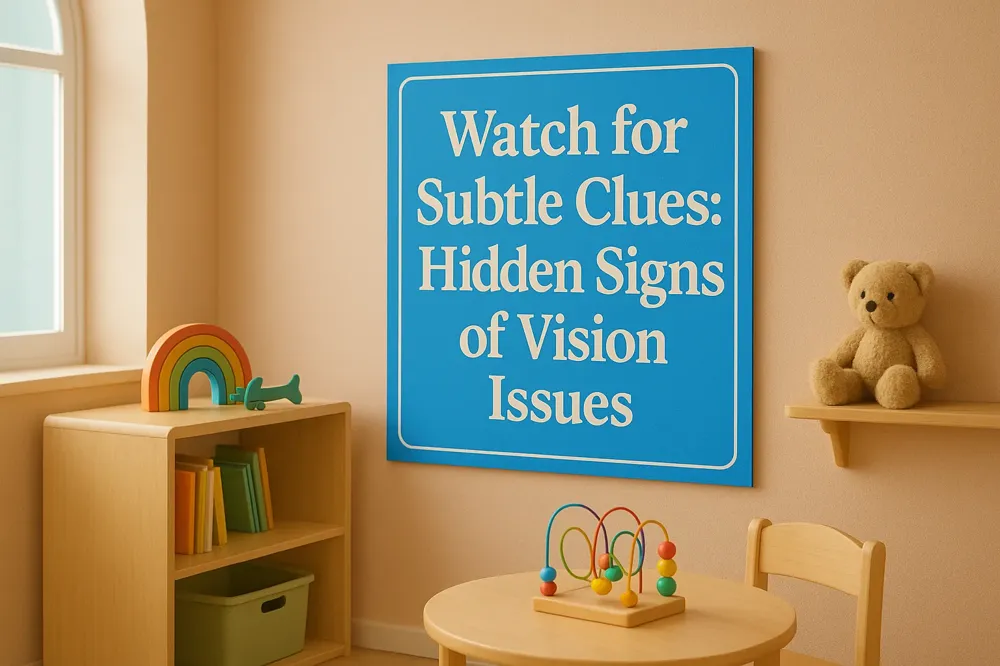
Sometimes, more subtle behaviors reveal vision issues: a child may lose place while reading, avoid tasks that require close focus, or tilt and turn their head to see better. Additionally, children might show a short attention span during schoolwork or have difficulty tracking moving objects.
Regular, comprehensive eye exams for kids by eye care professionals are essential for catching vision problems early, which is critical for learning, sports, and social development. Urgent attention is needed if sudden changes occur, such as eye pain, redness, or seeing flashes and floaters.
What are common signs of vision problems in children?
Common behavioral signs include squinting, frequent rubbing of the eyes, and tilting the head while trying to focus. Physical symptoms to watch for are crossed or misaligned eyes, redness, swelling, and sensitivity to light.
Parents may notice their child holding reading material uncomfortably close or avoiding visual activities. "Jiggly" or wandering eyes, persistent tearing, or white reflections in photos are also red flags.
Additional indicators are repeated headaches, short attention spans, and difficulty concentrating during close-up tasks. If these signs are present, timely evaluation with an eye care specialist can help prevent lasting vision loss.
Subtle indicators to watch for
Some vision problems manifest in less obvious ways. A child struggling with vision might have trouble following lines of text, confuse left and right, or perform poorly with hand-eye coordination tasks like catching a ball.
Difficulty staying focused, frequent blinking, and fatigue during reading or homework might be linked to underlying visual issues. These subtle signs often impact academic performance and social confidence.
When to seek professional eye evaluation
If you observe any signs mentioned, such as eye misalignment, head tilting, squinting, redness, or complaints of eye discomfort, arrange a professional eye exam promptly.
Regular screenings during routine health check-ups are useful, but comprehensive eye examinations conducted by pediatric ophthalmologists or optometrists provide a thorough assessment of visual acuity, eye alignment, focusing ability, and overall eye health.
Early intervention improves treatment outcomes dramatically, reducing the risk of permanent vision impairment while supporting the child’s development and quality of life.
Common Eye Disorders Affecting Children and Teens
What are the most common eye disorders in children and adolescents?
Children and teens frequently experience several eye disorders that can impact their vision and overall development. The most prevalent issues include refractive errors such as myopia (nearsightedness), hyperopia (farsightedness), and astigmatism. These conditions affect how clearly children see objects, whether near or far.
Amblyopia, also called lazy eye, is a common childhood vision condition where the brain favors one eye over the other, potentially leading to permanent vision loss if untreated. Another frequent problem is strabismus (crossed eyes), which involves misalignment of the eyes and can cause difficulties with depth perception and focus. Early detection through pediatric eye exams is crucial since treatments like patching, corrective lenses, or surgery can improve outcomes.
Aside from these, younger children can develop congenital cataracts, leading to cloudy or blurred vision that often requires surgery. Other serious but less common disorders include glaucoma, which involves increased pressure inside the eye damaging the optic nerve, and retinoblastoma, a rare eye cancer in infants and toddlers characterized by unusual white reflections in the pupil. Kids may also frequently suffer from more minor but uncomfortable problems like conjunctivitis (pink eye) and blocked tear ducts.
What eye conditions are typically found in teenagers?
Teenagers often face similar refractive problems such as myopia, hyperopia, and astigmatism, often influenced by genetics and lifestyle factors. Puberty can trigger changes in vision, so regular eye checkups are important to monitor and adjust treatments like glasses or contact lenses.
In addition to refractive errors, teens are prone to digital eye strain due to extensive screen time on computers, smartphones, and gaming devices. Symptoms include eye fatigue, headaches, and blurred vision. Preventing strain includes practicing good screen hygiene—regular breaks following the 20-20-20 rule—and using artificial tears as needed.
Teens are also at risk of eye injuries from sports or accidents, making protective eyewear vital both for recreation and sun exposure. Wearing UV-protective sunglasses helps guard against long-term damage from ultraviolet rays, which can increase risk for cataracts and retinal problems later in life.
By recognizing early symptoms—such as squinting, headaches, or holding reading materials close—parents and teens can seek eye care promptly. This ensures timely diagnosis and treatment, which is critical for preserving vision and supporting academic and social success through adolescence and beyond.
When and How Are Children's Eyes Tested for Vision Problems?
Recommended Eye Exam Schedule from Infancy to Adolescence
Children should have their first eye screening between 6 and 12 months of age, with follow-up comprehensive exams recommended at ages 3 to 5 years and again before starting school (around 5-6 years). Afterward, annual or biennial exams are advised throughout childhood and adolescence to monitor vision development and address any changes. (Eye exam at 6 months, Second eye exam ages 3 to 5, Eye exam before first grade, Annual eye exams ages 6 to 18)
Screenings Versus Comprehensive Eye Exams
Screenings are quick checks often performed by pediatricians or school nurses to identify potential problems. However, screenings may miss subtle or complex issues. Comprehensive eye exams, conducted by pediatric ophthalmologists or optometrists, are more detailed and necessary for diagnosing and treating conditions like amblyopia, strabismus, and refractive errors. (Screenings vs eye examination, Comprehensive eye exams, Importance of comprehensive eye exams, Professional Eye Care for Children)
Diagnostic Procedures Used
- Red Reflex Test: Performed on newborns to screen for cataracts or retinoblastoma by checking the reflection from the retina. (Red reflex abnormalities, Red Reflex Test)
- Visual Acuity Charts: Age-appropriate tests like Allen pictures or Snellen charts assess how clearly a child sees at various distances. (Visual Acuity Testing for Infants, Allen charts for children's vision, Visual Acuity Assessment)
- Eye Alignment Exams: Cover tests and corneal light reflex tests detect strabismus and other alignment issues. (Eye Tracking Analysis, Strabismus in Children, Strabismus and amblyopia treatment)
- Refraction Tests: Determine the need for glasses by assessing focusing ability. (Refraction Tests, Refractive Errors in Children
Use of Eye Drops, Child-Friendly Testing Methods, and Specialized Equipment
Eye drops may be used to dilate pupils for a thorough examination of the eye's interior, although these can temporarily cause light sensitivity or blurred vision. Pediatric eye care centers use child-friendly methods, such as picture charts and games, to make exams less intimidating. Specialized equipment accommodates children’s varying ages and cooperation levels, facilitating accurate and comfortable testing. (Pupil dilation in pediatric eye exams, Child-friendly pediatric eye care environment, Specialized pediatric eye equipment)
Regular vision testing from infancy through adolescence ensures early detection and proper management of eye conditions, safeguarding children’s vision and supporting their learning and development. (Children's Vision Screenings, Early Detection of Vision Issues in Children, Importance of Early Eye Problem Detection, Impact of Vision Issues on Child Development)
The Role of Early Detection, Treatment, and Prevention in Children's Vision Health
What is the most common vision problem among children?
Refractive errors are the most common Vision Problems at Boston Children's Hospital affecting nearly 20% of children in the United States. Nearsightedness (Myopia) is the most frequently occurring type, making distant objects blurry while close vision remains clear. Other typical refractive errors include Farsightedness (Hyperopia), Astigmatism in Children, and Lazy Eye (Amblyopia). Strabismus (Crossed-Eyes) Symptoms, or crossed eyes, also affects children's vision and can lead to long-term issues if not addressed promptly.
Why is early intervention important for conditions like amblyopia and strabismus?
Early detection allows for effective treatment of childhood eye conditions such as Amblyopia and strabismus in kids. Since the visual system develops mostly in the first several years of life, timely intervention supports normal visual development. When treated early, the risk of permanent vision impairment is significantly reduced, improving a child’s chance to succeed academically and socially.
What treatment options are available for children's eye problems?
Several treatments help address children’s eye issues, including:
- Eyeglasses for vision problems: Correct refractive errors and support lazy eye treatment.
- Pediatric eye care in Las Vegas: Used to strengthen the weaker eye in amblyopia.
- Treatment for Cataracts: Corrects alignment problems such as strabismus or removes cataracts.
- Vision therapy for children: Customized exercises to improve focusing, eye teaming, and eye-brain communication.
How can parents prevent vision problems in their children?
Prevention plays a critical role in maintaining Child's Vision Health. Key measures include:
- Nutrition: A balanced diet rich in vitamins supports eye development.
- Limiting screen time: Reducing digital eye strain helps maintain healthy vision.
- Protective eyewear: Using sunglasses and sports goggles preventing injuries and UV damage.
- Outdoor play: Encouraging time outside reduces the risk of myopia progression.
Why is follow-up care and regular exams essential?
Routine eye exams for children. Routine comprehensive eye exams help monitor development, detect emerging problems, and adjust treatments as needed. Regular checkups ensure ongoing support for healthy vision, ultimately aiding a child's learning, confidence, and daily activities.
| Aspect | Details | Significance |
|---|---|---|
| Common vision problems in children | Myopia, hyperopia, astigmatism, amblyopia, strabismus | Affect 20% of children nationally |
| Early detection of eye problems | Patching, glasses, surgery, vision therapy | Prevents permanent vision loss |
| Preventing eye injuries and strain | Nutrition, screen time limits, protective eyewear | Reduces risk of eye strain and injury |
| Routine eye exams and follow-up | Regular exams from infancy through adolescence | Monitors changes and optimizes treatment |
Genetics, Environmental Factors, and Eye Safety for Children
Is poor eyesight in children inherited from the mother or father?
Poor eyesight in children can be inherited from either parent. Many common vision problems such as Myopia in Kids, Astigmatism in Children, and Farsightedness (Hyperopia) have a strong genetic component. A family history that includes conditions like nearsightedness, glaucoma, or cataracts significantly raises a child's risk of developing similar eye issues. However, it's important to understand that inheritance comes from both sides of the family, not just the mother or father alone.
How do environmental factors influence children's vision?
Environmental influences also play a crucial role in Child's Vision and Eye Health. Excessive screen time, especially without breaks, can lead to eye strain and may worsen nearsightedness progression. On the other hand, spending time outdoors is beneficial; natural light and distance viewing help support healthy eye development and may reduce the risk of Myopia in children.
What are the essential eye safety practices for kids?
Protecting children's eyes from injury is vital. Parents and caregivers should ensure kids wear protective eyewear with shatter-resistant lenses during sports and active play. Additionally, choosing age-appropriate toys that meet safety standards prevents accidental eye injuries. UV protection is equally important—sunglasses with UV-blocking lenses shield eyes from harmful sunlight exposure, reducing the chances of long-term damage. For more detailed safety tips, see Children's Eye Health and Safety Month.
Why is family education on children's eye health important?
Educating families about eye health ensures early recognition of vision problems and promotes preventive care. Comprehensive Pediatric Eye Exams beginning in infancy and continuing throughout childhood help detect inherited or acquired eye issues promptly. Families should be encouraged to balance screen time with outdoor activities and to maintain proper use of protective gear for sports and sun exposure.
Together, genetics, environment, and safety precautions shape a child's visual health. Proactive care and informed family support are key to preserving healthy vision for life.
Prioritize Your Child's Vision for Lifelong Benefits
Why Early Detection Matters
Early detection of vision problems in children is crucial for preventing long-term complications. Many common childhood vision issues, such as nearsightedness, crossed eyes, or lazy eye, can be successfully treated when caught early.
The Vital Role of Parents
Parents should vigilantly observe for signs like frequent squinting, head tilting, eye rubbing, or complaints of blurred vision. Children may not always vocalize difficulties, so behavioral cues are essential in spotting potential issues.
Seek Professional Care Promptly
If any signs or concerns arise, parents should promptly consult pediatric eye care professionals. Comprehensive eye exams are indispensable for diagnosing and managing vision problems to support healthy development and academic success.
Taking an active role in your child's eye health ensures they have the best chance at clear vision and confidence now and into adulthood.