Why a Personalized Check‑Up Schedule Matters
Family‑centered preventive care starts with a schedule that fits each child’s unique health goals and life circumstances. By tailoring well‑child visits, parents and pediatricians can catch growth or developmental concerns early, allowing timely referrals, interventions, and the peace of mind that comes from proactive care. The Bright Futures Periodicity Schedule provides an evidence‑based backbone—visits at newborn, 1 month, 2 months, 4 months, 6 months, 9 months, 12 months, 15 months, 18 months, 24 months, 30 months, and then annually through age 21—ensuring that immunizations, screenings, and anticipatory guidance happen at the right moments. Digital tools such as the Well Visit Planner let families create, store, and share personalized guides, complete pre‑visit forms, and receive reminders via email, print, or patient‑portal upload. This blend of expert‑driven timing and technology keeps the care team focused on the child’s current needs while maintaining continuity across the entire pediatric journey.
Understanding the AAP Well‑Child Schedule
 The American Academy of Pediatrics (AAP) Bright Futures Periodicity Schedule is the gold‑standard road‑map for preventive pediatric care from birth through age 21. Its timing mirrors the CDC’s immunization recommendations, so every well‑visit naturally aligns with the next vaccine dose, ensuring children stay up‑to‑date on protection against measles, pertussis, HPV, COVID‑19 and more. Parents can download a clear, age‑by‑age PDF of the schedule at https://downloads.aap.org/AAP/PDF/periodicity_schedule.pdf, which outlines when to expect growth measurements, blood‑pressure checks, developmental and behavioral screenings, and BMI assessments. Key visits include newborn (3‑5 days), 1 month, 2 months, 4 months, 6 months, 9 months, 12 months, 15 months, 18 months, 2 years (24 months), 2½ years (30 months), 3 years, 4 years, 5 years, then annually through age 21. Each appointment offers anticipatory guidance on nutrition, safety and sleep, and a chance for parents to bring 3‑5 questions. Following this schedule helps catch developmental delays, behavioral concerns, and health issues early, laying a solid foundation for a child’s physical, mental and social wellbeing.
What to Expect at Each Visit Age
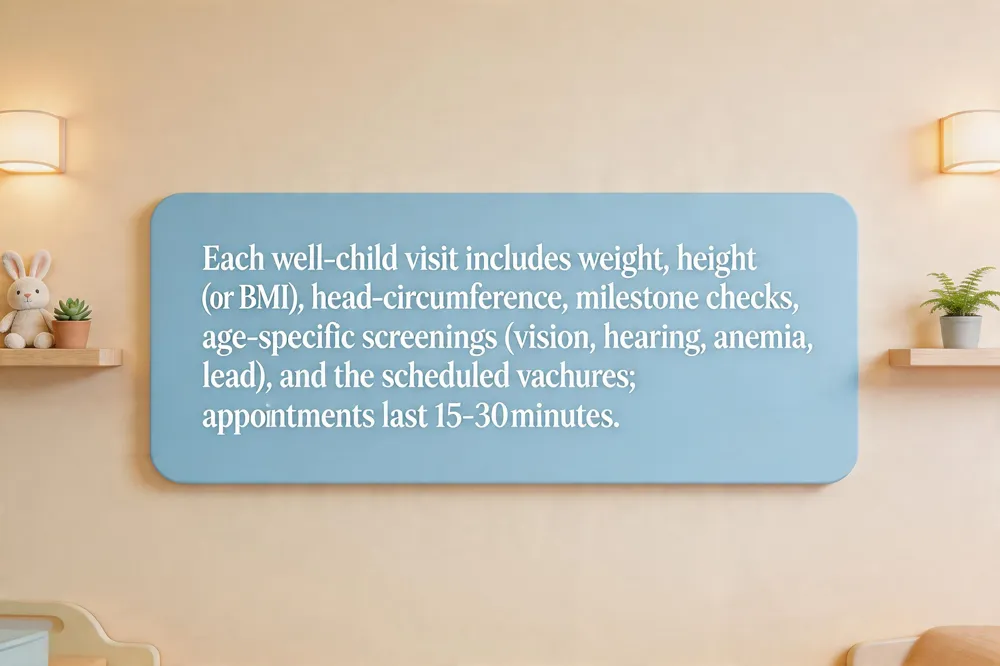 Well‑child visits follow the AAP Bright Futures schedule, starting the a first‑week checkup after birth and then at 1, 2, 4, 6, 9, 12 months. After the infant year the appointments move to 15 months, 18 months, 2 years, 2½ years, 3 years, 4 years, 5 years and continue annually from age 6 through 21. Each visit includes age‑specific measurements—weight, height, head‑circumference or BMI—growth‑chart tracking, developmental milestone checks, and immunizations per the CDC schedule. Vision, hearing, anemia, lead and behavioral screenings are added at recommended ages. The typical appointment lasts 15‑30 minutes: a physical exam, vitals, vaccine administration, and a brief counseling session. Parents are encouraged to arrive early, complete any pre‑visit forms, and bring a short list of 3‑5 questions about nutrition, sleep, safety or behavior. A pediatric preventive visit is a proactive health assessment that catches issues early, reinforces healthy habits, and supports the child’s physical, mental and social development throughout childhood and adolescence.
Personalizing Your Child’s Check‑Ups
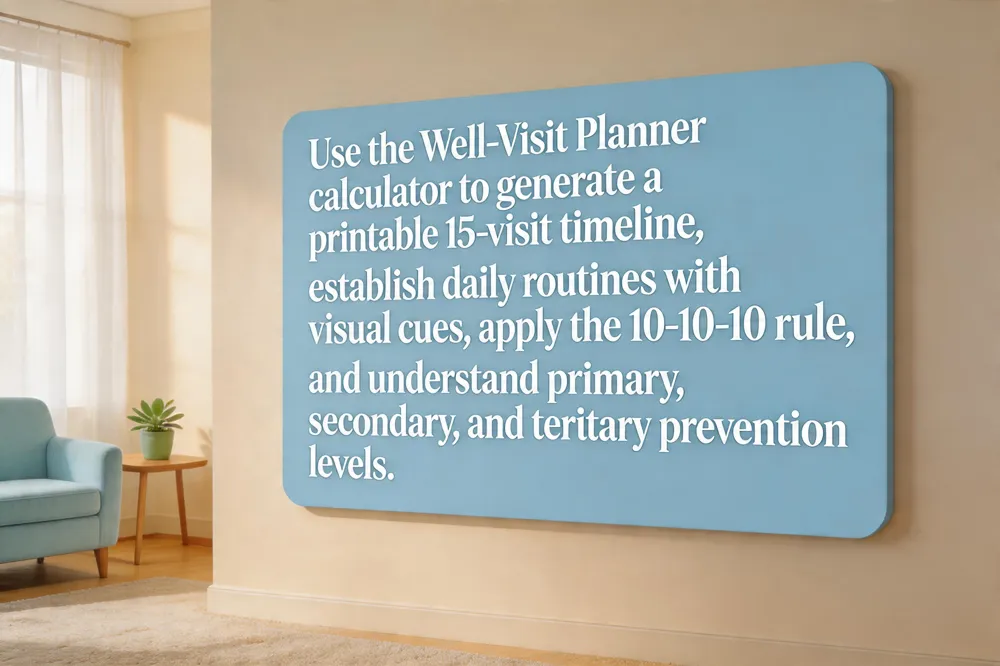 Creating a child‑focused preventive plan starts with a reliable schedule. A Well‑Visit Planner calculator lets parents enter their child’s birthdate and instantly produces the AAP‑aligned 15‑visit timeline from the first week of life through age 6. The tool highlights each age‑specific window, offers printable guides, and can be uploaded to a patient portal for the pediatrician.
How to create a routine for kids? Choose a daily anchor—wake‑up, meals, or bedtime—and break it into a short, ordered list of steps (e.g., brush teeth, pajamas, story). Use visual cue cards for younger children and written checklists for older ones, letting the child pick details to foster ownership. When changes are needed, give advance notice and adjust gradually (e.g., 10‑minute increments) to keep the routine stable.
What is the 10‑10‑10 rule for kids? Provide three focused 10‑minute interactions each day: after waking, when you return home, and before sleep. These brief, intentional moments build connection and set a positive tone.
Levels of prevention in pediatric care include primary (immunizations to stop disease), secondary (early screenings such as anemia, vision, and hearing checks), and tertiary (management plans for conditions like asthma to prevent complications).
Integrating these strategies ensures families stay on track with well‑child visits, support healthy habits, and protect children’s long‑term wellbeing.
Practical Considerations for Parents
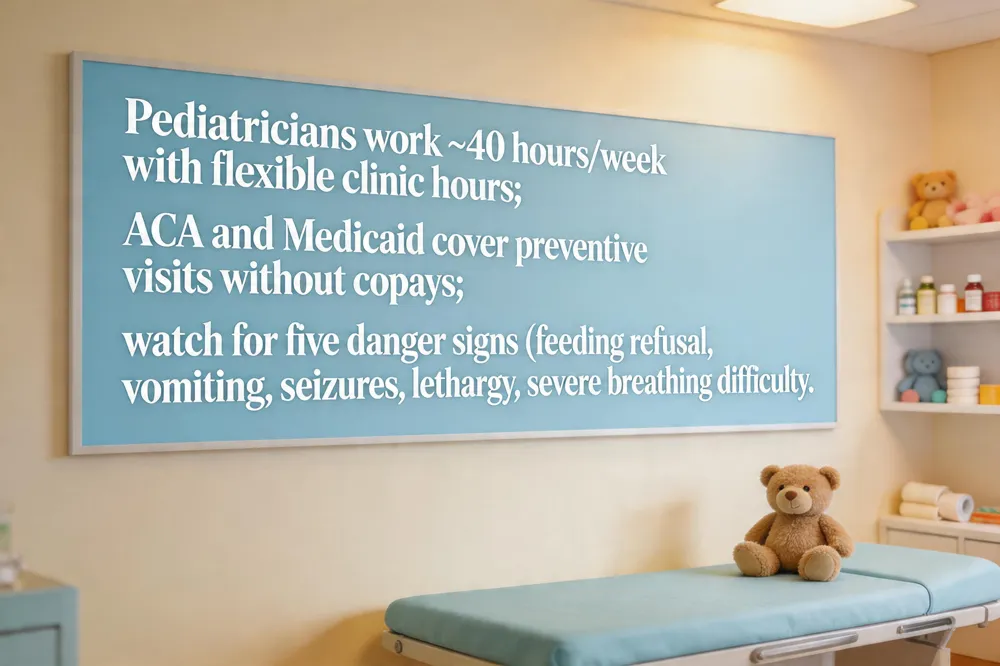 Parents often wonder what a pediatrician’s work day looks like. A typical pediatrician works roughly a 40‑hour week split among half‑day clinic sessions, on‑call duties, and administrative tasks. Many offices offer evening or weekend hours to fit school schedules, and on‑call shifts rotate among colleagues to cover urgent sick visits or hospital rounds.
Legally, well‑child visits aren’t mandated by federal law, but most states require specific immunizations for school or daycare enrollment. The Affordable Care Act obligates private insurers and Medicaid to cover AAP‑recommended preventive visits without copays, and Medicaid’s EPSDT program ensures regular check‑ups for eligible children.
When a child falls ill, pediatricians use a structured sick‑visit template: chief complaint, symptom duration, focused history, brief review of systems, vital signs, growth data, allergies, and a systematic physical exam. The assessment outlines diagnosis, treatment plan, follow‑up instructions, and any needed referrals or immunizations.
Finally, recognize the five danger signs that demand immediate care: inability to breastfeed or drink, persistent vomiting, convulsions, lethargy or unconsciousness, and severe chest indrawing or difficulty breathing.
Vaccinations and Preventive Care Essentials
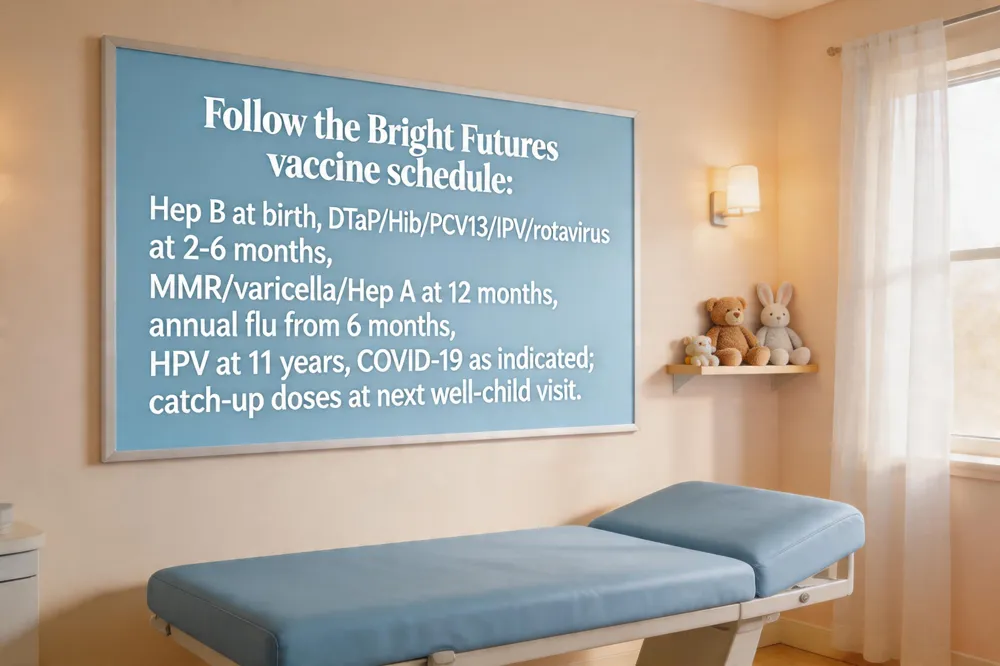 Well‑child visits are the cornerstone of preventive pediatric health. For a toddler, the schedule calls for a visit at the two‑year mark, followed by at least one annual appointment through the preschool years (ages 3‑5). Children with chronic conditions such as asthma or obesity may need more frequent check‑ups, and any acute concern should prompt an earlier visit. A routine pediatric check‑up is called a well‑child visit (also known as a preventive or annual wellness visit). During this appointment the pediatrician measures height, weight, and head circumference, screens development, updates immunizations, and offers anticipatory guidance on nutrition, safety, sleep, and behavior. The American Academy of Pediatrics’ Bright Futures Periodicity Schedule outlines visits at 3‑5 days, 1 mo, 2 mo, 4 mo, 6 mo, 9 mo, 12 mo, 15 mo, 18 mo, 2 yr, 2½ yr, 3 yr, 4 yr, 5 yr, then yearly through age 21, each including age‑specific screenings and counseling. The Bright Futures vaccine schedule follows the CDC recommendations: hepatitis B at birth, DTaP, Hib, PCV13, IPV, and rotavirus at 2, 4, 6 months, MMR, varicella, and hepatitis A at 12 months, annual flu from 6 months, HPV starting at age 11, and COVID‑19 when appropriate. Catch‑up doses are given at the next well‑child visit to keep children fully protected.
Take the First Step Toward a Healthier Future
Having a personalized well‑child schedule means each visit is tuned to your child’s unique growth pattern, health goals, and family priorities. When appointments match the AAP Bright Futures periodicity, parents receive targeted anticipatory guidance, timely immunizations, and early detection of developmental or behavioral concerns—saving time and preventing future problems. The free Well Visit Planner turns that customization into a simple, step‑by‑step guide: enter age, health objectives, and preferences, then receive printable resources, example questions for the provider, and secure sharing options. Families can save the guide in a family account or use it as a guest, ensuring the pediatrician sees the child’s full picture before the exam begins. Don’t wait—log in today, create your personalized guide, and call Kids & Teens Primary Healthcare to book the next well‑child visit. Together we’ll keep your child on the path to a healthier, happier future for life and peace of mind every day.