Welcome to Core Pediatric Care
This article explains why regular medical attention is vital for children and teenagers and how Kids & Teens Primary Healthcare makes that care accessible and supportive for families. The purpose is to highlight the role of well‑child visits, timely immunizations, growth screenings, and mental‑health checks in preventing illness and promoting healthy development. Kids & Teens Primary Healthcare provides family‑centered services from birth through age 21, offering comprehensive well‑child exams, nutrition counseling, chronic‑condition management, and confidential teen health discussions. Their team uses evidence‑based guidelines, offers flexible scheduling and telehealth options, and partners with parents to create a continuous medical home that safeguards each child’s short‑ and long‑term well‑being.
What Pediatric Care Is and Who Provides It
Quick Reference Table
| Provider Type | Training & Certification | Age Range Served | Core Responsibilities |
|---|---|---|---|
| Pediatrician | Medical degree + 3‑year pediatric residency; board‑certified in pediatrics | Birth‑21 years | Growth & development monitoring, immunizations, acute & chronic disease management, preventive counseling |
| Family Physician | Medical degree + 3‑year family medicine residency; board‑certified in family medicine | All ages (including children) | Primary‑care for whole family, routine well‑child visits, chronic disease management, referrals |
| Internist (Adult Medicine) | Medical degree + 3‑year internal‑medicine residency; board‑certified in internal medicine | Adults (typically 18+) | Focus on adult health; may see older adolescents for transition care |
| Nurse Practitioner / Physician Assistant (Pediatric focus) | Graduate nursing or PA program + pediatric clinical experience | Birth‑21 years | Assist with exams, vaccinations, health education, chronic disease follow‑up |
Use this table to identify the most appropriate clinician for a child’s health needs.
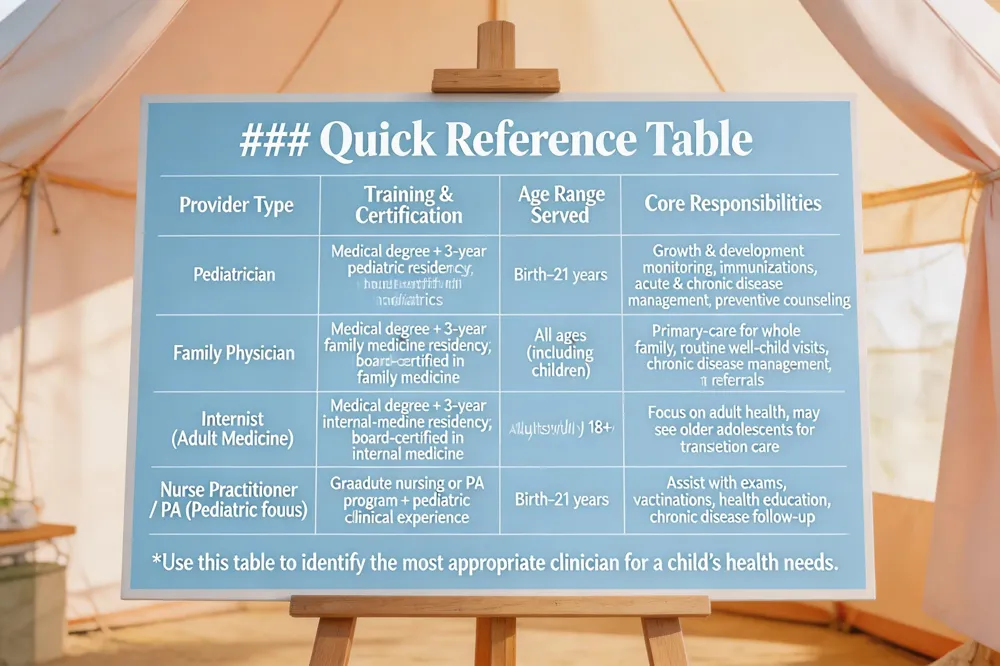 Pediatric care is the specialized medical care for infants, children, adolescents, and young adults up to age 21. It focuses on the physical, emotional, and developmental health of growing patients through preventive services—such as well‑child check‑ups, immunizations, vision and hearing screenings—and the diagnosis and treatment of acute illnesses and chronic conditions like asthma, obesity, and mental‑health concerns. A pediatrician is the doctor who serves as the primary‑care provider for this age group; trained in a three‑year residency after medical school, they understand normal growth curves, developmental milestones, and age‑appropriate nutrition, safety, and behavioral guidance. While pediatricians specialize exclusively in child health, primary‑care physicians—family doctors and some internists—also see children. Family physicians provide care for patients of all ages, making them a convenient option for whole‑family health, whereas internal‑medicine doctors typically focus on adults. Basic knowledge of pediatrics includes growth and developmental surveillance, preventive immunizations (e.g., hepatitis B, DTaP, MMR, annual flu), nutrition counseling, safety measures (car seats, safe sleep), and the ability to coordinate care with specialists when needed.
Well‑Child Visit Schedule and Checklist
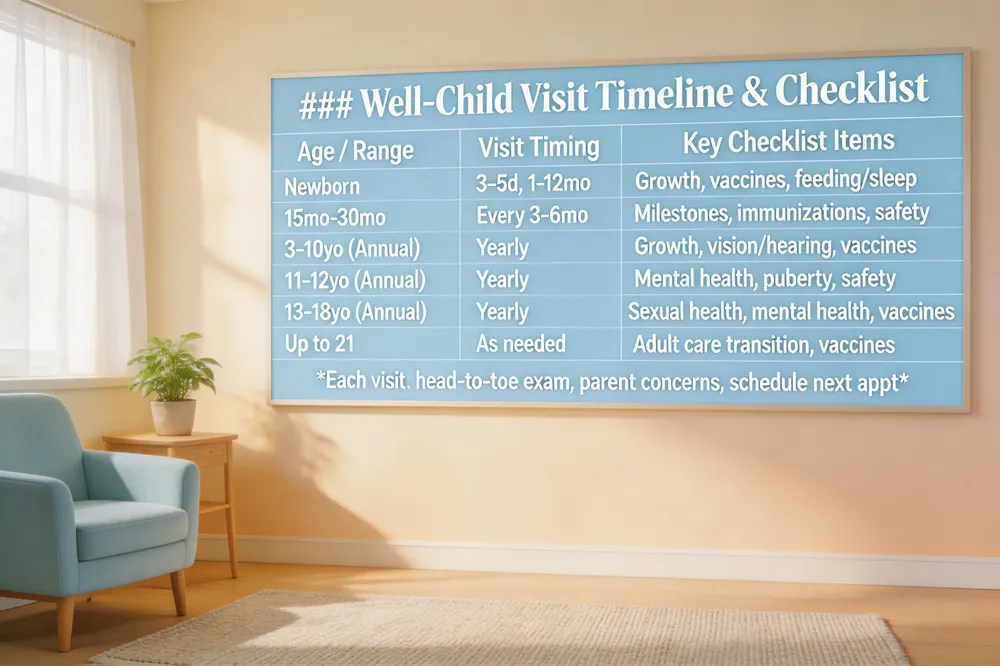
Well‑Child Visit Timeline & Checklist
| Age / Range | Visit Timing (per Bright Futures) | Key Checklist Items |
|---|---|---|
| Newborn | 3–5 days, 1 mo, 2 mo, 4 mo, 6 mo, 9 mo, 12 mo | Weight/height/head circumference, newborn screen results, feeding & sleep counseling, first vaccine series |
| 15 mo, 18 mo, 2 y (24 mo), 2½ y (30 mo) | Every 3‑6 mo | Developmental milestones, growth chart, immunizations (DTaP, Hib, IPV, MMR, Varicella), safety (car seat, fall prevention) |
| Ages 3‑10 (annual) | Yearly | Growth & BMI, developmental screening, vision/hearing (if indicated), immunizations, anticipatory guidance (nutrition, activity, safety) |
| Ages 11‑12 (annual) | Yearly | Add vision & hearing screenings, mental‑health red‑flag screening, puberty education, sports‑related safety |
| Ages 13‑18 (annual) | Yearly | Nutrition, sexual‑health education, risk‑behavior counseling, mental‑health screening, vaccine updates (HPV, meningococcal) |
| Up to 21 (transition) | As needed (often at 21) | Review health maintenance, final immunizations, transition to adult care, discuss future health goals |
Each visit should also include a head‑to‑toe physical exam, review of parental concerns, and scheduling of the next appointment.
 Well‑child visits by age
Newborns should be seen at 3–5 days, 1 month, 2 months, 4 months, 6 months, 9 months, and 12 months. After the first year, visits occur at 15 months, 18 months, 2 years (24 months) and 2½ years (30 months). From age 3 through age 10 a well‑child exam is performed yearly, focusing on growth, development, immunizations and safety counseling. Ages 11‑12 continue annual visits that add vision, hearing and mental‑health screening, while teens (13‑18) have yearly exams that include nutrition, sexual‑health education and risk‑behavior counseling. Young adults up to age 21 may schedule a final transition visit to review health maintenance, vaccinations and any ongoing concerns.
Well‑child visits by age
Newborns should be seen at 3–5 days, 1 month, 2 months, 4 months, 6 months, 9 months, and 12 months. After the first year, visits occur at 15 months, 18 months, 2 years (24 months) and 2½ years (30 months). From age 3 through age 10 a well‑child exam is performed yearly, focusing on growth, development, immunizations and safety counseling. Ages 11‑12 continue annual visits that add vision, hearing and mental‑health screening, while teens (13‑18) have yearly exams that include nutrition, sexual‑health education and risk‑behavior counseling. Young adults up to age 21 may schedule a final transition visit to review health maintenance, vaccinations and any ongoing concerns.
Well‑child visit checklist for providers A provider should first review the child’s growth parameters—weight, height, head circumference, and BMI—plotting them on age‑appropriate CDC/AP growth charts and noting any percentile shifts. Next, assess developmental milestones and conduct a comprehensive head‑to‑toe physical exam, including heart, lung, abdominal, musculoskeletal, skin, and sensory (vision and hearing) screenings as indicated by age. Update the immunization record and administer any pending vaccines, while also reviewing newborn screening results and other age‑specific labs such as anemia or lead testing. Provide anticipatory guidance covering nutrition, sleep, physical activity, screen time, safety (home, car, water), and discuss mental‑health red flags, including anxiety, depression, and behavioral concerns. Finally, address parental questions, reinforce preventive counseling, and schedule the next well‑child visit according to the Bright Futures periodicity schedule.
Healthy Habits for Kids and Teens
Core Healthy‑Habit Checklist
| Habit | Recommended Goal | Practical Tips |
|---|---|---|
| Nutrition | 5‑7 servings of fruits & veg; whole grains; lean protein; low‑fat dairy; water instead of sugary drinks | Fill half plate with veggies/fruits, choose water or milk, involve kids in grocery shopping |
| Physical Activity | ≥ 60 min moderate‑to‑vigorous activity daily | Play outdoors, bike, dance, sports; break up sedentary time every 30 min |
| Sleep | 9‑11 h (kids), 8‑10 h (teens) | Consistent bedtime, screen‑free wind‑down, dim lights, quiet room |
| Stress Management | Daily coping practice | Mindfulness, journaling, talking with trusted adult, limit caffeine & screen overload |
| Screen Time | ≤ 2 h recreational for kids, ≤ 1 h for school‑age; replace extra minutes with active play or reading | Use parental‑control apps, set device‑free zones (e.g., meals, bedrooms) |
| Student Health | Balanced lunch, hydration, posture, movement breaks, restorative sleep | Pack fruit/veg, keep water bottle, ergonomic backpack, 5‑minute stretch every 30 min |
These habits form the foundation for lifelong wellness.
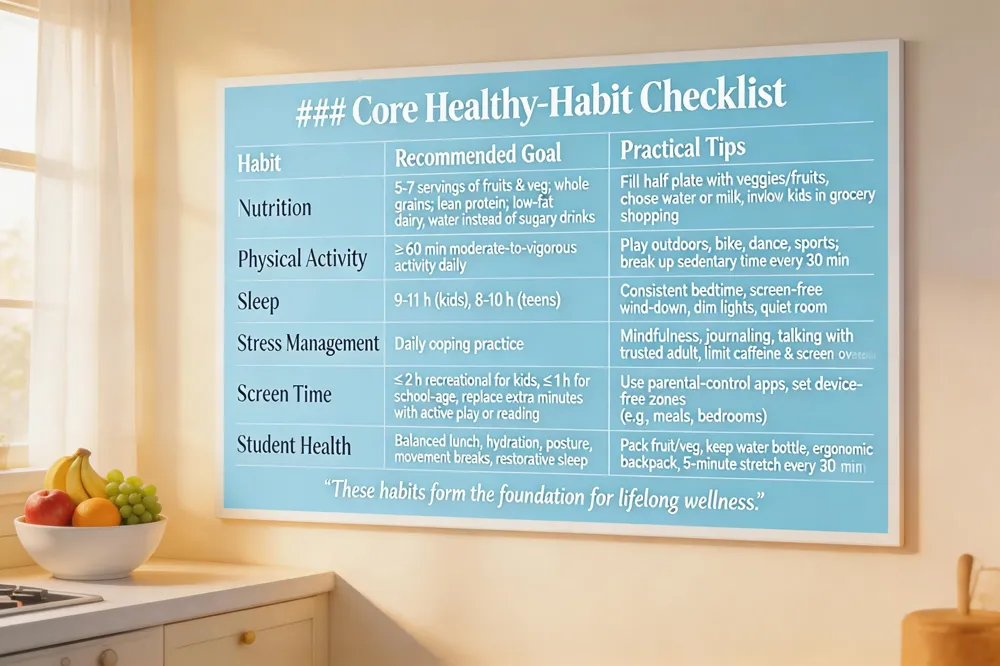 Guiding children and adolescents toward lifelong well‑being starts with six core habits.
Nutrition – Offer a colorful variety of fruits, vegetables, whole grains, lean proteins and low‑fat dairy each day, and encourage water instead of sugary drinks.
Physical activity – Aim for at least 60 minutes of moderate‑to‑vigorous movement daily—playing outdoors, biking, sports, dance or age‑building exercises.
Sleep hygiene – Children need 9‑11 hours, teens 8‑10 hours of restful sleep; keep a consistent bedtime routine and a screen‑free wind‑down period.
Stress management – Teach mindfulness, journaling or talking with trusted adults; limit risky behaviors such as vaping, tobacco and excessive alcohol.
Screen time – Keep recreational screen use under two hours for kids and under one hour for school‑age children, replacing extra minutes with active play or reading.
Student health tips – Pack balanced lunches, drink water, practice good posture, take short movement breaks every 20‑30 minutes, and prioritize restorative sleep.
Answering common questions:
- 8 healthy habits for kids – Eat a colorful diet, stay active 60 min, limit screen time, get 9‑11 hrs sleep, brush teeth twice daily, wash hands, schedule well‑child visits, model healthy choices, and maintain a smoke‑free home.
- Healthy habits for teens – Prioritize 8‑10 hrs sleep, balanced diet, 60 min daily activity, good hygiene, stress‑management techniques, and avoid risky substances.
- 5 student health tips – Balanced lunch, hydrate with water, limit screens, practice ergonomics, and ensure consistent restorative sleep.
Preventive Health: Immunizations, Safety, and Developmental Screening
Preventive‑Care Summary Table
| Category | Example(s) | Typical Frequency / Timing |
|---|---|---|
| Immunizations | Hepatitis B, DTaP, Hib, IPV, PCV13, Rotavirus, MMR, Varicella, Annual Influenza | Birth → 21 y per AAP‑CDC schedule (e.g., 2 mo, 4 mo, 6 mo, 12‑15 mo, 4‑6 y, 11‑12 y, 16 y) |
| Safety Measures | Rear‑facing car seat, helmets, smoke detectors, child‑proof locks | At every well‑child visit; update as child ages (e.g., forward‑facing seat at 2 y) |
| Developmental Screening | Ages & Stages Questionnaire, Denver Developmental Screening Test | At 9 mo, 18 mo, 30 mo, 4 y, 5 y, then annually through school age |
| Mental‑Health Screening | PHQ‑9, GAD‑7, behavioral questionnaires | Starting at age 5, then annually (or sooner if concerns) |
| Dental & Vision | Toothbrushing with fluoride toothpaste, vision acuity test | Dental visit by 1 y, then every 6 mo; vision screen at preschool and school entry |
Regular adherence to this schedule promotes optimal health and early detection of issues.
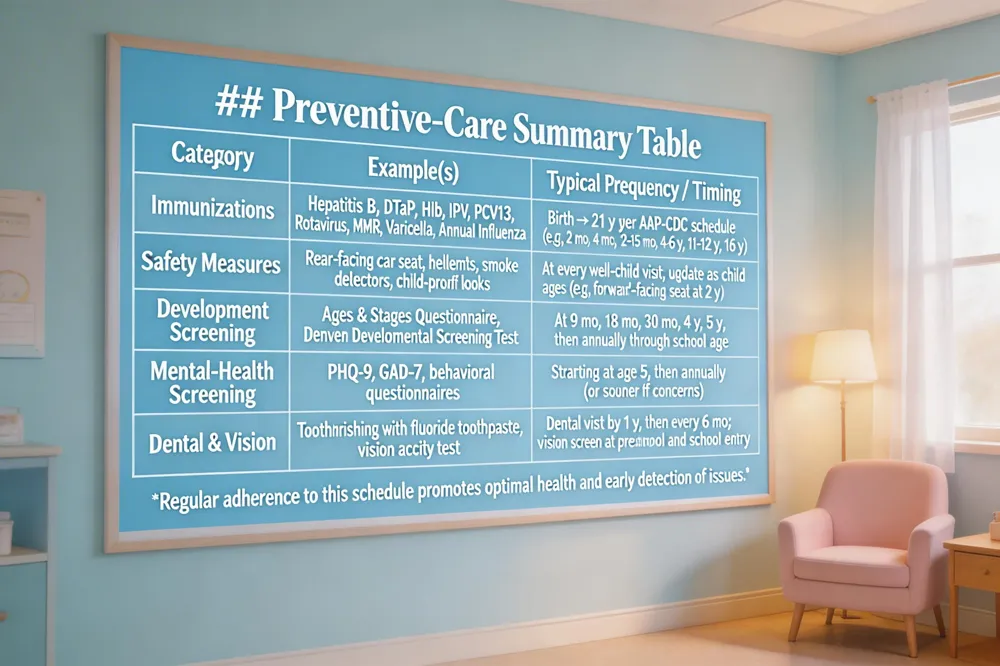 A solid preventive‑care plan starts with the AAP‑CDC immunization schedule: vaccines such as hepatitis B, DTaP, Hib, IPV, PCV13, rotavirus, MMR, varicella, and annual flu shots protect children from serious disease from birth through age 21. Safety measures—rear‑facing car seats, helmets, smoke detectors, and child‑proofed homes—greatly reduce preventable injuries. At each well‑child visit, pediatricians use tools like the Ages and Stages Questionnaire to screen developmental milestones and refer early for speech, motor, or cognitive delays. Mental‑health screening for anxiety, depression, and behavioral issues begins at age 5 and continues annually, ensuring early support. Finally, dental care should start with the first tooth (brush twice daily with fluoride toothpaste) and vision screenings at preschool age help catch problems that could affect learning.
Family Resources and Access to Care
Resource‑Access Overview
| Resource | What It Offers | How to Access |
|---|---|---|
| Medicaid / CHIP | Low‑cost or free health insurance for eligible children | Apply online via state Medicaid portal, through pediatric office staff, or at local health department |
| Patient Portals & Telehealth | View notes, request refills, video visits | Sign up through your clinic’s website or ask the front desk for enrollment instructions |
| After‑Hours Support (24/7 line, urgent‑care triage) | Immediate advice for urgent concerns when office closed | Call the clinic’s after‑hours number (often listed on after card) or use the telehealth app for urgent consults |
| Community Programs (health departments, school health, nonprofit workshops) | Nutrition classes, immunization clinics, safety education | Search local health department website, ask school nurse, or check community center bulletin boards |
| Parenting Education (core principles & 4 S attachment) | Guidance on empathy, routines, rules, coaching, attachment | Attend workshops offered by hospitals, nonprofit families, or online webinars (e.g., AAP Parenting Resources) |
Leverage these resources to reduce barriers and support comprehensive pediatric care.
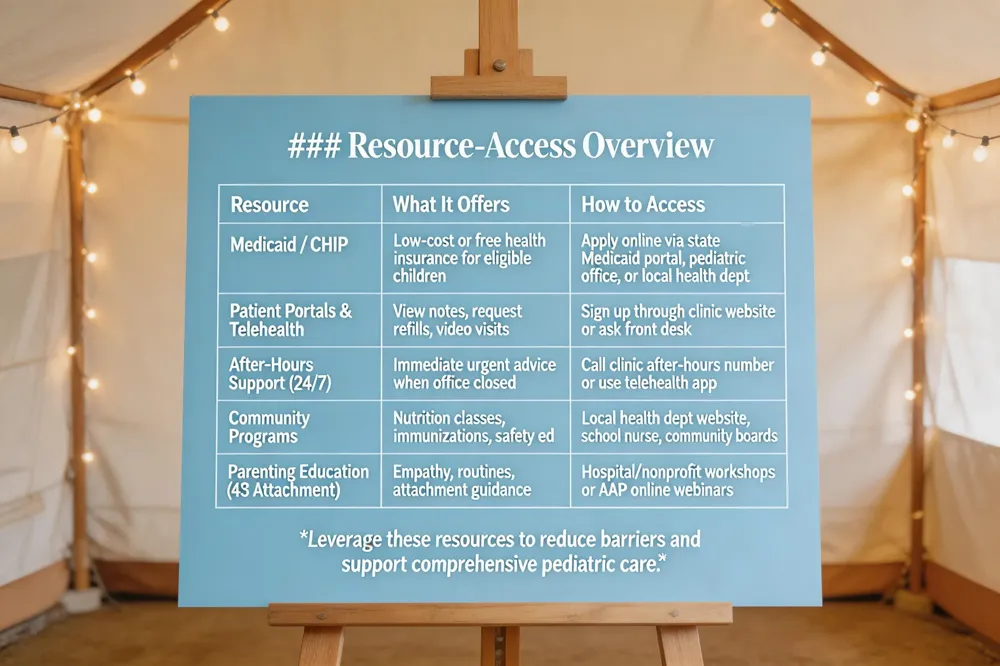 Navigating pediatric health becomes easier when families know the tools at their fingertips. Insurance options such as Medicaid and the Children’s Health Insurance Program (CHIP) provide low‑cost or free coverage for most U.S. children, and many pediatric offices have staff who help with enrollment and billing. Patient portals and telehealth let parents view visit notes, request refills, and video‑chat with a pediatrician without leaving home, reducing missed appointments and travel time. After‑hours support—often a 24/7 on‑call line or urgent‑care triage—ensures that urgent concerns are addressed promptly, even when the clinic is closed. Community resources like local health departments, school health programs, and nonprofit parenting workshops offer nutrition classes, immunization clinics, and safety education that complement office‑based care.
What are the core parenting principles? Core parenting principles combine five universal strategies—attention and empathy, predictable daily routines, consistent sequencing within routines, clear household rules, and coaching skills—with the four S’s of attachment (Seen, Soothed, Safe, Secure). Together they promote a nurturing, stable environment that supports children’s emotional and physical development.
Putting It All Together
Key Takeaways: Visits let pediatricians monitor growth, milestones, immunizations and signs of asthma or obesity. Recommended vaccines protect against disease, and breastfeeding for six months followed by a diet with fruits, vegetables, whole grains and protein supports health. Activity, sleep, screen time and safety measures such as car‑seat use and safe sleep are essential.
Next Steps for Parents: Book the next visit per Bright Futures, update immunization records, and complete an Ages and Stages screen. Set routines with meals, bedtime and activity, and verify car‑seat safety. Keep in touch with your pediatrician and discuss mental‑health screening and insurance options.