Why Confidentiality Matters
Confidential teen visits are brief, private portions of a health‑care appointment in which the adolescent meets alone with the clinician to discuss sensitive issues such as sexual activity, mental‑health concerns, substance use, or gender‑identity questions. Federal law—primarily HIPAA and FERPA—sets a baseline privacy floor, while every state has statutes that let minors consent to STI testing, contraception, mental‑health counseling, and substance‑abuse treatment without parent notification, with exceptions for imminent harm or abuse. When teens trust that their disclosures stay private, they are far more likely to seek care, share accurate risk information, and follow treatment plans, leading to lower rates of untreated STIs, unintended pregnancies, depression, and substance‑related injury.
Key Confidential Health Issues for Teens
 What is the most common health problem among teenagers in the United States? nThe most common health problem among U.S. teenagers is mental‑health illness. Conditions such as anxiety, depression, ADHD and other mood disorders affect a large share of adolescents, with roughly four‑in‑ten high‑school students reporting persistent feelings of sadness or hopelessness. Suicide, a tragic outcome of untreated mental‑health disorders, is the second leading cause of death for people aged 15‑24. Early identification, counseling, and appropriate treatment are essential to protect teens’ well‑being.
Why is privacy important for teenage health care? nPrivacy is essential because it builds the trust teens need to be honest about sensitive issues such as sexual health, mental‑health concerns, or substance‑use habits. When adolescents know their information will be kept confidential, they are far more likely to seek care promptly rather than avoid it out of fear that parents will be automatically notified. Confidential care also encourages follow‑up visits and adherence to treatment plans, leading to better long‑term outcomes. Legally and ethically, pediatricians follow AAP recommendations that protect adolescent privacy while still involving families when appropriate. Respecting privacy empowers teens to take control of their health.
What health‑risk behaviors are most common among U.S. teens? nU.S. teens most commonly engage in high‑risk substance use—drinking alcohol, vaping e‑cigarettes, and using illicit drugs. They also frequently experience unsafe sexual behaviors; about 39.5 % have ever had intercourse, and many do not use condoms consistently, raising the risk of STIs and unintended pregnancy. Violence‑related risks, including dating violence, bullying, and physical fights, are prevalent, as are risky driving behaviors that lead to injuries. Together, these behaviors contribute to a high burden of preventable injuries, STIs, unintended pregnancies, and long‑term health problems.
When Confidentiality Must Be Broken
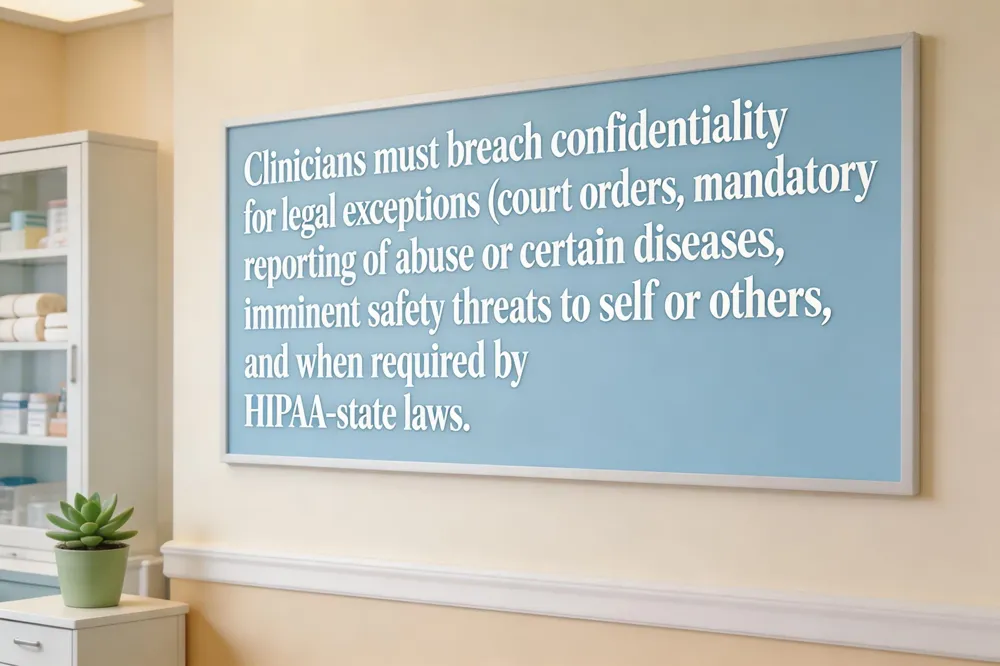 Adolescent confidentiality is a legal right, but there are clearly defined exceptions that compel a clinician to disclose information. Legal exceptions include court‑ordered releases, subpoenas, and state‑mandated reporting for child abuse, neglect, certain communicable diseases, and, in some jurisdictions, gun‑related safety concerns. Safety concerns arise when a teen poses an imminent danger to themselves (e.g., suicidal intent) or others (e.g., threats of violence); providers must break confidentiality to arrange emergency protection. Reporting requirements also cover mandatory disclosures for abuse, neglect, and specific infectious diseases, even when the teen has consented to confidential care.
Under what circumstances can a doctor break confidentiality for a teen? A physician may disclose without consent if the teen is an immediate threat to self or others, if abuse or neglect is suspected, for certain infectious diseases, or if a court order or subpoena demands the records.
How does HIPAA protect a minor’s medical information? HIPAA treats parents as personal representatives but respects state‑provided rights: when a minor can legally consent—e.g., for STI testing, contraception, mental‑health or substance‑use treatment—the minor’s consent overrides parental access, and the provider may withhold information unless required by law.
Can a teen in Texas see a doctor without a parent’s presence or consent? Yes, Texas allows teens 16 and older to obtain reproductive health, mental‑health, substance‑use, and STI services without parental presence. Routine care still generally requires parental consent, but emergencies and certain court‑ordered situations are exceptions.
Practical Guidance for Parents and Teens
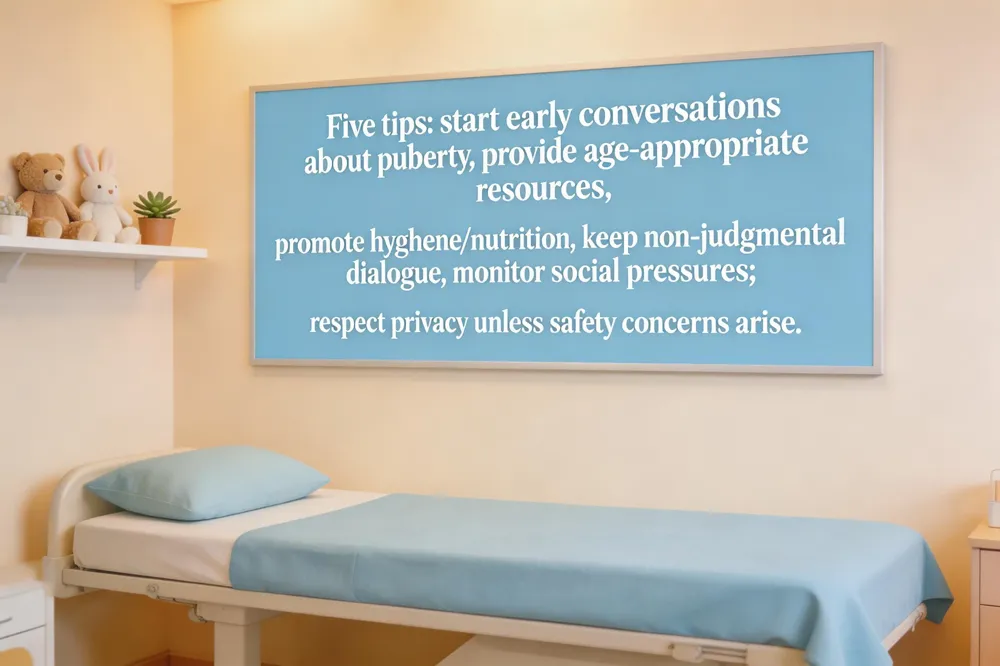 Navigating puberty, respecting privacy, and keeping communication open are the cornerstones of a healthy teen years. When families treat these topics as collaborative journeys rather than battles, adolescents feel safe, informed, and ready to make good choices.
What are five practical tips for parents and teens to navigate puberty comfortably? 1️⃣ Start early and speak openly about physical changes, reminding both that timing varies for each child. 2️⃣ Provide age‑appropriate resources—books, videos, or trusted websites—so teens can learn at their own pace. 3️⃣ Promote consistent hygiene and nutrition habits, including daily showers, deodorant, calcium‑rich foods, and regular exercise. 4️⃣ Keep communication non‑judgmental and ongoing; listen actively, validate feelings, and answer follow‑up questions without criticism. 5️⃣ Monitor social and school pressures, helping teens develop coping strategies for peer dynamics, body‑image concerns, and stress while reinforcing a supportive family environment.
Is it ever acceptable to invade a teenager’s privacy? Rarely. Privacy should be honored unless a clear safety‑related reason exists—evidence of self‑harm, illegal activity, or a credible threat. In those cases, the intrusion must be brief, transparent, and followed by an open conversation explaining why it was necessary. Trust builds far better than covert spying.
Can a therapist share a 17‑year‑old’s counseling information with the teen’s parents? Therapists keep sessions confidential unless the teen gives explicit permission or the law mandates disclosure for safety reasons (imminent self‑harm, harm to others, or suspected abuse). Even then, only the minimal information required is shared, protecting the teen’s trust while meeting legal obligations.
State and Federal Policies Shaping Confidential Care
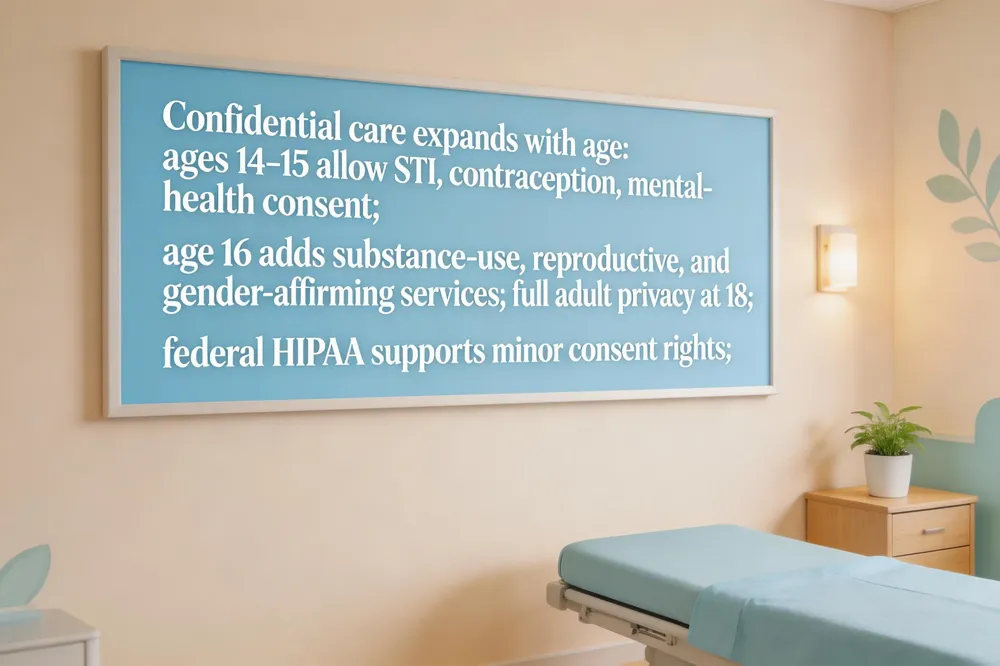 State consent laws vary by age and service. In most states parents can access a child’s medical record and must consent to routine care for those under 14, limiting confidentiality. By ages 14‑15 many states permit teens to consent to and keep confidential services such as STI testing, contraception, and mental‑health counseling. At age 16 a broader range—substance‑use treatment, additional reproductive health care, and gender‑affirming services—can be obtained without parental notification, and the records are protected. Once a minor turns 18, full adult privacy rights apply. Providers must still disclose information when a teen poses a danger to self or others.
Sensitive medical issues teens can seek confidential care for – Sexual and reproductive health (STI testing, birth‑control, pregnancy counseling, abortion‑related care), mental‑health treatment (depression, anxiety, self‑harm counseling), substance‑use counseling (alcohol, tobacco, vaping, illicit drugs), and gender‑identity/LGBTQ+ services are all covered by state‑specific confidentiality statutes and must be kept separate from parental portal access.
AAP stance on adolescent confidentiality – The American Academy of Pediatrics emphasizes that confidentiality is essential for trust and honest disclosure. Clinicians should discuss confidentiality at every visit, explain limits (safety concerns, mandatory reporting), obtain teen assent, and use EHR safeguards to segment sensitive data. Clear policies shared through patient portals and consistent staff training improve health outcomes and support family‑centered care.
Implementing Confidentiality in Practice
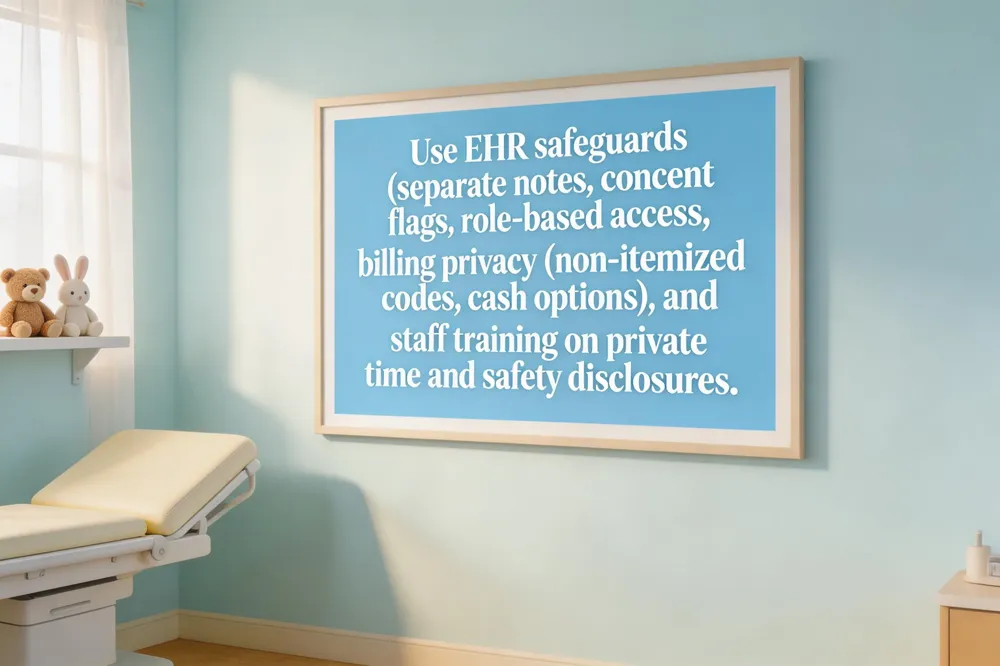 Protecting adolescent privacy starts with robust EHR safeguards—use separate confidential notes, granular consent flags, and role‑based access so parents can’t see sensitive sexual‑health, mental‑health, or substance‑use entries. Pair this with billing privacy strategies: request non‑itemized codes, offer cash or confidential insurance options, and educate teens about explanation‑of‑benefits statements that might reveal services. Finally, staff training is essential; regular, state‑specific workshops ensure every team member knows how to handle private time, document consent, and respond to safety‑risk disclosures. Together, these steps build trust and encourage teens to seek the care they need.
Putting Confidentiality Into Action
Helping your teen feel safe is the first step toward better health. Start by reviewing your state’s consent laws—most states let adolescents obtain STI testing, contraception, mental‑health counseling, and substance‑use treatment without parental notification. Talk openly with your teen about the clinic’s confidentiality policy and explain that private time during the visit is protected unless there is a danger to self or others. Use resources such as the CDC’s teen health portal, the Guttmacher Institute’s state guide, and local Title X clinics that offer confidential care. Finally, call the office to schedule a 10‑15‑minute private portion of the next appointment, and ask the staff to flag sensitive notes in the record.