Understanding the ADHD Evaluation Journey
A thorough evaluation is essential because ADHD symptoms can mimic anxiety, learning gaps, sleep or thyroid problems, and a accurate diagnosis guides safe, effective treatment. At CHOP and other reputable centers, the process begins with a pre‑appointment interview and online parent‑teacher questionnaires, followed by a 1‑2‑hour face‑to‑face clinical interview, review of medical, school and prior records, and rating‑scale scoring. Families receive written summaries and feedback within a few days to weeks, with recommendations for medication, behavioral strategies, and school accommodations—ensuring the child gets the right care early and preventing unnecessary delays.
The Role of Pediatricians in ADHD Testing
 How do pediatricians test for ADHD?
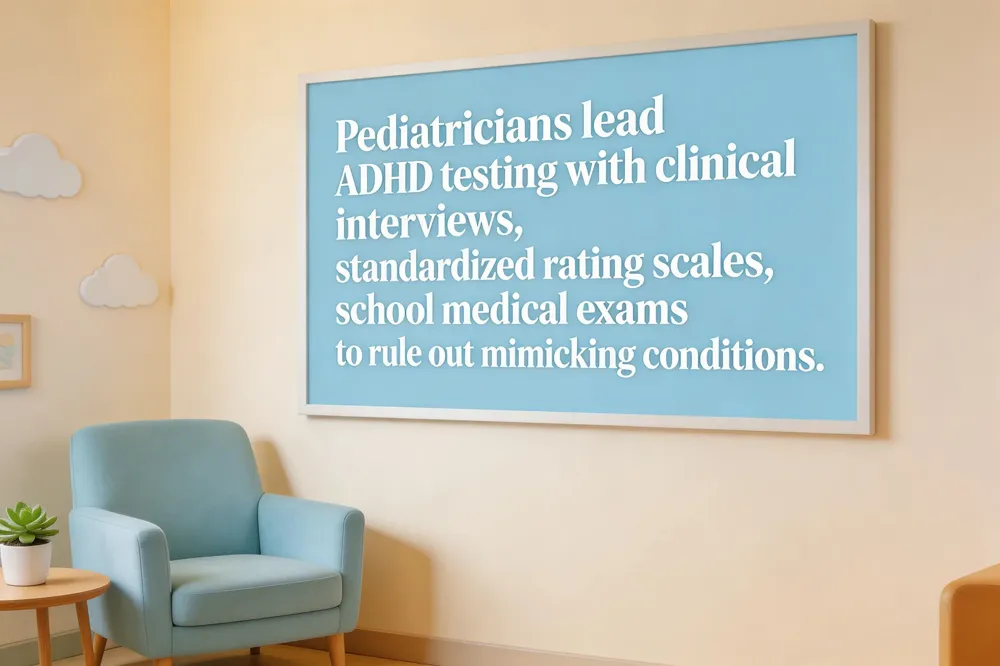
Pediatricians begin with a thorough clinical interview of the child and parents, exploring developmental milestones, behavior at home and school, and family mental‑health history. They then collect standardized behavior rating scales—such as the Vanderbilt or Conners questionnaires—completed by parents and teachers to compare the child’s behavior against age‑appropriate norms. A review of school records, report cards, and any prior assessments is done, and a brief physical exam (and labs if needed) helps rule out medical conditions that can mimic ADHD, like thyroid problems or sleep disorders. When the picture is unclear or learning‑difficulty concerns arise, the pediatrician may refer the child for neuropsychological testing or to a specialist for a more comprehensive evaluation.
What are the DSM‑5 criteria for ADHD in children?
The DSM‑5 requires at least six of nine inattention symptoms or six of nine hyperactivity‑impulsivity symptoms (or both) persisting for six months or more. Symptoms must be present in two or more settings (e.g., home and school) and cause functional impairment in academic, social, or daily activities. Onset must be before age 12. The diagnosis can be classified as inattentive, hyperactive‑impulsive, or combined. Importantly, the symptoms cannot be better explained by another mental disorder or medical condition. Early pediatric involvement ensures accurate identification and timely support for children and teens.
Who Can Diagnose ADHD in Your Child and Which Tools Are Used
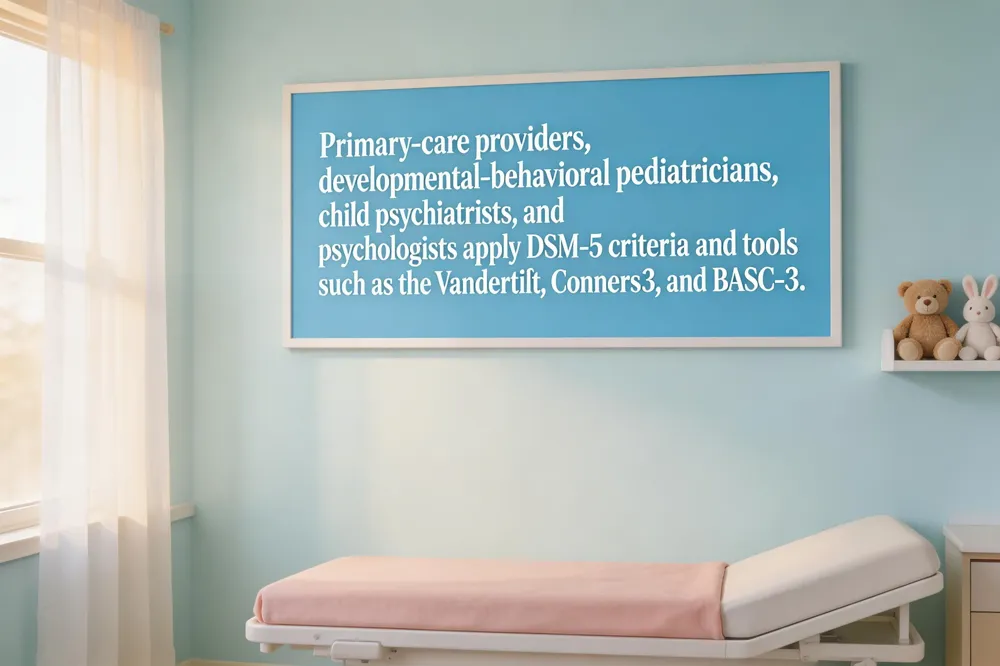 In the United States, the first line of assessment is usually the child’s primary‑care provider—pediatrician or family doctor—who has training in behavioral health. When the picture is complex, specialists such as developmental‑behavioral pediatricians, child psychiatrists, or licensed child psychologists may take over the diagnostic interview. All of these clinicians use the same core process: a detailed developmental and medical history, observation of behavior, and the DSM‑5‑TR criteria that require six or more symptoms of inattention or hyperactivity‑impulsivity for at least six months, onset before age 12, and impairment in two or more settings.
Common assessment instruments include parent‑ and teacher‑completed rating scales such as the Vanderbilt Rating Scales, Conners 3, ADHD Rating Scale‑5, the Behavior Assessment System for Children (BASC‑3), and the Child Behavior Checklist (CBCL). Structured interviews—K‑SADS, Diagnostic Interview Schedule for Children—supplement these questionnaires, and brief neuro‑performance tasks (continuous‑performance tests) help quantify attention and impulse control. Clinicians often collaborate with school staff, psychologists, and, when needed, neuropsychologists to gather a full multi‑informant picture before delivering a diagnosis and treatment plan.
Finding an Evaluation Site and Understanding the Vanderbilt Scale
 When you notice your child struggling with attention, impulsivity, or hyperactivity, the first step is to talk to your primary pediatrician. The doctor can complete a brief screening and, if needed, refer you to a specialist. In most U.S. cities, children’s hospitals (such as CHOP’s Center for Management of ADHD) and university‑affiliated developmental‑behavioral clinics offer dedicated evaluation slots. Private child psychologists, psychiatrists, or neurodevelopmental pediatricians also provide comprehensive assessments, and many accept insurance when the provider is in‑network. For families seeking quicker access, multidisciplinary clinics within academic medical centers or tele‑health options can start the process from home.
The Vanderbilt ADHD assessment is the most widely used rating scale in these evaluations. Parents and teachers each fill out a questionnaire that rates 18 core ADHD behaviors on a four‑point scale, plus items that gauge academic performance and screen for common comorbidities such as oppositional‑defiant disorder. Scores that meet DSM‑5 cut‑offs in both settings help clinicians confirm a diagnosis and shape individualized treatment plans. Using the Vanderbilt scale ensures that the child's challenges are documented objectively, guiding both medication decisions and behavioral interventions.
The key is locating a qualified evaluation site, completing the Vanderbilt questionnaires before the appointment, and discussing the results with your provider are essential steps toward securing the right support for your child’s success.
Timing, Feedback, and Next Steps After Diagnosis
 How long does an ADHD assessment take for a child?
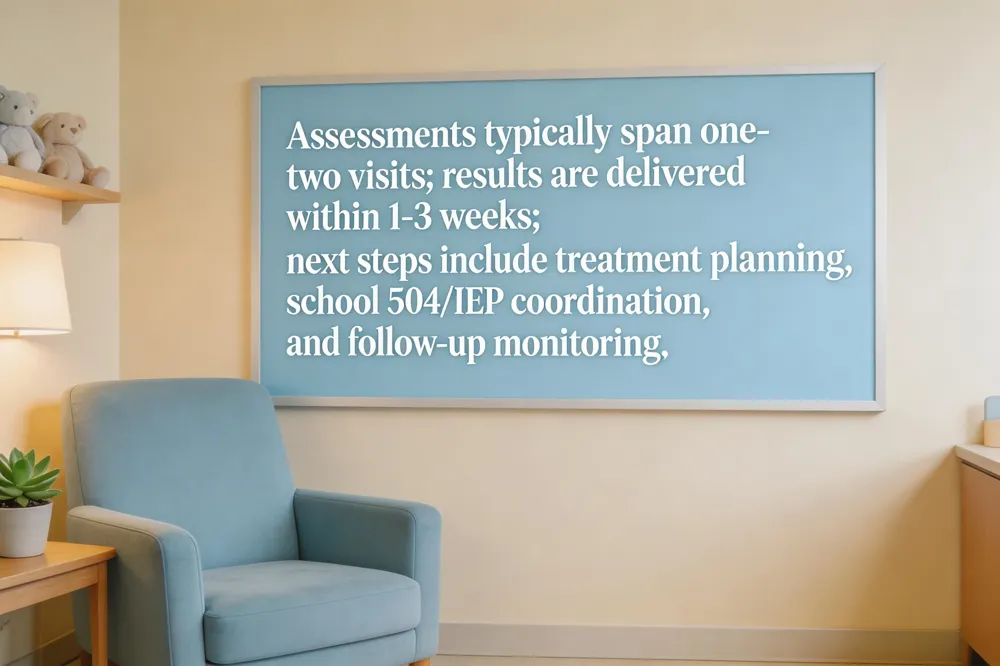
A typical child ADHD assessment at a specialty center such as CHOP or a community clinic includes a face‑to‑face clinical interview lasting 60‑90 minutes, plus online parent and teacher rating scales (30‑60 minutes each). Some programs add brief attention or executive‑function tasks, which can add another 1‑2 hours of testing. Most families complete data collection in one or two visits, and clinicians aim to finalize the report within 2‑4 weeks of the first appointment. The exact timeline depends on appointment availability and how promptly questionnaires are returned.
How and when are results delivered?
CHOP and many other providers give feedback either the same day or schedule a follow‑up visit within one to three weeks. Families receive a written summary outlining diagnostic impressions, symptom severity, and treatment recommendations that can be shared with schools, pediatricians, or other providers.
What are the next steps after an ADHD diagnosis in a child?
Parents should educate themselves about ADHD, discuss the diagnosis in an age‑appropriate way with the child, and collaborate with the pediatrician to choose evidence‑based treatments (medication, behavioral therapy, lifestyle changes). Coordination with the school to develop a 504 plan or IEP is essential, and regular follow‑up visits help monitor progress and adjust the care plan.
Supporting Your Child at Home and Recognizing Adult Differences
 Adult ADHD assessment looks different. Rather than relying on teacher reports, clinicians conduct a detailed interview that reviews current functioning and retrospectively verifies childhood symptoms. Self‑report tools such as the ASRS‑v1.1, Conners’ Adult ADHD Rating Scale, and computerized tests like TOVA provide objective data. Collateral input from a spouse or close family member confirms symptom presence across work, home, and social settings. The evaluation screens for comorbid medical and psychiatric conditions, applies a higher symptom threshold (five or more), and focuses on how ADHD impacts daily organization and relationships.
When a teen ages out of pediatric services, a smooth transition to adult care involves sharing the evaluation summary, discussing medication management, and connecting with an adult‑focused mental‑health provider. Early, coordinated medical attention—whether in childhood or adulthood—remains essential for optimal outcomes.
Adult Diagnosis and the Full Scope of a Comprehensive ADHD Evaluation
 A comprehensive evaluation goes far beyond a quick questionnaire. It starts with a detailed intake interview covering developmental history, work performance, home life, and social relationships. Standardized rating scales are completed by the adult and, when possible, by close informants such as a spouse or partner. Clinicians review medical, psychiatric, and medication records, conduct a physical exam to rule out medical mimics (e.g., thyroid disorders, sleep problems), and may include brief cognitive or executive‑function tasks. The goal is to confirm ADHD, rule out alternative explanations, and identify any co‑occurring conditions.
These adult evaluation components mirror the principles used in pediatric assessments—multiple informants, review of school or work records, and systematic ruling out of other conditions—ensuring continuity of care across the lifespan.
Putting It All Together
At CHOP’s ADHD Center the journey begins with a PCP referral, followed by a 1‑2‑hour diagnostic interview, parent and teacher rating scales, and review of school and medical records. The evaluation does not include IQ testing unless needed, and results are delivered the same day or within three weeks. Successful outcomes rely on teamwork: families share observations, clinicians interpret data, and schools provide classroom input. Parents should complete questionnaires, gather report cards, and schedule follow‑up appointments to start treatment promptly.