Why Distinguishing Matters
Knowing whether a child has a cold or the flu is more than a diagnostic detail—it influences health outcomes. Flu can cause fever, muscle aches, and complications such as pneumonia, especially in young children, teens, and those with asthma or diabetes; a cold usually stays mild and resolves in a week. Accurate identification guides parents in deciding when to keep a child home, when to use fever‑reducers, and when to seek urgent care for signs like trouble breathing, persistent fever, or dehydration. Early antiviral treatment for flu can shorten illness and reduce complications, while supportive care for a cold focuses on hydration and rest. Finally, recognizing the illness drives preventive actions—hand‑washing, cough etiquette, and annual flu vaccination—protecting child and community.
Key Symptom Differences
 When you’re trying to decide whether a child has a cold or the flu, focus on five hallmark clues.
Onset speed – Cold symptoms usually appear gradually over two to three days, starting with a sore throat or runny nose. Flu symptoms erupt suddenly, often within hours of exposure.
Fever patterns – Low‑grade fever (≤38 °C) or no fever is common with a cold. Flu typically brings a high fever (≥38 °C) that can reach 39‑40 °C and lasts three to four days.
Cough type – A cold produces a wet, productive cough with visible mucus. Flu usually causes a dry, persistent cough that can be painful and worsen at night.
Body aches – Mild or absent aches accompany a cold. Flu brings severe muscle and joint pain that can immobilize a child.
Energy levels – Children with a cold remain relatively active, playing between naps. Flu‑ill children experience profound fatigue, may sleep most of the day, and lose interest in food.
How to know if a child has a cold or flu? A cold develops gradually, affecting the nose and throat with a runny or stuffy nose, sneezing, mild cough, and sore throat while the child can still play. Flu appears suddenly—often within hours—and is more severe, with high fever (≥38 °C), intense body aches, chills, profound fatigue, and a dry cough that can make the child feel too weak for normal activities. Colds last about a week; flu peaks quickly and may improve after three to five days but can leave lingering tiredness. Monitor temperature, hydration, and breathing, and contact a pediatrician if fever stays above 38 °C for more than two days, breathing becomes difficult, or the child looks unusually ill.
When Flu Is More Than a Cold
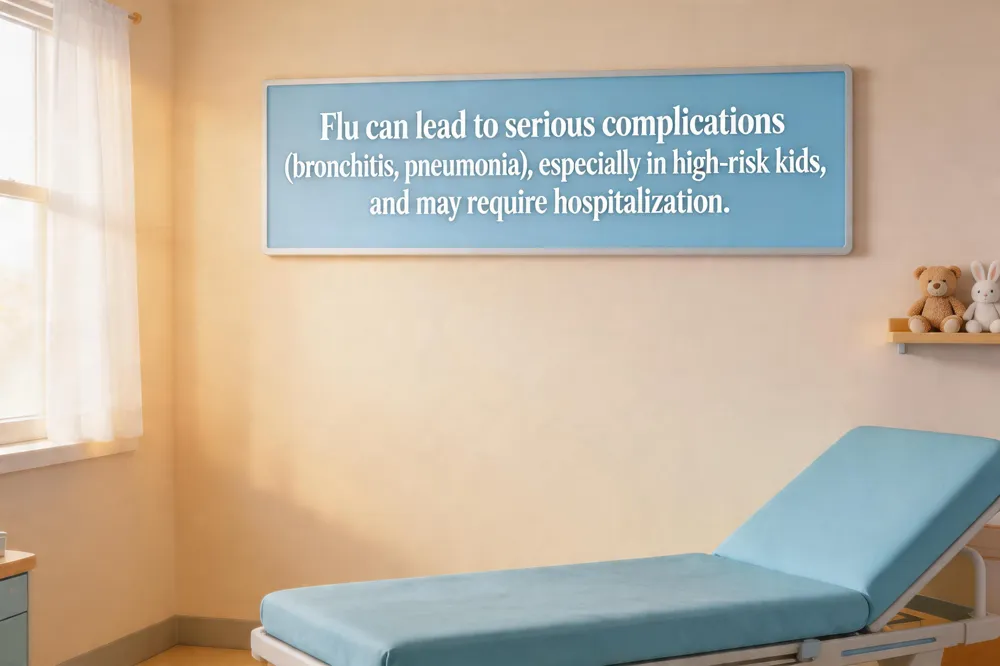 Influenza is definitely more serious than a common cold. While a cold usually brings a runny nose, sneezing and a sore throat that resolve on their own, the flu often arrives suddenly with high fever, chills, severe muscle aches, intense fatigue and a dry cough. These vigorous symptoms can quickly overwhelm a child’s immune system and lead to serious complications.
Complications – Flu can progress to bronchitis, pneumonia, or secondary bacterial infections. In children, pneumonia is the most common severe outcome and may require hospitalization.
High‑risk groups – Kids under five, especially those under two, children with asthma, diabetes, heart disease, or a weakened immune system are at greater risk for flu‑related complications.
Hospitalization risk – When flu causes persistent high fever (≥38 °C), difficulty breathing, rapid breathing, or a change in skin color, doctors may need to admit the child for IV fluids, oxygen therapy, or antiviral treatment.
Underlying conditions – Chronic lung disease, obesity, neurological disorders, and prematurity increase the chance that flu will exacerbate an existing illness, sometimes leading to intensive‑care admission.
When to seek care – If a child’s fever lasts more than three days, they cannot stay hydrated, vomit repeatedly, experience severe chest pain, or develop wheezing or bluish lips, contact a pediatrician or go to the emergency department immediately. Early antiviral medication (e.g., oseltamivir) started within 48 hours can shorten illness by 1‑2 days and reduce complications.
Vaccination remains the single most effective preventive measure. An annual flu shot, given at least two weeks before the season starts, protects children and teens from the most severe outcomes of influenza.
Identifying Flu in Children
 When a child suddenly spikes a high fever (38 °C/100 °F or higher), feels achy all over, and becomes unusually tired, parents should suspect influenza rather than a common cold. Flu in kids often arrives abruptly, delivering severe body aches, pounding headache, and a dry, relentless cough that can sap energy for days. Some children also develop gastrointestinal upset—vomiting or diarrhea—adding another red flag that sets flu apart from the milder, gradual runny‑nose picture of a cold.
How to tell the difference between cold and flu in children? A cold usually creeps in over a few days, staying in the nose and throat with a runny or stuffy nose, sneezing, mild sore throat, and a light cough; the child typically remains active and recovers within 7‑10 days. The flu, by contrast, hits fast—often within hours—and brings systemic signs: sudden high fever, intense muscle and joint pain, profound fatigue, headache, and sometimes vomiting or diarrhea. Flu symptoms are more intense, last longer, and may be accompanied by chills or sweats. If your child looks very ill, can’t stay awake, or the fever spikes above 100.4 °F (38 °C) and persists, seek medical evaluation promptly. Early antiviral treatment (e.g., Tamiflu) started within 48 hours can shorten the illness and reduce complications, especially for children with asthma, diabetes, or other chronic conditions. Good hand‑washing, covering coughs, and keeping sick kids home remain essential to halt the spread.
Supportive Care for Both Illnesses
 When a child or teen shows signs of a cold or the flu, the most effective approach is supportive, symptom‑focused care. Hydration is the cornerstone: offer water, diluted juice, warm broth, or electrolyte solutions frequently to replace fluids lost from fever and nasal discharge. Rest allows the immune system to work efficiently, so keep the youngster in a calm environment and encourage naps. For fever or sore‑throat pain, give age‑appropriate acetaminophen or ibuprofen, following dosing guidelines and never using aspirin. Nasal saline drops or a gentle spray, followed by a bulb syringe for younger children, can clear congestion without medication. A cool‑mist humidifier in the bedroom adds moisture to the air, easing coughing and nasal irritation. For children over one year, a teaspoon of honey mixed in warm tea or taken straight can soothe a cough, but honey is unsafe for infants. Importantly, avoid over‑the‑counter cough and cold medicines in kids under 12, as they offer little benefit and may cause side effects. While these home measures are usually sufficient, parents should seek medical attention promptly if the child has difficulty breathing, a high fever lasting more than three days, persistent vomiting, signs of dehydration, or any worsening of symptoms, especially in those with asthma, diabetes, or weakened immune systems.
Antiviral Treatment: When Tamiflu Is Needed
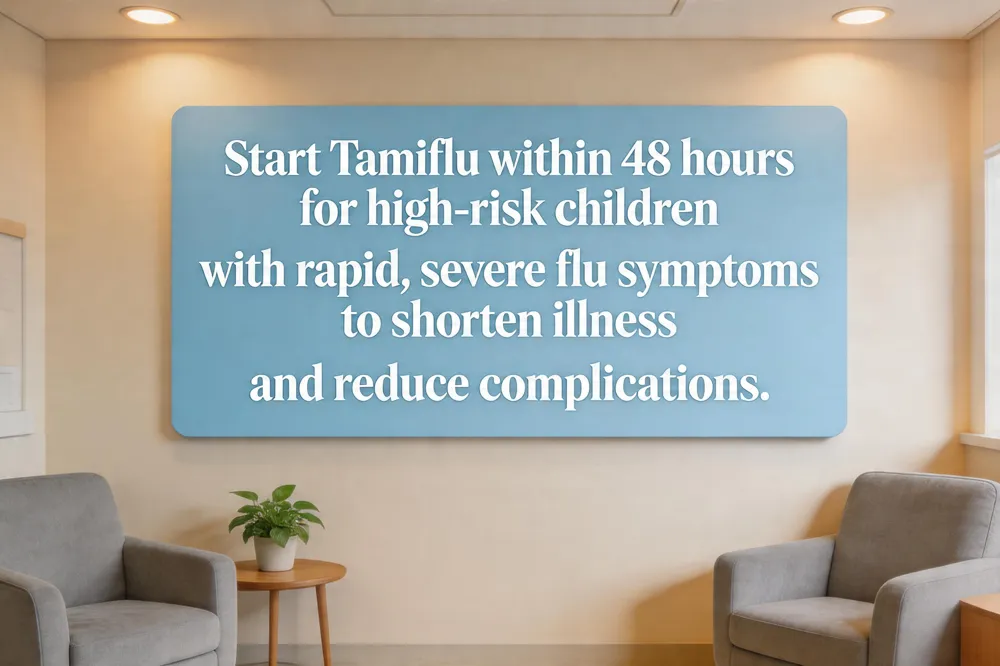 Flu in children can become serious very quickly, so acting fast matters. Timing of antiviral – Tamiflu (oseltamivir) works best when started within 48 hours of symptom onset; the earlier it’s given, the more it can shorten illness and reduce complications.
High‑risk children – Kids with asthma, obesity, diabetes, a weakened immune system, or those under five years old are more vulnerable to severe flu and should be evaluated promptly for antiviral therapy.
Symptoms indicating antiviral – A sudden high fever (≥100 °F/38 °C), chills, severe body aches, headache, dry cough, or loss of appetite—especially if the fever persists or is accompanied by vomiting or diarrhea—warrants a call to the pediatrician.
Dosage considerations – Tamiflu dosing is based on the child’s weight and age; the prescription must be tailored by a health professional to avoid under‑ or overdosing.
Consultation with pediatrician – Parents should contact the pediatric office as soon as flu‑like symptoms appear. The doctor will confirm the diagnosis (often with a rapid flu test) and decide if Tamiflu is appropriate.
What are signs a child needs Tamiflu? – A child who develops flu‑like symptoms—especially a fever higher than 100 °F (38 °C)—should be evaluated for Tamiflu within the first 48 hours. Other warning signs include a sudden onset of sore throat, cough, body aches, headache, or chills that are worsening rather than improving. If the fever is high, persistent, or accompanied by vomiting, diarrhea, or a loss of appetite, it’s especially important to call the pediatric office promptly. Children with underlying conditions such as asthma, obesity, or a weakened immune system are at higher risk for complications and may benefit from antiviral treatment. Contact your doctor right away; they can determine whether Tamiflu is appropriate based on the timing and severity of these symptoms.
Staying Ahead of Respiratory Illnesses
Annual flu vaccination is the most effective shield for children and teens, building immunity two weeks after the shot and cutting severe illness risk. Good hand‑washing for at least 20 seconds, using soap or sanitizer, and covering coughs and sneezes with a tissue or elbow cuts spread in homes and classrooms. Parents should seek professional care promptly if a child develops high fever, difficulty breathing, persistent vomiting, or symptoms that worsen after three days, especially those with asthma, diabetes, or weakened immunity. Stay aware of peaks, follow school exclusion policies, and keep sick kids until fever‑free for 24 hours without medication.