Introduction
Childhood obesity—affecting roughly one in five U.S. children—has become a silent epidemic that threatens both immediate and lifelong health. Excess weight raises the risk of asthma, sleep apnea, type 2 diabetes, high blood pressure, and mental‑health challenges such as depression and anxiety. These complications often persist into adulthood, increasing the likelihood of stroke, heart disease, certain cancers, and premature death. This article aims to equip families, caregivers, and healthcare providers with clear, evidence‑based guidance on early detection, routine medical monitoring, and proactive lifestyle changes that can safeguard children’s growth, well‑being, and future health.
Understanding Childhood Obesity
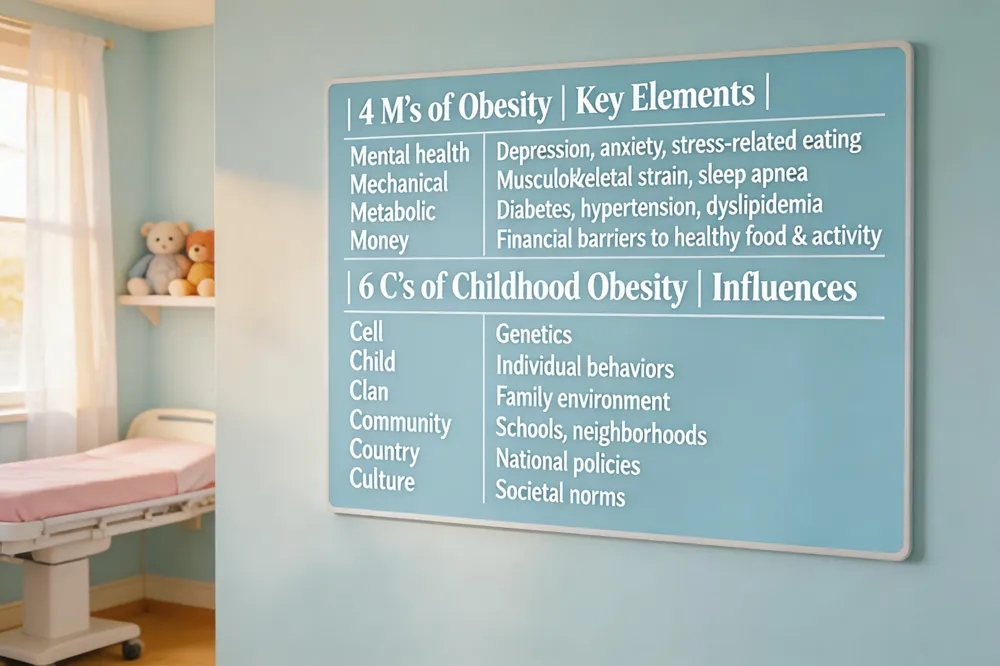
| 4 M’s of Obesity | Key Elements |
|---|---|
| Mental health | Depression, anxiety, stress‑related eating |
| Mechanical | Musculoskeletal strain, sleep apnea |
| Metabolic | Diabetes, hypertension, dyslipidemia |
| Money | Financial barriers to healthy food & activity |
| 6 C’s of Childhood Obesity | Influences |
|---|---|
| Cell | Genetics |
| Child | Individual behaviors |
| Clan | Family environment |
| Community | Schools, neighborhoods |
| Country | National policies |
| Culture | Societal norms |
 Childhood obesity articles
Our resource library includes pediatric‑written articles that explain the causes of childhood obesity, evidence‑based prevention strategies, and treatment options. The pieces cover nutrition counseling, active‑play recommendations, screen‑time limits, sleep hygiene, and supportive parenting techniques that align with national guidelines. We also discuss how primary‑care providers can use growth‑chart data, motivational interviewing, and, when appropriate, FDA‑approved medications to help families set realistic health goals. Each article emphasizes a non‑stigmatizing, family‑centered approach and offers practical, step‑by‑step tips that fit into everyday life.
Childhood obesity articles
Our resource library includes pediatric‑written articles that explain the causes of childhood obesity, evidence‑based prevention strategies, and treatment options. The pieces cover nutrition counseling, active‑play recommendations, screen‑time limits, sleep hygiene, and supportive parenting techniques that align with national guidelines. We also discuss how primary‑care providers can use growth‑chart data, motivational interviewing, and, when appropriate, FDA‑approved medications to help families set realistic health goals. Each article emphasizes a non‑stigmatizing, family‑centered approach and offers practical, step‑by‑step tips that fit into everyday life.
Prevention of obesity Preventing obesity in children and teens starts with families modeling balanced nutrition—offer a variety of fruits, vegetables, whole‑grains and low‑fat dairy while replacing sugary drinks with water or plain milk. Aim for at least 60 minutes of moderate‑to‑vigorous activity most days and make movement a family habit. Limit screen time to no more than 1‑2 hours per day, encourage mindful eating, keep the home stocked with healthy snacks, and avoid using food as a reward. Routine well‑child visits let providers monitor growth and address early signs of excess weight.
4 M’s of obesity Mental health (depression, anxiety, stress‑related eating), Mechanical (musculoskeletal strain, sleep apnea), Metabolic (diabetes, hypertension, dyslipidemia), and Money (financial barriers to healthy food and activity) together shape a child’s weight trajectory.
6 C’s of childhood obesity Cell (genetics), Child (behaviors), Clan (family environment), Community (schools, neighborhoods), Country (policy), and Culture (societal norms) illustrate the multi‑layered influences on obesity risk.
CDC childhood obesity prevention The CDC reports ~1 in 5 U.S. children (≈14.7 million) have obesity, with higher rates among Hispanic and Black youth. Family meals and CDC toolkits, school‑based programs, and the AAP Clinical Practice Guideline support comprehensive, family‑focused care, emphasizing early medical evaluation and non‑stigmatizing support to improve long‑term health outcomes.
Nutrition Essentials for Growing Children
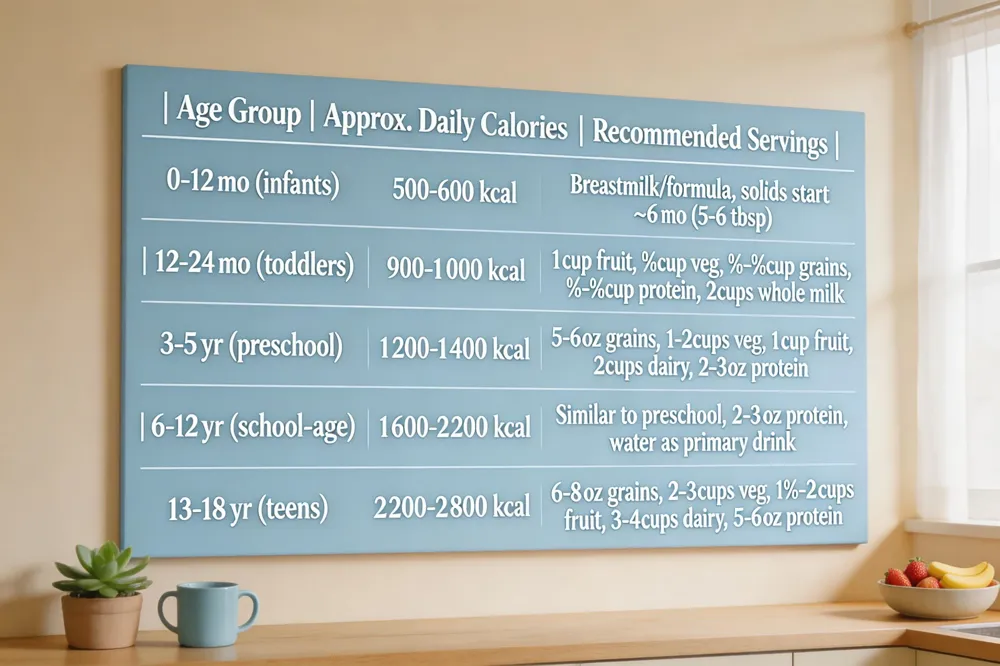
| Age Group | Approx. Daily Calories | Recommended Servings (per day) |
|---|---|---|
| 0‑12 mo (infants) | 500‑600 kcal | Breastmilk/formula; solids start ~6 mo (5‑6 tbsp total) |
| 12‑24 mo (toddlers) | 900‑1 000 kcal | 1 cup fruit, ¼ cup veg, ¼‑½ cup grains, ¼‑½ cup protein, 2 cups whole‑milk |
| 3‑5 yr (preschool) | 1 200‑1 400 kcal | 5‑6 oz grains, 1‑2 cups veg, 1 cup fruit, 2 cups dairy, 2‑3 oz protein |
| 6‑12 yr (school‑age) | 1 600‑2 200 kcal | Similar to preschool portions, 2‑3 oz protein, water as primary drink |
| 13‑18 yr (teens) | 2 200‑2 800 kcal | 6‑8 oz grains, 2‑3 cups veg, 1½‑2 cups fruit, 3‑4 cups dairy, 5‑6 oz protein |
 Overweight child diet Plans PDF
A downloadable guide (Kids & Teens Primary Healthcare) offers AAP‑based meal plans for ages 2‑12, age‑appropriate portion sizes, snack ideas, and a printable "5‑2‑1" worksheet to track fruits/veggies, screen time, and activity. Links to NICHQ tools and a weekly activity log are included.
Balanced diet chart for 7 Year old
A 7‑year‑old needs ~1,200‑1,400 kcal. Aim for 5 servings fruit/veg (½ cup each), 3‑4 grain servings (1 slice bread or ¾ cup cooked rice), 2‑3 cups dairy, and 2‑3 oz protein. Include 1 tsp healthy oil or 1 tbsp nut butter. Sample day: cereal + milk + banana; turkey sandwich + carrot sticks + apple + milk; grilled chicken + brown rice + broccoli + yogurt; snack nuts or cheese stick. Limit added sugars and choose water.
Child nutrition chart
Infants 0‑12 mo: breastmilk/formula; solids start 6 mo, 1‑2 tbsp 5‑6 × day. Toddlers 12‑24 mo: ~1 cup fruit, ¼ cup veg, ¼‑½ cup grains, ¼‑½ cup protein, 2 cups whole‑milk. Preschoolers 3‑5 yr: 5‑6 oz grains, 1‑2 cups veg, 1 cup fruit, 2 cups dairy, 2‑3 oz protein. School‑age 6‑12 yr: similar grain/veg/fruit portions, 2‑3 oz protein, water as primary drink. Teens 13‑18 yr: 6‑8 oz grains, 2‑3 cups veg, 1½‑2 cups fruit, 3‑4 cups dairy, 5‑6 oz protein.
Balanced diet for child of 5‑12 yr PDF
Shows 5‑6 veg servings, 2‑4 cup fruit, 4‑6 oz whole‑grain grains, 2‑3 oz lean protein, 4 dairy servings daily. Uses visual portion cues (tennis‑ball fruit, hockey‑puck veg). Emphasizes water, limits sugary drinks, added sugars, saturated fat, and sodium.
Nutritional requirements for different age groups PDF
Summarizes calorie, protein, calcium, iron, vitamin D needs per age (infants to teens) per Dietary Guidelines for Americans, with serving‑size tables and practical meal‑snack tips.
Balanced diet for child of 5‑12 yr
Follow MyPlate: ½ plate fruit/veg, ¼ protein, ¼ whole‑grain/dairy. Choose nutrient‑dense foods, limit added sugars and salty snacks, involve kids in meal prep, and pair with at least 60 min daily activity.
Pediatric Nutrition PDF
Comprehensive guide covering age‑specific nutrients, fluid needs, growth charts, sample menus, breastfeeding benefits, and feeding‑skill assessments. Available for download from the clinic website.
Promoting Healthy Habits at Home and School
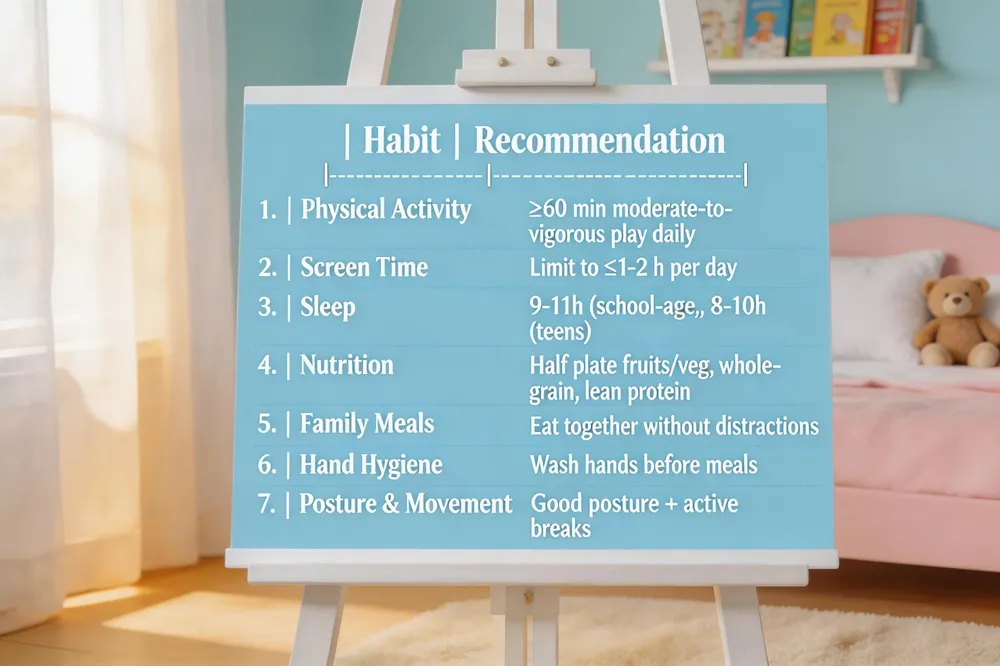
| Habit | Recommendation |
|---|---|
| Physical Activity | ≥60 min moderate‑to‑vigorous play daily (games, bike rides, dancing) |
| Screen Time | Limit to ≤1‑2 h per day |
| Sleep | 9‑11 h (school‑age), 8‑10 h (teens) |
| Nutrition | Half plate fruits/veg, whole‑grain carbs, lean protein, water/low‑fat milk; limit sugary drinks |
| Family Meals | Eat together without distractions; involve kids in prep |
| Hand Hygiene | Wash hands before meals |
| Posture & Movement | Encourage good posture; incorporate active breaks |
 Healthy habits for kids activities
Encourage at least 60 minutes of moderate‑to‑vigorous play daily—games, bike rides, dancing—paired with simple cooking projects that teach fruit, veg, and whole‑grain choices. Keep a consistent sleep routine (9‑11 h for school‑age, 8‑10 h for teens) and offer water or low‑fat milk instead of sugary drinks. Limit screens to 1‑2 h and replace excess time with family meals or active hobbies.
5 characteristics of a healthy child
Steady growth on pediatric charts, abundant energy for play and school, restorative sleep, positive self‑esteem with joyful social interactions, and resilience in handling setbacks.
How to prevent childhood obesity in schools
Adopt a whole‑school approach: nutrition standards limiting added sugars, daily outdoor activity, structured PE, screen‑time limits, and after‑school active programs. Use non‑stigmatizing BMI monitoring and involve families through newsletters and resources.
10 health tips for students
- Eat a balanced breakfast.
- Pack fruit/veg snacks.
- Stay hydrated with water.
- Move at least 30 min daily.
- Get 9‑11 h sleep.
- Limit screen time to ≤2 h.
- Practice good hand hygiene.
- Choose whole‑grain foods.
- Avoid sugary drinks.
- Have regular family meals without distractions.
10 ways to control obesity
Start with a nutritious breakfast, fill half the plate with fruits/veg, choose water over soda, engage in 60 min daily activity, limit screens, ensure 9‑11 h sleep, eat family meals together, avoid food rewards, and schedule routine pediatric check‑ups.
8 healthy habits for kids
- Eat a rainbow of fruits/veg daily.
- Drink water, limit sugary drinks.
- Get 15 min active play, ≤2 h screen time.
- Prioritize adequate sleep.
- Practice hand hygiene.
- Maintain good posture.
- Share family meals.
- Keep consistent daily routines.
Health tips for kids in school
Begin with a balanced breakfast, keep a water bottle handy, wash hands before meals, aim for age‑appropriate sleep, limit screen time, choose water or low‑fat milk, and pack nutrient‑dense snacks.
Prevention Strategies Across the Lifespan
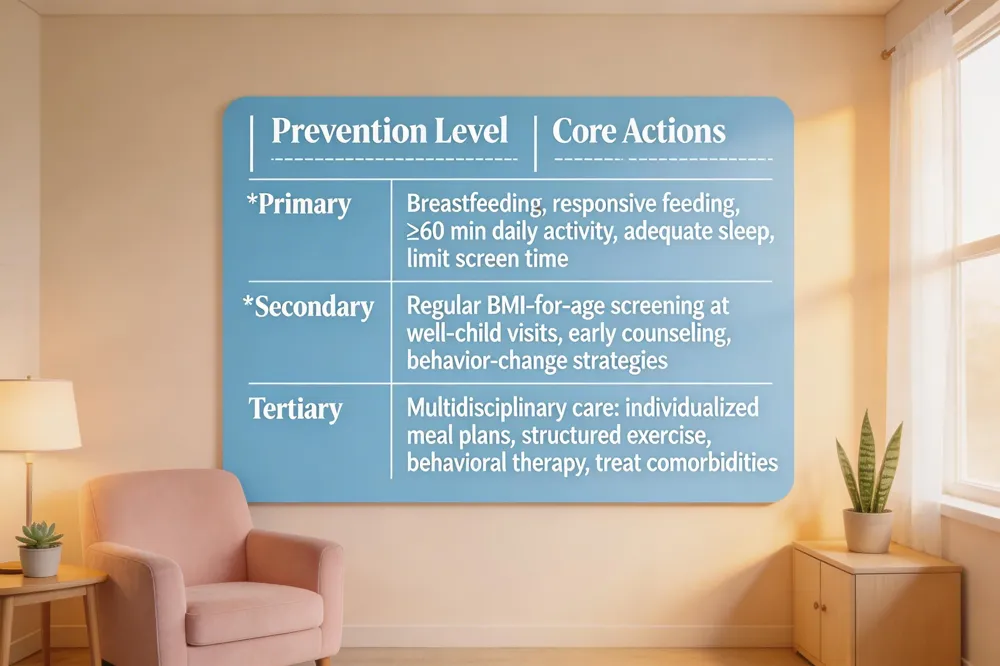
| Prevention Level | Core Actions |
|---|---|
| Primary | Breastfeeding, responsive feeding, ≥60 min daily activity, adequate sleep, limit screen time |
| Secondary | Regular BMI‑for‑age screening at well‑child visits, early counseling, behavior‑change strategies |
| Tertiary | Multidisciplinary care: individualized meal plans, structured exercise, behavioral therapy, treat comorbidities |
 Providing solutions to childhood obesity starts with family‑wide nutrition education and modeling healthy eating—offering colorful fruits, vegetables, whole grains, lean proteins, and water instead of sugary drinks (sugary drinks). Schools and community programs can boost daily activity by providing structured play, sports, and safe recreation spaces while limiting sedentary screen time to 1–2 hours per day. Routine BMI‑for‑age screening during well‑child visits enables early identification of risk, allowing pediatricians to refer families to evidence‑based Family Healthy Weight Programs that deliver personalized guidance on diet, activity, and sleep.
Primary prevention promotes healthy habits from birth—breastfeeding, responsive feeding, adequate sleep, and at least 60 minutes of moderate‑to‑vigorous activity for children 6‑17. Secondary prevention uses regular growth‑chart monitoring to catch excess weight gain early and intervene with counseling and behavior‑change strategies. Tertiary prevention supports children already living with obesity through multidisciplinary care: individualized meal plans, structured exercise, behavioral therapy, and treatment of comorbidities such as asthma or insulin resistance.
Local options include the Kids & Teens Primary Healthcare 12‑week Healthy Habits Program, while national resources such as CDC‑recognized family weight programs, the New Balance Foundation’s “Fit Kit,” and the Institute for Healthy Childhood Weight offer tools, screenings, and community‑engagement guides. Consistent medical follow‑up, family involvement, and supportive policies together create the environment needed to prevent and treat childhood obesity.
Supporting Teens and Managing Weight
| Teen Health Tip | Details |
|---|---|
| Activity | 60 min daily moderate‑to‑vigorous exercise |
| Nutrition | Fill half plate with fruits/veg, choose whole grains & lean protein, swap sugary drinks for water |
| Screen Limits | ≤2 h per day |
| Sleep | 8‑10 h nightly |
| Medical Follow‑up | Regular pediatric visits for BMI checks and counseling |
| Positive Language | Focus on health benefits, not weight, avoid stigmatizing language |
| Family Involvement | Shared meals and active family activities |
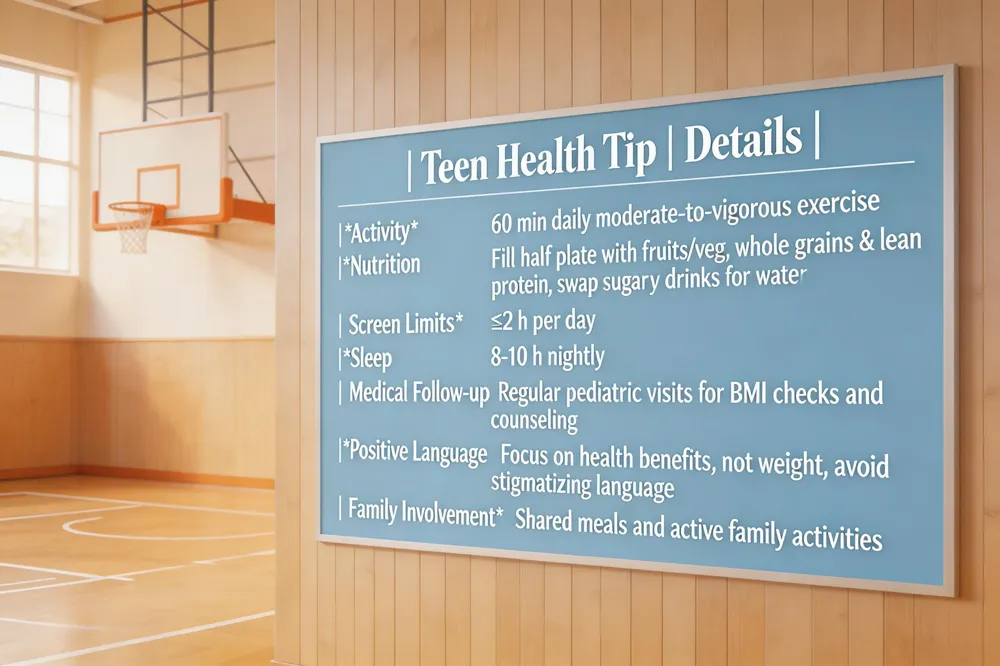 Adolescent health thrives on balanced habits and timely medical guidance; the answers below address common concerns with clear headings.
How can teens prevent obesity? Aim for 60 min daily moderate‑to‑vigorous activity, fill half plate with fruits/veg, choose whole grains/lean protein, swap sugary drinks for water, limit screen time, get 8‑10 h sleep, see pediatrician regularly.
Healthy teenage lifestyle tips pdf Download our free teen‑focused PDF for quick checklists on nutrition, 60‑min activity, sleep, screen limits, and stress‑relief tools.
My child is overweight and always hungry Persistent hunger may reflect rapid growth or metabolic issues; schedule a well‑child visit, assess diet, labs, and ensure balanced, portion‑controlled meals with adequate sleep and activity.
How to help a child lose weight without making them feel bad Focus on health, not weight; involve whole family in nutritious meals and fun activity, use positive language, non‑food rewards, and consult a pediatric dietitian.
How to prevent childhood obesity essay Start with prevalence, discuss diet, sedentary habits, sleep, socioeconomic factors; propose home, school, community actions; stress pediatric screening and counseling.
Early intervention and family involvement are key to preventing long‑term health problems. Partnering with healthcare providers ensures personalized support, early detection of risks, and sustained healthy habits for teens. Regular physical activity, adequate sleep, and mindful eating together build a foundation for lifelong wellness.
Resources, Tools and Practical Guides
| Resource | Format | Highlights |
|---|---|---|
| Pediatric Nutrition PDF | Downloadable PDF | Age‑specific nutrient tables, meal plans, grocery checklist, growth‑velocity charts |
| 5‑2‑1‑0 Worksheet | Printable checklist | 5 fruit/veg servings, 2 h screen, 1 h activity, 0 sugary drinks |
| CDC Family Meals Toolkit | Online toolkit | Guidance on family meals, nutrition standards, activity ideas |
| Kids & Teens Primary Healthcare Program | 12‑week program | Structured healthy‑habits curriculum for families |
| AAP Clinical Practice Guideline | Guideline document | Evidence‑based recommendations for obesity prevention and treatment |
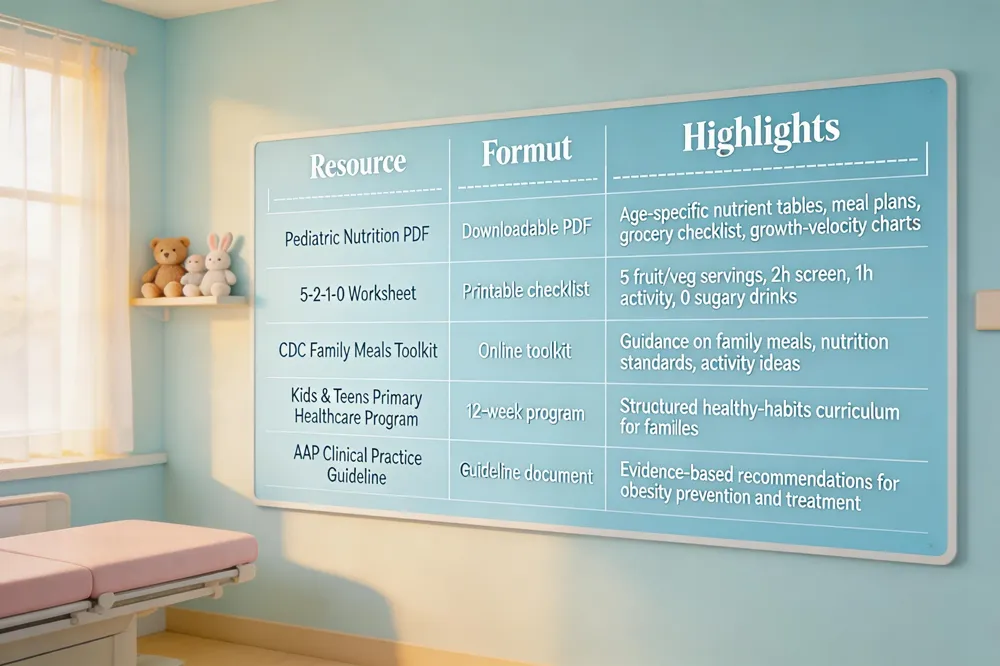 Families looking to protect their children’s health can tap into a suite of evidence‑based resources that make nutrition, activity and medical care easy to navigate.
PDF Guides – Our Pediatric Nutrition PDF offers age‑specific nutrient recommendations from birth through age 21, sample meal plans, a grocery‑shopping checklist, and growth‑velocity charts. It explains how to introduce solid foods, the benefits of exclusive breastfeeding for the first six months, and strategies for limiting added sugars, sodium and sugary drinks.
Checklists – Quick‑reference checklists help parents monitor daily fruit‑and‑vegetable servings, screen‑time limits, sleep‑duration goals and physical‑activity minutes (≥60 min for ages 6‑17). A printable “5‑2‑1‑0” worksheet reinforces the CDC’s guideline of five fruit/veg servings, two hours of screen time, one hour of activity and zero sugar‑sweetened beverages.
Healthcare Support – Regular well‑child visits enable pediatricians to calculate BMI percentiles, screen for comorbidities and refer families to Family Healthy Weight Programs when needed.
Covered Questions
- Pediatric Nutrition guidelines: The AAP recommends exclusive breastfeeding for six months, continued breastfeeding alongside complementary foods, and age‑appropriate meals that limit added sugars to <10 % of calories while ensuring adequate protein, calcium, iron and vitamin D.
- Pediatric Nutrition PDF: This downloadable guide contains nutrient tables, fluid needs, meal‑planning tools and practical tips for feeding skills, enteral nutrition and probiotic use during illness.
For deeper guidance, search “pediatric nutrition guidelines age groups.”
Conclusion
Key takeaways: childhood obesity affects 1 in 5 U.S. kids, raises risks of asthma, diabetes, mental‑health issues, and often persists into adulthood. physical activity, balanced meals without added sugars, adequate sleep, and limited screen time are proven protectors. Families should model healthy habits, serve water instead of sugary drinks, and make meals a supportive time. Call to action: schedule visits, have BMI checked, and ask providers about Family Healthy Weight Programs or nutrition counseling to keep your child on a healthy trajectory.