Why Asthma Management Matters
Childhood asthma can turn everyday activities into challenges. A coughing fit during class, wheezing on the playground, or a nighttime cough that steals sleep often leads to missed school days, reduced participation in sports, and lower academic performance. These disruptions affect confidence and can strain families. Because each child’s triggers, severity, and response to medication differ, a one‑size‑fits‑all plan is ineffective. A personalized written Asthma Action Plan, created together with a pediatrician or allergist, outlines daily controller doses, rescue inhaler use, and step‑by‑step actions for green, yellow, and red zones. Regular follow‑up visits allow the care team to adjust medications, reinforce inhaler technique, and update trigger‑avoidance strategies, ensuring the child stays safe, active, and ready for school and life. Early medical help cuts emergency visits and keeps children thriving daily.
Understanding the GINA Guidelines and Treatment Steps
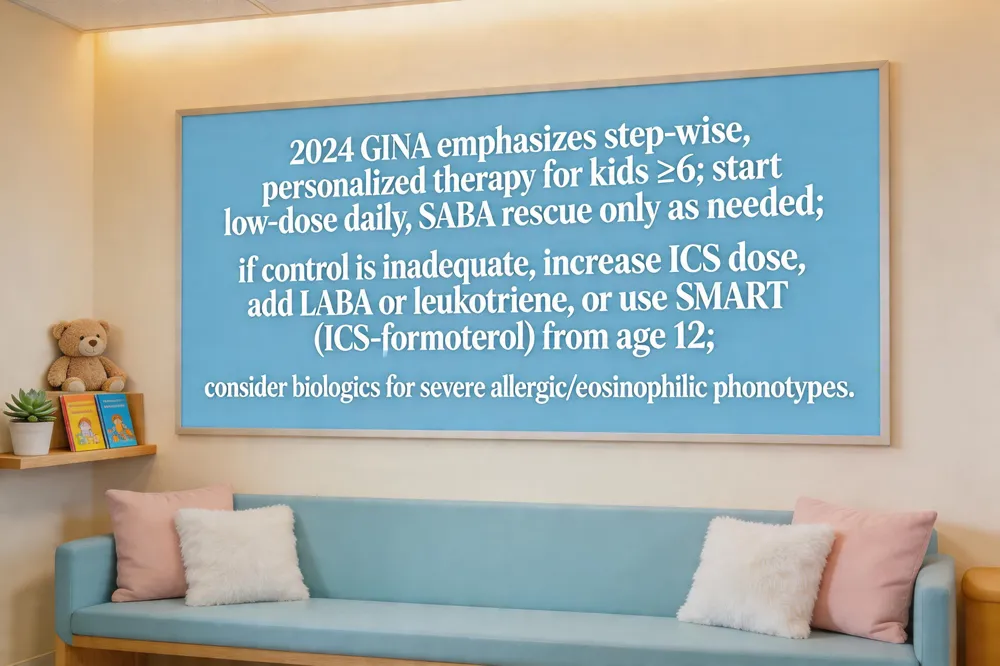 The 2024 Global Initiative for Asthma (GINA) update reinforces a step‑wise, personalized strategy for kids ≥ 6 years and teens. First, a low‑dose inhaled corticosteroid (ICS) is the preferred daily controller, with a short‑acting β₂‑agonist (SABA) reserved for occasional rescue. If control remains inadequate, clinicians increase the ICS dose (step 2) or add a leukotriene receptor antagonist or a long‑acting β₂‑agonist (LABA) at step 3. More severe disease may require higher‑dose ICS, LABA + ICS combos, a long‑acting muscarinic antagonist, or biologic therapy for allergic/eosinophilic phenotypes.
A key innovation is SMART (Single Maintenance and Reliever Therapy). For patients ≥ 12 years—and increasingly for younger children when appropriate—a single inhaler combining low‑dose ICS with formoterol can be used both for daily control and as needed relief, eliminating separate SABA use. This approach has been shown to cut severe attacks and steroid exposure.
All children with asthma should have a written, personalized Asthma Action Plan that details green (stable), yellow (early warning), and red (danger) zones, medication doses, trigger avoidance, and emergency contacts. Prompt medical review—at least yearly or after any change in symptoms or medication—ensures the plan stays current, empowers caregivers, and reduces emergency department visits. If a child enters the red zone (severe shortness of breath, inability to speak, or worsening after rescue medication), call 911 or go to the emergency department immediately.
Is Asthma a Childhood‑Only Problem?
 Children who wheeze or have mild asthma before 6 often improve as they grow, but asthma is not always a fleeting childhood issue. Most kids see fewer attacks when they become school‑age, yet a sizable group—especially those with a family history of asthma, eczema, allergic rhinitis, or early‑onset persistent symptoms—continue to experience asthma into teenage years and adulthood. Even when a child feels well, underlying airway inflammation or hyper‑responsiveness can linger, resurfacing during viral infections, exercise, hormonal changes, or exposure to triggers such as smoke or pollen. The severity of early disease is the strongest predictor of long‑term persistence; the more severe the childhood asthma, the higher the likelihood it will endure. Therefore, ongoing monitoring, a personalized written Asthma Action Plan, and regular follow‑up with a health‑care provider are essential to keep the condition under control and to prevent emergencies as the child matures.
Core Medications and How to Use Them
 What is the best evidence‑based treatment for pediatric asthma?
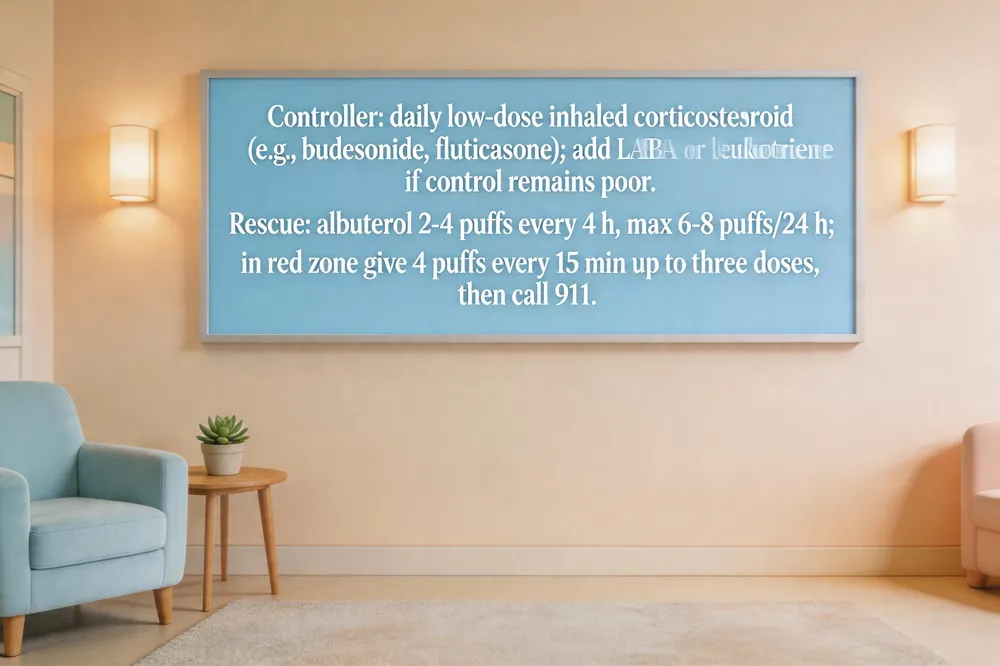
A stepwise, controller‑focused regimen is the cornerstone. Begin with daily low‑dose inhaled corticosteroids (ICS) for any persistent disease and a short‑acting β₂‑agonist (SABA) rescue inhaler. If control is inadequate, add a long‑acting β₂‑agonist (LABA) or a leukotriene modifier while continuing the SABA. For moderate‑to‑severe persistent asthma unresponsive to high‑dose ICS/LABA, biologics (anti‑IL‑5, anti‑IgE) are recommended. An individualized written asthma action plan, regular spirometry or peak‑flow monitoring, and trigger avoidance complete the strategy.
What are the top asthma inhaler brands prescribed for patients under 21?
Common controller inhalers include Pulmicort (budesonide), Flovent (fluticasone), and Qvar (beclomethasone). Rescue inhalers are Ventolin, ProAir, and Proventil (albuterol). Combination products such as Advair (fluticasone/salmeterol) and Symbicort (budesonide/formoterol) are widely used for adolescents.
What common triggers can cause an asthma cough in children?
Triggers include viral infections (colds, flu, RSV), tobacco or vape smoke, strong odors and cleaning chemicals, cold dry air, and exercise‑induced bronchoconstriction.
How often should a child use a rescue inhaler and what is the typical dosing schedule?
Use albuterol only when symptoms appear—generally 2–4 puffs (≈100 µg each) every 4 hours, not exceeding 6–8 puffs in 24 hours. In a red‑zone emergency, give 4 puffs every 15 minutes up to three doses and then seek emergency care.
What are the five major causes or risk factors for developing asthma in kids?
Key risk factors are (1) family history of asthma/atopy, (2) personal allergic conditions (eczema, allergic rhinitis), (3) early viral respiratory infections, (4) exposure to second‑hand smoke or air pollutants, and (5) obesity.
Creating and Using an Asthma Action Plan
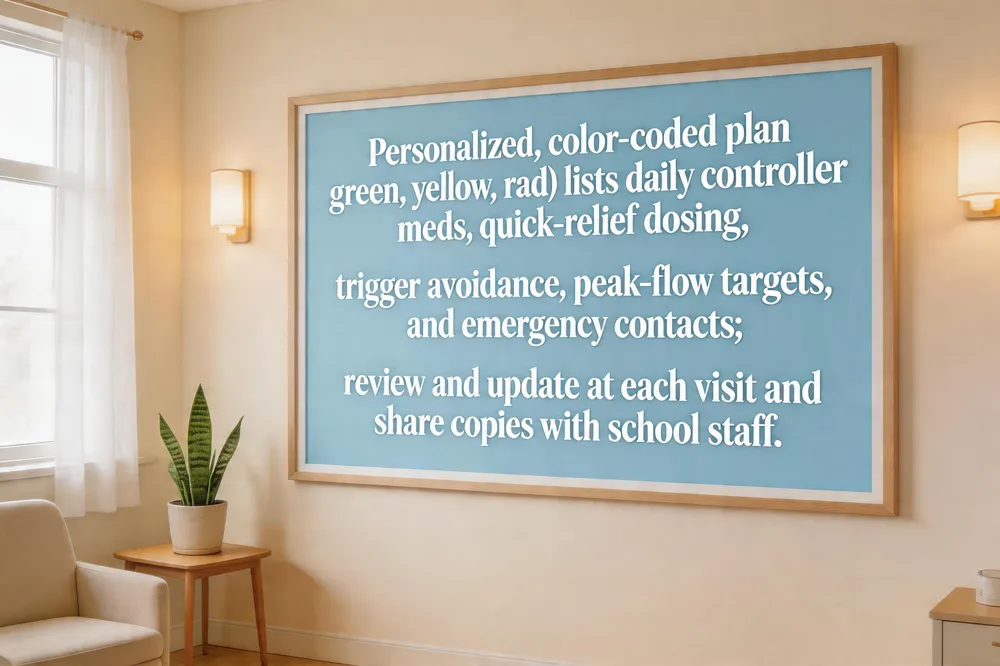 A written asthma action plan is a personalized, color‑coded guide that tells families, teachers, and caregivers exactly what to do when a child’s asthma is stable (green), warning‑zone (yellow), or dangerous (red). The plan lists daily controller medicines (usually inhaled corticosteroids), quick‑relief inhaler doses, trigger avoidance tips, peak‑flow targets, and emergency contacts. Having this plan empowers adults to respond calmly and promptly, reducing panic, emergency visits, and missed school days.
CDC‑approved template – The CDC offers a ready‑to‑print PDF for school‑age children on its asthma website (https://www.cdc.gov/asthma/actionplan/). Families should download, fill in, and share the copy with the child’s school nurse and teachers.
Step‑by‑step personalization – Meet with the child’s pediatrician or asthma specialist to define the green, yellow, and red zones, record exact medication names, dosages, and timing, and note specific triggers (pollen, smoke, exercise). Write clear actions for each zone, sign the form, and keep copies at home, in the backpack, and at school. Review and update the plan at every asthma visit or after any change in symptoms or treatment.
School‑form requirements – The school version must include the student’s name, DOB, asthma severity, trigger list, controller and rescue medication instructions for each zone, a permission statement for staff to administer meds, parent and provider phone numbers, and signatures with a recent date.
Why it matters – A written plan gives every adult a trusted roadmap, ensuring the child receives the right medication at the right time, stays in control, and can safely participate in school and activities.
Preventing Triggers and Monitoring Asthma
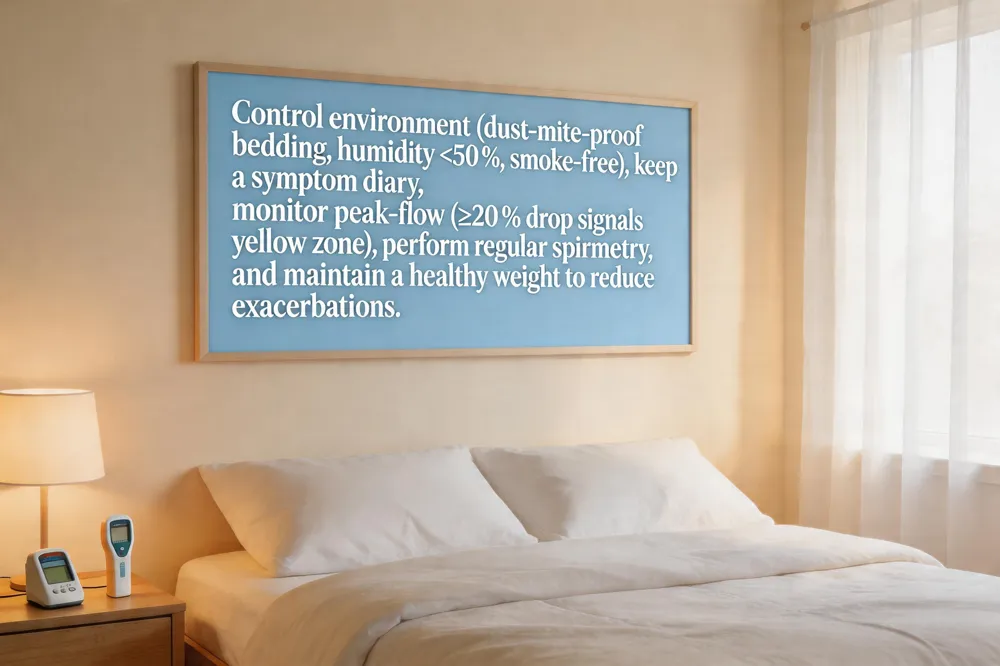 Keeping a child’s asthma under control starts with a clean, allergen‑free environment both at home and at school. Use dust‑mite‑proof mattress and pillow covers, wash bedding in hot water weekly, keep humidity below 50 %, and remove carpets from bedrooms to curb mold and mites. Ban indoor smoking, vape use, and strong‑odor products, and ensure ventilation when painting or using gas stoves. Parents should keep a symptom diary and a peak‑flow meter; a drop of 20 % from the child’s personal best can signal early worsening and prompt a move from the green to yellow zone. Diagnosis combines a detailed history, physical exam, spirometry or peak‑flow testing, and—when needed—bronchoprovocation or allergy testing, especially after age five. Preventive measures include regular well‑child visits, weight‑healthy diet, and early breastfeeding, all of which reduce future asthma risk and ensure rapid medical attention when symptoms flare.
Empowering Kids and Caregivers for a Breath‑Easy Future
An Asthma Action Plan is a written guide that translates medication schedules, symptom zones (green, yellow, red), and emergency steps into a roadmap for children and teens. Key takeaways: use controller inhalers, recognize warning signs, follow traffic‑light zone actions, and keep a rescue inhaler handy at home and school. Next steps for families: work with the child’s healthcare provider to complete plan, give copies to teachers, daycare staff, and coaches, practice inhaler technique with a spacer, and review plan yearly or after changes. Providers should confirm trigger lists, check inhaler technique, update medication doses, and reinforce education at visits.