Why Hydration Matters for Children
Water is the engine that keeps a child’s body running smoothly. It regulates temperature, carries waste to the kidneys, and cushions joints. When a child is sick, has a fever, or sweats in hot weather or during sports, they can lose fluids faster than they replace them, dropping hydration levels. Mild dehydration can make a child irritable, tired, and less able to concentrate, while prolonged fluid loss can stunt growth, impair cognitive development, and increase the risk of kidney stones or urinary infections. Because children’s bodies contain a higher proportion of water than adults, they become dehydrated faster and may not show thirst cues. Attention is essential if a child shows signs such as dry mouth, no tears, sunken eyes, or reduced urine output, to prevent progression to severe dehydration.
Recognizing Early Signs in Young Children (0‑4 years)
Dehydration Signs by Age (0‑4 years)
| Age | Dry mouth/lips | Tears | Urine output (wet diapers / bathroom trips) | Sunken eyes / fontanelle | Irritability / drowsiness | Severe signs (call pediatrician) |
|---|---|---|---|---|---|---|
| 1 yr | Yes | Few | < 6 wet diapers/day | Sunken eyes or fontanelle | Irritability or drowsiness | Lethargy, rapid heartbeat, refusal to drink |
| 2 yr | Yes | Absent | Fewer bathroom trips | Sunken eyes | Crankiness, drowsiness | Rapid breathing, fast pulse, lethargy (if fluids refused > hrs) |
| 4 yr | Yes | Few | Reduced urination | Sunken eyes | Irritability | Dizziness, rapid shallow breathing, very low urine output |
| 5 yr | Yes | Absent | Very few bathroom trips | Sunken eyes | Crankiness, headache, light‑headedness | Rapid breathing, fast heartbeat, refusal of fluids for many hours |
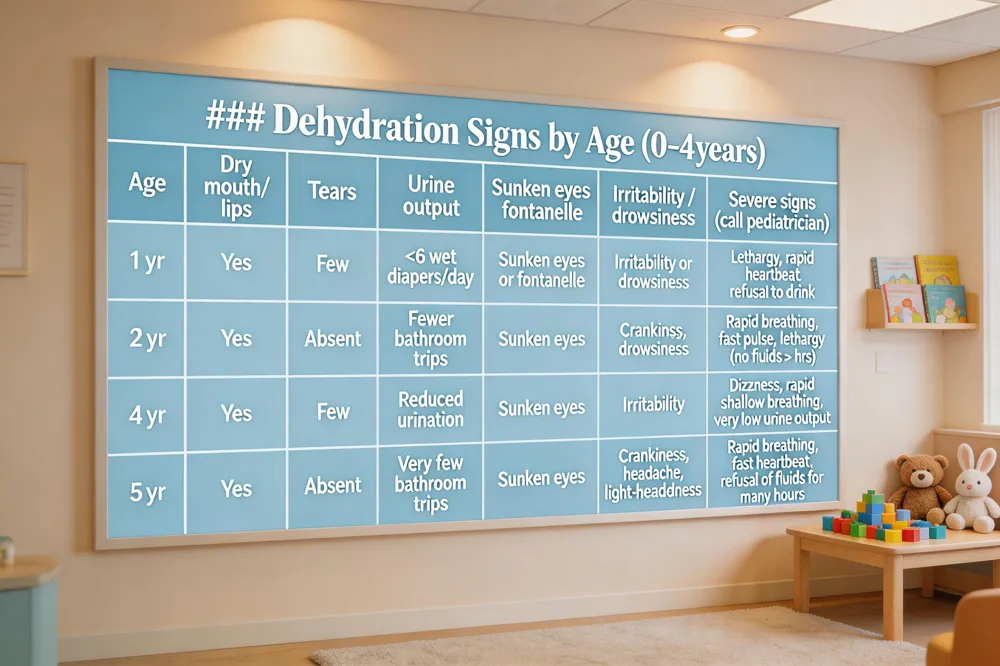 A child’s dehydration often begins subtly. Watch for a dry or sticky dry mouth and lips, and notice if tears are scarce when they cry—this loss a classic early cue. Urine output is another reliable barometer: fewer than six wet diapers a day for infants, dark‑yellow urine or strong‑smelling urine, or longer gaps between bathroom trips signal fluid loss. Sunken eyes or a sunken fontanelle (the soft spot on an infant’s head) and poor skin turgor (skin that stays tented after a gentle pinch) point to more moderate dehydration. Behavioral changes—crankiness, irritability, lethargy, or an unusual desire to sleep—often precede visible signs and should prompt immediate fluid offering.
Signs of dehydration in a 1‑year‑old: dry mouth/lips, few tears, reduced wet diapers, sunken eyes or fontanelle, irritability or drowsiness. If lethargy, rapid heartbeat or refusal to drink occurs, seek care right away.
Signs of dehydration in a 2‑year‑old: dry mouth/lips, absent tears, fewer bathroom trips, sunken eyes, crankiness, drowsiness; severe cases show rapid breathing, fast pulse or lethargy—call the pediatrician if fluids are refused for several hours.
Signs of dehydration in a 4‑year‑old: dry mouth/lips, few tears, reduced urination, sunken eyes, irritability; worsening dehydration adds dizziness, rapid shallow breathing or very low urine output—contact a doctor promptly if fluids are refused.
Signs of dehydration in a 5‑year‑old: dry mouth/lips, absent tears, fewer bathroom trips, sunken eyes, crankiness, headache, light‑headedness, rapid breathing or fast heartbeat—if the child is refusing fluids or has not urinated for many hours, call the pediatrician without delay.
Detecting Dehydration in School‑Age Children (6‑10 years)
Dehydration Signs by Age (6‑10 years)
| Age | Dry mouth/lips | Tears | Urine (color / frequency) | Sunken eyes | Skin turgor / dizziness | Irritability / headache | Severe signs |
|---|---|---|---|---|---|---|---|
| 6 yr | Yes | Few | Dark‑yellow, fewer trips | Sunken eyes | Light‑headedness, headache | Irritability | Rapid breathing, fast pulse, lethargy |
| 7 yr | Yes | Reduced | Darker urine, fewer trips | Sunken eyes | Delayed skin‑turgor rebound | Crankiness | Rapid breathing, fast heartbeat, lethargy |
| 8 yr | Yes | Few | Dark urine, reduced urination | Sunken eyes | Sluggish turgor, dizziness | Irritability | — |
| 10 yr | Yes | Scarce | Dark urine, fewer trips | Sunken eyes | — | Crankiness | Rapid breathing, elevated heart rate |
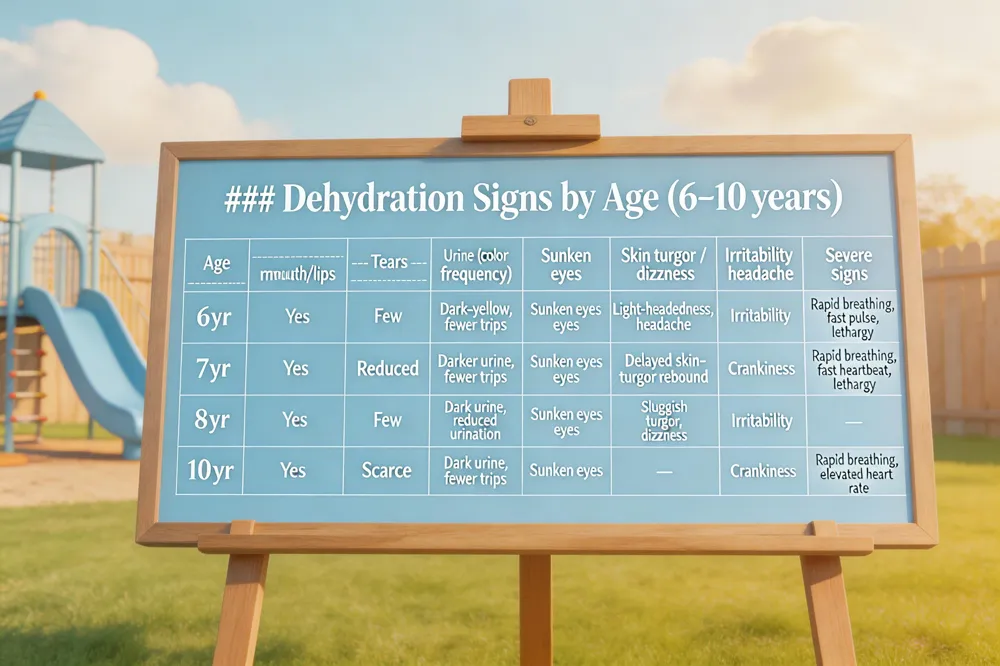 Mouth, lips, and tear production: A dehydrated 6‑ to 10‑year‑old often has a dry mouth or sticky mouth and cracked lips; tears are scarce when the child cries.
Urine, color, and frequency: Dark‑yellow urine and fewer bathroom trips (or fewer wet underwear changes) signal fluid loss.
Sunken eyes, skin turgor, and dizziness: The eyes may appear sunken eyes and the skin on the back of the hand stays pinched longer before snapping back, sometimes accompanied by light‑headedness or a headache.
More serious signs: Rapid breathing, a fast or weak pulse, and lethargy indicate that dehydration is progressing toward a dangerous level and requires prompt medical evaluation.
Signs of dehydration in a 6‑year‑old – Dry mouth, few tears, dark urine, sunken eyes, irritability, headache, dizziness; severe cases show rapid breathing, fast pulse, lethargy.
Signs of dehydration in a 7‑year‑old – Dry mouth, reduced tears, darker urine, fewer bathroom trips, sunken eyes, delayed skin‑turgor rebound, crankiness; serious cases add rapid breathing, fast heartbeat, lethargy.
Signs of dehydration in an 8‑year‑old – Dry mouth, few tears, dark urine, reduced urination, sunken eyes, sluggish skin turgor, dizziness, irritability.
Signs of dehydration in a 10‑year‑old – Dry mouth, scarce tears, dark urine, fewer trips to the bathroom, sunken eyes, crankiness, rapid breathing, elevated heart rate.
Dehydration‑related headline – A child’s headache can be an early dehydration cue; it often follows a day of reduced fluid intake or activity. Look for dry mouth, dark urine, fewer wet diapers, fatigue, and poor skin turgor. Rehydrating with water or an oral electrolyte solution usually eases the pain within minutes; persistent or worsening headache warrants a pediatric check‑up.
When Mild Dehydration Needs Medical Attention
Severity Levels & Key Indicators
| Severity | Key Clinical Features | Recommended Action |
|---|---|---|
| Mild | Dry mouth/lips, few tears, reduced urine output, slight irritability; child stays alert | Home rehydration with water, Pedialyte®, ice chips, clear broth (≈ 15 ml every 5 min) |
| Moderate | Markedly dry mucosa, sunken fontanelle (infants), lethargy, poor skin turgor, pronounced reduced urine | Structured oral rehydration solution (ORS) + pediatric follow‑up |
| Severe | No tears, extreme lethargy/unconsciousness, rapid breathing, very sunken fontanelle, shock signs, seizures | Immediate emergency care – IV fluids, hospital admission |
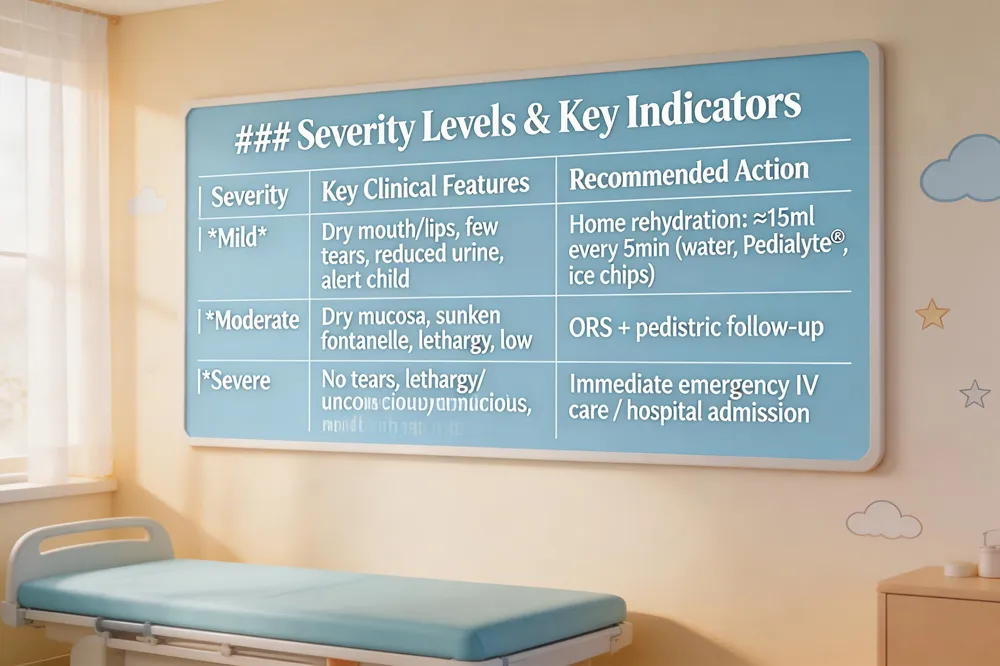 Dehydration can creep up fast in kids, so knowing when a simple home remedy isn’t enough is vital.
Red‑flag symptoms and rapid progression – A child who stops drinking for several hours , has fewer than six wet diapers a day (or no urine for >12 hrs) , or shows persistent dry mouth and no tears is moving beyond mild dehydration. Watch for sunken eyes or a sunken fontanelle , rapid breathing or heartbeat, lethargy, dizziness, inability to stand , or vomiting that is bright green, red, or brown. Any of these signs—especially in an infant under one year who hasn’t fed for 24 hrs—require immediate medical attention (call your pediatrician or 911).
Differentiating severity –
- Mild: Dry mouth/lips, few tears, reduced urine output, slight irritability ; child stays alert and can be rehydrated at home with water, Pedialyte®, ice chips, or clear broth.
- Moderate: Markedly dry mucosa, visibly sunken fontanelle, lethargy, poor skin turgor, and more pronounced reduced urine. Structured oral rehydration (ORS) and pediatric follow‑up are needed.
- Severe: No tears, extreme lethargy or unconsciousness, rapid breathing, very sunken fontanelle, shock signs, or seizures. This is an emergency—IV fluids and hospital care are required.
Potential complications – Untreated dehydration can lead to electrolyte imbalances, seizures, brain swelling, kidney injury, and in extreme cases, death. Even moderate dehydration can cause dizziness, low blood pressure, and impaired cognition, affecting a child’s growth and school performance.
When to call a pediatrician – Contact your doctor if the child refuses fluids for >3 hrs, has <6 wet diapers in 24 hrs, shows persistent dry mouth, or if vomiting/diarrhea continues despite ORS. Seek urgent care immediately for any severe signs listed above, or if the child is unusually sleepy, confused, or unable to stay upright.
Early detection and prompt treatment keep dehydration from escalating and protect your child’s health.
Home Treatment and Prevention Strategies
Home Rehydration Guidelines
| Age Group | ORS Dosing (approx.) | Fluid Options | Monitoring Tips |
|---|---|---|---|
| Infant (0‑12 mo) | 50‑100 ml /kg / day (small sips) | Commercial ORS, breast‑milk, formula | Track wet diapers; aim for ≥ 6 / day |
| 1‑yr | 1–2 tsp ≈ 5‑10 ml every few minutes | Pedialyte®, water, weak broth | Log total intake; watch for improved alertness |
| Toddler (2‑4 yr) | 15 ml (1 tbsp) every 5 min | ORS, water, electrolyte‑enhanced pops | Keep a simple intake log; note urine frequency |
| School‑age (5‑10 yr) | 15 ml every 5 min as needed | Water, ORS, diluted sports drink | Encourage regular sips; avoid sugary/caffeinated drinks |
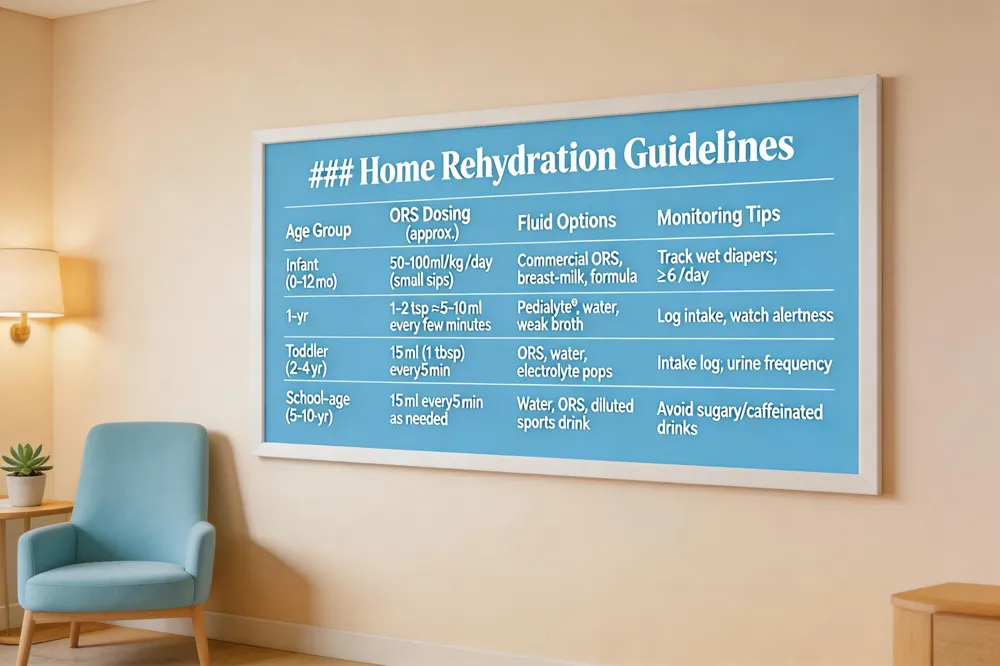 Mild dehydration in toddlers can often be handled at home with small, frequent sips of an oral rehydration solution (ORS) such as Pedialyte® or a store‑brand equivalent. Aim for about 15 ml (1 tbsp) every 5 minutes, using a medicine cup or syringe, and keep a simple log of total intake. If a commercial ORS isn’t on hand, clear fluids—water, ice chips, weak broth, or an electrolyte‑enhanced ice pop—are acceptable alternatives, but avoid sugary sodas, fruit drinks, or undiluted juice because they can worsen fluid loss.
For a 1‑year‑old, the same ORS dosing applies (1–2 teaspoons ≈ 5–10 mL every few minutes) while continuing breast‑milk or formula if tolerated. Plain water, sports drinks, or undiluted juice lack the necessary electrolyte balance and should be avoided.
Infants with mild to moderate dehydration should receive frequent small sips of ORS or continue nursing/formula, aiming for roughly 50‑100 mL per kilogram per day. Watch for improved wet diapers and alertness; if vomiting persists, the baby is lethargic, or a sunken fontanelle appears, contact the pediatrician for possible IV therapy.
The “medicine” for pediatric dehydration is ORS, which provides the right mix of water, sugar, and electrolytes. A homemade mix (½ tsp salt + ½ tsp sugar per liter of water) can be used in a pinch.
Prevention: keep water, milk, or ORS available throughout the day, especially during illness, hot weather, or activity. Offer small sips every 10‑20 minutes, turn drinking into a game, and never rely on sugary or caffeinated beverages for hydration.
When to Seek Emergency Care
Red‑Flag Signs & Immediate Actions
| Red‑Flag Symptom | Why It’s Critical | Immediate Action |
|---|---|---|
| Sunken fontanelle (infants) | Indicates severe fluid loss | Call 911 / go to ER |
| No tears when crying | Suggests advanced dehydration | Seek urgent medical care |
| Rapid breathing / fast weak pulse | Possible shock | Emergency evaluation |
| Lethargy, inability to stay upright | Brain hypoperfusion risk | Call pediatrician / emergency services |
| Bright‑colored vomit (green/red/brown) | Possible GI bleed or severe dehydration | Immediate ER visit |
| No urine > 12 hrs or < 6 wet diapers in 24 hrs | Kidney risk | Call pediatrician urgently |
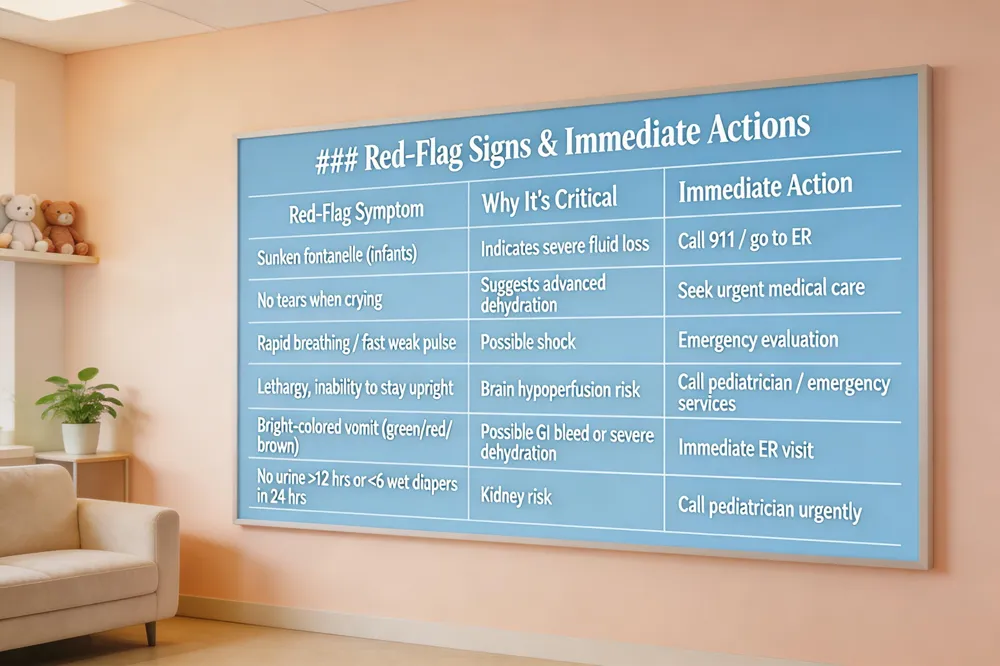 Dehydration can move from mild to life‑threatening quickly, especially in babies, toddlers, and older kids.
Severe dehydration signs that require IV fluids – Look for a sunken fontanelle in infants, no tears when crying, very dry mouth, rapid heartbeat, lethargy, dizziness, or a headache that doesn’t ease with a sip of water. Cool, mottled skin, fainting, or a bright‑colored (green, red, brown) vomit also signal a fluid deficit that may need rapid intravenous replacement.
Hospital evaluation for infants and toddlers – If an infant is vomiting all feeds, has fewer than six wet diapers in 24 hours, a sunken soft spot, dry eyes, or is unusually drowsy, go straight to the emergency department. For toddlers, any combination of sunken eyes, no tears, inability to urinate for more than 12 hours, or persistent vomiting/diarrhea warrants immediate medical attention.
Immediate actions for life‑threatening symptoms – Call 911 or your pediatrician right away if the child shows any of the above signs, especially if they are unable to keep any fluid down, have a high fever, or become unresponsive. Early intervention prevents seizures, brain injury, and the need for intensive care.
Quick FAQ
- Baby dehydration when to go to hospital: Vomiting all feeds, <6 wet diapers, sunken fontanelle, dry mouth, lethargy.
- When to take child to ER: Sunken fontanelle, no tears, rapid breathing, inability to retain fluids, bright‑colored vomit.
- Toddler dehydration when to go to hospital: Very dry mouth, sunken eyes, no urination >12 hrs, persistent vomiting/diarrhea.
- Dehydration symptoms kids headache: Headache often appears with dry mouth, dark urine, irritability; rehydration usually resolves it quickly.
Key Takeaways for Parents
Watch for the seven core signs: dry mouth or lips, reduced tears, fewer wet diapers or bathroom trips, sunken eyes or fontanelle, irritability, lethargy, and rapid breathing. At the first hint of mild or moderate dehydration, give sips of an oral rehydration solution such as Pedialyte® or diluted clear broth—these restore water and electrolytes and often prevent the need for a doctor’s visit. However, if any red‑flag symptoms appear—no tears, sunken fontanelle, inability to stand, urine output over 12 hours, or a loss of consciousness—call 911 or seek emergency care immediately. Finally, make hydration a habit: offer water or electrolyte‑rich drinks during meals, illness, hot weather, and play, and monitor urine output to keep dehydration at bay.