Why Nutrition Counseling Matters
Healthy eating isn’t just a fad—it’s a scientifically proven foundation for a child’s physical development, brain function, and emotional well‑being. Research shows that nutrient‑dense meals rich in fruits, vegetables, whole grains, lean proteins, and low‑fat dairy improve immune health, reduce obesity risk, and enhance academic performance by stabilizing blood‑sugar and supporting concentration. Pediatric clinicians play a pivotal role: they screen growth charts, identify nutrient gaps, and translate dietary guidelines into family‑friendly plans. By reviewing labels, suggesting age‑appropriate portions, and modeling balanced meals, doctors empower parents to create a home environment where nutritious choices are the norm. Because nutrition directly influences bone growth, hormone balance, and cognitive pathways, early intervention by a pediatrician or registered dietitian can prevent deficiencies that impair learning and long‑term health. Regular, personalized counseling ensures each child receives the right fuel to thrive now and into adulthood. Together, families and clinicians build lifelong habits that safeguard health across the lifespan.
Creating a Healthy Home Food Environment
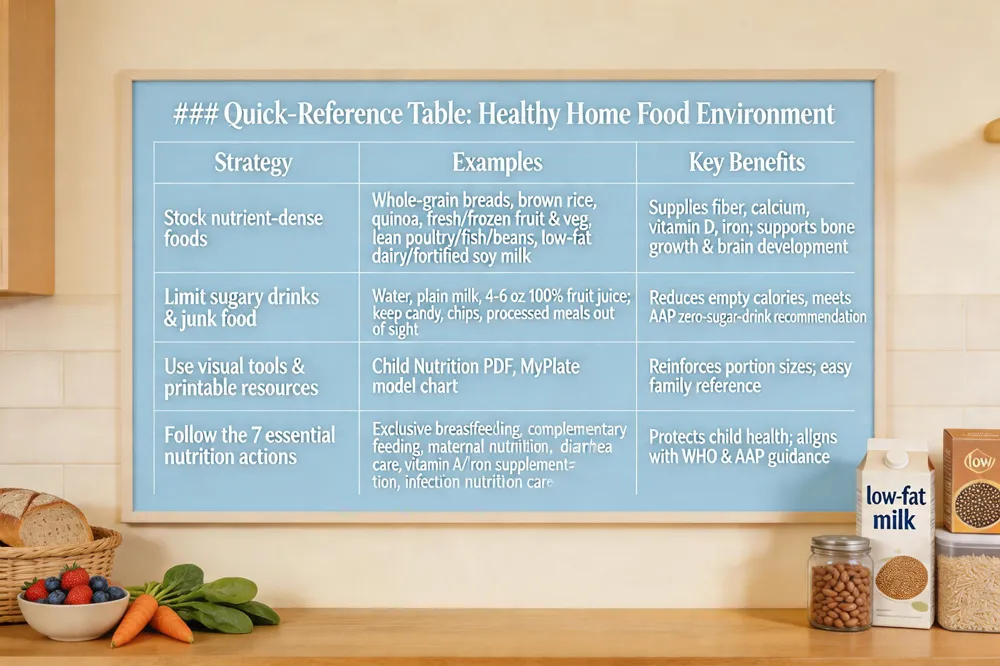
Quick‑Reference Table: Healthy Home Food Environment
| Strategy | Examples | Key Benefits |
|---|---|---|
| Stock nutrient‑dense foods | Whole‑grain breads, brown rice, quinoa, fresh/frozen fruit & veg, lean poultry/fish/beans, low‑fat dairy or fortified soy milk | Supplies fiber, calcium, vitamin D, iron; supports bone growth & brain development |
| Limit sugary drinks & junk food | Water, plain milk, 4‑6 oz 100 % fruit juice; keep candy, chips, processed meals out of sight | Reduces empty calories, meets AAP zero‑sugar‑drink recommendation |
| Use visual tools & printable resources | Child Nutrition PDF, Child Nutrition chart (MyPlate model) | Reinforces portion sizes; easy family reference |
| Follow the 7 essential nutrition actions | Exclusive breastfeeding, appropriate complementary feeding, maternal nutrition, diarrhea prevention/treatment, vitamin A & iron supplementation, nutrition care during infectious disease | Protects child health globally; aligns with WHO & AAP guidance |
 A supportive home food environment is the foundation of a child’s lifelong health, and pediatricians stress that families should pair good nutrition with regular medical check‑ups to catch growth concerns early.
Stocking nutrient‑dense foods – Fill the pantry and fridge with whole‑grain breads, brown rice, quinoa, fresh or frozen fruits and vegetables, lean proteins such as poultry, fish, beans, and low‑fat dairy or fortified soy milks. These choices supply the fiber, calcium, vitamin D, and iron needed for bone growth and brain development, as highlighted by the American Academy of Pediatrics and the Dietary Guidelines for Americans.
Limiting sugary beverages and junk food – Replace sodas sports drinks, and high‑sodium snacks with water, plain milk, or a modest 4‑6 oz of 100 % fruit juice. Keeping candy, chips, and processed meals out of sight reduces impulse eating and helps meet the AAP’s recommendation of 0 sugary drinks per day.
Using visual tools and printable resources – Parents can download the free Child Nutrition PDF from Kids & Teens Primary Healthcare, which outlines the five food groups, age‑specific portion sizes, and tips for family meals. A Child Nutrition chart visually breaks down daily servings of fruits, vegetables, whole grains, protein, dairy, and water, reinforcing the MyPlate model.
What are the 7 essential nutrition actions? – Exclusive breastfeeding, appropriate complementary feeding, maternal nutrition, diarrhea prevention/treatment, vitamin A and iron supplementation, and nutrition care during infectious disease are the core actions that protect children’s health worldwide.
By integrating these strategies, families create a nutritious, engaging kitchen that supports growth, learning, and the preventive care guidance offered by pediatric professionals.
Balanced Meals and Age‑Specific Portion Guidance
Portion Guidance by Age (USDA MyPlate)
| Age (years) | Fruit (cups) | Veg (cups) | Whole‑grain grains (oz) | Lean protein (oz) | Low‑fat dairy (cups) |
|---|---|---|---|---|---|
| 5‑7 | 1‑1.5 | 1‑1.5 | 3‑5 | 2‑4 | 2‑2.5 |
| 8‑12 | 1‑1.5 | 1‑1.5 | 4‑5 | 3‑5 | 2‑2.5 |
| 12‑14 | 1.5‑2 | 2‑2.5 | 5‑6 | 5‑6 | 2.5‑3 |
Portion‑size cues – Palm = protein, Fist = vegetables, Baseball‑sized scoop = grains.
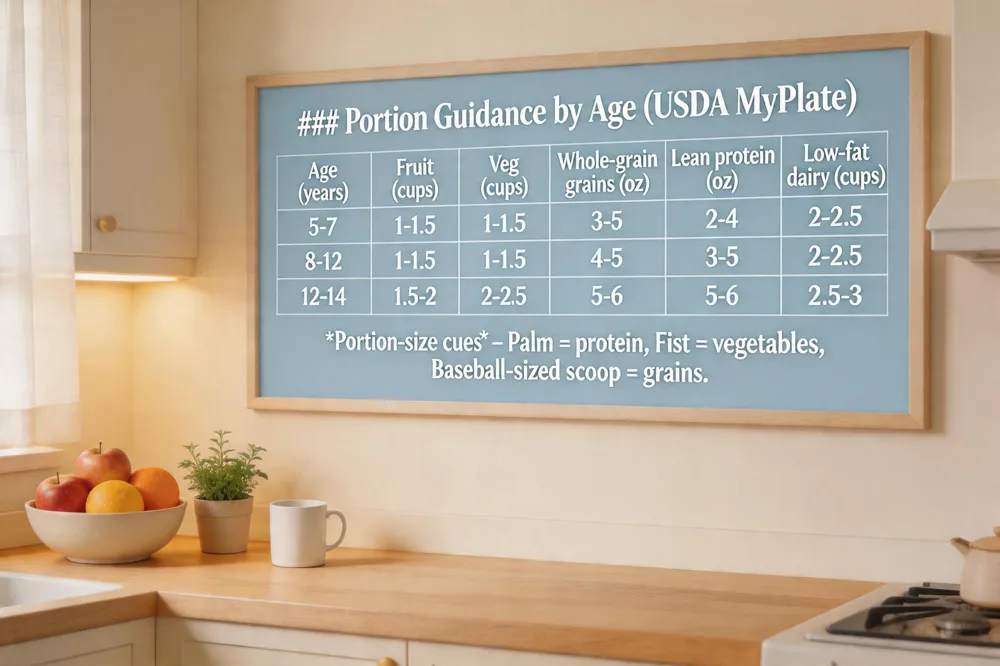
Parents can translate these ratios into easy portion cues—use a child’s palm for protein, a fist for vegetables, and a baseball‑sized scoop for grains—to keep servings age‑appropriate without counting every ounce.
Whole‑grain and lean‑protein choices – swapping white‑flour breads for whole‑wheat, brown rice, quinoa, or whole‑grain pasta adds fiber and micronutrients, while lean meats, eggs, beans, and unsalted nuts supply essential amino acids without excess saturated fat.
Balanced diet for children 5‑12 years – Aim for 1‑1.5 cups fruit, 1‑1.5 cups vegetables, 3‑5 oz whole‑grain grains, and 2‑4 oz lean protein per day, plus 2‑2.5 cups low‑fat dairy. Limit sugary drinks, processed snacks, and added sodium; water and milk should be the primary beverages. Regular physical activity and family meals reinforce these habits.
Weekly chart for an 11‑year‑old – Include 2 serves fruit, 5 serves vegetables, 4‑5 serves whole‑grain cereals/starches, 2½‑3 serves low‑fat dairy, and 2½ serves lean protein daily, paired with 5‑6 cups water. Rotate breakfasts (whole‑grain toast with peanut butter and banana; oatmeal with berries), lunches (turkey or hummus wrap, fruit, veggie sticks, yogurt), and dinners (grilled chicken or tofu, brown rice or quinoa, two veggies, dairy). Snacks should be nutrient‑dense (fruit, nuts, cheese, whole‑grain crackers with hummus).
Weekly chart for a 12‑year‑old – Similar pattern but calories 1,800‑2,200 kcal. Emphasize calcium‑rich breakfasts, varied protein sources, and colorful vegetable sides. Keep added sugars and saturated fats low, and involve the child in meal planning to boost acceptance.
General balanced diet for kids – Fill half the plate with fruits/vegetables, the other half with whole grains and lean protein, and add dairy. Follow age‑specific serving recommendations, limit added sugars, sodium, and saturated fats, and model healthy choices. If concerns arise—growth delays, picky eating, or weight changes—consult your pediatrician or a registered dietitian for personalized guidance.
Smart Snacks and School Lunch Strategies
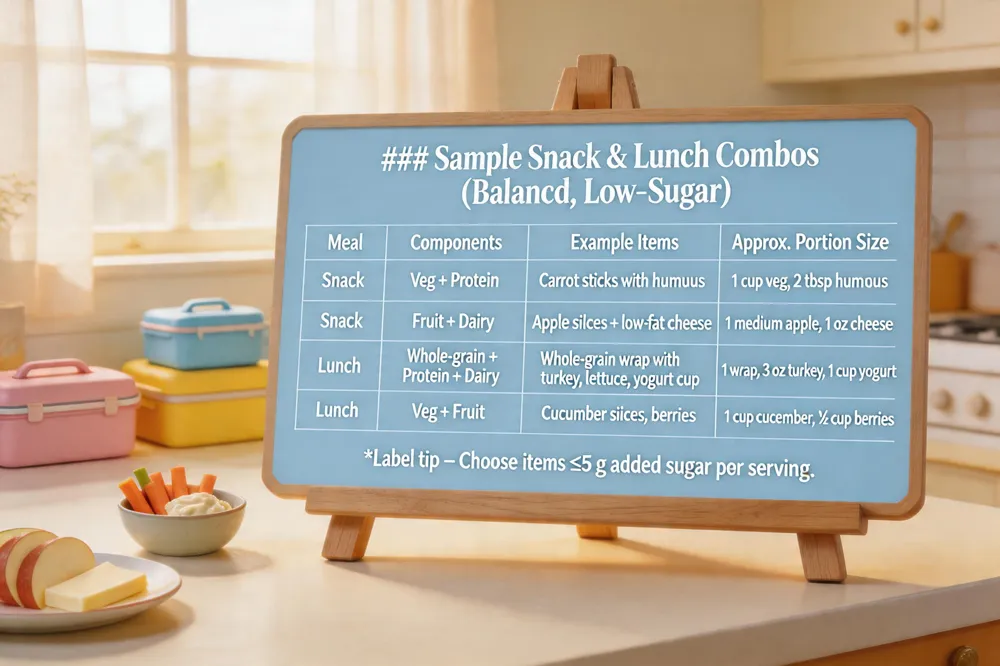
Sample Snack & Lunch Combos (Balanced, Low‑Sugar)
| Meal | Components | Example Items | Approx. Portion Size |
|---|---|---|---|
| Snack | Veg + Protein | Carrot sticks with hummus | 1 cup veg, 2 tbsp hummus |
| Snack | Fruit + Dairy | Apple slices + low‑fat cheese | 1 medium apple, 1 oz cheese |
| Lunch | Whole‑grain + Protein + Dairy | Whole‑grain wrap with turkey, lettuce, and a yogurt cup | 1 wrap (≈1 oz grain), 3 oz turkey, 1 cup yogurt |
| Lunch | Veg + Fruit | Cucumber slices, berries | 1 cup cucumber, ½ cup berries |
Label tip – Choose items ≤5 g added sugar per serving.
 Pack nutrient‑dense snacks that combine color, crunch, and protein. Raw carrot sticks, cucumber slices, apple wedges or berries with hummus, low‑fat cheese, or a hard‑boiled egg give fiber, vitamins, and protein without excess calories. Balance carbs, protein, and dairy by adding a whole‑grain base (brown rice, quinoa, or whole‑grain bread) with protein (grilled chicken, turkey, beans) and low‑fat dairy (milk, yogurt, cottage cheese) to keep stable and support focus.
Read nutrition labels for added sugars—look for “added sugar” on the Facts panel and choose items ≤5 g per serving. Choose water and unsweetened milk over sugary drinks.
Healthy food for kids for school – Pack vegetables and fruit, a whole‑grain component, protein, and a low‑fat dairy option in an insulated lunchbox.
Nutrition for school‑age child PDF – Download the guide at https://extensionpubs.unl.edu/publication/g1086/na/pdf/view.
5‑year‑old food chart – Offer five grain servings, 2‑4 fruit and veg servings, 2‑3 dairy servings, and 1‑2 protein servings as in the sample day.
4‑to 5‑year‑old food chart – Similar portions, emphasizing whole‑grain breads, meats, and snack times.
Consult your pediatrician or a registered dietitian for advice and to address any growth concerns.
Budget‑Friendly Meal Planning for Tweens
Low‑Cost Daily Menu (≈$2‑$3 per child)
| Meal | Menu (≈portion) | Cost‑Saving Tips |
|---|---|---|
| Breakfast | 1 cup low‑fat milk, 1 slice whole‑grain toast + 1 tsp peanut butter, 1 banana | Buy milk in bulk, choose store‑brand toast, buy bananas in bulk |
| Lunch | 1 cup cooked brown rice, 3 oz boiled egg or canned tuna, ½ cup frozen mixed veg, 1 cup low‑fat yogurt | Cook rice in large batches, use canned tuna on sale, buy frozen veg when on sale |
| Snack | Apple slices + 2 tbsp hummus | Make hummus at home from canned chickpeas |
| Dinner | ½ cup quinoa or whole‑grain bread, 3 oz chicken thigh or tofu, ½ cup steamed broccoli, 1 glass milk | Purchase chicken thighs in bulk, rinse dried beans for tofu, use frozen broccoli |
| Evening | Water + small handful of inexpensive nuts/seeds | Buy bulk nuts or seeds, portion them yourself |
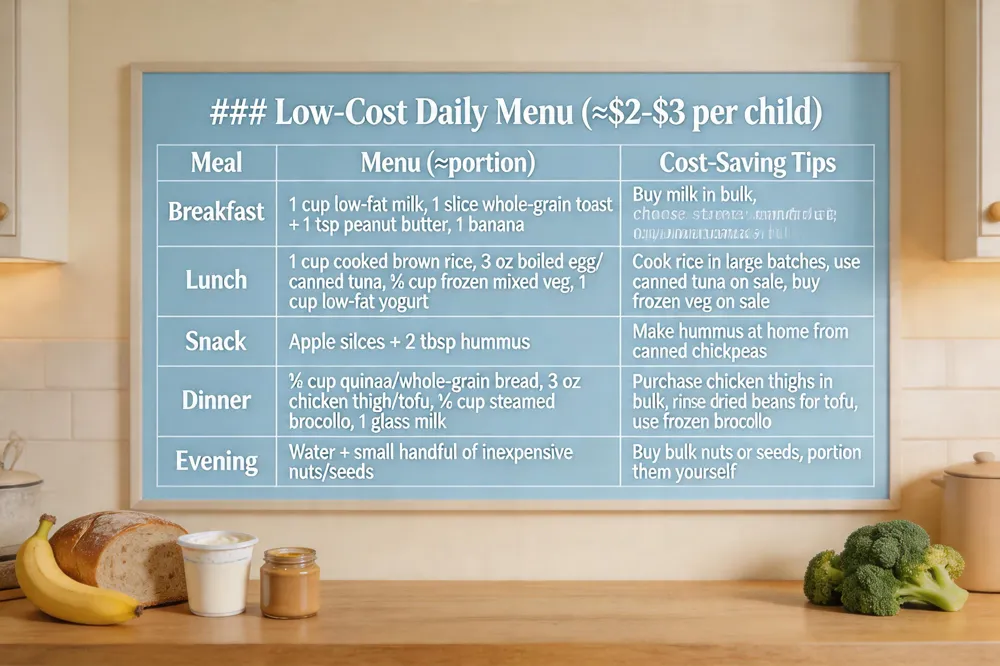 A nutritious, low‑cost diet helps pre‑teens grow strong and stay healthy, and regular check‑ups let pediatricians catch any gaps early.
Cost‑effective protein sources – choose eggs, canned tuna, dry beans, lentils, tofu, and budget‑friendly chicken thighs. These foods provide the 3‑4 oz of protein a 12‑year‑old needs without breaking the bank.
Utilizing frozen and canned produce – frozen mixed vegetables, canned low‑sodium tomatoes, and frozen berries keep meals colorful, fiber‑rich, and affordable year‑round.
Simple cooking techniques for families – boil beans in bulk, stir‑fry frozen veggies with a splash of olive oil, and use a microwave‑safe steamer for quick greens.
Sample diet chart (not expensive) –
- Breakfast: 1 cup low‑fat milk, 1 slice whole‑grain toast with 1 tsp peanut butter, and a banana.
- Lunch: 1 cup cooked brown rice, 3 oz boiled egg or canned tuna, ½ cup frozen mixed veg, and a cup of low‑fat yogurt.
- Snack: Apple slices with 2 tbsp hummus.
- Dinner: ½ cup quinoa or whole‑grain bread, 3 oz chicken thigh or tofu, ½ cup steamed broccoli (fresh or frozen), and a glass of milk.
- Evening: Water and a small handful of inexpensive nuts or seeds.
These easy, balanced meals support growth, energy, and school performance while keeping costs low; regular pediatric visits ensure the plan meets each child’s unique needs.
Physical Activity, Hydration, and Lifestyle Integration
Daily Activity & Hydration Checklist
| Recommendation | Details | Why It Matters |
|---|---|---|
| Physical activity | ≥60 min moderate‑to‑vigorous (aerobic, bone‑strengthening, muscle‑strengthening) | Supports healthy weight, bone density, mental health, academic performance |
| Screen time | ≤1 hr (preschool) / ≤2 hrs (older kids) | Improves sleep hygiene, reduces sedentary behavior |
| Sleep | 9‑11 hr (5‑12 yr) | Regulates hunger hormones, boosts learning |
| Hydration | Water as primary beverage; limit milk & sugary drinks | Aids digestion, temperature regulation, cellular health |
| Modeling | Parents model active play, water drinking, balanced meals | Increases child adherence and long‑term habit formation |
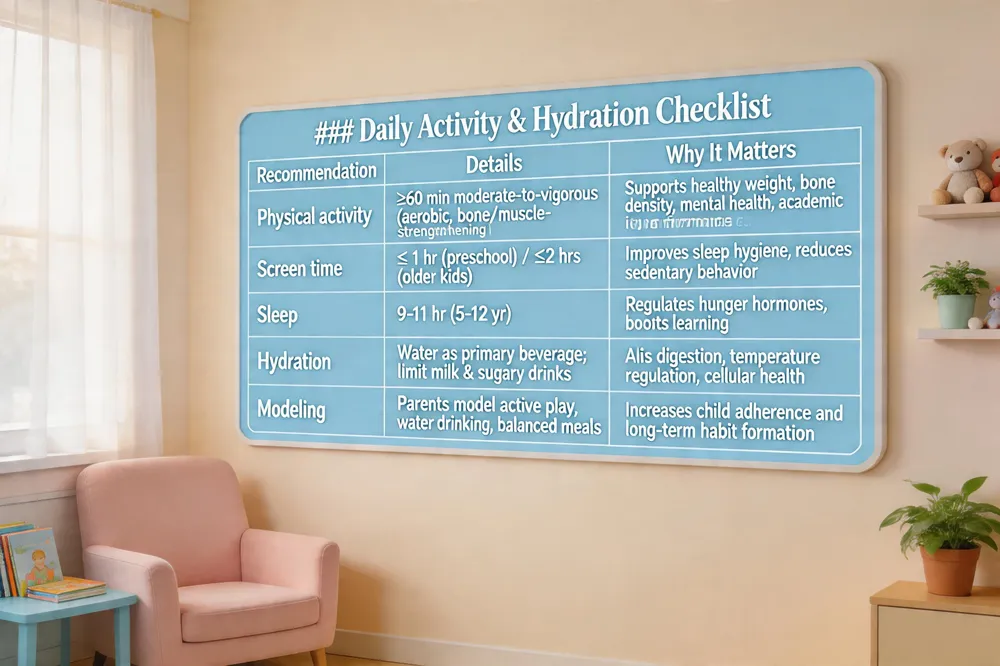 Children need at least 60 minutes of moderate‑to‑vigorous physical activity each day, including aerobic, bone‑strengthening, and muscle‑strengthening activities. Pairing this movement with sensible Reducing screen time improves sleep quality, helps maintain a healthy weight, boosts academic performance, and supports better mental health. (no more than 1 hour for preschoolers and a maximum of 2 hours for older kids) helps improve sleep hygiene; adequate sleep in turn regulates hunger hormones and boosts academic performance. Water should be the primary beverage; excess milk or sugary drinks add unnecessary calories.—replace sugary drinks and excessive fruit‑juice servings with plain water, which aids digestion, temperature regulation, and overall cellular health. Parents and caregivers should model these habits, involve kids in planning active outings, and consult pediatric health‑care providers if activity levels, sleep patterns, or hydration habits raise concerns about growth or chronic‑disease risk.
Putting It All Together – Next Steps for Families
Reviewing the six counseling tips, parents are reminded to: (1) model balanced meals and limit sugary drinks; (2) fill half the plate with colorful fruits and vegetables; (3) choose whole‑grain over refined grains; (4) offer lean protein and low‑fat dairy; (5) keep nutritious snacks visible and limit junk‑food exposure; and (6) involve children in meal planning and preparation. These evidence‑based actions, supported by the American Academy of Pediatrics and the Dietary Guidelines for Americans, help prevent obesity, support growth, and reduce chronic‑disease risk. To make implementation easier, families can download our free PDF toolkit, which includes printable MyPlate visuals, label‑reading checklists, and simple recipe cards. Finally, we strongly encourage scheduling a nutrition counseling visit with a pediatrician or registered dietitian. A brief, personalized session can address specific concerns, monitor growth, and ensure each child receives the medical attention needed for optimal health.